





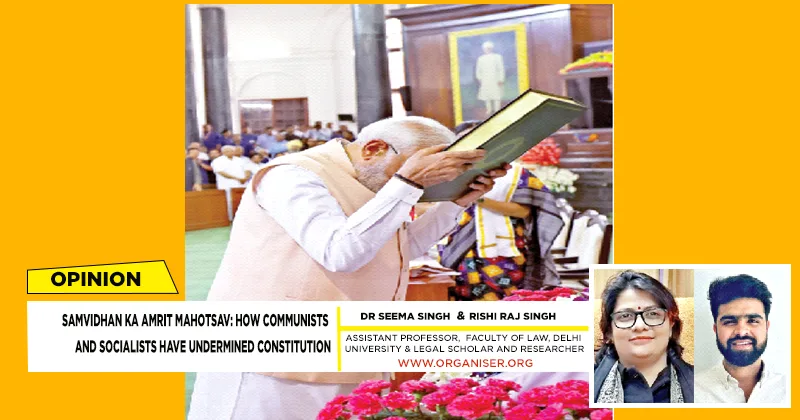
By Independence, we have lost the excuse of blaming the British for anything going wrong. If hereafter’ things go wrong, we will have nobody to blame. Except ourselves.
These are some of the last words of the last speech given by the Chairperson of the Drafting Committee, Dr BR Ambedkar, on November 25, 1949 in the Constituent Assembly. The Constituent Assembly included more than 350 members representing various voices of the nation, including 22 committees which worked 24X7 to give us this Constitution. It was first amended in the next 18 months. In the next 25 years, the Constitution was amended around 40 times which means there were two amendments every year. Today, when the number of amendments reaches a three-digit number, it reflects almost the same number of average amendments. In their speeches before the Constituent Assembly, both Dr BR Ambedkar and Pandit Jawaharlal Nehru had acknowledged that while Constitution of India was a significant and groundbreaking document, it was created during imperfect times and hence couldn’t be static. They recognised the fact that although the Constitution was a reflection of their ideals and the needs of the time, it could require amendments in future in response to the evolving social, political, and economic circumstances.
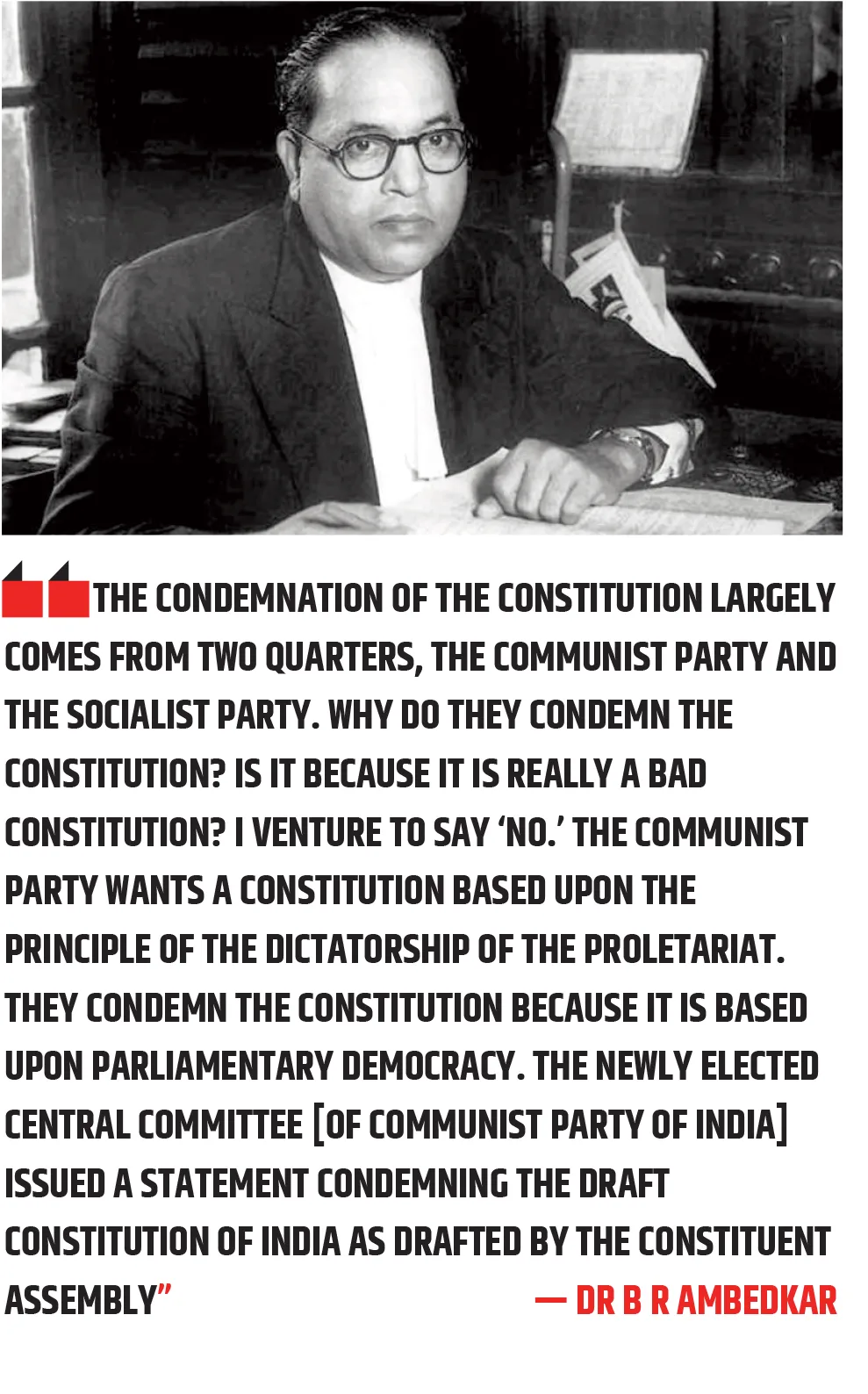
In his speech, Dr Ambedkar’s showed concerns about the future of the Constitution of India. He said:
“Will history repeat itself? It is this thought which fills me with anxiety. This anxiety is deepened by the realisation of the fact that in addition to our old enemies in the form of castes and creeds, we are going to have many political parties with diverse and opposing political creeds. Will Indians place the country above their creed, or will they place the creed above the country? I do not know. But this much is certain: if the parties place creed above country, our Independence will be put in jeopardy a second time and probably be lost forever. We must all resolutely guard against this eventuality. We must be determined to defend our Independence with the last drop of our blood.”The primary concern of Dr Ambedkar was his apprehension about the ambitions of political parties to remain in the power by any means and to compromise the constitutional spirit for their political gains. Listing below a few amendments which raised controversies for the similar reasons:
First Constitutional Amendment 1951
The first constitutional amendment was introduced after the Champakam Dorairajan judgment, where a Brahmin woman, was denied admission to a state medical college in Madras despite meeting her academic qualifications. The Supreme Court gave her relief on the basis of Article14. This prompted the then government to amend the Constitution of India and thus was introduced the first amendment. This amendment was introduced within a-year-and-a-half, when Constituent Assembly was working as the provisional Lok Sabha and while the Rajya Sabha was not even constituted. Though Art 15(4) was added along with Article 31A and Article 31B to implement reservation for socially and educationally backward classes and to implement land reforms, the procedural lapse due to non-existence of Rajya Sabha for this amendment cannot be denied. This amendment also curbed the freedom of speech and expression (such example was the attempt by the then government to censor the Organiser (a Right ideology magazine) and Cross Roads (a Left-leaning weekly). This amendment faced a series of criticism from the then President, Rajendra Prasad, to the first speaker of Lok Sabha, GV Mavlankar, and many others, like Shyama Prasad Mukherjee. Later, scholars like Upendra Bakshi called it “the second Constitution” or “the Nehruvian Constitution”, and author Tripurdaman Singh, in his book Sixteen Stormy Days called it “the first battle of Indian liberalism”.
Presidential Order of 1954
In 1954, after three years of the commencement of the Indian Constitution, through a Presidential Order, Article 35-A was introduced in the Constitution, bypassing the amendment process and power of Parliament to amend the same. Many constitutional experts say it was a constitutional fraud which restricted the applicability of Indian laws in Jammu and Kashmir unless applied via Article 370 and empowered the state’s legislature to define “permanent residents,” granting them special privileges in property ownership, employment, and education. Women marrying non-residents lost their permanent resident status, which was also denied to their descendants. Critics argue that this created a “Constitution within a Constitution,” and a “nation within the nation” under the influence of Nehru-Sheikh Abdullah accord of 1951.
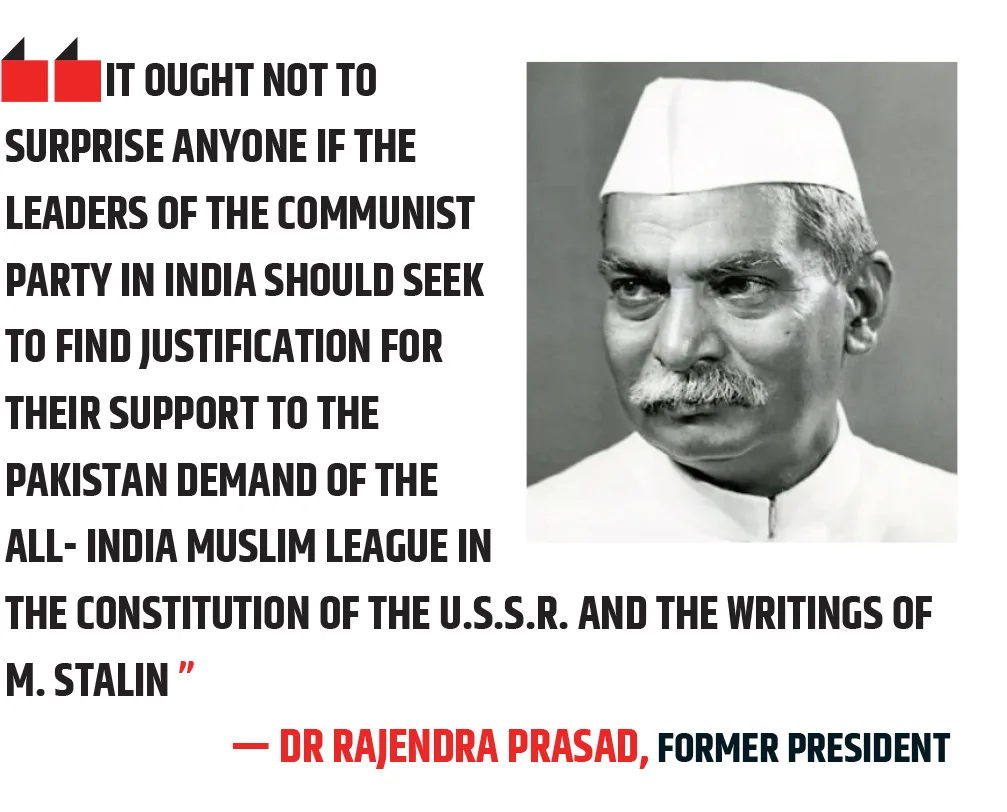
24th Constitutional Amendment Act 1971
In 1971, post Golaknath Judgment (which came about in 1967), the 24th Constitutional amendment was introduced by Indira Gandhi, giving Parliament unlimited powers to amend any part of the Indian Constitution, including the Fundamental Rights. The purpose was to establish parliamentary supremacy and to give Parliament the status of Constituent Assembly. Though this amendment was subsequently approved by the Supreme Court, its purpose was largely diluted (by the Supreme Court) in the Kesavanand Bharti case (1973), by propounding Basic Structure Theory.
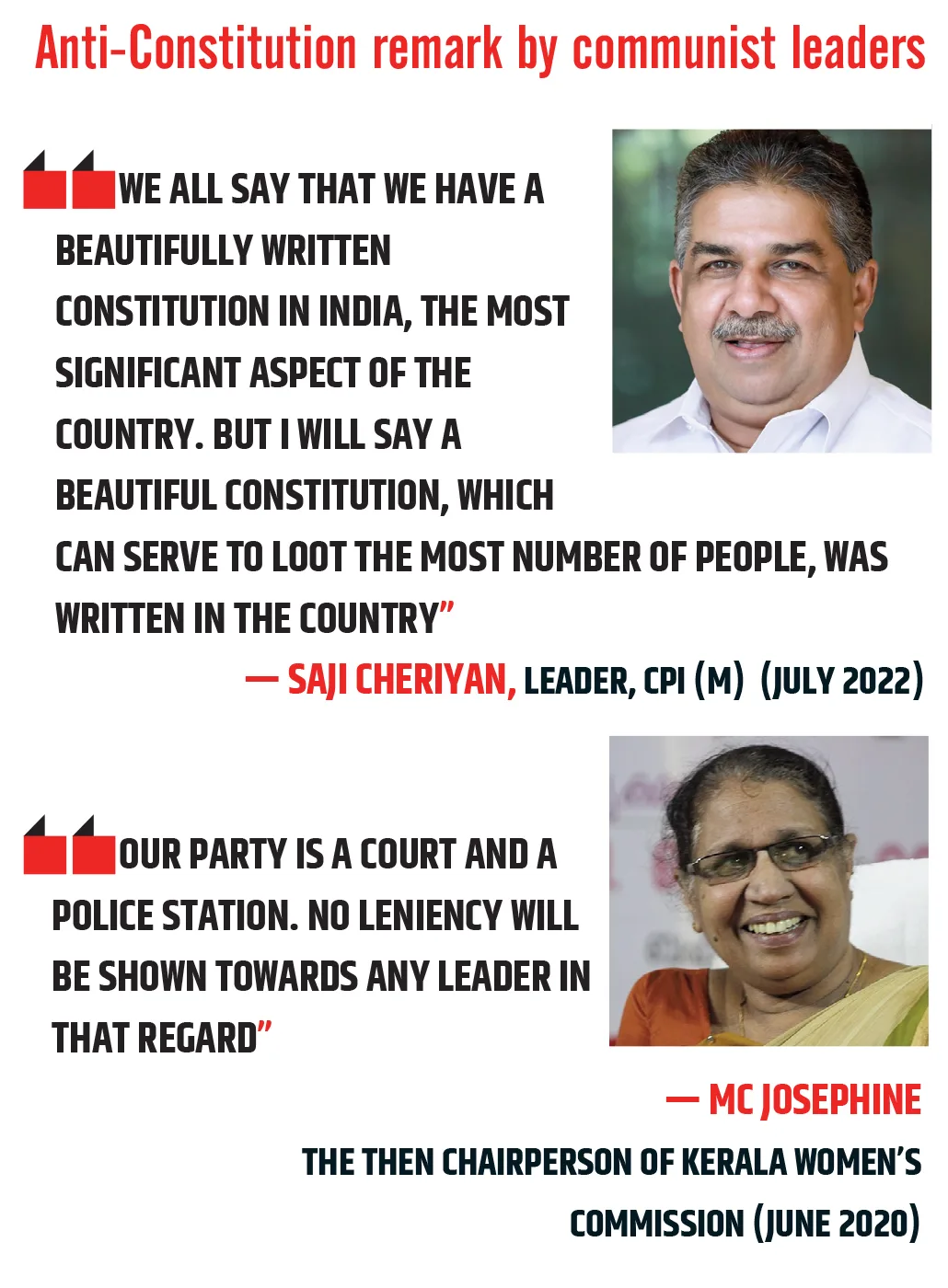
MISA,1971 and Dilution of Article 22
Another controversial amendment was the amendment of Article 22 of the Indian Constitution, granting protection to individuals from arbitrary arrest and detention by the State. The Maintenance of Internal Security Act (MISA) was a controversial law passed by the Indian Parliament in 1971, giving the then Prime Minister Indira Gandhi and Indian law enforcement agencies extensive powers like indefinite preventive detention of individuals, and search and seizure of property without warrant. The law was used to arrest politicians, student leaders, civil society activists, trade unionists, and others during the period of Emergency. MISA allowed preventive detention without trial, effectively overriding the constitutional protections guaranteed by Article 22. Later, in 1976 Supreme Court – in the case of ADM Jabalpur Vs Shivakant Shukla – established that the court cannot review the validity of a detention order under the Maintenance of Internal Security Act (MISA) during a state of emergency.
39th Constitutional Amendment Act 1975
The 39th Amendment was another controversial amendment which was introduced in response to the Allahabad High Court ruling declaring Prime Minister Indira Gandhi’s election void. Through this amendment she tried to immunise the election of the President, Prime Minister and Vice President from the judicial scrutiny. It removed the authority of the Indian Courts to adjudicate petitions regarding the election of the Prime Minister. It established a body constituted by Parliament to resolve election disputes. The 39th Amendment was passed during the period of Emergency in 1975, though it was later declared unconstitutional for the violation of Basic Structure Theory.
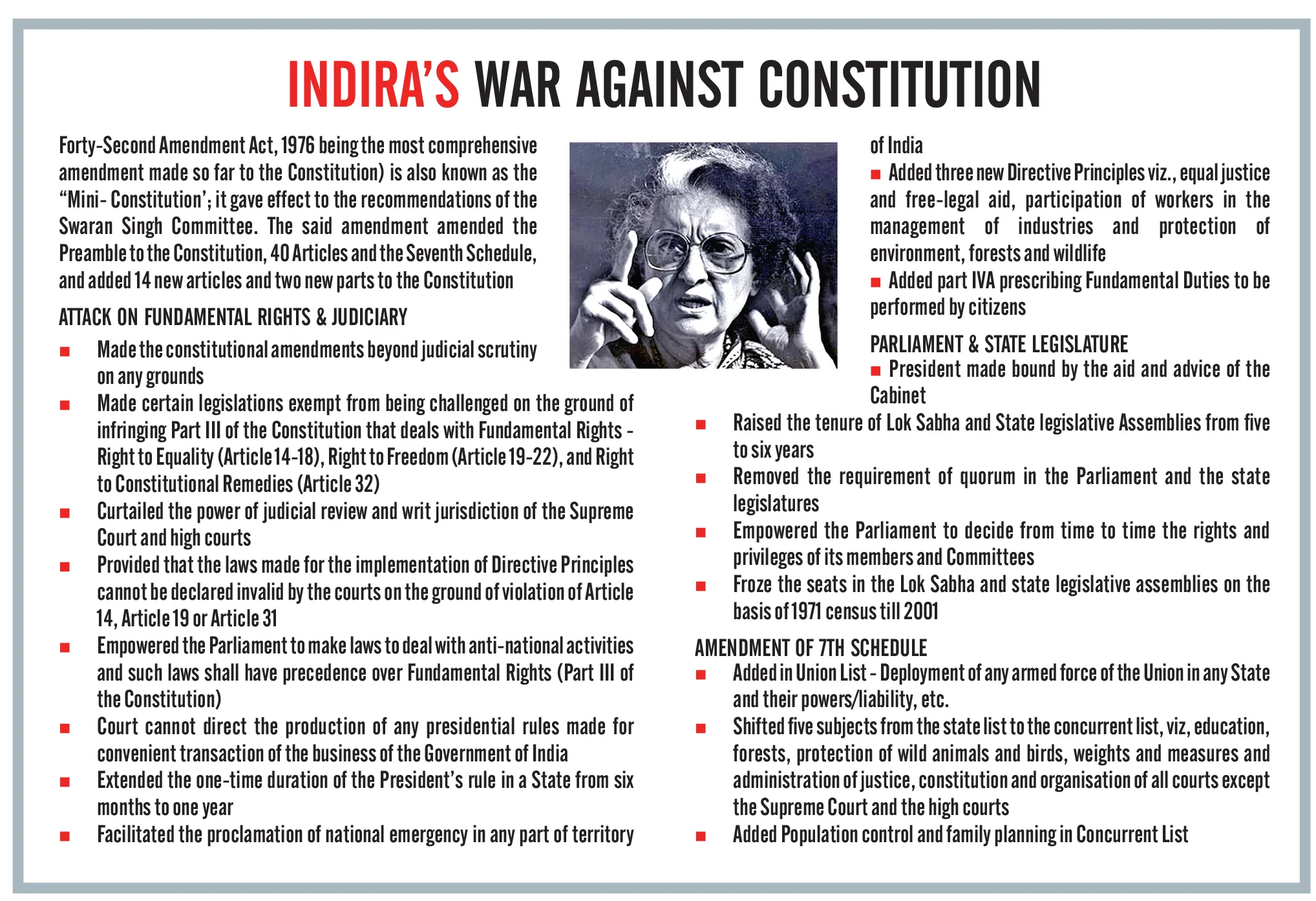
42nd Constitutional Amendment Act 1976
Finally, the most controversial amendment was the 42nd Constitutional amendment Act 1976, also termed as “mini-constitution” by jurists. It attempted to alter the basic structure of the Indian Constitution by stripping the Supreme Court of many of its powers and moved the political system toward parliamentary sovereignty. It curtailed democratic rights in the country and gave sweeping powers to the Prime Minister’s Office. The Amendment gave Parliament unrestrained power to amend any part of the Constitution without judicial review. It transferred more power from the State Governments to the Central Government, eroding India’s federal structure. The reason behind such an amendment was to make the Prime Minister the Centre of all power. The amendment was not only undemocratic to the end but also dictatorial through its means. The Indira Gandhi government changed the Constitution forever through this amendment because most of the things remained unchanged even today. The Preamble of the Constitution was amended and certain words like Secular and Socialist were included in it. This amendment prohibited courts from judicial review of these insertions by adding Article 368(4) in the Indian Constitution. The above-mentioned amendments were happening under the dark veil of Emergency when most of the Opposition leaders were in jail, and the life of Lok Sabha was extended for one year without having an appropriate reason under the garb of Emergency, imposed in the name of Internal Security threat. The constitutionality of this amendment has been challenged, and the matter is still pending before the Supreme Court.
The most controversial amendment was the 42nd Constitutional amendment Act 1976, also termed as “mini-constitution” by jurists. It attempted to alter the basic structure of the Indian Constitution by stripping the Supreme Court of many of its powers and moved the political system toward parliamentary sovereignty
The changes to the Constitution’s Preamble, brought in by Indira Gandhi, were also discussed in the Constituent Assembly but rejected. In the CAD, when the question regarding the enshrinement of words like socialism and secularism was put on by several members of the Constituent Assembly, it was Ambedkar who opposed this idea and advocated not putting the country in any particular political or economic ideology align with “ism”. The idea of Ambedkar, the dreams of Anne Besant and Bal Gangadhar Tilak which they saw in 1895, the wars that were fought to get our own Constitution – all may be dissolved by the principles of this amendment.
The journey of the Indian Constitution has been fraught with a lot of turmoil ever since the beginning – the rejection of the Nehru report in 1928, the agreement of Gandhi in the year 1939, the formation of a Constituent Assembly on December 9, 1946, its dispute, and the problems created by the Muslim League in its working and lately to the making of the Constitution – the issues never stopped cropping up, rather these continued even after Independence.
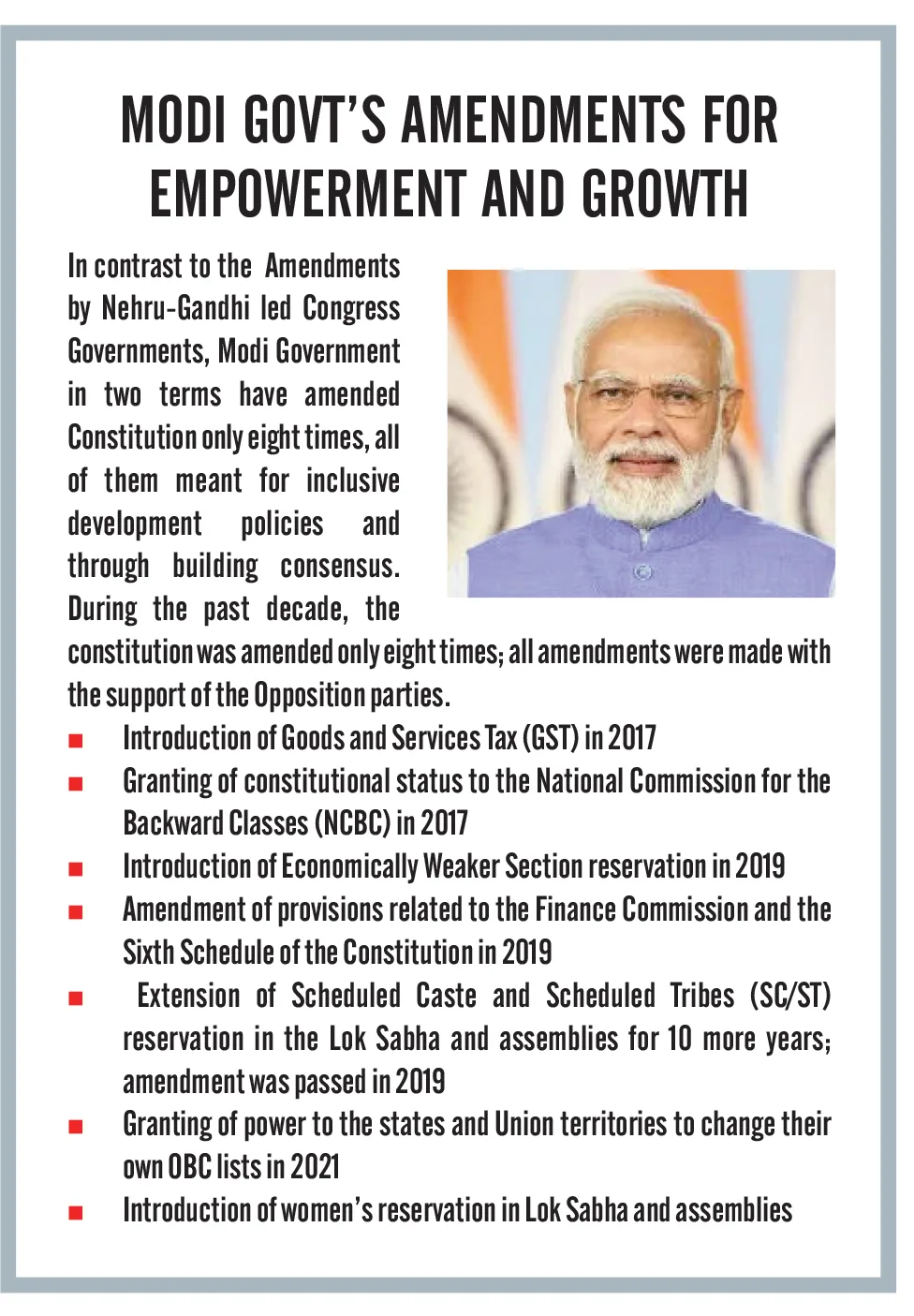
Today when we are moving towards the completion of 75 years of the implementation of Indian Constitution, it is our duty is to make people aware about the spirit and objectives of our Constitution and to implement the vision of Dr Ambedkar, who famously said “The constitution is not merely a lawyer’s document, it is a vehicle of life, and its spirit is always the spirit of Age”.















Comments