Temple Architecture and Human Anatomy: Understanding their spiritual connection
December 5, 2025
  • Read Ecopy
  • Circulation
  • Advertise
  • Careers
  • About Us
  • Contact Us
Android AppiPhone AppArattai
Organiser
  • ‌
  • Bharat
    • Assam
    • Bihar
    • Chhattisgarh
    • Jharkhand
    • Maharashtra
    • View All States
  • World
    • Asia
    • Europe
    • North America
    • South America
    • Africa
    • Australia
  • Editorial
  • International
  • Opinion
  • RSS @ 100
  • More
    • Op Sindoor
    • Analysis
    • Sports
    • Defence
    • Politics
    • Business
    • Economy
    • Culture
    • Special Report
    • Sci & Tech
    • Entertainment
    • G20
    • Azadi Ka Amrit Mahotsav
    • Vocal4Local
    • Web Stories
    • Education
    • Employment
    • Books
    • Interviews
    • Travel
    • Law
    • Health
    • Obituary
  • Subscribe
    • Subscribe Print Edition
    • Subscribe Ecopy
    • Read Ecopy
  • ‌
  • Bharat
    • Assam
    • Bihar
    • Chhattisgarh
    • Jharkhand
    • Maharashtra
    • View All States
  • World
    • Asia
    • Europe
    • North America
    • South America
    • Africa
    • Australia
  • Editorial
  • International
  • Opinion
  • RSS @ 100
  • More
    • Op Sindoor
    • Analysis
    • Sports
    • Defence
    • Politics
    • Business
    • Economy
    • Culture
    • Special Report
    • Sci & Tech
    • Entertainment
    • G20
    • Azadi Ka Amrit Mahotsav
    • Vocal4Local
    • Web Stories
    • Education
    • Employment
    • Books
    • Interviews
    • Travel
    • Law
    • Health
    • Obituary
  • Subscribe
    • Subscribe Print Edition
    • Subscribe Ecopy
    • Read Ecopy
Organiser
  • Home
  • Bharat
  • World
  • Operation Sindoor
  • Editorial
  • Analysis
  • Opinion
  • Culture
  • Defence
  • International Edition
  • RSS @ 100
  • Magazine
  • Read Ecopy
Home Bharat

Temple Architecture and Human Anatomy: Understanding their spiritual connection

Temple architecture is deeply rooted in ancient Indian philosophy, where every aspect of design reflects spiritual and cosmic principles. The connection between temple structures and human anatomy symbolises the harmonious relationship between the physical body and the divine, guiding individuals towards spiritual enlightenment

WEBDESKWEBDESK
Nov 21, 2024, 09:00 am IST
in Bharat, Culture
Follow on Google News
Representative image

Representative image

FacebookTwitterWhatsAppTelegramEmail

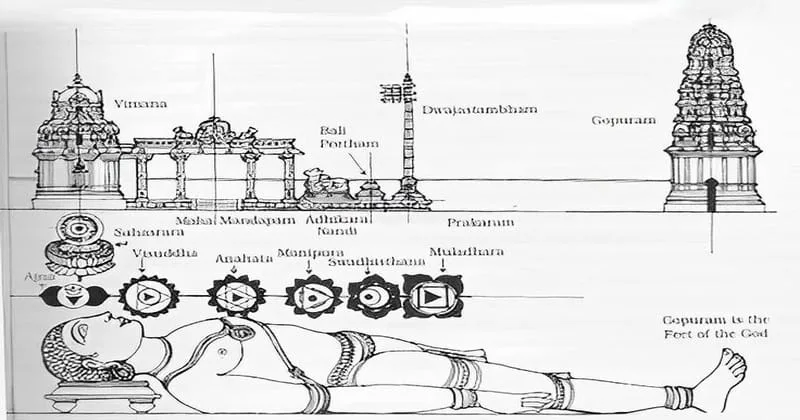
In the realm of ancient Indian architecture, temple design is not only a reflection of artistic expression but also a profound representation of spiritual and metaphysical concepts. One of the most fascinating aspects of temple architecture is its symbolic relationship with the human body.

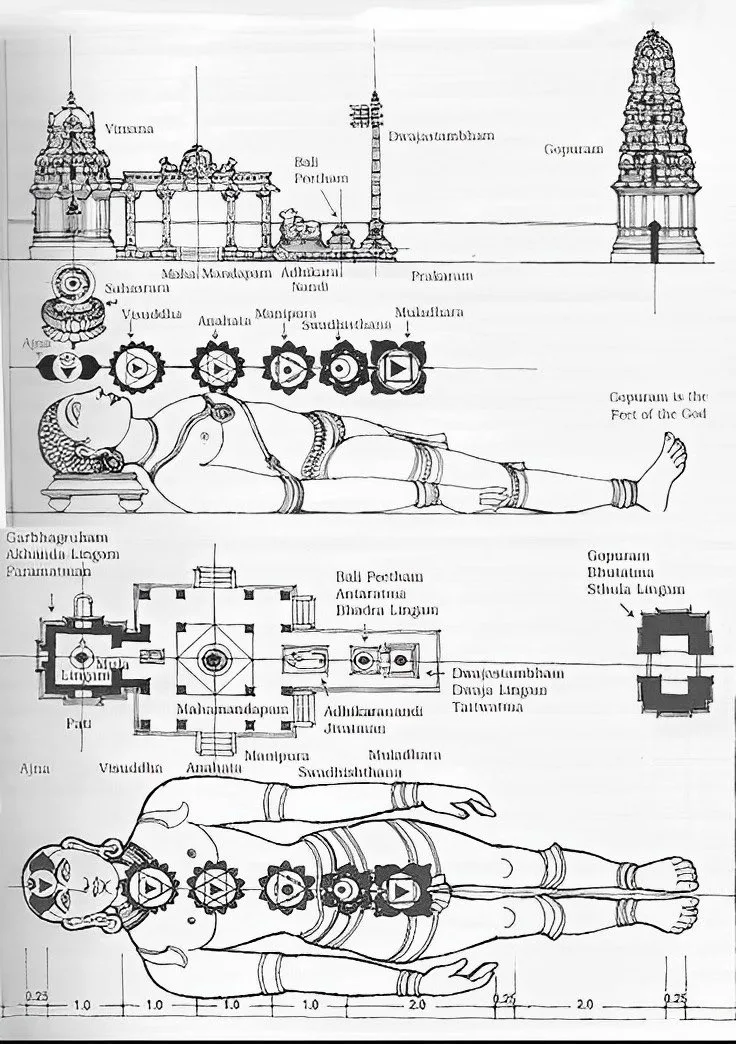
Every component of a temple, from its towers to its inner sanctum, is intricately connected to various aspects of human anatomy, each representing an element of human existence and consciousness. This unique relationship emphasises the spiritual belief that the human body and the temple are microcosms of the divine universe, bridging the physical and spiritual realms. The connection between temple architecture and human anatomy is not a mere coincidence but a deliberate design choice that reflects the profound understanding of the cosmos and the human soul.
Vimana: The Head of the Individual

The Vimana, the main tower that rises above the sanctum of a temple, symbolises the head of the individual. It represents the divine presence and serves as the focal point of the temple, much like the head is the focal point of human consciousness. In this sense, the Vimana is believed to house the divine energy, drawing the individual’s attention upwards towards spiritual enlightenment. Just as the head controls thought and intellect, the Vimana embodies the highest spiritual essence, channelling it from the heavens into the temple and into the devotee’s mind and soul.

Mahal Mandapam: The Chest of the Human Body

Moving down from the head, the Mahal Mandapam, or the great hall, corresponds to the chest region of the human body. This area is symbolic of the heart and lungs, where vital energy and spiritual essence converge. The Mahal Mandapam serves as the space for the congregation, where devotees come together to experience collective energy and devotion. It is a place of both physical and spiritual nourishment, where the heart of the temple beats with the flow of life and vitality, much like the chest area is central to the circulation of blood and air in the human body.

Garbhagruha (Sanctum): The Heart or Core of the Temple

The Garbhagruha, or the sanctum, is the most sacred and private part of the temple, often housing the deity. It corresponds to the heart or core of an individual, symbolising the deepest essence of one’s being. Just as the heart is the seat of life, the Garbhagruha represents the spiritual heart, housing the divine soul (Atman). In this chamber, the devotee experiences the essence of creation, connecting with the ultimate reality or God. This space is considered the seat of pure consciousness, and entering it represents a return to one’s innermost spiritual self.

Gopuram: The Feet of the Deity

The Gopuram, a monumental entrance tower often seen in South Indian temples, symbolises the feet of the deity. It serves as the gateway between the physical world and the divine, marking the beginning of the spiritual journey. Just as the feet ground the body, the Gopuram reflects the grounding aspect of human existence. It marks the physical entry point into the temple, where the devotee steps from the worldly realm into a space of higher spiritual vibration. The Gopuram also symbolises the connection between the devotee’s material existence and the divine energy, grounding them spiritually while guiding them towards the sanctum.

Chakras: Aligning the Temple with the Human Energy Centers

The human body, according to ancient Indian philosophy, contains seven primary energy centres or chakras, each of which plays a vital role in physical, emotional, and spiritual well-being. These chakras are aligned with various components of the temple, further reinforcing the connection between the human body and sacred architecture.

Ajna Chakra (Third Eye): Represents intuition and insight, aligning with the Vimana (head) of the temple, which directs spiritual awareness towards higher realms.

Vishuddha Chakra (Throat): Associated with communication and expression, it is reflected in the Mahal Mandapam, the area where devotees congregate and express their devotion.

Anahata Chakra (Heart): Linked to love and compassion, it corresponds to the Garbhagruha, the heart of the temple, where the divine presence resides.

Manipura Chakra (Solar Plexus): Represents personal power and self-esteem, symbolised in the strength and energy of the temple’s foundation and structure.

Swadhisthana Chakra (Sacral): Connected to emotions and relationships, this chakra is aligned with the temple’s architectural layout, fostering a sense of community and connection among devotees.

Muladhara Chakra (Root): Representing stability and grounding, it is reflected in the temple’s foundation and the Gopuram, which provides a grounded entry point for the devotee.

Also Read:World’s Tallest Temple: Chandrodaya Mandir, pyramid-shaped wonder to mesmerise devotees in Vrindavan

The alignment of temple architecture with human anatomy is not merely a symbolic gesture but a reflection of the ancient wisdom that sees the human body and the temple as intertwined expressions of the divine. This deep philosophical connection emphasises the belief that, like the temple, the human body is a sacred space that channels divine energy. The temple’s design, from the towering Vimana to the sacred Garbhagruha, reflects this intricate relationship, offering devotees a holistic experience of spiritual growth, connection, and self-realisation. By understanding the architectural elements of the temple in relation to the human body, one can gain a deeper appreciation for the holistic approach to spirituality that defines ancient Indian culture.


Topics: Temple architectureHuman AnatomyVimanaAncient Indian Philosophy
Share5TweetSendShareSend
✮ Subscribe Organiser YouTube Channel. ✮
✮ Join Organiser's WhatsApp channel for Nationalist views beyond the news. ✮
Previous News

Rio Declaration builds on New Delhi’s vision for inclusivity, peace & global unity: Amitabh Kant on Rio G20 Declaration

Next News

Pakistan: Passengers demand reform as Karachi’s public transport declines in quality and comfort

Related News

Telangana: Saptasindhu celebrates temple architecture with students, blending tradition and technology at T-Hub

Panchvaktra Mahadev Mandir

Panchvaktra Mahadev Mandir: The sacred Shiva shrine that withstands time and tides

Kiyomizu dera Temple of Japan: In harmony with nature

Load More

Comments

The comments posted here/below/in the given space are not on behalf of Organiser. The person posting the comment will be in sole ownership of its responsibility. According to the central government's IT rules, obscene or offensive statement made against a person, religion, community or nation is a punishable offense, and legal action would be taken against people who indulge in such activities.

Latest News

(L) Kerala High Court (R) Bouncers in Trippoonithura temple

Kerala: HC slams CPM-controlled Kochi Devaswom Board for deploying bouncers for crowd management during festival

Fact Check: Rahul Gandhi false claim about govt blocking his meet with Russian President Putin exposed; MEA clears air

Union Minister for Road Transport and Highways Nitin Gadkari (Right)

India set for highway overhaul as Union Minister Nitin Gadkari unveils nationwide shift to MLFF electronic tolling

RSS Akhil Bharatiya Prachar Pramukh Shri Sunil Ambekar

When Narrative Wars result in bloodshed, countering them becomes imperative: Sunil Ambekar

Ministry of Civil Aviation mandates emergency action: IndiGo ordered to stabilise flight operations by midnight

Chhattisgarh CM Vishnu Deo Sai at Panchjanya Conclave, Nava Raipur, Image Courtesy - Chhattisgarh govt

Panchjanya Conclave: Chhattisgarh CM Sai shares views on development projects in Maoist hotbed, women empowerment

Union Finance Minister Nirmala Sitharaman

‘TMC is holding Bengal back’: Sitharaman slams Mamata govt over industrial & healthcare setbacks

Karnataka: Muslim youth Mohammed Usman accused of sexual assault, blackmail & forced conversion in Bengaluru

Social Justice Is a cover; Anti-Sanatana dharma is the DMK’s real face at Thirupparankundram

Karnataka: Hindus demand reclaiming of Anjaneya Mandir at the site of Jamia Masjid; Setting wrongs of Tipu Sultan right

Load More
  • Privacy
  • Terms
  • Cookie Policy
  • Refund and Cancellation
  • Delivery and Shipping

© Bharat Prakashan (Delhi) Limited.
Tech-enabled by Ananthapuri Technologies

  • Home
  • Search Organiser
  • Bharat
    • Assam
    • Bihar
    • Chhattisgarh
    • Jharkhand
    • Maharashtra
    • View All States
  • World
    • Asia
    • Africa
    • North America
    • South America
    • Europe
    • Australia
  • Editorial
  • Operation Sindoor
  • Opinion
  • Analysis
  • Defence
  • Culture
  • Sports
  • Business
  • RSS @ 100
  • Entertainment
  • More ..
    • Sci & Tech
    • Vocal4Local
    • Special Report
    • Education
    • Employment
    • Books
    • Interviews
    • Travel
    • Health
    • Politics
    • Law
    • Economy
    • Obituary
  • Subscribe Magazine
  • Read Ecopy
  • Advertise
  • Circulation
  • Careers
  • About Us
  • Contact Us
  • Policies & Terms
    • Privacy Policy
    • Cookie Policy
    • Refund and Cancellation
    • Terms of Use

© Bharat Prakashan (Delhi) Limited.
Tech-enabled by Ananthapuri Technologies