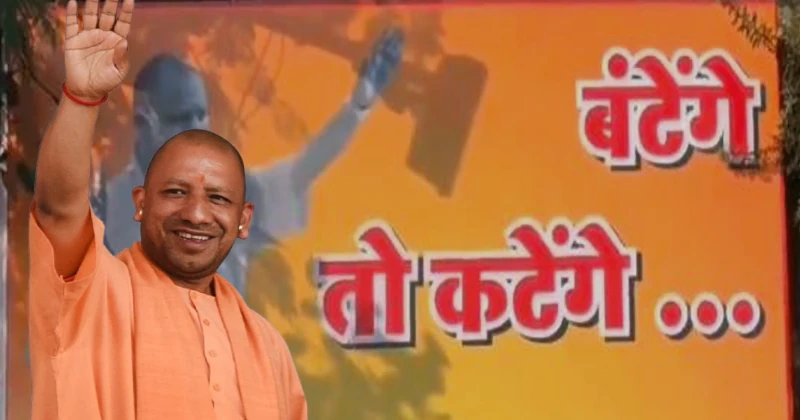
Batenge toh Katenge: ATS unveils Mumbra plot where Islamists planned to kill 40,000 Hindus by poisoning temple prasad
December 6, 2025
  • Read Ecopy
  • Circulation
  • Advertise
  • Careers
  • About Us
  • Contact Us
Android AppiPhone AppArattai
Organiser
  • ‌
  • Bharat
    • Assam
    • Bihar
    • Chhattisgarh
    • Jharkhand
    • Maharashtra
    • View All States
  • World
    • Asia
    • Europe
    • North America
    • South America
    • Africa
    • Australia
  • Editorial
  • International
  • Opinion
  • RSS @ 100
  • More
    • Op Sindoor
    • Analysis
    • Sports
    • Defence
    • Politics
    • Business
    • Economy
    • Culture
    • Special Report
    • Sci & Tech
    • Entertainment
    • G20
    • Azadi Ka Amrit Mahotsav
    • Vocal4Local
    • Web Stories
    • Education
    • Employment
    • Books
    • Interviews
    • Travel
    • Law
    • Health
    • Obituary
  • Subscribe
    • Subscribe Print Edition
    • Subscribe Ecopy
    • Read Ecopy
  • ‌
  • Bharat
    • Assam
    • Bihar
    • Chhattisgarh
    • Jharkhand
    • Maharashtra
    • View All States
  • World
    • Asia
    • Europe
    • North America
    • South America
    • Africa
    • Australia
  • Editorial
  • International
  • Opinion
  • RSS @ 100
  • More
    • Op Sindoor
    • Analysis
    • Sports
    • Defence
    • Politics
    • Business
    • Economy
    • Culture
    • Special Report
    • Sci & Tech
    • Entertainment
    • G20
    • Azadi Ka Amrit Mahotsav
    • Vocal4Local
    • Web Stories
    • Education
    • Employment
    • Books
    • Interviews
    • Travel
    • Law
    • Health
    • Obituary
  • Subscribe
    • Subscribe Print Edition
    • Subscribe Ecopy
    • Read Ecopy
Organiser
  • Home
  • Bharat
  • World
  • Operation Sindoor
  • Editorial
  • Analysis
  • Opinion
  • Culture
  • Defence
  • International Edition
  • RSS @ 100
  • Magazine
  • Read Ecopy
Home Bharat

Batenge toh Katenge: ATS unveils Mumbra plot where Islamists planned to kill 40,000 Hindus by poisoning temple prasad

The Mumbra Poison Plot, foiled by Maharashtra's Anti-Terrorism Squad, revealed a chilling attempt to kill 40,000 Hindus by poisoning prasad at a temple, driven by radicalised elements. Against this backdrop, Yogi Adityanath's call for unity through the slogan "Batenge Toh Katenge" highlights the growing tensions and the need for national cohesion in the face of rising extremism

WEBDESKWEBDESK
Nov 13, 2024, 01:00 pm IST
in Bharat
Follow on Google News
FacebookTwitterWhatsAppTelegramEmail

Against this backdrop of religious violence and radicalisation, the rhetoric of Uttar Pradesh Chief Minister Yogi Adityanath carries significant weight. Known for his hardline stance on Hindu unity and national security, Yogi Adityanath recently echoed the slogan “Batenge Toh Katenge” during a public address in Agra. The phrase, which translates to “If they (the enemies) talk, they will be cut off,” is an apt representation of his combative approach to political and religious challenges in India.

In his speech, Adityanath emphasised the need for national unity, warning against the dangers of divisiveness and the rising threat of radical forces that could destabilise the country. He compared the situation in India to the recent unrest in Bangladesh, suggesting that the mistakes made by Bangladesh in handling religious and political tensions should not be replicated in India. According to the Chief Minister, the failure to unite as a nation could lead to internal strife, which would only benefit those looking to undermine India’s sovereignty and its multi-religious fabric.

Adityanath’s rhetoric of “Batenge Toh Katenge” aims to unify Hindus in the face of perceived threats to their culture and religion. It is a clarion call to assert strength and unity, ensuring that divisive forces, particularly those who target Hindu traditions and values, do not succeed.

In July 2019, the Maharashtra Anti-Terrorism Squad (ATS) uncovered a chilling plot: ten individuals, allegedly linked to ISIS, were arrested on charges of planning a mass killing by poisoning “prasad” during a religious gathering at the ancient Shree Mumbreshwar Mahadev Temple in Mumbra, located outside Mumbai. The plot was allegedly intended to target approximately 40,000 Hindu devotees, and ATS’s preventive intervention foiled what could have been one of India’s deadliest terror attacks.

Once a predominantly Hindu settlement, Mumbra’s demographic makeup has drastically changed over the years. Today, over 80 per cent of the population is Muslim, and the area has gained notoriety as a hub of illegal construction, criminal activity, and political maneuvering. Despite its troubling transformation, Mumbra remains a region with a deep-rooted connection to its Hindu past. The name “Mumbra” is believed to have been derived from the Mumbreshwar Mahadev Temple, dedicated to Bhagwan Shiva, which has stood for centuries.

This temple, though modest in its physical stature, is an emblem of Mumbra’s Hindu heritage. It draws thousands of devotees every year, particularly during events like the Bhagwat Katha followed by a Bhandara (community feast). On this day, it is said that up to 40,000 Hindus partake in the prasad offered in devotion. However, in an alarming twist, a group of ten individuals reportedly conspired to poison the prasad, intending to kill as many Hindus as possible during the Bhandara. While law enforcement foiled the plot, the chilling nature of the attack underscores the level of hate and violence that can be incited by ideological extremism.

The ATS’s investigations revealed that the accused were allegedly radicalised and inspired by the banned preacher Zakir Naik, a controversial figure known for his extremist rhetoric and alleged influence on terror suspects. The suspects reportedly held allegiance to Daesh (ISIS) and were active on social media platforms like Telegram, where they communicated with foreign handlers, exchanged extremist propaganda, and received instructions.

The ten individuals involved in the alleged plot include Abu Hamza, identified as the group’s leader, and Talha Potrik, reportedly the mastermind. The remaining suspects—Mohsin Khan (aka Abu Marya), Atai Waris Abdul Rashid Shaikh (aka Mazhar), Mohammad Takky Khan (aka Abu Khalid), Mushahed Ul-Islam, Jamman Khutepad (aka Abu Kital), Salman Khan (aka Abu Ubeda), and Fahad Ansari—were all residents of Mumbra, with some hailing from other parts of Maharashtra, such as Aurangabad.

The ATS charge sheet documented evidence of the accused organising a closed social media group called “Ummat-E-Mohammaddiya,” which disseminated ISIS’s ideology. Only trusted members were admitted to this group, and it served as a virtual community for discussions on the Daesh ideology. Additionally, the suspects were involved in other groups, like “Wakkunuma-Assadikin” and “Iqwa-F-Deen,” which facilitated contact with ISIS handlers abroad and offered extremist training material.

The ATS found that prior to their arrests, the suspects had conducted reconnaissance around the temple. They allegedly procured explosives and received guidance through ISIS-affiliated Telegram channels on manufacturing explosives using hydrogen peroxide. Abu Hamza reportedly led blast trials in secluded areas around Mumbra, aiming to refine their skills in assembling explosive devices for potential use in the attack.

One of the accused, Mohsin Khan, allegedly attended physical training sessions at a stadium in Mumbra, designed to ready individuals for what they called “the Daesh battlefield.” This was, as per the ATS, part of a systematic process to build physical resilience, psychological resolve, and logistical readiness among sympathisers before carrying out any attacks.

The timing and target of the Mumbra poisoning plot — the prasad distributed at a Hindu temple — highlights the extremists’ desire to strike at the core of Hindu traditions and spirituality. Hindus are described as being a “tiny minority” in the area, yet their religious practices and festivals continue despite the changing demographic and political landscape.

The political environment in Maharashtra, particularly under the Mahavikas Aghadi (MVA) coalition, has been a point of contention. Critics of the coalition argue that its leadership has failed to act decisively on issues related to religious extremism, criminal activity, and illegal construction, which have contributed to the rise of places like Mumbra as hotbeds of radicalization.

The MVA’s role in addressing issues of religious harmony and security has come under scrutiny, with some accusing the coalition of downplaying the significance of such incidents or failing to take swift action against elements that incite violence.


Topics: CM YogiYogi AdityanthAnti-Terrorism SquadMumbra PoisonBatenge toh KatengeBatenge toh Katenge campaign
Share2TweetSendShareSend
✮ Subscribe Organiser YouTube Channel. ✮
✮ Join Organiser's WhatsApp channel for Nationalist views beyond the news. ✮
Previous News

ABVP urges UPPSC to address candidates’ concerns over PCS, RO/ARO exams, condemns use of force on protesters

Next News

Karnataka: HC objects to Siddaramaiah govt’s decision to allow Waqf board to issue marriage certificates 

Related News

Karnataka: Ahmed Mohiuddin Syed, who sought to ‘Separate South India’, arrested in ISIS-linked Ricin Terror plot

Uttar Pradesh: CM Yogi offers prayers to Maa Bhagwati at Gorakhnath Mandir, seeks prosperity & National welfare

Terror suspects planning to form "Mujahideen Army" arrested

UP: Four terror suspects, including Akmal Raza & Safeel Salmani, planning to form “Mujahideen Army” arrested by ATS

Uttar Pradesh: CM Yogi alleges that Islamic invasions halved Hindu population, devastated India over 800 years

CM Yogi sets three-month deadline for ‘Developed Uttar Pradesh 2047’ blueprint

Akhilesh Yadav expels Samajwadi Party MLA Pooja Pal after she praises Yogi Adityanath

Load More

Comments

The comments posted here/below/in the given space are not on behalf of Organiser. The person posting the comment will be in sole ownership of its responsibility. According to the central government's IT rules, obscene or offensive statement made against a person, religion, community or nation is a punishable offense, and legal action would be taken against people who indulge in such activities.

Latest News

PM Modi presents Putin with Bhagavad Gita, chess set, and silver horse

Cultural ties strengthened: PM Modi presents Putin with Bhagavad Gita, chess set, and silver horse

Image for representational purpose only, Courtesy Vocal Media

Bihar to get ‘Special Economic Zones’ in Buxar and West Champaran

Thirupparankundram Karthigai Deepam utsav

Andhra Pradesh: AP Dy CM Pawan Kalyan reacts to Thirupparankundram row, flags concern over religious rights of Hindus

23rd India-Russia Annual Summit

India-Russia Summit heralds new chapter in time-tested ties: Inks MoUs in economic, defence, tourism & education

DGCA orders probe into IndiGo flight disruptions; Committee to report in 15 days

BJYM leader Shyamraj with Janaki

Kerala: Widow of BJP worker murdered in 1995 steps into electoral battle after three decades at Valancherry

Russian Sber bank has unveiled access to its retail investors to the Indian stock market by etching its mutual fund to Nifty50

Scripting economic bonhomie: Russian investors gain access to Indian stocks, Sber unveils Nifty50 pegged mutual funds

Petitioner S Vignesh Shishir speaking to the reporters about the Rahul Gandhi UK citizenship case outside the Raebareli court

Rahul Gandhi UK Citizenship Case: Congress supporters create ruckus in court; Foreign visit details shared with judge

(L) Kerala High Court (R) Bouncers in Trippoonithura temple

Kerala: HC slams CPM-controlled Kochi Devaswom Board for deploying bouncers for crowd management during festival

Fact Check: Rahul Gandhi false claim about govt blocking his meet with Russian President Putin exposed; MEA clears air

Load More
  • Privacy
  • Terms
  • Cookie Policy
  • Refund and Cancellation
  • Delivery and Shipping

© Bharat Prakashan (Delhi) Limited.
Tech-enabled by Ananthapuri Technologies

  • Home
  • Search Organiser
  • Bharat
    • Assam
    • Bihar
    • Chhattisgarh
    • Jharkhand
    • Maharashtra
    • View All States
  • World
    • Asia
    • Africa
    • North America
    • South America
    • Europe
    • Australia
  • Editorial
  • Operation Sindoor
  • Opinion
  • Analysis
  • Defence
  • Culture
  • Sports
  • Business
  • RSS @ 100
  • Entertainment
  • More ..
    • Sci & Tech
    • Vocal4Local
    • Special Report
    • Education
    • Employment
    • Books
    • Interviews
    • Travel
    • Health
    • Politics
    • Law
    • Economy
    • Obituary
  • Subscribe Magazine
  • Read Ecopy
  • Advertise
  • Circulation
  • Careers
  • About Us
  • Contact Us
  • Policies & Terms
    • Privacy Policy
    • Cookie Policy
    • Refund and Cancellation
    • Terms of Use

© Bharat Prakashan (Delhi) Limited.
Tech-enabled by Ananthapuri Technologies