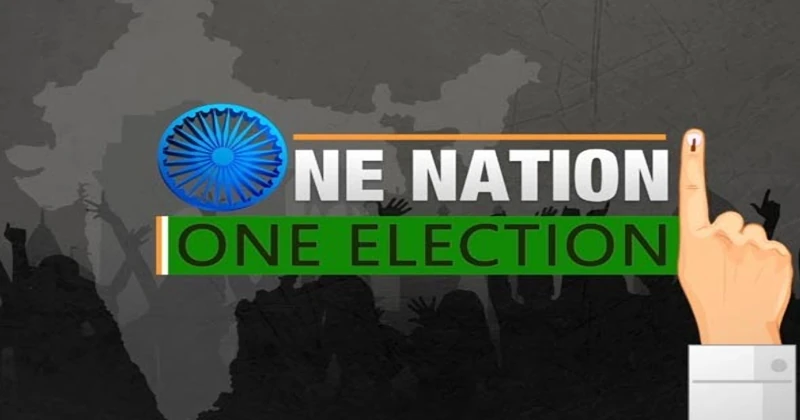
One Nation One Election: A game-changer for Democracy and its stakeholders
December 5, 2025
  • Read Ecopy
  • Circulation
  • Advertise
  • Careers
  • About Us
  • Contact Us
Android AppiPhone AppArattai
Organiser
  • ‌
  • Bharat
    • Assam
    • Bihar
    • Chhattisgarh
    • Jharkhand
    • Maharashtra
    • View All States
  • World
    • Asia
    • Europe
    • North America
    • South America
    • Africa
    • Australia
  • Editorial
  • International
  • Opinion
  • RSS @ 100
  • More
    • Op Sindoor
    • Analysis
    • Sports
    • Defence
    • Politics
    • Business
    • Economy
    • Culture
    • Special Report
    • Sci & Tech
    • Entertainment
    • G20
    • Azadi Ka Amrit Mahotsav
    • Vocal4Local
    • Web Stories
    • Education
    • Employment
    • Books
    • Interviews
    • Travel
    • Law
    • Health
    • Obituary
  • Subscribe
    • Subscribe Print Edition
    • Subscribe Ecopy
    • Read Ecopy
  • ‌
  • Bharat
    • Assam
    • Bihar
    • Chhattisgarh
    • Jharkhand
    • Maharashtra
    • View All States
  • World
    • Asia
    • Europe
    • North America
    • South America
    • Africa
    • Australia
  • Editorial
  • International
  • Opinion
  • RSS @ 100
  • More
    • Op Sindoor
    • Analysis
    • Sports
    • Defence
    • Politics
    • Business
    • Economy
    • Culture
    • Special Report
    • Sci & Tech
    • Entertainment
    • G20
    • Azadi Ka Amrit Mahotsav
    • Vocal4Local
    • Web Stories
    • Education
    • Employment
    • Books
    • Interviews
    • Travel
    • Law
    • Health
    • Obituary
  • Subscribe
    • Subscribe Print Edition
    • Subscribe Ecopy
    • Read Ecopy
Organiser
  • Home
  • Bharat
  • World
  • Operation Sindoor
  • Editorial
  • Analysis
  • Opinion
  • Culture
  • Defence
  • International Edition
  • RSS @ 100
  • Magazine
  • Read Ecopy
Home Bharat

One Nation One Election: A game-changer for Democracy and its stakeholders

The 'One Nation One Election' proposal seeks to hold simultaneous national, state, and local elections to reduce costs, streamline resources, and improve governance. While backed by many political parties, its implementation requires constitutional amendments and broad political consensus.

Dr K Venkatakrishna RaoDr K Venkatakrishna Rao
Sep 27, 2024, 07:00 pm IST
in Bharat, Opinion
Follow on Google News
FacebookTwitterWhatsAppTelegramEmail

Last week, the Union cabinet approved a high-level committee’s recommendation headed by former President of India Ramnath Kovind to implement simultaneous national, state, and local polls across India. The committee has recommended conducting Lok Sabha and state assembly elections together, followed by local body elections within a 100-day window.

The high-level committee consulted with various national and regional parties, experts, and the public and gathered feedback. Simultaneous elections are not new for India, and the agenda is not new. Till 1967, elections in India were held simultaneously. However, this practice was disrupted when several legislative assemblies were dissolved prematurely in 1968 and 1969. After that, the Election Commission of India favoured the ‘One Nation One Election’ in 1982. The law commission under Justice BP Jeevan Reddy in 1999 and then PM Vajpayee in 2003. Senior BJP leader Advani mentioned in a blog for ‘One Nation One Election’ in 2010. With cabinet approval of the Kovind committee recommendations, India moved towards ‘One Nation One Election’.

The main intuition behind the ‘One Nation One Election’ is to reduce elections’ frequency and save resources. The financial burden of frequent elections has grown substantially. A study estimated that five years election expenditure including general elections and state elections from 2024 to 2029 could be Rs 10 lakh crore. The estimated expenditure for the 2024 general elections alone by political parties and their candidates is Rs 1.35 lakh crore, significantly from the Rs 60,000 crore in the 2019 general elections. 2024 general elections expenditure surpasses the 2020 US elections expenditure, which stood at Rs 1.20 lakh crore. The political parties and their candidates could save nearly Rs 3 to 5 lakh crore if the ‘One Nation One Election’ idea is adopted. Political parties across the spectrum spared no expense to win over the seat.

Like general elections expenditures, the political parties will spend similar expenditures in state legislative elections and local body elections. Kovind’s committee suggested that simultaneous elections could help 1.5 per cent growth in the countryside, equivalent to Rs 4.5 lakh crore for a financial year, half of the government spending on public health and one-third of government spending on education. When the ‘One Nation One Election’ could reduce these costs and streamline the use of resources, including govt personnel, law enforcement persons such as employees of state governments, state police, central reserved, armed forces who are heavily involved in election duties. Frequent elections can also lead to corruption due to continuous fundraising by politicians for their campaigning and managing their followers. ‘One Nation One Election’ could reduce the number of campaigns due to simultaneous elections.

In democracy, all the political parties prioritise the vote bank and welfare politics. Due to frequent elections, governments can not function smoothly due to model code conduct (MCC); they can not make aggressive developmental activity decisions. Due to less frequent elections, state governments will have less pressure to announce populist measures or more freebies to attract the vote bank. It will also help the state for stable financial management. Simultaneous elections can simplify the voting process and reduce the misuse of the voter list, such as missing voters’ names from the electoral list.

India is not the only country that is aiming to have simultaneous elections in the world. Many countries in the world are already practising simultaneous elections. Sweden conducts national, provincial and local elections every four years together. In South Africa, national and state provincial elections are held every five years.

To Implement the ‘One Nation One Election’ concept, the Modi government has to keep more efforts now. In 2019, the Modi government had a full majority, it could have been easy in the previous government. Now, the Modi government lacks the majority and strong opposition, trying to create hurdles for him and his government. Another good thing for the Modi government in the Kovind’s committee report is 32 political parties have supported the Idea and only 15 parties have opposed the Idea in the political consultations process. To put the report into action, the government has to draft a constitutional amendment bill to amend several articles. This bill has to be passed by a two-thirds majority of parliament.

However, the government must build a broad consensus among political parties and the State Governments. To secure the consensus in the parliament, either a standing committee or joint parliamentary committee composed of various political parties for a collective bill. Apart from the parliament consensus, the union government must also work with the state governments. The constitution mandates that any amendment that affects local government elections should be ratified by at least half of the country’s state legislatures. BJP-ruled governments are more than a dozen in the country, so it may not be a big challenge for Modi’s government.
Topics: One Nation One ElectionDemocracyElection Commission of IndiaModi government
ShareTweetSendShareSend
✮ Subscribe Organiser YouTube Channel. ✮
✮ Join Organiser's WhatsApp channel for Nationalist views beyond the news. ✮
Previous News

What Bharat 6G encompasses, why it’s a Game-Changer for society, and how to achieve its goals

Next News

Odisha’s Malkangiri sees posters urging Maoists to abandon rebellion, return home and reunite with family 

Related News

The Supreme Court of India

Supreme Court allows extra support for overburdened BLOs, says SIR duties are mandatory for government staff

A representative image

‘One Nation, One Election’ gets constitutional green signal from law commission

Leader of Oppositon in the West Bengal Assembly, Suvendu Adhikari

BJP writes to Election Commission, alleges ‘Undue influence’ in Bengal SIR of voter rolls

For decades, tribals lived under the fear of
Maoist terrorism often becoming victim of this violence

Red Terror: Manipulations and mutilation by Maoists

From Power to Service: PMO becomes ‘Seva Teerth’ as India shifts focus on governance with citizen-first vision

Lakshadweep becomes first UT to complete 100 per cent SIR, sets new national standard in electoral preparedness

Load More

Comments

The comments posted here/below/in the given space are not on behalf of Organiser. The person posting the comment will be in sole ownership of its responsibility. According to the central government's IT rules, obscene or offensive statement made against a person, religion, community or nation is a punishable offense, and legal action would be taken against people who indulge in such activities.

Latest News

Chhattisgarh CM Vishnu Deo Sai at Panchjanya Conclave, Nava Raipur, Image Courtesy - Chhattisgarh govt

Panchjanya Conclave: Chhattisgarh CM Sai shares views on development projects in Maoist hotbed, women empowerment

Union Finance Minister Nirmala Sitharaman

‘TMC is holding Bengal back’: Sitharaman slams Mamata govt over industrial & healthcare setbacks

Karnataka: Muslim youth Mohammed Usman accused of sexual assault, blackmail & forced conversion in Bengaluru

Social Justice Is a cover; Anti-Sanatana dharma is the DMK’s real face at Thirupparankundram

Karnataka: Hindus demand reclaiming of Anjaneya Mandir at the site of Jamia Masjid; Setting wrongs of Tipu Sultan right

Assam govt proscribes all forms of Jihadi literatures in state; Islamic terror groups trying to recruit Muslim youth

Retired Subedar held for leaking Army details to Pak handlers posing as Indians

Gujarat ATS dismantles spy network involving Ex-Army personnel and woman for sharing information with Pakistan

Economic freefall of West Bengal: Mamata’s “Paribartan” turns to crisis; 207 Companies gone in six months

Prime Minister Narendra Modi and Russian President Vladimir Putin

India on the side of “peace” in Russia-Ukraine conflict, PM Modi asserts for swift peaceful solution

Russian Economic Development Minister Maxim Reshetnikov and Commerce and Industry Minister Piyush Goyal

Piyush Goyal holds talks with Russian counterpart, discusses cooperation in textiles, automobiles and agriculture

Load More
  • Privacy
  • Terms
  • Cookie Policy
  • Refund and Cancellation
  • Delivery and Shipping

© Bharat Prakashan (Delhi) Limited.
Tech-enabled by Ananthapuri Technologies

  • Home
  • Search Organiser
  • Bharat
    • Assam
    • Bihar
    • Chhattisgarh
    • Jharkhand
    • Maharashtra
    • View All States
  • World
    • Asia
    • Africa
    • North America
    • South America
    • Europe
    • Australia
  • Editorial
  • Operation Sindoor
  • Opinion
  • Analysis
  • Defence
  • Culture
  • Sports
  • Business
  • RSS @ 100
  • Entertainment
  • More ..
    • Sci & Tech
    • Vocal4Local
    • Special Report
    • Education
    • Employment
    • Books
    • Interviews
    • Travel
    • Health
    • Politics
    • Law
    • Economy
    • Obituary
  • Subscribe Magazine
  • Read Ecopy
  • Advertise
  • Circulation
  • Careers
  • About Us
  • Contact Us
  • Policies & Terms
    • Privacy Policy
    • Cookie Policy
    • Refund and Cancellation
    • Terms of Use

© Bharat Prakashan (Delhi) Limited.
Tech-enabled by Ananthapuri Technologies