One Nation or One Election: What opposition fears?
June 6, 2026
  • Read Ecopy
  • Circulation
  • Advertise
  • Careers
  • About Us
  • Contact Us
Android AppiPhone AppArattai
Organiser
  • ‌
  • Bharat
    • Assam
    • Bihar
    • Chhattisgarh
    • Jharkhand
    • Maharashtra
    • View All States
  • World
    • Asia
    • Europe
    • North America
    • South America
    • Africa
    • Australia
  • Editorial
  • International
  • Opinion
  • RSS @ 100
  • More
    • Op Sindoor
    • Analysis
    • Sports
    • Defence
    • Politics
    • Business
    • Economy
    • Culture
    • Special Report
    • Sci & Tech
    • Entertainment
    • G20
    • Azadi Ka Amrit Mahotsav
    • Vocal4Local
    • Web Stories
    • Education
    • Employment
    • Books
    • Interviews
    • Travel
    • Law
    • Health
    • Obituary
  • Subscribe
    • Subscribe Print Edition
    • Subscribe Ecopy
    • Read Ecopy
  • ‌
  • Bharat
    • Assam
    • Bihar
    • Chhattisgarh
    • Jharkhand
    • Maharashtra
    • View All States
  • World
    • Asia
    • Europe
    • North America
    • South America
    • Africa
    • Australia
  • Editorial
  • International
  • Opinion
  • RSS @ 100
  • More
    • Op Sindoor
    • Analysis
    • Sports
    • Defence
    • Politics
    • Business
    • Economy
    • Culture
    • Special Report
    • Sci & Tech
    • Entertainment
    • G20
    • Azadi Ka Amrit Mahotsav
    • Vocal4Local
    • Web Stories
    • Education
    • Employment
    • Books
    • Interviews
    • Travel
    • Law
    • Health
    • Obituary
  • Subscribe
    • Subscribe Print Edition
    • Subscribe Ecopy
    • Read Ecopy
Organiser
  • Home
  • Bharat
  • World
  • Operation Sindoor
  • Editorial
  • Analysis
  • Opinion
  • Culture
  • Defence
  • International Edition
  • RSS @ 100
  • Magazine
  • Read Ecopy
Home Politics

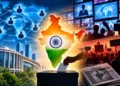
One Nation or One Election: What opposition fears?

The Congress pursues a policy of exacerbating regionalism and encourages caste, religion, and gender disparities in Bharat. If the Congress intends to carry out such agendas to get power, elections should be held at states and centre at different periods. Therefore, Congress is opposing the idea of one nation one election.

Dr Vishnu AravindDr Vishnu Aravind
Sep 22, 2024, 07:00 pm IST
in Politics, Bharat
Follow on Google News
FacebookTwitterWhatsAppTelegramEmail

The Union Cabinet has finally approved the Kovind Committee report on ‘One Nation, One Election.’ One of Congress’s and other opposition parties’ major arguments against it is that it is unsuited for a country as diverse as Bharat. They argue that a unified policy is impractical given a country’s diversity. However, they are unaware that such a system functions well in many socially diverse countries. For example, Sweden has combined county and municipal elections every four years. Every five years, South Africa has elections for the national legislature, municipal councils, and province governments. Indonesia’s constitution was amended in 2019 to ensure that parliamentary and presidential elections are held together every five years. Belgium’s federal parliamentary elections are conducted every five years, along with the European Union’s parliamentary elections. Besides, Germany, Italy, the Philippines, Costa Rica, Bolivia, Guatemala, and the United States have similar systems but different variants. Are Congress and other opposition parties daring to say these countries have no social diversity?

Indeed, it is the concept of ‘one nation’, not a ‘single election’, that Congress is afraid of and has tried to eliminate. The Congress and its allies use the diversity of Indian society to justify opposing every new policy or idea in our country. If those who listen to these arguments believe that social diversity exists solely in India, they cannot be faulted. By purposefully ignoring the truth that all countries in the globe, including Europe, America, Africa, and Islamic countries, are equally diverse as India, these people have imprinted this narrative on the minds of every Indian for decades. Moreover, the same people are putting forward a new argument, saying that all the new ideas are part of the BJP’s agenda.

One Nation One Election: A New Idea?

‘One Nation One Election’ is not a new concept in India. The only difference is that a process in exercise between 1952 and 1967 is now being legalized, and the required framework is being established. However, the Congress and other opposing parties claim this is the BJP’s agenda. These parties should remember that this idea existed before a political party called the BJP. We had joint elections for the Lok Sabha and state assemblies in 1951-52, 1957, 1962, and 1967. That changed when several state legislatures and the Lok Sabha were dissolved early. However, in the 1980s, there was a growing clamour to revert to the old system. In 1983, the Election Commission advocated simultaneous elections. In 1999, the then-Law Commission, led by Justice BP Jeevan Reddy, favoured the same. In 2003, then-Prime Minister Atal Bihari Vajpayee attempted to execute a solution with Congress, but it did not materialize. In 2010, BJP leader L.K. Advani supported this, and the BJP included this in the 2014 Lok Sabha election manifesto. In 2015, the Parliamentary Committee on Law and Justice also backed it. Besides, certain political parties proposed simultaneous elections in an all-party conference hosted by the Law Commission in 2018. Moreover, since 2016, Prime Minister Narendra Modi has hosted multiple meetings to implement this and raise public awareness of its importance.

Opposition Needs a Divided Bharat

The Congress-Communist parties loathed and despised the ideals of one nation and nationalism. The politics practised by Congress and its leaders, particularly Rahul Gandhi, during the last decade has been divisive. Their goal has been to get votes by propagating anti-nationalism in the Northeast, demanding caste censuses in the northern states, appeasing minorities, and instilling fear of Hindu communalism in Southern states. Furthermore, the Congress has long maintained a policy of accentuating regionalism. This Congress approach has resulted in the birth of several regional parties and years of unstable rule at the Centre. As a result, Congress plans can only be implemented when elections are held in several states across the country at different periods. This is because the Congress cannot treat India as a unified entity or pursue the same policies as the BJP nationwide. The Congress exists only when India is divided and fuels local matters and ultra-regionalism. The Tamil parties highlighting the Dravidian theory, the communist parties underlining the regional argument ‘this is Kerala’, the Muslim League, the Kashmir National Conference, and the PDP promoting Muslim politics all need to keep India divided. Therefore, the opposition advocates for annual elections in the nation. The recent election in Jammu and Kashmir is a case in point. The Congress era is defined by granting constitutional sanction to separatism via Articles 370 and 35 (A), forcing the Muslim community into terrorism, recruiting Muslim youth to Pakistan, and displacing Kashmiri Pandits from the state. The Congress’ electoral promise is to restore that period through 370, signalling a similar agenda for separatism and regionalism. Pakistan’s Defence Minister, Khwaja Asif, also backed this, reflecting a similar interest. Similarly, during his recent visit to the United States, Rahul Gandhi made remarks about segregating Sikhs from India to pacify Khalistan’s militants. This divisive politics can only save Congress in the future. As a result, the Congress and other opposition parties will only be relevant in elections if India remains divided along caste, religious, regional, and gender lines and elections are held regularly in different states. Therefore, they will use every measure necessary to oppose the ‘One Nation One Election’ idea.

Necessary Change Over Time

The Indian Constitution has been framed to accommodate the changes of every era. What is wrong with adapting a joint election system to a country with a population of 140 crores? Frequent elections have an adverse impact on India’s economic growth and pollute its socio-communal environment. With the implementation of the new system, it will be possible to cut election costs, save time, increase voter involvement, and ensure better governance for elected governments. However, the Congress-Communists’ arguments that the nation’s diversity will be affected, democracy will die, and this is the BJP’s agenda are illogical.

Topics: BJPcongress partyOne Nation One Election
Share5TweetSendShareSend
✮ Subscribe Organiser YouTube Channel. ✮
✮ Join Organiser's WhatsApp channel for Nationalist views beyond the news. ✮
Previous News

PM Modi’s US Visit: India’s rising geopolitical clout has radically shifted balance of power in Indo-US relations

Next News

The Fight for Hindu Rights: Tirupati prasadam controversy

Related News

Change of Guard in Punjab BJP: Challenges, opportunities and the road ahead

BJP meets Governor over Karnataka’s Ladle Mashak Dargah case withdrawal

Karnataka Dargah Dispute: BJP complaints to governor over case withdrawal by govt, alleges insult to Hindu sentiments

Veteran actress, dancer and Padma Shri awardee Mamata Shankar has openly expressed her admiration for the Rashtriya Swayamsevak Sangh (RSS), stating that she strongly supports its ideals, discipline and efforts to preserve India's cultural heritage

Exclusive: BJP and RSS will preserve our culture; I support their ideals and work — Mamata Shankar

Himachal Municipal Election Results: BJP sweeps Dharamshala, Mandi & Solan; Congress retains Palampur

Keralam: BJP Mayor launches massive anti-drug crackdown near schools

Mamata Banerjee purportedly yelled at a Kolkata hospital's CEO after Abhishek Banerjee was shifted there following the attack on him. (Photos: PTI)

West Bengal: Mamata Banerjee’s alleged threat to hospital CEO goes viral after Abhishek Banerjee attack

Load More

Latest News

Inspired by Bhagwan Shiva's teachings, this ancient breathing practice helps calm the mind and reduce stress

Ancient Yogic Breathing for Modern Stress: How the Shiva method cultivates peace & self-awareness

The Vedic age saw remarkable women sages, known as Rishikas, who composed hymns and shaped India's spiritual and philosophical heritage

Rishikas of Vedic Age: How Gargi, Maitreyi & other women shaped ancient India’s spiritual and philosophical tradition

Police in AAP-Ruled state of Punjab lathi charge sit-in protesters

Punjab: ITI candidates seeking jobs lathi-charged outside PSPCL HQ; opposition slams AAP Govt over police action

From constables to DGP, India's police system follows a structured chain of command that governs law enforcement across the country

From Constable to DGP: Understanding India’s police hierarchy, powers & recruitment system

The terracotta dice that challenges historical assumptions and highlights India's millennia-old civilisational heritage

How a 4,500-year-old terracotta dice is reviving the debate on India’s civilisational continuity & Vedic heritage

The Porumamilla inscription and the ancient science behind a reservoir that survived 650 years

India’s 655-Year-Old Water Policy: The Porumamilla inscription that turned stone into a manual of hydrology

India’s Permanent Representative to the United Nations Ambassador Harish Parvathaneni

India slams Pakistan at UNSC for peddling false narratives on Jammu & Kashmir

Keralam: Pathanamthitta temple property occupied beyond lease period reclaimed by devotees

A series of high-level engagements signals New Delhi's growing focus on building interoperable security networks across the Indo-Pacific

India strengthens Indo-Pacific security architecture with new defence and maritime partnerships

Prime Minister Narendra Modi

“Makes every Indian proud”: PM Modi hails India’s 7.7 per cent GDP growth in FY 2025-26

Load More
  • Privacy
  • Terms
  • Cookie Policy
  • Refund and Cancellation
  • Delivery and Shipping

© Bharat Prakashan (Delhi) Limited.
Tech-enabled by Ananthapuri Technologies

  • Home
  • Search Organiser
  • Bharat
    • Assam
    • Bihar
    • Chhattisgarh
    • Jharkhand
    • Maharashtra
    • View All States
  • World
    • Asia
    • Africa
    • North America
    • South America
    • Europe
    • Australia
  • Editorial
  • Operation Sindoor
  • Opinion
  • Analysis
  • Defence
  • Culture
  • Sports
  • Business
  • RSS @ 100
  • Entertainment
  • More ..
    • Sci & Tech
    • Vocal4Local
    • Special Report
    • Education
    • Employment
    • Books
    • Interviews
    • Travel
    • Health
    • Politics
    • Law
    • Economy
    • Obituary
  • Subscribe Magazine
  • Read Ecopy
  • Advertise
  • Circulation
  • Careers
  • About Us
  • Contact Us
  • Policies & Terms
    • Privacy Policy
    • Cookie Policy
    • Refund and Cancellation
    • Terms of Use

© Bharat Prakashan (Delhi) Limited.
Tech-enabled by Ananthapuri Technologies