





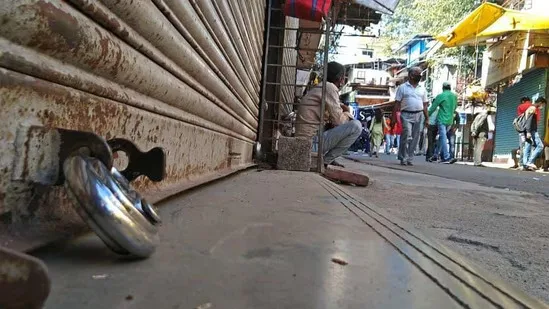
The Reservation Bachao Sangharsh Samiti has called for a “Bharat Bandh” (nationwide shutdown) on August 21 to protest against the Supreme Court’s ruling, which endorses the creation of sub-quotas within reserved categories. The Court ruled on August 1 that states could prioritise those who are most in need within the SC and ST categories. The National Confederation of Dalit and Adivasi Organisations (NACDAOR) has outlined a series of demands, including justice and equity for Scheduled Castes (SCs), Scheduled Tribes (STs), and Other Backward Classes (OBCs).
NACDAOR opposes a recent Supreme Court judgment by a seven-judge bench, which they argue undermines the landmark Indira Sawhney case decided by a nine-judge bench that established the framework for reservations in India.
Here are the answers to all your questions in mind
1. What is the concept of ‘Quota within Quota’?
‘Quota within Quota’ refers to the subdivision of existing reservation quotas to provide more targeted benefits to specific sub-groups within a broader category. For example, within the SC or OBC reservation, certain underrepresented or disadvantaged sub-castes might receive a separate, designated quota. This ensures that benefits reach the most marginalised groups within these categories, who might otherwise be overshadowed by relatively better-off sub-groups.
2. What did the Supreme Court rule regarding ‘Quota within Quota’?
On August 1, 2024, the Supreme Court of India upheld the right of state governments to create sub-quotas within reserved categories such as SCs and OBCs. The ruling gives states the flexibility to allocate a portion of the reserved quota to specific sub-castes within the category, provided there is empirical data supporting the need for such subdivision. The Court emphasised that this measure is voluntary and should be based on a careful assessment of social and educational backwardness within the categories. The judgment heralds a potential widening and deepening of the constitutional guarantee of equality — sub-classification, it says, must be seen as a facet of equality, not its violation, and as a movement towards its more substantive version, by expanding the sphere and scope of reservation to ensure that its benefits reach those who need it most.
3. How did the case on sub-quotas or categorisation come before the Supreme Court?
In 1975, the Congress government in Punjab, led by Giani Jail Singh, decided to allocate half of the seats reserved for SCs to Mazhabi Sikhs and Valmiki communities. This continued until 2006 when the Punjab and Haryana High Court halted it. In response, there was a significant movement in Punjab, leading to the enactment of The Punjab Scheduled Castes and Backward Classes (Reservation in Services) Act, 2006 by the Congress government under Amarinder Singh. In 2010, Devinder Singh from the Chamar Mahasabha challenged the 50 per cent quota allocation, and the High Court stayed Section 4(5) of the law. The Punjab government then took the case to the Supreme Court, and it progressed to a 7-judge bench, with hearings starting in February 2024. On August 1, the Supreme Court ruled that states have the freedom to create sub-quotas. The Court can also review the status of castes benefiting from such quotas.
3. What led to the Bharat Bandh on this issue?
The Bharat Bandh was primarily organised by groups opposed to the concept of the ‘Creamy Layer’ within the OBC category, and the demand for its implementation in SC/ST reservations. There was also opposition to the Supreme Court’s August 1 ruling, as some communities feared that ‘Quota within Quota’ would lead to fragmentation and reduce their share of reservation benefits. The bandh organisers demanded that the Creamy Layer principle not be applied to SC/ST reservations and that the existing reservation structure remain untouched.
4. Who organised the Bharat Bandh and what are their demands?
The Bharat Bandh is organised by various community groups and political organisations that are against the implementation of the Creamy Layer in SC/ST reservations. Prominently by the Reservation Bachao Sangharsh Samiti and National Confederation of Dalit and Adivasi Organisations (NACDAOR). They also oppose the subdivision of quotas, fearing it might diminish their access to reservation benefits. Their key demands include the rejection of the Creamy Layer for SC/ST reservations, maintaining the current reservation system without further sub-categorisation, and ensuring that the most marginalised communities within SC/ST categories continue to receive benefits.
5. What are the objections of the disadvantaged SC-ST castes against the Bandh?
These communities argue that they have been advocating for this for a long time and have fought legal battles. They believe that representation proportional to their population is their right. They also expressed frustration that they were not consulted before the call for the Bharat Bandh.
6. What is the ‘Creamy Layer’ and how does it apply to reservations?
The ‘Creamy Layer’ refers to the relatively wealthier and more educated sections within a reserved category, particularly the OBCs, who are excluded from reservation benefits. This concept was introduced to ensure that only the genuinely disadvantaged within OBCs benefit from reservations. There has been a debate on whether the ‘Creamy Layer’ concept should be extended to SC/ST reservations, which has been a contentious issue.
7. What is sub-quota or categorisation?
It involves setting a specific quota for underrepresented castes within a category. For example, within the 16 per cent SC reservation, 4 per cent might be allocated to disadvantaged SC castes like Nayak, Mochi, Valmiki, Dhobi, Balai, Chandal, Nat, etc.
8. What is the basis for creating sub-quotas within reserved categories?
The creation of sub-quotas within reserved categories must be based on empirical data that demonstrates the relative backwardness or underrepresentation of certain sub-castes within the broader category. This data could include socio-economic indicators, educational attainment, and access to employment opportunities. The Supreme Court has mandated that any sub-quotas should be carefully justified with such data to ensure that they genuinely benefit the most disadvantaged groups.
9. What are some examples of “Quota within Quota”?
One prominent example is the categorisation of OBCs into ‘Creamy Layer’ and ‘Non-Creamy Layer,’ with reservations primarily benefiting the latter. Additionally, within the Scheduled Castes (SC) category in states like Tamil Nadu, there is a separate sub-quota for Arunthathiyars, who are considered more marginalised within the SC community.
10. How did the Supreme Court justify its ruling on sub-quotas?
The Supreme Court justified its ruling by pointing out the need for states to address disparities within reserved categories. The Court emphasised that reservation policies should evolve to reflect the changing socio-economic realities within these communities. By allowing states to create sub-quotas, the Court aimed to ensure that reservation benefits are more equitably distributed among sub-groups that might otherwise remain marginalised.
11. How have different states responded to the Supreme Court’s ruling?
States like Haryana have already initiated steps to implement sub-quotas within their SC reservations, allocating specific percentages to underrepresented castes based on detailed surveys. Other states are studying the implications of the ruling and may follow suit based on their specific socio-political contexts. The decision to implement sub-quotas is voluntary, and states are likely to consider both political and social factors before making changes.
12. If sub-quota seats are not filled (NFS), will they revert to the general category?
No, unfilled seats within the sub-quota will be converted back to the SC category and filled by other SC castes. The sub-quota essentially gives first preference to disadvantaged castes, and if positions are not filled by them, they are filled by other SC castes.
13. What if the state governments misuse sub-quotas for political gain by adding castes for vote-bank purposes?
According to the Supreme Court, only those castes identified as disadvantaged SCs based on survey data can be included in sub-quotas. The Supreme Court halted the Karnataka government’s decision to allocate a separate quota to some castes without sufficient data.
14. What is the future of “Quota within Quota” in India?
The future of “Quota within Quota” is likely to involve more nuanced and data-driven approaches to ensure that all deserving communities within reserved categories receive their due share of opportunities. As demands for greater inclusion and representation grow, both at the state and central levels, the concept of “Quota within Quota” may see wider application and refinement.













Comments