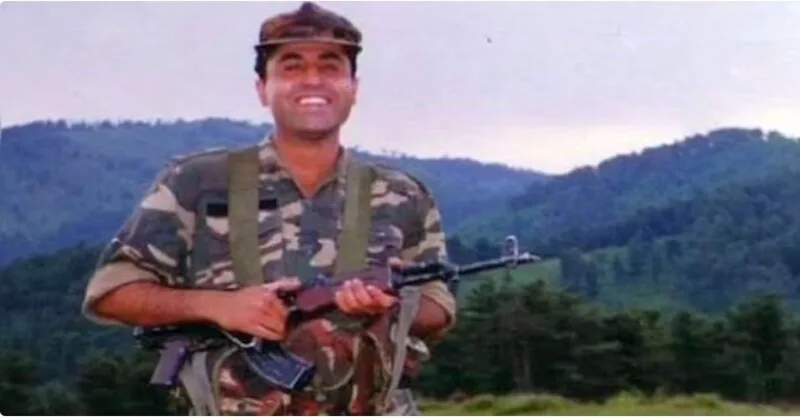
A couple of years ago, the Central government decided to name 21 largest unnamed islands of Andaman and Nicobar after the 21 extraordinary men who have received Param Vir Chakras till date. One of the islands is now named Batra island after Captain Vikram Batra of 13 JAK RIF who was awarded PVC posthumously for conspicuous bravery on July 7, 1999, in the Drass sector during Kargil war.
The government college in Palampur (Himachal Pradesh) where Batra had studied has also been named as Shaheed Captain Vikram Batra Government College, Palampur. The historic Point 4875 is today named Batra Top in his honour. Besides, a hall at the Service Selection Centre Allahabad is named ‘Vikram Batra Block’ and the combined cadet’s mess at the IMA is named ‘Vikram Batra Mess’. Who was this man larger than life who had so many landmarks named after him?
Also Read: Budget 2024: Government aims for economic optimism with RBI’s financial support
For knowing more about him, we will have to look back at what he did 25 years ago which immortalised him. The Param Vir Chakra citation of Captain Vikram Batra of 13 JAK RIF reads:
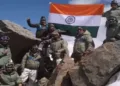
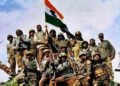
During ‘Operation Vijay’, on 20 June 1999, Captain Vikram Batra, Commander Delta Company was tasked to attack Point 5140. Captain Batra with his company skirted around the feature from the East and maintaining surprise reached within assaulting distance of the enemy. Captain Batra reorganised his column and motivated his men to physically assault the enemy positions. Leading from the front, he in a daredevil assault, pounced on the enemy and killed four of them in a hand-to hand fight.
On 7 July 1999, in another operation in the area Pt 4875, his company was tasked to clear a narrow feature with sharp cuttings on either side and heavily fortified enemy defences that covered the only approach to it. For speedy operation, Captain Batra assaulted the enemy position along a narrow ridge and engaged the enemy in a fierce hand –to-hand fight and killed five enemy soldiers at point blank range. Despite sustaining grave injuries, he crawled towards the enemy and hurled grenades clearing the position with utter disregard to his personal safety, leading from the front, he rallied his men and pressed on the attack and achieved a near impossible military task in the face of heavy enemy fire. The officer, however, succumbed to his injuries. Inspired by his daredevil act, his troops fell upon the enemy with vengeance, annihilated them and captured Point 4875.
Captain Vikram Batra, thus, displayed the most conspicuous personal bravery and leadership of the highest order in the face of the enemy and made the supreme sacrifice in the highest traditions of the Indian Army.
We learn from this citation that it was not one, but two occasions, on June 20 and July 7 (in 1999) that Captain Vikram Batra had been involved in close combat successfully. On the second occasion, it was in an attempt to evacuate an injured soldier that Captain Batra lost his life. He is perhaps one of the best known martyrs of the Kargil war whom Lieutenant General Y K Joshi paid tribute by flying over Batra Top in 2021. Lt Gen Joshi was Northern Command chief when he flew over Batra Top in a Sukhoi 30- MK I and he was Lt Col Joshi, Commanding Officer (CO) of 13 JAK RIF when the Kargil war happened.
`Yeh dil maange more’ was what Capt Batra used to communicate the success of his mission on June 20. These words, actually the slogan of a popular aerated drink, made him famous as they were beamed over cable TV across the world. Explaining these words, Captain Batra said in an interview later that his troops said these words as they were supremely charged and raring to go. There were only a few enemy bunkers to be captured and the soldiers wanted more!
When a smiling Captain Batra was shown saying these words, there was a huge surge of pride and patriotism among the Indians. When he died almost a fortnight later after saying these words `Yeh dil maange more’, the channels repeatedly showed that interview. In today’s language, these words went viral in an unprecedented manner.