Researchers find how areas of brain are associated with helping decisions
June 9, 2026
  • Read Ecopy
  • Circulation
  • Advertise
  • Careers
  • About Us
  • Contact Us
Android AppiPhone AppArattai
Organiser
  • ‌
  • Bharat
    • Assam
    • Bihar
    • Chhattisgarh
    • Jharkhand
    • Maharashtra
    • View All States
  • World
    • Asia
    • Europe
    • North America
    • South America
    • Africa
    • Australia
  • Editorial
  • International
  • Opinion
  • RSS @ 100
  • More
    • Op Sindoor
    • Analysis
    • Sports
    • Defence
    • Politics
    • Business
    • Economy
    • Culture
    • Special Report
    • Sci & Tech
    • Entertainment
    • G20
    • Azadi Ka Amrit Mahotsav
    • Vocal4Local
    • Web Stories
    • Education
    • Employment
    • Books
    • Interviews
    • Travel
    • Law
    • Health
    • Obituary
  • Subscribe
    • Subscribe Print Edition
    • Subscribe Ecopy
    • Read Ecopy
  • ‌
  • Bharat
    • Assam
    • Bihar
    • Chhattisgarh
    • Jharkhand
    • Maharashtra
    • View All States
  • World
    • Asia
    • Europe
    • North America
    • South America
    • Africa
    • Australia
  • Editorial
  • International
  • Opinion
  • RSS @ 100
  • More
    • Op Sindoor
    • Analysis
    • Sports
    • Defence
    • Politics
    • Business
    • Economy
    • Culture
    • Special Report
    • Sci & Tech
    • Entertainment
    • G20
    • Azadi Ka Amrit Mahotsav
    • Vocal4Local
    • Web Stories
    • Education
    • Employment
    • Books
    • Interviews
    • Travel
    • Law
    • Health
    • Obituary
  • Subscribe
    • Subscribe Print Edition
    • Subscribe Ecopy
    • Read Ecopy
Organiser
  • Home
  • Bharat
  • World
  • Operation Sindoor
  • Editorial
  • Analysis
  • Opinion
  • Culture
  • Defence
  • International Edition
  • RSS @ 100
  • Magazine
  • Read Ecopy
Home World

Researchers find how areas of brain are associated with helping decisions

Researchers have pinpointed a specific brain region crucial for our willingness to assist others, revealed through a study involving patients with damage to that area

WEBDESKWEBDESK
Jul 1, 2024, 11:00 pm IST
in World, Health
Follow on Google News
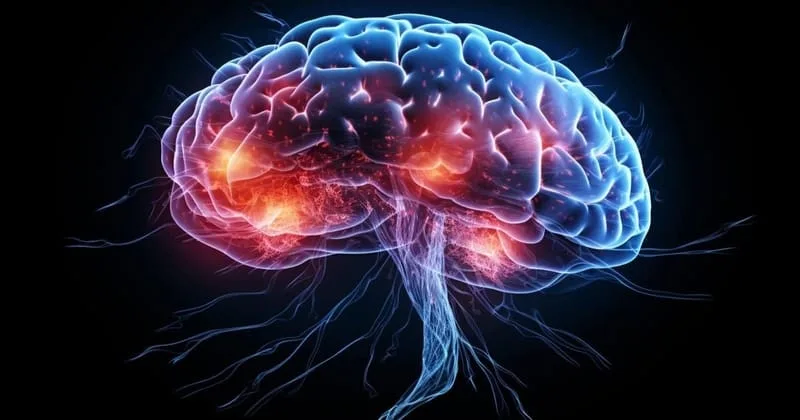
Representative image

Representative image

FacebookTwitterWhatsAppTelegramEmail

Researchers found that a particular brain region–which they identified through a study of patients who had brain damage to that region–controls our willingness to assist others.

Understanding the areas of the brain associated with “helping” decisions is crucial to comprehend how people could be inspired to take on major global issues like infectious diseases, climate change, and international conflict. It is also necessary to discover novel treatments for social interaction difficulties.

Researchers from the Universities of Birmingham and Oxford conducted the study, which was published in Nature Human Behaviour. It demonstrates for the first time how the ventromedial prefrontal cortex (vmPFC), a brain region, plays a crucial role in helpful or “prosocial,” activities.

Lead author Professor Patricia Lockwood said: “Prosocial behaviours are essential for addressing global challenges. Yet helping others is often effortful and humans are averse to effort. Understanding how effortful helping decisions are processed in the brain is extremely important.”

In the study, the researchers focused on the vmPFC, a region located right at the front of the brain, which is known to be important for decision-making and other executive functions. Previous studies using magnetic resonance imaging (MRI scanning) have linked the vmPFC to choices that involve a trade-off between the rewards available and the effort required to obtain rewards. However, these techniques cannot show whether a part of the brain is essential for these functions.

Three groups of participants were recruited for the study. 25 patients had vmPFC damage, 15 patients had damage elsewhere in the brain, and 40 people were healthy age and gender-matched control participants. These groups allowed the researchers to test the impact of damage to vmPFC specifically.

Each participant attended an experiment where they met another person anonymously. They then completed a decision-making task that measured how willing they were to exert physical effort (squeezing a grip force device) to earn rewards (bonus money) for themselves and for the other person.

By enabling participants to meet – but not see – the person they were ‘working’ for in advance, researchers were able to convey the sense that participants’ efforts would have real consequences, but hide any information about the other person that could affect decision-making.
Each choice the participants made varied in how much bonus money for them or the other person was available, and how much force they would have to exert to obtain the reward. This allowed the researchers to measure the impact of reward and effort separately, and to use advanced mathematical modelling to precisely quantify people’s motivation.

The results of the study clearly showed that the vmPFC was necessary for motivation to help others. Patients with vmPFC damage were less willing to choose to help others, exerted less force on even after they did decide to help, and earned less money to help others compared to the control groups.

In a further step, the researchers used a technique called lesion symptom mapping, which enabled them to identify even more specific subregions of the vmPFC where damage made people particularly antisocial and unwilling to exert effort for the other person. Surprisingly, damage to a nearby but different subregion made people relatively more willing to help.

Also Read: Enhancing Nerve Health: Ayurvedic herbs for alleviating weakness

Co-lead author Dr Jo Cutler said: “As well as better understanding prosocial motivation, this study could also help us to develop new treatments for clinical disorders such as psychopathy, where understanding the underlying neural mechanisms can give us new insights into how to treat these conditions.”

“This region of the brain is particularly interesting because we know that it undergoes late development in teenagers, and also changes as we get older,” added Professor Lockwood. “It will be really interesting to see whether this area of the brain can also be influenced by education – can we learn to be better at helping others?”

(with inputs from ANI)


Topics: Behaviour disordersHuman brainBrain structureSocial decision makingNeurological disorder
ShareTweetSendShareSend
✮ Subscribe Organiser YouTube Channel. ✮
✮ Join Organiser's WhatsApp channel for Nationalist views beyond the news. ✮
Previous News

VK Saxena Defamation Case: Court sentences Medha Patkar to 5 months imprisonment, orders to pay Rs 10 lakh compensation

Next News

Lok Sabha Polls: Expansionist TMC chief Mamata Banerjee eyes Hindi belt, turns ‘thorn’ for Congress

Related News

Representative image

Study observes possible foundations of human intelligence

Study finds new design of computer memory that reduce energy consumption

Load More

Latest News

Accused Nida Khan reportedly admits taking victim for religious instruction, teaching Islamic rituals

Nashik TCS Corporate Jihad: ‘I taught her how to do namaz,’ says Nida Khan; victim pressured to observe 30 ramzan roza

Germany: Sri Ganesha temple opens in Berlin: Europe’s largest Hindu Mandir reflects India’s cultural & dharmic spirit

Rajasthn | RSS centenary journey embodies dedication to nation-building: Dr Ramesh Agrawal

Decades of illegal infiltration from Bangladesh have driven profound demographic shifts in Assam, fundamentally altering its religious, linguistic, and political landscape

Unnatural demographic change: The termite threat

The Rs 200-crore MAHA Water Mission seeks to boost water security and democratise research funding in India

From Rigveda to Research Labs: How ANRF’s Rs 200 crore water mission is securing India’s future

(Right) Prakhar Shrivastava, Senior Consulting Editor and Anchor at Delhi Doordarshan Kendra at a Narada Jayanti programme in Guwahati (Left) Prakahar Srivastava addressing the gathering

Narada Jayanti by VSK Assam: “Half-truths more dangerous than lies,” says senior journalist Prakhar Shrivastava

Everest Survivor being taken to the hospital on a stretcher

Everest Survivor ICU Interview: BBC under fire for interviewing Sherpa without family’s consent

Phillipines Earthquake: 7.8 magnitude deadly earthquake leaves 15 dead, 200 injured; Rescue operation underway

Shamli Conversion Case: 'I studied Islam on YouTube,' says Ayush Malik as family alleges grooming

Shamli Conversion Case: ‘I studied Islam on YouTube,’ says Ayush Malik, now Mohammad Ali, as family alleges grooming

RSS functionaries on the stage at samapan samaroh of Sangh Shiksha Varg and Karyakarta Vikas Varg–Pratham at Sambalpur.

Awakening of Lokshakti is essential for building a glorious Bharat: Dr Gopal Prasad Mahapatra

Load More
  • Privacy
  • Terms
  • Cookie Policy
  • Refund and Cancellation
  • Delivery and Shipping

© Bharat Prakashan (Delhi) Limited.
Tech-enabled by Ananthapuri Technologies

  • Home
  • Search Organiser
  • Bharat
    • Assam
    • Bihar
    • Chhattisgarh
    • Jharkhand
    • Maharashtra
    • View All States
  • World
    • Asia
    • Africa
    • North America
    • South America
    • Europe
    • Australia
  • Editorial
  • Operation Sindoor
  • Opinion
  • Analysis
  • Defence
  • Culture
  • Sports
  • Business
  • RSS @ 100
  • Entertainment
  • More ..
    • Sci & Tech
    • Vocal4Local
    • Special Report
    • Education
    • Employment
    • Books
    • Interviews
    • Travel
    • Health
    • Politics
    • Law
    • Economy
    • Obituary
  • Subscribe Magazine
  • Read Ecopy
  • Advertise
  • Circulation
  • Careers
  • About Us
  • Contact Us
  • Policies & Terms
    • Privacy Policy
    • Cookie Policy
    • Refund and Cancellation
    • Terms of Use

© Bharat Prakashan (Delhi) Limited.
Tech-enabled by Ananthapuri Technologies