POJK's Hydel Power Paradox: Cheap energy, costly bills
August 25, 2026
  • Read Ecopy
  • Circulation
  • Advertise
  • Careers
  • About Us
  • Contact Us
Android AppiPhone AppArattai
Organiser
  • ‌
  • Bharat
    • Assam
    • Bihar
    • Chhattisgarh
    • Jharkhand
    • Maharashtra
    • View All States
  • World
    • Asia
    • Europe
    • North America
    • South America
    • Africa
    • Australia
  • Editorial
  • International
  • Opinion
  • RSS @ 100
  • More
    • Op Sindoor
    • Analysis
    • Sports
    • Defence
    • Politics
    • Business
    • Economy
    • Culture
    • Special Report
    • Sci & Tech
    • Entertainment
    • G20
    • Azadi Ka Amrit Mahotsav
    • Vocal4Local
    • Web Stories
    • Education
    • Employment
    • Books
    • Interviews
    • Travel
    • Law
    • Health
    • Obituary
  • Subscribe
    • Subscribe Print Edition
    • Subscribe Ecopy
    • Read Ecopy
  • ‌
  • Bharat
    • Assam
    • Bihar
    • Chhattisgarh
    • Jharkhand
    • Maharashtra
    • View All States
  • World
    • Asia
    • Europe
    • North America
    • South America
    • Africa
    • Australia
  • Editorial
  • International
  • Opinion
  • RSS @ 100
  • More
    • Op Sindoor
    • Analysis
    • Sports
    • Defence
    • Politics
    • Business
    • Economy
    • Culture
    • Special Report
    • Sci & Tech
    • Entertainment
    • G20
    • Azadi Ka Amrit Mahotsav
    • Vocal4Local
    • Web Stories
    • Education
    • Employment
    • Books
    • Interviews
    • Travel
    • Law
    • Health
    • Obituary
  • Subscribe
    • Subscribe Print Edition
    • Subscribe Ecopy
    • Read Ecopy
Organiser
  • Home
  • Bharat
  • World
  • Operation Sindoor
  • Editorial
  • Analysis
  • Opinion
  • Culture
  • Defence
  • International Edition
  • RSS @ 100
  • Magazine
  • Read Ecopy
Home International Edition News

POJK’s Hydel Power Paradox: Cheap energy, costly bills

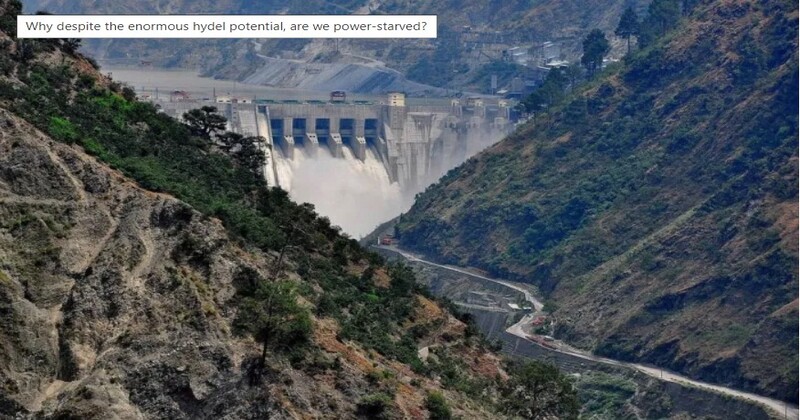
Pakistan Occupied Jammu and Kashmir (POJK) produces five to six times more power than it needs through hydroelectric power projects located in the region. However, most of this power is exported to nearby Punjab, even as POJK residents battle long hours of power cuts and unreliable power supply

Sant Kumar SharmaSant Kumar Sharma
May 14, 2024, 06:00 pm IST
inNews, South Asia, Asia, India, International Edition
Follow on Google News
Representative Image

Representative Image

Facebook
Twitter
WhatsAppTelegramEmail

To understand what is going on in Pakistan Occupied Jammu Kashmir (POJK) nowadays, it is essential that we know the dynamics behind the demands of the protestors. Once we understand these dynamics, we can perhaps also make sense of these demands, whether they are genuine or just politically inspired meant to cause disruptions.

Let us take these demands one by one. Topmost on the agenda of the protestors is a demand for cheaper electricity for POJK residents. Why this push for supply of cheap electricity? The fact is that the POJK region produces electricity in abundance, far more than is required for its own use. However, this electricity is not available to local consumers. Where does it go then and who benefits from it, if not POJK? Well, most of the electricity produced in POJK is evacuated to the nearby Punjab province.

If truth be told, various hydropower stations located in POJK like Mangla, Kohala, Azad Pattan and others, produce four to five times the electricity than needed in POJK. However, dark nights and power failures are common complaints that the residents face. Besides, whatever little power the POJK residents get is on rates which are six to seven times higher than the cost of production!

This double whammy of not getting adequate power and high costs of power supplied is a perennial source of conflict with the Federal government. Technically, POJK is not a province of Pakistan and it gets very little by way of royalties from power production. To understand this conundrum, we need to delve a bit deeper into sleight of hand that the Federal government of Pakistan plays with POJK.

The Federal government of Pakistan has put in place a very exploitative system of revenue sharing for four provinces of Pakistan and two non provinces. Incidentally, the provinces of Punjab, Sindh and Khyber Pakhtunkhwa (KP) get paid six times more than non provinces like POJK and Gilgit Baltistan for power produced by them. This led to massive revenue losses for the POJK since 1967, when the first power project became operational in POJK. Besides, it also helps the Federal government pay very little to POJK.

An even more interesting fact is that despite treating Punjab and POJK differently when it comes to paying royalties, the consumers in POJK are treated the same as those of Punjab. That means the rates of rentals for the consumers in Punjab and POJK is the same! Thus, there is a system by which the Federal government treats people of Punjab and POJK differently when it comes to paying to POJK. However, the POJK people are charged the same rentals as those paid by Punjab or Sindh!

As a result, the demonstrators are now requesting that POJK receive its electricity at rates that are comparable to those generated by the various hydropower projects in the area. However, what happens is that electricity produced by Mangla, Kohala, Azad Pattan and a couple of other projects is exported to Punjab. This leads to a situation where electricity is not available for the users in POJK.

The Jammu Kashmir Joint Awami Action Committee (JAAC), which is led by traders mostly, wants electricity supply in POJK at hydropower generation costs. They also want subsidised wheat flour and an end to the privileges of certain categories of ruling classes.

On May 9 and 10, over 100 activists were arrested to prevent them from participating in the march to Muzaffarabad. The march had been announced by the JAAC to force the government to comply with an agreement signed in February this year. This agreement was signed to deflate the ongoing protests all through POJK but nothing has been done to implement it.

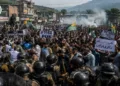
On Sunday (May 12), spontaneous protests started at several places in POJK as activists gathered in large numbers. A shutter down strike across the territory, coupled with a chakka jam, led to widespread violence and one police sub-inspector lost his life. Hundreds of protestors were arrested but this has failed to curb the JAAC demands.
Topics: Gilgit BaltistanPoJKJAACHydel Power
Share1
Tweet
SendShareSend
✮ Subscribe Organiser YouTube Channel. ✮
✮ Join Organiser's WhatsApp channel for Nationalist views beyond the news. ✮
Previous News

Union Government extends ban on LTTE for five more years, cites ongoing threats to national security

Next News

Red Terror: 30 Maoists lay down arms citing disgruntlement with the Maoist ideology in Bijapur of Chhattisgarh

Related News

J&K Chief Minister Omar Abdullah

‘That part of Jammu Kashmir belongs to us’: Omar Abdullah invokes 1947 resistance, asserts claim over PoJK on 15 August

Pakistan Airstrikes Hit Balochistan Again: 30 Civilians Reportedly Killed in Sorab Amid Brutal Military Crackdowns

Pakistan Airstrikes Hit Balochistan Again: 30 Civilians Reportedly Killed in Sorab Amid Brutal Military Crackdowns

UN raises concern over poll violence in PoJK

PoJK: UN flags concern over poll violence amid Pakistan’s crackdown on peaceful protesters in the occupied territory

PoJK: The call for unfinished justice and India’s unwavering resolve to secure sovereignty

Pakistan Power Play: Asim Munir's Province Breakup Push Puts Shehbaz Sharif Under Pressure

Power Struggle in Pakistan? Headwinds for PM Shehbaz Sharif as CDF Asim Munir suggests breaking Balochistan

Pakistan Tightens Media Censorship: Foreign Journalists Need NOC to Report Beyond Major Cities (This image is generated by AI)

Pakistan moves to silence global media after PoJK crackdown: NOCs mandatory for foreign journalists

Load More

Latest News

Russian President Vladimir Putin and External Affairs Minister Dr. S. Jaishankar

EAM Jaishankar meets Russian President Putin & briefs bilateral developments; Extends PM Modi’s invite to BRICS Summit

Tamil Nadu Assembly

Tamil Nadu: TVK govt drops Parandur airport project, announces free bus travel and LPG cylinders

From students voice to political instrument?

PM addressing the Nation on the occasion of 80th Independence Day celebrations at Red Fort, in Delhi on August 15, 2026.

80th Independence Day Address of PM Modi: Walking the difficult path confidently

Representative Image

Beyond ‘Gen Z’: Why Bharat must reclaim its younger generation through ‘Samvad’ and ‘Kutumb Prabodhan’

JeM headquarters rebuilt in Bahawalpur, Pakistan

Pakistan: Destroyed in Operation Sindoor, JeM base rebuilt in 15 months; Exposes Islamabad’s eternal terror nexus

Dimagi Naxals: Decoding the cognitive virus

“A result of a gang war”: Former Envoy to Canada Sanjay Verma on Goldy Brar’s purported claim of hand in Nijjar killing

Tamil Nadu: Tirunelveli POCSO court awards death sentence to church pastor Abraham, for sexually assaulting minor girls

AI Generated Image

West Asia: 20,000+ Pakistanis deported; Gulf countries flag illegal entry, drug trafficking & national security threat

Load More
  • Privacy
  • Terms
  • Cookie Policy
  • Refund and Cancellation
  • Delivery and Shipping

© Bharat Prakashan (Delhi) Limited.
Tech-enabled by Ananthapuri Technologies

  • Home
  • Search Organiser
  • Bharat
    • Assam
    • Bihar
    • Chhattisgarh
    • Jharkhand
    • Maharashtra
    • View All States
  • World
    • Asia
    • Africa
    • North America
    • South America
    • Europe
    • Australia
  • Editorial
  • Operation Sindoor
  • Opinion
  • Analysis
  • Defence
  • Culture
  • Sports
  • Business
  • RSS @ 100
  • Entertainment
  • More ..
    • Sci & Tech
    • Vocal4Local
    • Special Report
    • Education
    • Employment
    • Books
    • Interviews
    • Travel
    • Health
    • Politics
    • Law
    • Economy
    • Obituary
  • Subscribe Magazine
  • Read Ecopy
  • Advertise
  • Circulation
  • Careers
  • About Us
  • Contact Us
  • Policies & Terms
    • Privacy Policy
    • Cookie Policy
    • Refund and Cancellation
    • Terms of Use

© Bharat Prakashan (Delhi) Limited.
Tech-enabled by Ananthapuri Technologies