China to deploy own security apparatus and forces to protect CPEC, nationals in Pakistan
June 4, 2026
  • Read Ecopy
  • Circulation
  • Advertise
  • Careers
  • About Us
  • Contact Us
Android AppiPhone AppArattai
Organiser
  • ‌
  • Bharat
    • Assam
    • Bihar
    • Chhattisgarh
    • Jharkhand
    • Maharashtra
    • View All States
  • World
    • Asia
    • Europe
    • North America
    • South America
    • Africa
    • Australia
  • Editorial
  • International
  • Opinion
  • RSS @ 100
  • More
    • Op Sindoor
    • Analysis
    • Sports
    • Defence
    • Politics
    • Business
    • Economy
    • Culture
    • Special Report
    • Sci & Tech
    • Entertainment
    • G20
    • Azadi Ka Amrit Mahotsav
    • Vocal4Local
    • Web Stories
    • Education
    • Employment
    • Books
    • Interviews
    • Travel
    • Law
    • Health
    • Obituary
  • Subscribe
    • Subscribe Print Edition
    • Subscribe Ecopy
    • Read Ecopy
  • ‌
  • Bharat
    • Assam
    • Bihar
    • Chhattisgarh
    • Jharkhand
    • Maharashtra
    • View All States
  • World
    • Asia
    • Europe
    • North America
    • South America
    • Africa
    • Australia
  • Editorial
  • International
  • Opinion
  • RSS @ 100
  • More
    • Op Sindoor
    • Analysis
    • Sports
    • Defence
    • Politics
    • Business
    • Economy
    • Culture
    • Special Report
    • Sci & Tech
    • Entertainment
    • G20
    • Azadi Ka Amrit Mahotsav
    • Vocal4Local
    • Web Stories
    • Education
    • Employment
    • Books
    • Interviews
    • Travel
    • Law
    • Health
    • Obituary
  • Subscribe
    • Subscribe Print Edition
    • Subscribe Ecopy
    • Read Ecopy
Organiser
  • Home
  • Bharat
  • World
  • Operation Sindoor
  • Editorial
  • Analysis
  • Opinion
  • Culture
  • Defence
  • International Edition
  • RSS @ 100
  • Magazine
  • Read Ecopy
Home World

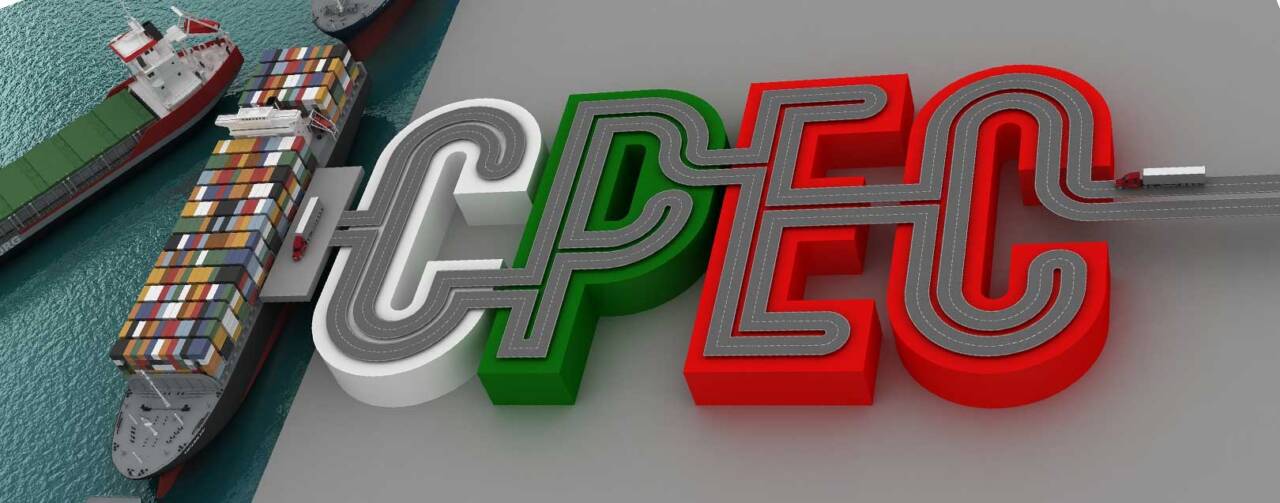
China to deploy own security apparatus and forces to protect CPEC, nationals in Pakistan

Having witnessed the large-scale damage to its integral component of the Belt and Road Initiative (BRI) which is the China-Pakistan Economic Corridor (CPEC), and death of several personnel and officers handling the project, the Chinese government has lost faith in Pakistan’s security system and has decided to replace the Pakistani forces with its own handpicked troops

WEBDESKWEBDESK
Apr 24, 2024, 09:30 pm IST
in World, South Asia
Follow on Google News
Representative Image

Representative Image

FacebookTwitterWhatsAppTelegramEmail

Concerned over the deadly attacks on its nationals in Pakistan, China has sought approval from Islamabad to deploy its security personnel in the country to counter the security concerns, a senior fellow with the Department of War Studies of King’s College London and former director of naval research for the Pakistan Navy, Ayesha Siddiqa said in an opinion piece, an international media agency reported on Tuesday.

Sources indicate that Islamabad was close to accepting Beijing’s demand in 2016, during Nawaz Sharif’s tenure as PM. However, the Pakistan Army, led by Raheel Sharif at the time, intervened and established new military units with around 12,000 personnel tasked with protecting CPEC projects. These units have since failed to prevent attacks against Chinese workers effectively.

“Beijing wants foolproof security for its 1,200 workers building critical infrastructure and teaching in Pakistan. In the face of persistent attacks, Beijing has asked Islamabad to allow it to deploy its own security personnel, but Pakistan has yet to agree,” she said in an opinion piece.

“I have been told that Islamabad came close to accepting Beijing’s demand around 2016 during Nawaz Sharif’s third term as prime minister, but the Pakistan Army blocked the plan. Raheel Sharif, then the military chief, instead created a new army and naval units with around 12,000 personnel with the ostensible mission of protecting China-Pakistan Economic Corridor (CPEC) projects,” she added.

Further, in her opinion piece as reported by an international media agency, she stated that the recent attacks on foreign nationals have raised serious concerns about the security of Chinese workers and investments in the country, jeopardizing the China-Pakistan Economic Corridor (CPEC) projects.

Last month, a suicide attacker targeted a bus carrying Chinese engineers, resulting in the deaths of five individuals. In another incident, a convoy of Japanese workers was attacked, believed to have been mistaken for Chinese workers. Beijing has repeatedly urged Islamabad to ensure the safety of its 1,200 workers engaged in critical infrastructure and educational projects in Pakistan, an international media agency reported.

In 2022, after a suicide bombing killed three Chinese language teachers at Karachi University, Islamabad allowed Beijing to send its investigators for the first time and pledged better protection for Chinese workers. However, a subsequent attack on Chinese engineers last month revealed lapses in security protocols, including transporting workers in unsecured buses.

The CPEC army division, although led by military officers, primarily consists of civilian police officers with inadequate training. Many of these officers have been deployed for domestic political tasks, diverting attention from their primary duty of ensuring the security of Chinese workers.

Further, amid domestic political and economic crises in Pakistan, the CPEC and China’s ongoing projects appear to be losing priority. Pakistani officials have reportedly engaged in discussions with Saudi Arabia’s Public Investment Fund (PIF) regarding the Reko Diq copper and gold mine in Balochistan. Western diplomats have also visited Gwadar, a key area of Chinese interest, while China’s top envoys have been absent, an international media agency reported.

While China remains a vital source of weapon systems for Pakistan and crucial to its defence infrastructure, the current army chief, Gen. Asim Munir, has expressed a preference for closer ties with the West. Munir’s recent visit to Washington led to promises of support from the U.S. in various sectors, including agriculture, mining, and counterinsurgency efforts.

Observers suggest that China might begin to feel sidelined as other nations, such as Canada’s Barrick Gold, operate in Pakistan with fewer security concerns. Baloch nationalist groups view Chinese companies as collaborators with the Pakistani state and are less critical of Western companies operating in the region.

The opinion piece also asserted that in a broader sense, Islamabad’s focus has drifted from the CPEC and China’s ongoing projects, making Beijing increasingly wary.

Domestic political and economic crises in Pakistan have consumed attention in Islamabad in recent years despite recurrent references by the leaders in power to the importance of the CPEC.

It simply no longer appears to be a top priority. The emerging reality is that while rhetoric about Pakistan’s deep friendship with China is still frequently heard, officials are increasingly signalling an interest in making room for other foreign investors, even in areas that had been informally reserved for Chinese use.

These developments certainly do not mean that China has become unimportant to Pakistan. Beijing is now the only major source of weapon systems for Pakistan and key to its defence industrial infrastructure, an international media agency reported.

Yet Qamar Javed Bajwa, who succeeded Raheel Sharif as army chief in 2016, often spoke privately about feeling more affinity with the West than with China. At a private briefing at the International Institute for Strategic Studies in London in 2019, he remarked that Pakistan has “genetic ties with the West” that could supersede its links with China.


Topics: Raheel SharifPakistanChinaQamar Javed BajwaBRICPEC
ShareTweetSendShareSend
✮ Subscribe Organiser YouTube Channel. ✮
✮ Join Organiser's WhatsApp channel for Nationalist views beyond the news. ✮
Previous News

Surya Tilak of Ram Lalla on Ram Navami: Where Science meets spirituality

Next News

US military aid signals ‘strong message’ to Israel’s enemies: Foreign Minister Katz

Related News

As fuel shortages rippled across Asia, New Delhi expanded supplies to its neighbours while Beijing sought to turn energy security into strategic influence.

The Hormuz Test: How India’s energy assistance outshines China’s conditional approach

Bangladesh’s reported JF-17 push has triggered fresh scrutiny after India’s Ops Sindoor exposed the vulnerabilities of Pakistani-Chinese defence systems and precision strike capabilities

Shadows of Operation Sindoor: Questions loom over Bangladesh’s JF-17 ambitions amid Sino-Pakistani tech vulnerabilities

Kawagoe Mosque Row: Pakistan faces embarrassment as Japan orders demolition of illegally built mosque

As Beijing tightens its grip ahead of June 4, dissidents inside China face surveillance and intimidation while activists abroad keep alive the memory of the 1989 Tiananmen crackdown

Tiananmen at 37: How China suppresses remembrance of the massacre through fear, censorship and surveillance

Representative Image

Britain’s Grooming Gangs: Survivors demand justice as chilling testimonies shake UK’s Parliament

Tiananmen Square Massacre: When Tanks Met Students—The Night China Crushed Its Democratic Hope!

Tiananmen Square Massacre: When Tanks Met Students—The Night Communist China Crushed Its Democratic Hope!

Load More

Latest News

MK Stalin with Sonai Gandhi; MK Stalin with Rahul Gandhi (File Photos) (Left to Right)

Tamil Nadu: DMK says no to INDIA Alliance meet in Delhi, blames Congress for political backstabbing

Union Finance Minister Nirmala Sitharaman

Karnataka: All-Women team powers Yadgir’s groundnut revolution; Nirmala Sitharaman inaugurates NABARD Unit

Keralam: Jamaat-e-Islami event features Hamas and Muslim Brotherhood ideologues, raises concerns over Political Islam

Representative Image (This is an AI Generated image)

Uttar Pradesh CM Abhyudaya Scheme: Apply for free civil services, JEE and NEET coaching from June 5

House worth Rs 2 crore of drug peddler bulldozed in J&K

Anti-narcotics campaign in J&K: Police demolish Rs 2 crore residential property linked to drug peddler Sheikh Tasaduq

As fuel shortages rippled across Asia, New Delhi expanded supplies to its neighbours while Beijing sought to turn energy security into strategic influence.

The Hormuz Test: How India’s energy assistance outshines China’s conditional approach

Demographic changes in Bharat’s border districts have raised concerns about migration, security, and social cohesion

Demographic Shift in Border Areas of Bharat: The dangerous design

FIR filed against the Islamists in the Love Jihad case in Bhopal

Love Jihad again in Bhopal: Minor Hindu girl forced to drink beer, trapped and pressured to convert by Islamists

The ₹100 Crore Dhaba: How Amrik Sukhdev Revolutionised Highway Dining in India

The Dhaba Story: The family that changed highway dining

After TCS Controversy, Wipro Faces Fresh 'Corporate Jihad' Allegations as Former Employee Details Harassment, Religious Pressure and Forced Resignation

Exclusive | Corporate Jihad at Wipro? Hindu employee says Shahina told her, ‘Accept Islam, I’ll marry you to a Sheikh’

Load More
  • Privacy
  • Terms
  • Cookie Policy
  • Refund and Cancellation
  • Delivery and Shipping

© Bharat Prakashan (Delhi) Limited.
Tech-enabled by Ananthapuri Technologies

  • Home
  • Search Organiser
  • Bharat
    • Assam
    • Bihar
    • Chhattisgarh
    • Jharkhand
    • Maharashtra
    • View All States
  • World
    • Asia
    • Africa
    • North America
    • South America
    • Europe
    • Australia
  • Editorial
  • Operation Sindoor
  • Opinion
  • Analysis
  • Defence
  • Culture
  • Sports
  • Business
  • RSS @ 100
  • Entertainment
  • More ..
    • Sci & Tech
    • Vocal4Local
    • Special Report
    • Education
    • Employment
    • Books
    • Interviews
    • Travel
    • Health
    • Politics
    • Law
    • Economy
    • Obituary
  • Subscribe Magazine
  • Read Ecopy
  • Advertise
  • Circulation
  • Careers
  • About Us
  • Contact Us
  • Policies & Terms
    • Privacy Policy
    • Cookie Policy
    • Refund and Cancellation
    • Terms of Use

© Bharat Prakashan (Delhi) Limited.
Tech-enabled by Ananthapuri Technologies