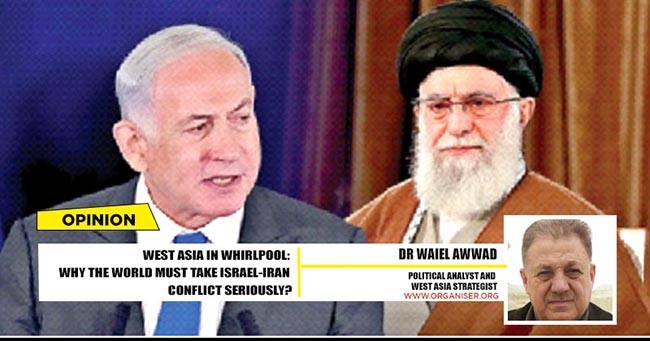
On April 13, 2024, Iran retaliated by launching direct attacks on Israel, targeting military installations and issuing threats of decisive responses to any Israeli counterattacks or actions targeting Iranian interests worldwide. This escalation provided an opening for Netanyahu. Government to justify a preemptive strike on Iranian nuclear installations for civilian purposes. The aim was to prevent Tehran from acquiring nuclear weapons, especially after the United States, under former President Donald Trump, withdrew from the nuclear deal and imposed “Maximum Pressure” on Iran. The situation not only relieved internal pressures on Netanyahu’s premiership but also rallied Israeli allies, including some Arab countries, behind Israel in response to the Iranian attack. However, amidst this geopolitical maneuvering, Palestinians have emerged as major losers. Human rights agencies have raised alarm over the mounting civilian casualties.
Snapping Points
The recent military action by Iran marks a significant turning point in the geopolitical landscape. This unprecedented move officially thrusts Iran into the Israel-Arab conflict, challenging the status quo at a time when many Arab capitals were moving towards normalisation with Israel under Abraham Accords. The introduction of Iran into the equation creates a new paradigm for the rules of engagement, serving as a deterrent for Israel and its allies considering future attacks on Iran. The repercussions of this development extend far beyond the immediate conflict, with potential implications for regional stability, particularly in key strategic areas such as the Strait of Hormuz. Any retaliatory actions by Israel could escalate into an all-out war, further destabilising the region. The Gulf countries, wary of Iranian retaliation, have urged the United States not to utilise its military bases within their territories for offensive operations against Iran. Washington has also conveyed to Tel Aviv that it will not participate in any Israeli attacks on Iran. However, reports from intelligence sources suggest the deployment of USA B-52 fighters armed with nuclear warheads heading towards the Persian Gulf adds a dangerous dimension to the already volatile situation. If true, this escalator move brings the region perilously close to the brink of a limited nuclear conflict, led by a coalition of Israel and the USA.
The potential consequences of an Israeli-US attack on Iranian territory are grave. With Iran possessing formidable ballistic missile capabilities and support from regional allies in Lebanon, Syria, Iraq, and Yemen, protecting Israel from direct retaliatory strikes would pose a significant challenge to the USA and its regional partners. No one in the region is interested in further escalation of the conflict, which began with Israel’s action in the Gaza Strip, followed by the attack on the Iranian consulate in Damascus, Syria, on April 1st, 2024, resulting in the deaths of several Iranian officials . These attacks have heightened tensions not only with Israel but also with other regional players, including the United States and its allies. The increased military presence in the region raises the risk of conflicts spilling over into key maritime chokepoints like the Strait of Hormuz, a critical oil transit route. Any disruption in oil flow through the Strait, whether due to direct attacks or heightened geopolitical tensions, could lead to a spike in global oil prices and instability in energy markets. Furthermore, heightened tensions could increase naval patrols and military exercises in the Persian Gulf and surrounding waters, raising the risk of accidental clashes or miscalculations and further destabilising the region. The West has swiftly condemned Iranian actions and threatened further sanctions and isolation, leading to broader economic consequences that would affect global trade flows, particularly for countries reliant on oil imports passing through the Strait. Prime Minister Benjamin Netanyahu and his military Cabinet remain determined to retaliate against Iran despite calls for restraint from close allies and even the US administration, which is concerned about the personalisation of Israel’s foreign policy.
Netanyahu is under domestic pressure to resign due to his handling of Israeli hostages held by Hamas and government intelligence failures that led to the October 7th attack by Hamas. However, Netanyahu sees retaliation against Iran as essential for Israel’s survival and believes it will garner international legitimacy. Many speculate that Netanyahu seeks to drag the USA and Iran into a regional war for his political survival, which is why the US was not informed beforehand about the Israeli attacks on the Iranian consulate in Syria. For Netanyahu, Iran remains the main target. The situation has escalated to the point where South Africa has taken Israel to the International Court of Justice.
The situation paints a grim picture of escalating tensions in West Asia, with significant implications for regional stability and global security.
The situation paints a grim picture of escalating tensions in West Asia, with significant implications for regional stability
Conclusion and Recommendations
- Immediate De-escalation and Diplomatic Engagement:
The international community, particularly influential stakeholders such as the United Nations, major powers, and regional actors, should pressure all parties involved to cease hostilities and pursue diplomatic solutions immediately.
- Calls for an end to Israel-Hamas war in Gaza and implementation of United Nations Security Council (UNSC) resolutions aimed at resolving the Israeli-Palestinian conflict and establishing a two-state solution should be reinforced, emphasising the importance of adherence to international law and respect for human rights.
- Trust-Building Measures and Conflict Resolution:
Efforts to build trust among rival parties in the region should be prioritised, focusing on fostering dialogue, reconciliation, and confidence-building measures.
- Regional initiatives and multilateral frameworks, such as the Arab Peace Initiative and the Middle East Quartet, should be revitalised to facilitate comprehensive peace negotiations and address underlying grievances.
Establishment of Communication Mechanisms:
Hotlines and communication channels should be established among stakeholders to facilitate immediate dialogue, crisis management, and coordination in times of heightened tensions.
- Regular consultations and exchanges of information can help prevent misunderstandings, reduce the risk of accidental conflict escalation, and promote mutual understanding and confidence-building.
- Promotion of Peace and Security:
By adopting these recommendations and taking collective action to prevent the escalation of conflict in West Asia, the international community can mitigate the risk of a wider war, safeguard global peace and security, and contribute to the stability and prosperity of the region.