PM Modi's microeconomics approach to development; from theory to implementation
June 25, 2026
  • Read Ecopy
  • Circulation
  • Advertise
  • Careers
  • About Us
  • Contact Us
Android AppiPhone AppArattai
Organiser
  • ‌
  • Bharat
    • Assam
    • Bihar
    • Chhattisgarh
    • Jharkhand
    • Maharashtra
    • View All States
  • World
    • Asia
    • Europe
    • North America
    • South America
    • Africa
    • Australia
  • Editorial
  • International
  • Opinion
  • RSS @ 100
  • More
    • Op Sindoor
    • Analysis
    • Sports
    • Defence
    • Politics
    • Business
    • Economy
    • Culture
    • Special Report
    • Sci & Tech
    • Entertainment
    • G20
    • Azadi Ka Amrit Mahotsav
    • Vocal4Local
    • Web Stories
    • Education
    • Employment
    • Books
    • Interviews
    • Travel
    • Law
    • Health
    • Obituary
  • Subscribe
    • Subscribe Print Edition
    • Subscribe Ecopy
    • Read Ecopy
  • ‌
  • Bharat
    • Assam
    • Bihar
    • Chhattisgarh
    • Jharkhand
    • Maharashtra
    • View All States
  • World
    • Asia
    • Europe
    • North America
    • South America
    • Africa
    • Australia
  • Editorial
  • International
  • Opinion
  • RSS @ 100
  • More
    • Op Sindoor
    • Analysis
    • Sports
    • Defence
    • Politics
    • Business
    • Economy
    • Culture
    • Special Report
    • Sci & Tech
    • Entertainment
    • G20
    • Azadi Ka Amrit Mahotsav
    • Vocal4Local
    • Web Stories
    • Education
    • Employment
    • Books
    • Interviews
    • Travel
    • Law
    • Health
    • Obituary
  • Subscribe
    • Subscribe Print Edition
    • Subscribe Ecopy
    • Read Ecopy
Organiser
  • Home
  • Bharat
  • World
  • Operation Sindoor
  • Editorial
  • Analysis
  • Opinion
  • Culture
  • Defence
  • International Edition
  • RSS @ 100
  • Magazine
  • Read Ecopy
Home Bharat

PM Modi’s microeconomics approach to development; from theory to implementation

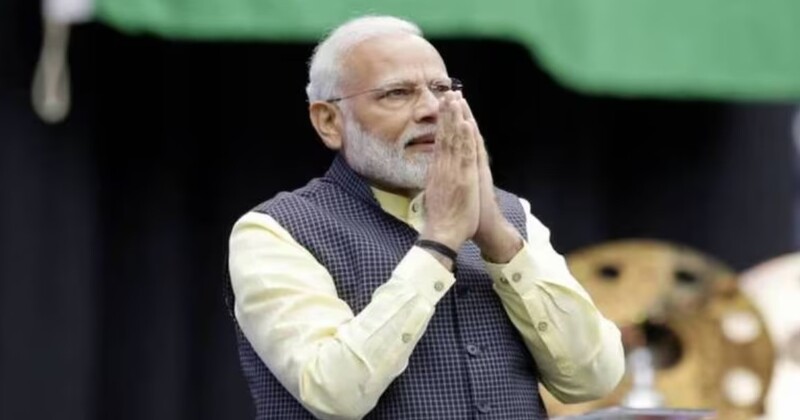
Prime Minister Narendra Modi's governance style has drawn attention not only for its macroeconomic strategies but also for its focus on microeconomics, highlighting the importance of everyday choices in shaping the nation's development trajectory

WEBDESKWEBDESK
Apr 14, 2024, 02:00 pm IST
in Bharat, Business, Economy
Follow on Google News
PM Narendra Modi

PM Narendra Modi

FacebookTwitterWhatsAppTelegramEmail

When discussing the advancement of India as a nation, we usually consider big numbers and big plans. However, an alternative perspective exists in which one looks at the everyday choices people make. That’s where microeconomics comes in to play its role. It understands how individuals, like you and me, make decisions. It’s like microscoping small details instead of looking at the bigger picture at once. However, usually, when the government wants advice on how to make a country better, they turn to macroeconomics, which focuses on the overall economy.

Why do people praise Modi? Well, Prime Minister Modi’s approach is different. Instead of just focusing on big statistics of macroeconomics, his government pays attention to the little things that can make a big difference in people’s lives. For example, they worked hard to make sure things like digital technology, e-payments, buildings toilets, roads, and bank accounts reach everyone, no matter where they live or how much money they make.

During a debate in Parliament, his way of thinking clashed with the old way. A former minister criticized PM Modi’s plan when he proposed to make digital payments accessible to everyone, saying it would fail and waste money. But PM Modi’s government proved everyone wrong. They made India’s digital system so good that people around the globe are admiring it.

But it’s not just about technology. PM Modi’s government also focuses on things like healthcare and the education system. They see these things not just as an expense, and investments in people’s future. Programs like health insurance for everyone and affordable housing for the poorest families are some of the examples to refer to.

From a broader perspective, looking at things this way helps the general public see how Modi’s government programs affect the people in real-life scenarios. For example, when people feel more secure about their health and finances, they tend to spend more, which ultimately helps the economy grow. However, these details are often overlooked while looking at the bigger picture.

To understand better, let’s expand on the theme of microeconomics and its relevance in policymaking while taking further examples from PM Modi’s approach to governance in India:

Empowering Individuals through Economic Choices: Microeconomics has taught us that the decisions taken by individuals help in shaping the economy. Thus, following this approach of microeconomics, PM Modi’s policies aim to prioritize empowering individuals so that they can make better economic choices. For example, Modi’s schemes such as Skill India and Start-up India help people learn skills and get what they need to start their own businesses. This encourages more people to become entrepreneurs in India and come-up with new ideas. Consequently, these programs help the economy grow from the bottom, up.

Helping everyone grow by focusing on specific problems: Microeconomics fixing particular challenges faced by different segments of society. Beti Bachao Beti Padhao (Save the Daughter, Educate the Daughter) scheme, which is a part of PM Modi’s government initiatives aims to address gender inequality by promoting the education and welfare of girls.

Using technology for lasting impact: Microeconomics shows us that by using technology we can makes things work better and it can help us get more done through productivity gains. PM Modi’s focus on digitalization and e-governance aligns with this perspective. By leveraging technology to bridge the digital divide, these efforts promote economic inclusion and empower individuals to participate in the digital economy actively.

Investing in Human Capital: Microeconomics states that having smart and healthy people helps the economy grow over time. Following this ideology, PM Modi’s government knows that investing in education and healthcare will make people skilled and healthy. Programmes like the National Health Mission and the National Education Policy focus on making people better, which helps the economy grow steadily.

Promoting Financial Inclusion and Access to Credit: Microeconomic principles highlight the significance of financial inclusion in promoting economic development. PM Modi’s Jan Dhan Yojana, aimed at providing access to financial services for all households, exemplifies this approach. By ensuring access to banking services, credit, and insurance, such initiatives empower individuals to participate more actively in economic activities, fostering inclusive growth and poverty alleviation.

Encouraging Sustainable Development Practices: Following the principle of microeconomics that emphasises the importance of considering the long-term implications of economic decisions on society and the environment, PM Modi’s government has shown a commitment to sustainable development through initiatives like the Swacchh Bharat Mission and the International Solar Alliance. By encouraging keeping things clean, using energy that lasts forever, and taking care of nature, these actions help the economy grow steadily and make life better for future generations.

Lastly, PM Modi’s governance approach showcases a deep and better understanding of microeconomic principles and their relevance in sustainable development. By prioritising the empowerment of individuals, targeted interventions, tech-related innovation, investment in human capital, financial inclusion, and sustainable practices, Modi’s government aims to build a more equitable and prosperous society.

Topics: International Solar AllianceJan Dhan YojanaPM Narendra ModiMicroeconomicsMacroeconomics
Share1TweetSendShareSend
✮ Subscribe Organiser YouTube Channel. ✮
✮ Join Organiser's WhatsApp channel for Nationalist views beyond the news. ✮
Previous News

Israel-Iran Tensions: Indian embassy issues safety advisory for its nationals

Next News

Kerala PSC rank holders denounce Pinarayi Government’s treatment of CPO candidates

Related News

PM Modi Pays Homage to Jan Sangh Founder Syama Prasad Mookerjee

Balidan Diwas: PM Modi pays tribute to Jan Sangh founder Syama Prasad Mookerjee, hails his nationalist legacy

French President Emmanuel Macron welcomes India's Prime Minister Narendra Modi during the G7 summit, in Evian-les-Bains, France, June 16, 2026.

From Global South to Global Power: Why G7 continues to seek India’s presence and partnership

Lucknow, Jun 22 (ANI): Firefighters conducting rescue and relief operations at a coaching centre in Aliganj area where a fire broke out, in Lucknow on Monday. Uttar Pradesh Deputy Chief Minister Brajesh Pathak also present. (ANI Photo)

Lucknow Coaching Centre Fire: Death toll rises to 15; CM Yogi meets victims’ families, orders high-level probe

PM Narendra Modi (Image Source X)

NEET-UG Re-Examination: PM Modi delays airport departure to ease traffic for students

PM Narendra Modi in Kolkata on the occasion of International Yoga Day

“Yoga connects everyone”: PM Modi leads 12th Yoga Day celebrations in Kolkata; invokes Tagore, cites Bhagavad Gita

Prime Minister Narendra Modi (Photo/DPR PMO/ANI)

Paschimbanga Divas not just a date, but reflection of Bengal’s history and heritage: PM Modi in Hooghly

Load More

Latest News

US Congressman Sanford Bishop(File Photo)

US: “We must stand against Hinduphobia”; Congressman Sanford Bishop hails Georgia’s anti-Hindu hate resolution

Tamil Nadu Higher Education Minister P. Viswanathan (Black T Shirt)

Tamil Nadu: TVK minister faces POCSO complaint over alleged inappropriate conduct with girl athletes in viral videos

Emergency Anniversary: Jaishankar says 1975 tested India's Democracy

Samvidhan Hatya Diwas: EAM Jaishankar recalls 1975 Emergency, lauds those who stood up for constitutional values

Ghar Wapsi in Khandwa: Azad Pathan after embracing Sanatan Dharma at Mahadevgarh temple becomes Ajay Kashyap

RSS struggle to defend the Constitution during the Emergency

Samvidhan Hatya Diwas: Revisiting RSS’s role in defending India’s Constitution & democratic freedoms during 1975-77

Fresh plea in Odisha High Court seeks CBI probe into Swami Laxmanananda murder case amid missing Naidu Commission report

Swami Laxmanananda Murder Case: Fresh plea in Odisha HC cites missing Naidu Commission report, seeks CBI inquiry

For the first time, NCERT adds Emergency to class 9 curriculum, highlights suspension of rights and democratic struggles

NCERT includes Emergency chapter in class 9 textbook, describes 1975-77 period as a major challenge to Indian democracy

Delhi HC adjourns Jawad Siddiqui’s plea seeking 6-week interim bail

Al-Falah Trust Case: ED opposes interim bail for chairman Jawad Ahmad, cites risk of concealing Rs 493 cr proceeds

Twin earthquakes devastate Venezuela

Venezuela Earthquake 2026: Powerful 7.5 & 7.2 magnitude tremors leave the country in ruins; State of emergency declared

Pakistan’s Defence Minister, Khawaja Muhammad Asif

Pakistan Defence Minister Khwaja Asif sparks fury in POJK, labels Mirpuris &  Rawalakot residents ‘Non-Kashmiris’

Load More
  • Privacy
  • Terms
  • Cookie Policy
  • Refund and Cancellation
  • Delivery and Shipping

© Bharat Prakashan (Delhi) Limited.
Tech-enabled by Ananthapuri Technologies

  • Home
  • Search Organiser
  • Bharat
    • Assam
    • Bihar
    • Chhattisgarh
    • Jharkhand
    • Maharashtra
    • View All States
  • World
    • Asia
    • Africa
    • North America
    • South America
    • Europe
    • Australia
  • Editorial
  • Operation Sindoor
  • Opinion
  • Analysis
  • Defence
  • Culture
  • Sports
  • Business
  • RSS @ 100
  • Entertainment
  • More ..
    • Sci & Tech
    • Vocal4Local
    • Special Report
    • Education
    • Employment
    • Books
    • Interviews
    • Travel
    • Health
    • Politics
    • Law
    • Economy
    • Obituary
  • Subscribe Magazine
  • Read Ecopy
  • Advertise
  • Circulation
  • Careers
  • About Us
  • Contact Us
  • Policies & Terms
    • Privacy Policy
    • Cookie Policy
    • Refund and Cancellation
    • Terms of Use

© Bharat Prakashan (Delhi) Limited.
Tech-enabled by Ananthapuri Technologies