Hindu New Year & Agriculture: Significance of Varsha Pratipada for farmers
June 29, 2026
  • Read Ecopy
  • Circulation
  • Advertise
  • Careers
  • About Us
  • Contact Us
Android AppiPhone AppArattai
Organiser
  • ‌
  • Bharat
    • Assam
    • Bihar
    • Chhattisgarh
    • Jharkhand
    • Maharashtra
    • View All States
  • World
    • Asia
    • Europe
    • North America
    • South America
    • Africa
    • Australia
  • Editorial
  • International
  • Opinion
  • RSS @ 100
  • More
    • Op Sindoor
    • Analysis
    • Sports
    • Defence
    • Politics
    • Business
    • Economy
    • Culture
    • Special Report
    • Sci & Tech
    • Entertainment
    • G20
    • Azadi Ka Amrit Mahotsav
    • Vocal4Local
    • Web Stories
    • Education
    • Employment
    • Books
    • Interviews
    • Travel
    • Law
    • Health
    • Obituary
  • Subscribe
    • Subscribe Print Edition
    • Subscribe Ecopy
    • Read Ecopy
  • ‌
  • Bharat
    • Assam
    • Bihar
    • Chhattisgarh
    • Jharkhand
    • Maharashtra
    • View All States
  • World
    • Asia
    • Europe
    • North America
    • South America
    • Africa
    • Australia
  • Editorial
  • International
  • Opinion
  • RSS @ 100
  • More
    • Op Sindoor
    • Analysis
    • Sports
    • Defence
    • Politics
    • Business
    • Economy
    • Culture
    • Special Report
    • Sci & Tech
    • Entertainment
    • G20
    • Azadi Ka Amrit Mahotsav
    • Vocal4Local
    • Web Stories
    • Education
    • Employment
    • Books
    • Interviews
    • Travel
    • Law
    • Health
    • Obituary
  • Subscribe
    • Subscribe Print Edition
    • Subscribe Ecopy
    • Read Ecopy
Organiser
  • Home
  • Bharat
  • World
  • Operation Sindoor
  • Editorial
  • Analysis
  • Opinion
  • Culture
  • Defence
  • International Edition
  • RSS @ 100
  • Magazine
  • Read Ecopy
Home Bharat

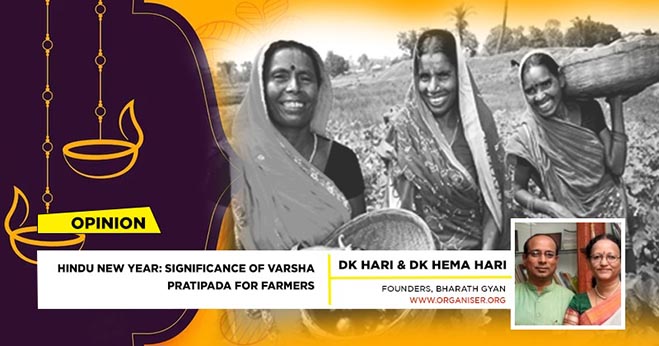
Hindu New Year & Agriculture: Significance of Varsha Pratipada for farmers

This is the apt time to relish how Bharatiya civilisation has fulfilled its Dharma as an agrarian society. It has connected space and time with rain, the vital component for agriculture through the connection between Varsha (rain), Varsha (year) and Varsha (land)

Dr DK Hari & Dr DK Hema HariDr DK Hari & Dr DK Hema Hari
Apr 9, 2024, 09:00 am IST
in Bharat, Opinion
Follow on Google News
FacebookTwitterWhatsAppTelegramEmail

In the months of March-April, we ring in the New Year as per Bharatiya calendars. We use the word calendars because Bharat has a variety of calendars, some are lunar based, some are based on the Sun, some are luni-solar.

Have you noticed the phonetic as well as semantic similarity between the English word calendar and the Indian word Kalaantara, which denotes the antara i.e. duration, space between different Kala, instants of time? It is about lapsing time, elapsed time. A New Year is one such Kalaantara which is a cyclic span of 12 months, called calendar in Western thought.

Calendars of Bharat

The calendars in India follow both the Sun and Moon. They are essentially Luni Solar and use the Rasi, Zodiac as the months.  Some parts of India use the Sun and stars of the Zodiac, Rasi as the marker, i.e. Sauramanam. They celebrate the New Year typically on April 14th / 15th as it is the day when Sun transits into Aries Zodiac. These include states such as Tamil Nadu which celebrates New Year as Puduvarsham or Puthandu, Kerala as Vishu, Punjab as Baisaki, Assam as Bohag/Rongali Bihu, Manipur as Cheiraoba etc. Sri Lanka too celebrates its New Year at the same time as  Aluth Avurudda.

Most other parts of India use the Moon and the Zodiac Rasi as the marker. The months start based on the phase of the Moon and the Zodiac being transited by the Sun or the Zodiac of the full Moon, i.e. Chandramanam.

Varsha in Bharat

A year in most Indian languages is called Varsha or variants thereof such as varudam in Tamil and Malayalam. Rain, in India, is also called Varsha. Our land is also called Bharatha Varsha.

So, there seems to be a distinct correlation between rain, year and land. They are all called Varsha, Varsha and Varsha. Why?

We find that a year is called Varsha, since Bharat has a distinct phenomenon of receiving rains unfailingly in a particular pattern. This cyclic pattern of rains, called monsoon, coincides with a time span of 12 months or 1 year.

Hence, the time span from one rainy season to another has also come to be called Varsha. Here, we see a beautiful connection between rain and the time space/span of a year.

At the same time, since this phenomenon is special to the landmass called Bharata, the land where this Varsha pours every year and thus showers prosperity every year, has also come to be called Bharata Varsha.
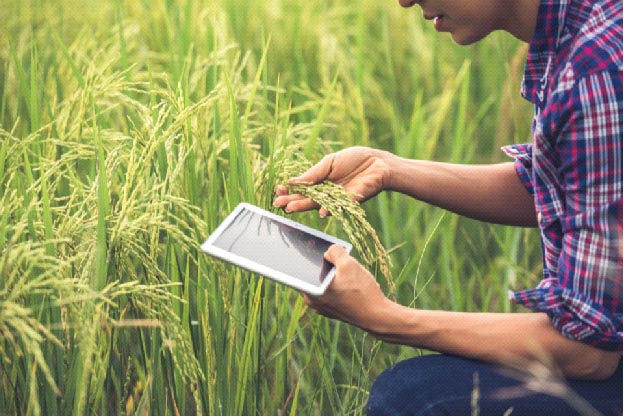
We thus have the word Varsha for rain, year and our land.
What is the prosperity that comes with Rain? But of course, trees, crops, food and grains besides water. All of which had kept the Bharatiya civilisation well fed and had given them lots of products to make, trade and generate wealth.

Influenced By Varsha

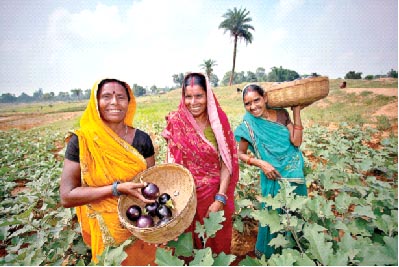
Agriculture was thus the mainstay of this civilisation and it was intricately tied to this Varsha, rain. Bharat is thus an agrarian civilisation by nature.

The Varsha, year and its months were defined by the agricultural activities such as when sowing should happen, when to harvest, when to account, when to clean and rest.

All these together went on to define the kalachar, culture of Bharata Varsha. These harvests went on to determine some of the main festival seasons of this land such as

  • Deepavali which followed the harvest during October/November and
  • Pongal, Bihu, Lori etc. which followed the harvest during January. What about Summer then?

Aspects Of Agriculture

If we look at agriculture, two aspects of agriculture come to fore.

Seasonal agriculture

This is agriculture where the crop lifecycle from seed to flower to seed all starts and ends within one season itself (i.e one harvest). The plants live for one season alone. It is the seed that acts as a bridge between 2 generations of the species.
Perennial agriculture

This is agriculture, where the seed once planted, gives rise to a plant that continues to keep giving flowers, fruits and seeds for years to come and the plant itself spans across generations.

While rain is important for all crops, we find that the seasonal agriculture is dominated by the rainfall pattern, whereas, it is Spring that rejuvenates Perennial agricultural plants and most buds, flowers, fruits and vegetables are formed during the seasons of Spring to Summer. The ushering in of the New Year in March/April is the signal for majority of the trees and plants of Bharat to produce their fruits and vegetables.

Focus On Society and Divine

It is also a time when it is dry and there is more daylight for other activities in this agrarian civilisation. This is then time for focussing on conducting various activities for the society and the Divine such as undertaking temple renovations and brahmotsavs (temple festivals), cleaning the village ponds and temple tanks in anticipation of the coming monsoon and so on.


Topics: DivineTamil and MalayalamBihupongalBharatiya civilisationVarsha PratipadaSeasonal agriculture
ShareTweetSendShareSend
✮ Subscribe Organiser YouTube Channel. ✮
✮ Join Organiser's WhatsApp channel for Nationalist views beyond the news. ✮
Previous News

Hindu New Year: Varsha Pratipada – Diverse celebrations, same spirit

Next News

Dr Hedgewar, a visionary organiser who developed mechanism to build resilient Hindu Society dedicated to Bharat Mata

Related News

Udhayanidhi Stalin, Leader of Opposition & DMK MLA, while speaking in Tamil Nadu Assembly on May 12

Sanatan Dharma and Politics: Understand before attacking

Bharat’s forgotten shipbuilding industry

Varsha Pratipada, Hindu New Year, is celebrated across the country under different names

Ayushman Bhava: Festivity of harmony

PM Modi feeds cows at his residence on Makar Sankranti

Makar Sankranti 2026: PM Modi feeds cows at residence while devotees celebrate across India

Pongal reflects Ek Bharat, Shreshtha Bharat, shares Indian culture beyond Tamil Nadu: PM Narendra Modi

Representative image

Pongal 2026: From harvest to harmony – Understanding the meaning & celebrations of the festival

Load More

Latest News

Security personnel along with the miscreants and arma and ammunitions that have been seized in assam

Manipur: Huge cache of arms and ammunitions recovered: Security forces intensify operations

A representatie image

NMCG expands river-centric planning across Ganga basin; Urban river management plans now cover 60 cities

A representative image

India tourism growth story: How infrastructure, spiritual tourism and connectivity transformed travel in a decade

Juna Akhada Mahamandaleshwar Anandavanam Bharti Maharaj at Kochi

Hindus must earn strength, wealth and power: Juna Akhada Mahamandaleshwar Anandavanam Bharti Maharaj at Kochi

J&K: LG Manoj Sinha performs pratham puja of Shivling at Amarnath cave & marks the beginning of yatra

India’s Mega Semiconductor & AI Mission: 12 projects, Rs 1.64L crore investment & 45K GPUs power global tech leadership

West Bengal: Reclaiming the legacy for reshaping the future

Tamil Nadu CM Joseph Vijay’s Birthday Celebrations in schools by TVK sparks row; Child Rights Watch urges NCPCR action

Dr Keshav Baliram Hedgewar: Victim of selective narrartivisation

‘VHP’s stand is absolutely clear; no guilty person will be spared’: Alok Kumar ji on Ayodhya Ram Mandir

Load More
  • Privacy
  • Terms
  • Cookie Policy
  • Refund and Cancellation
  • Delivery and Shipping

© Bharat Prakashan (Delhi) Limited.
Tech-enabled by Ananthapuri Technologies

  • Home
  • Search Organiser
  • Bharat
    • Assam
    • Bihar
    • Chhattisgarh
    • Jharkhand
    • Maharashtra
    • View All States
  • World
    • Asia
    • Africa
    • North America
    • South America
    • Europe
    • Australia
  • Editorial
  • Operation Sindoor
  • Opinion
  • Analysis
  • Defence
  • Culture
  • Sports
  • Business
  • RSS @ 100
  • Entertainment
  • More ..
    • Sci & Tech
    • Vocal4Local
    • Special Report
    • Education
    • Employment
    • Books
    • Interviews
    • Travel
    • Health
    • Politics
    • Law
    • Economy
    • Obituary
  • Subscribe Magazine
  • Read Ecopy
  • Advertise
  • Circulation
  • Careers
  • About Us
  • Contact Us
  • Policies & Terms
    • Privacy Policy
    • Cookie Policy
    • Refund and Cancellation
    • Terms of Use

© Bharat Prakashan (Delhi) Limited.
Tech-enabled by Ananthapuri Technologies