

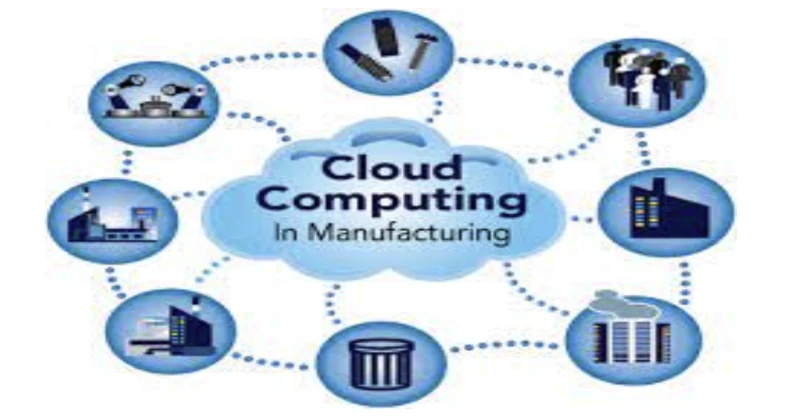
Cloud computing is a transformative technology that can help the manufacturing industry achieve higher levels of performance, efficiency and innovation. By using cloud computing, manufacturers can access and utilise computing and software resources over the internet, without having to own or manage them locally. This can enable them to save costs, collaborate in real time, gain data-driven insights, choose the best deployment models, develop custom software, automate and optimise their workflows and scale their resources according to their needs. Cloud computing is therefore a key enabler for the modern manufacturing ecosystem.
Cloud computing can transform the manufacturing industry by offering many benefits, such as:
- Cost savings: Cloud computing can reduce the capital and operational expenses of running and maintaining IT infrastructure and software. Manufacturers can pay only for the resources they use on a “pay-as-you-go” model
- Real-time collaboration: Cloud computing can enable manufacturers to share and access data and applications across different locations, devices and teams. This can improve communication, coordination and productivity among employees, suppliers, customers and partners.
- Data-driven insights: Cloud computing can help manufacturers collect, store, analyse and visualise large amounts of data from various sources, such as sensors, machines, products and customers. This can help them optimise their processes, improve quality, reduce waste, enhance customer satisfaction and innovate new products and services
- Deployment models that suit different manufacturing needs: Cloud computing can offer different types of deployment models, such as public, private, hybrid and multi-cloud. Manufacturers can choose the best option for their specific requirements, such as security, performance, scalability and compliance
- Custom software development: Cloud computing can provide manufacturers with various tools and platforms to develop, test and deploy their own software applications that meet their unique business needs. Manufacturers can also leverage cloud-based services such as artificial intelligence (AI), machine learning (ML), internet of things (IoT) and blockchain to enhance their capabilities
- Automation and optimisation: Cloud computing can help manufacturers automate and optimise their workflows and business processes by integrating cloud-based applications and services with their existing systems and devices. This can help them streamline their operations, increase efficiency, reduce errors and save time
- Scalability: Cloud computing can help manufacturers scale up or down their computing resources according to their changing demands. This can help them cope with fluctuations in production volumes, customer orders, market conditions and seasonal variations
Artificial Intelligence transforming the Manufacturing Industry
Artificial intelligence (AI) has become cost-effective and widely available in various businesses including the manufacturing industry. AI technology has completely changed the processes and functioning of the manufacturing industry. It allows robots and personnel to collaborate to accomplish tasks. As machines become smarter, they will be able to take on more and more repetitive tasks. Speed, precision, and quality control in manufacturing will improve as AI systems are implemented.
AI can help manufacturers save and make money, reduce risks, and improve production efficiency. Manufacturers can overcome insurmountable challenges and issues with AI/ML and advanced analytics. They can overcome challenges such as undetected bottlenecks and unprofitable production lines. Manufacturers with AI-powered analytical prowess use historical datasets for better forecasting. Advanced analytics can be used for forecasting and help gain product output cost-effectively.
AI assists the manufacturing sector in efficiently accomplishing its goals by plant monitoring and prescriptive maintenance. Since the beginning of industrialisation, the manufacturing industry has been constantly addressing the issue of machine downtime. Nowadays, manufacturing industries are focusing on predicting the maintenance and replacement of machine parts using AI/ML and data analytics. It has helped in preventing production interruptions and enhances plant resources by continuously monitoring the status of the factories and assembly lines. Inventory optimisation is another area where AI is being used.
Most supply chains find it challenging to cope with the present difficulties of globalisation, erratic demand, and increasingly complicated, differentiated, and personalised products. Maintaining inventory control while maintaining customer service standards is quite tricky. Overstocking of goods isn’t the solution that will help you get control over your inventory; indeed, it will lead to the inability to track crucial things that have long been a troublesome area in inventory management
AI can transform the manufacturing industry by offering many benefits, such as:
Augmenting operators through active analysis of all process and quality data coming off a manufacturing line: AI can help operators make better decisions by analysing data from sensors and other sources in real-time. This can help improve quality control and reduce waste.
Extending the sheer reach of potential applications in the manufacturing process from real-time equipment maintenance to virtual design that allows for new, improved, and customised products to a smart supply chain and the creation of new business models: AI can help manufacturers create new products and services by analysing data from various sources. This can help them identify new opportunities and improve their existing products.
Gathering and storing data from sensors and IoT technologies: AI can help manufacturers collect data from sensors and other IoT devices in real-time. This can help them monitor their equipment and processes more effectively.
Enhancing user experiences with augmented reality: AI can help manufacturers create more immersive experiences for their customers by using augmented reality (AR) technology. This can help them showcase their products in new ways and provide more value to their customers.
Ensuring safety: AI can help manufacturers improve safety in their factories by analysing data from sensors and other sources. This can help them identify potential hazards before they become a problem.
Creating smart factories and robots: AI can help manufacturers create more efficient factories by automating many of the processes that are currently done manually. This can help reduce costs and improve quality control.
IoT transforming the Manufacturing Industry
IoT in manufacturing industry is the use of interconnected devices and sensors that collect and exchange data to improve efficiency, productivity, and safety in factories. It is also known as Industrial Internet of Things (IIoT) or a way to digital transformation in manufacturing. IoT in manufacturing can help reduce costs, optimise asset and inventory management, lower machine downtime, and create new sources of revenue.
The implementation of IIoT technology has transformed the manufacturing industry by providing new ways to optimise operations and increase productivity. Industrial IoT enables manufacturers to monitor machines and equipment in real-time, allowing for proactive maintenance and reducing the risk of equipment failure. IoT offers manufacturers a new level of visibility, insights, and control. This technology has the potential to revolutionise the manufacturing industry by optimising production processes, reducing downtime, improving workplace safety and enabling predictive maintenance.
IoT can transform the manufacturing industry in many ways such as:
- IoT enables manufacturers to collect data from various machines and equipment in the factory, allowing them to identify trends and areas for improvement. This data can be used to optimise production processes and reduce downtime.
- IoT offers critical metrics and allows monitoring of production status in real-time. This enables easy replication of the production processes, automated auditing and timely resolution of production-related problems.
- IoT connects machines and equipment wirelessly to the internet, which allows manufacturers to remotely monitor and control them, reducing downtime and increasing efficiency.
- IoT can help manufacturers create new revenue streams and business models that allow them to stay competitive
- IoT can improve workplace safety by providing real-time data information that allows manufacturers to make informed decisions.
- IoT can help manufacturers predict maintenance needs before equipment failure occurs, reducing downtime and maintenance costs.