





Since independence from British rule, Jammu and Kashmir, undoubtedly one of the most critical regions of Bharat, has borne the brunt of external aggression and then terrorism for seven decades, transforming the issue from a local concern to a national and international one. After the Supreme Court decision on Article 370 delivered on 11 December 2023, this long drawn conflict faced by the country, has been put firmly on the track to resolution. The protracted and unresolved nature of this challenge had made it a linchpin in national politics for seven decades. The government of Narendra Modi has displayed extraordinary political will to integrate Jammu and Kashmir with the rest of Bharat in every sense of the word.
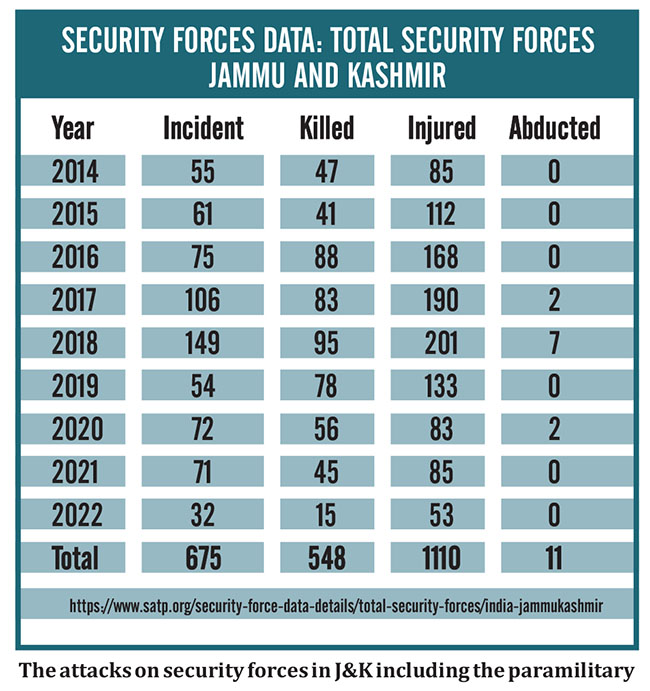
The resolved status of J&K stands as a reminder of the colossal sacrifices made by three generations of Bharatiyas, encompassing the resilient Bharatiya samaj that was given anchoring and direction by the leaders and cadre of the Rashtriya Swayamsewak Sangh and then by the Jan Sangh – both of which worked to create public awareness, defining and articulating the Kashmir issue in the collective psychological national mind-space. Likewise, Bharat’s Armed Forces have held ground in Kashmir in the face of losses. Also appreciable are ordinary citizens of Jammu and Kashmir who have held on to Kashmir in the face of the systemic violence of terror. This brief historical account serves as a humble tribute to all those who have paid an immeasurable price, symbolizing the collective strength, resilience, and determination of the people connected to this longstanding issue.
THE RSS AND THE JANA SANGH
The unequivocal approval of the amendment to Article 370 marks the culmination of The Great Game in the region, initiated amid the altered geopolitical landscape following the Second World War. When Lord Mountbatten arrived in Bharat in 1947, his mission was explicitly outlined, emphasizing the incorporation of Jammu and Kashmir and the North West Frontier Province (NWFP) into Pakistan, which was to be the western puppet state in South Asia. His mandate in NWFP was aimed at strategically securing influence over Iran, Iraq, and potential oil-rich British protectorates. Jammu and Kashmir was the doorway to Central Asia.
Thus, J&K played a central role in this geopolitical strategy, with the Maharaja coerced into an agreement granting the British military control over a crucial corridor from the Kashmir Valley to Afghanistan and Central Asia, encompassing strategic territories such as Gilgit, Baltistan, Hunza, Nagar, Chitral, Yasin, and Ponial. This corridor, vital for British interests, was managed through the Gilgit Agency under British Army control. However, with Bharat gaining independence, this agreement became null.
Given the imperative to ensure Pakistani control over the entire region, including the Jammu and Kashmir State, the partition plan had to be devised with meticulous consideration. The Instrument of Accession granted the princes the option to join Bharat or Pakistan, but the prospect of the Hindu king of Jammu and Kashmir aligning with Bharat prompted covert activities to safeguard the plan. Amidst the complex political landscape, the Maharaja of Kashmir, Hari Singh, became a target of British ire due to his unequivocal support of Bharat’s independence. He was unfortunately also beleaguered by the Nehru-Sheikh Abdullah combine. M.A. Jinnah and Pakistan also applied pressure on him to align with their cause while simultaneously organising tribes for an invasion of Jammu and Kashmir. The blockade of the Jhelum Valley Road, the sole all-weather link between Kashmir and the rest of Bharat, further exacerbated the situation, causing extreme food shortages and widespread panic amongst people of the State of Jammu and Kashmir.
What was needed was a firm political will and a grasp of the geopolitical intricacies by the Congress and its leaders, especially Nehru, which might have steered J&K towards stability. Unfortunately, Jawaharlal Nehru’s reliance on Sheikh Abdullah as a counterweight to Maharaja Hari Singh, and his willingness to play along with Mountbatten on the Great Game, only added to the turmoil. In 1947, against this backdrop of chaos and instability, the people of Jammu and Kashmir inherited a tumultuous situation.
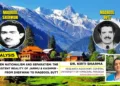
During this critical juncture, the Bharatiya samaj presented three influential figures – Prof. Balraj Madhok, Pandit Prem Nath Dogra, and Dr. Shyama Prasad Mukherjee – as beacons of guidance. The RSS, commencing its activities in the 1940s under the leadership of Prof. Balraj Madhok and the guidance of Pt. Prem Nath Dogra, played a crucial role in laying the foundation for social and political engagements in Jammu and Kashmir. Professor Balraj Madhok served as a Pracharak, contributing to the expansion of RSS activities in Jammu and Kashmir under the guidance of Pt. Prem Nath Dogra. The Praja Parishad in Jammu was established in 1947 in the backdrop of such intense political instability. Under the leadership of Prof. Balraj Madhok, the Jammu Praja Parishad since November 1952 led a series of movements against the grant of any special status to the State. This people’s movement took upon itself to articulate the basics of national interest, loudly calling for equality, integration and firm decision making.
Simultaneously, Maharaja Hari Singh, in a strategic move, replaced his Prime Minister with Meher Chand Mahajan, a confidant of Sardar Patel, who enjoyed a positive rapport with Prof. Balraj Madhok, the RSS Pracharak in the region. Mahajan, aligning with the nationalistic sentiments, presented a comprehensive memorandum to the Maharaja, outlining the advantages and disadvantages of various options, including joining Pakistan or Bharat. Prof. Madhok reassured full RSS support for the Maharaja’s decision.
During this critical period, RSS Sarsanghchalak M.S. Golwalkar, popularly known as Guruji, played a pivotal role. Meher Chand Mahajan, acting as an intermediary, approached Guruji, urging him to use his influence to persuade Maharaja Hari Singh to accede to Bharat. Responding promptly, Guruji canceled all engagements and rushed to Srinagar from Nagpur. Facilitated by the support of Meher Chand Mahajan and Pt. Prem Nath Dogra, a meeting between Guruji and Maharaja Hari Singh was arranged.
Guruji, with his sagacious counsel, directed RSS workers in Jammu and Kashmir to actively contribute to the security of the region. Influenced by these stalwarts, Maharaja Hari Singh signed the Instrument of Accession with the Indian Union. Consequently, the Princely State of Jammu and Kashmir seamlessly became an integral and inseparable part of India i.e. Bharat. The profound role of RSS Sarsanghchalak Guruji in persuading the Maharaja and ensuring the successful integration of J&K needs to be researched and given due space in the national psychological mind space.
Dr Shyama Prasad Mokherjee, a civilian and a non-combatant, gave the ultimate, highest sacrifice of prana-aahuti for Jammu and Kashmir. His sacrifice was replicated by many unknown and unsung cadre of the RSS who have kept the nationalist flame alive through their daily meetings for seven decades after a doddering political dispensation in the nation gave away national interest and Kashmir to utter chaos, confusion and terrorism, and continued to do so except for brief periods when they lost political power.
ARMED FORCES AND THEIR ROLE
The historical role of the Indian Army after the Instrument of Accession was signed by Maharaja Hari Singh is well known and documented. Military history has documented the valiant defence of Jammu and Kashmir by the Indian Army. What needs to be acknowledged is the asymmetric war that the Indian Army has faced in the state, especially Kashmir region, for almost seven decades. The Indian Army is a professional trained force that can and has defeated the enemy through sheer force many times in Kashmir. It has secured borders – a mandate it has consistently achieved. However, in Jammu and Kashmir the Indian Army has been fighting the ‘half front war’ as well. Jammu and Kashmir has been one of the most strident Information Warfare (IW) battles that Bharat has fought. This has been a multi-front war fought against an external as well as internal enemy. In this ongoing battle, information has been used as a weapon.
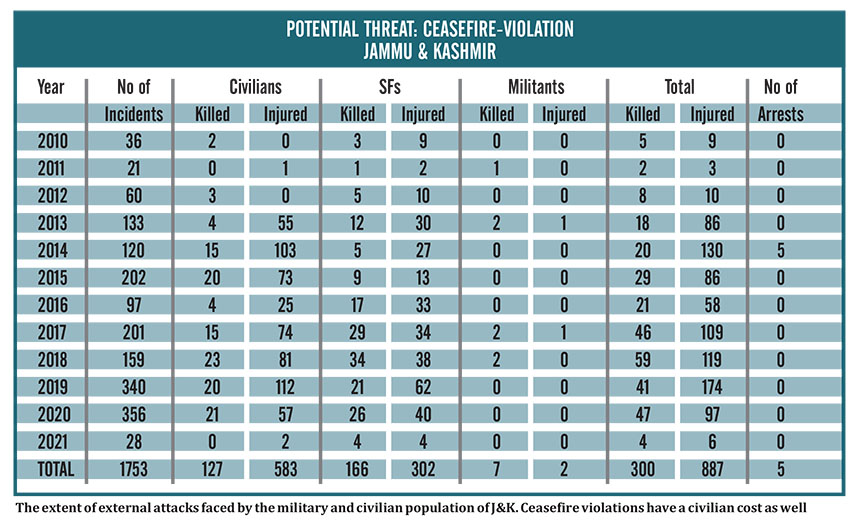
On September 22, 1965, Zulfikar Ali Bhutto, President of Pakistan, in his speech in the United Nations Security Council made clear that Kashmir would be taken as a space of Information Warfare (IW). Accordingly, the enemy weaponised information vis-à-vis Jammu and Kashmir methodologically. The erstwhile state of J&K emerged as a fault line primarily because a political, theological and ideological discourse was used to create a belligerent population within Bharat. As has been mentioned before, the strategic importance of the location of the state also made it a part of the geopolitical Great Game of super-power blocs. Thus, it was a fault-line that was deliberately kept festering and volatile. Another important aspect of IW here is Legal Warfare or Lawfare which has been used as a weapon to seize the political initiative on Kashmir especially in the international sphere.
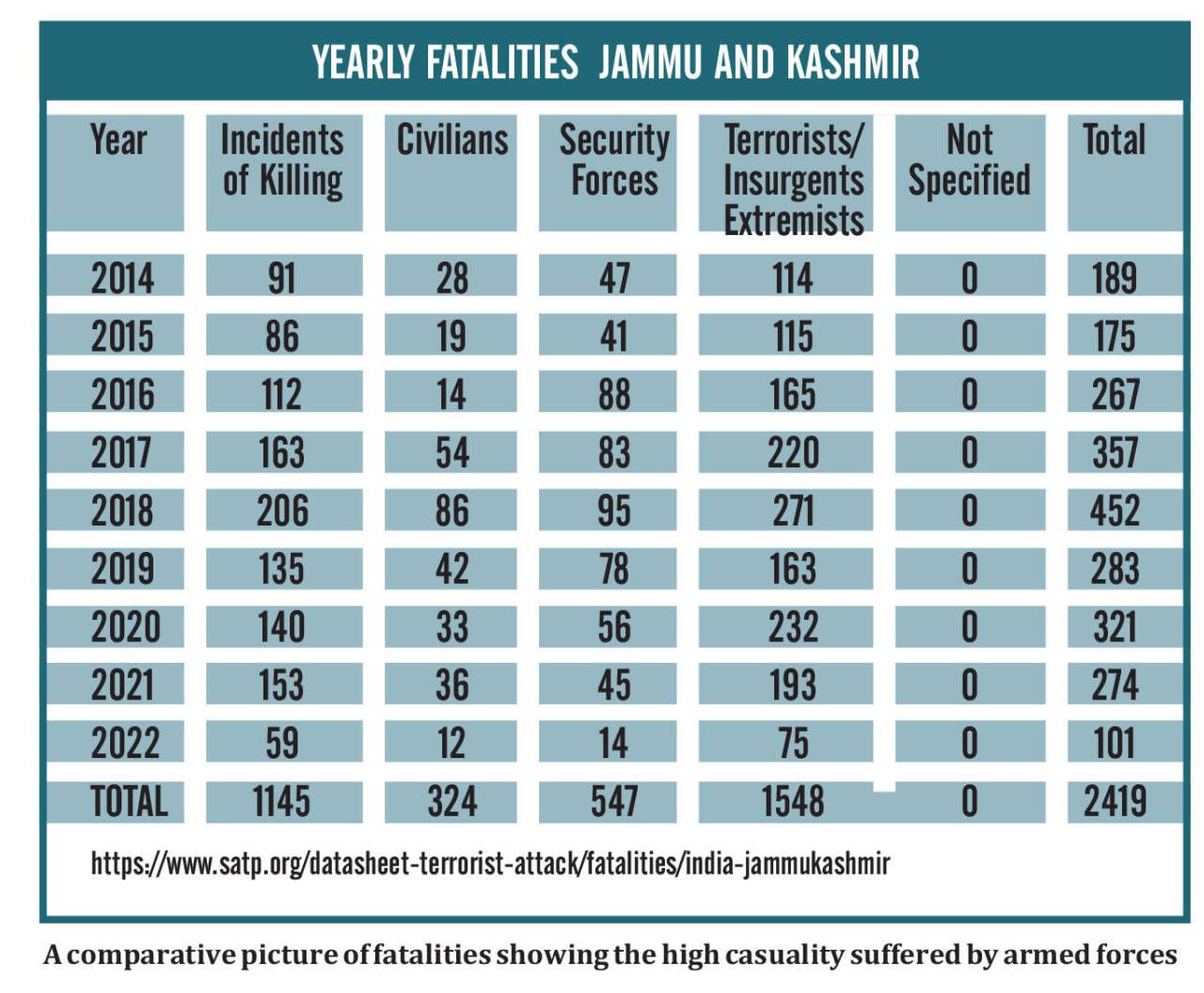
The IW or the war of narrative unleashed on ‘the Kashmir issue’ resulted in heavy loss of life for the security forces.In the conflict, ethnic cleansing and selective killings were witnessed with the internal displacement of the Kashmiri Hindu minority from the Kashmir valley to Jammu and other parts of the country. Not only was the Kashmir valley affected but Jammu suffered from some very heinous terror incidents in the nineties, such as the ones in Surankote and Prankote. The IW also led to extended protests and street fights in the Valley that resulted in loss of life. Of these, the 2008 and 2010 protests were the most disruptive. In 2016, the killing of Burhan Wani resulted in more than 150 deaths and violent street protests that lasted more than six months. The terrorist was projected as a martyr and the narrative was used to draw a parallel with the death of Maqbool Butt, in the initial stages of the conflict. The pattern remained the same in all such incidents. Triggers led to issuance of protest calendars by religious leaders. Stone pelting incidents led to street violence, injuries and more fodder for spreading false narratives.
POLITICAL WILL & CONFLICT RESOLUTION
The huge upsurge within the Bharatiya samaj and the leadership provided by the RSS resulted in public pressure on political parties to resolve the Kashmir conundrum in national interest. If there was a radical terrorist mind-space created by the enemy, a nationalist counterweight was created by organisations like the RSS. The Information Warfare offensive cannot be fought by the military alone. This war has been fought well by the organised, dedicated and committed cadre, led effectively by an equally organised and selfless nationalist leadership provided by the Bharatiya samaj. In the backdrop of the faith and hope created by the Vajpayee government in Kashmir, the present leadership went into the battle prepared to win the war on the issue of Jammu and Kashmir and emerged victorious. Right from 2014, this government clearly defined its strategy on Kashmir. It was clear from the beginning that the starting point of resolution would be the non-negotiable acceptance of the fact that Kashmir was for the past five thousand years, and since 1947, a part of the Bharatiya civilisation and territory. After this threshold was defined, the main issues for resolution in Kashmir were identified. These were – the ethnic manipulation of innocent locals by the political elite in Kashmir; large scale corruption and infiltration by terrorists in the administration leading to insider attacks; legal warfare in national and international forums; legitimate space to aspirations of Jammu and Ladakh. The overall thrust was to set the misplaced narrative of Kashmir on the right track.
Step by step this government handled all these issues and the outcomes are clear. It has taken seven decades and three generations of struggle by the Bharatiya samaj to resolve this conflict. Further conflict transformation remains an area of work and even here it is the committed cadre of nationalist forces in Bharatiya samaj who are taking the lead. While the Indian Army takes care of the kinetic war and has always done so without fear, it is the forces of the Bharatiya samaj, the unique model of sangathan shakti, the passion and love for the matrubhumi that have led to realignment of the ‘Kashmir narrative’ in a way that is totally in favour of national interest.














Comments