Children close to their parents are more likely to grow up kind, helpful: Research
December 5, 2025
  • Read Ecopy
  • Circulation
  • Advertise
  • Careers
  • About Us
  • Contact Us
Android AppiPhone AppArattai
Organiser
  • ‌
  • Bharat
    • Assam
    • Bihar
    • Chhattisgarh
    • Jharkhand
    • Maharashtra
    • View All States
  • World
    • Asia
    • Europe
    • North America
    • South America
    • Africa
    • Australia
  • Editorial
  • International
  • Opinion
  • RSS @ 100
  • More
    • Op Sindoor
    • Analysis
    • Sports
    • Defence
    • Politics
    • Business
    • Economy
    • Culture
    • Special Report
    • Sci & Tech
    • Entertainment
    • G20
    • Azadi Ka Amrit Mahotsav
    • Vocal4Local
    • Web Stories
    • Education
    • Employment
    • Books
    • Interviews
    • Travel
    • Law
    • Health
    • Obituary
  • Subscribe
    • Subscribe Print Edition
    • Subscribe Ecopy
    • Read Ecopy
  • ‌
  • Bharat
    • Assam
    • Bihar
    • Chhattisgarh
    • Jharkhand
    • Maharashtra
    • View All States
  • World
    • Asia
    • Europe
    • North America
    • South America
    • Africa
    • Australia
  • Editorial
  • International
  • Opinion
  • RSS @ 100
  • More
    • Op Sindoor
    • Analysis
    • Sports
    • Defence
    • Politics
    • Business
    • Economy
    • Culture
    • Special Report
    • Sci & Tech
    • Entertainment
    • G20
    • Azadi Ka Amrit Mahotsav
    • Vocal4Local
    • Web Stories
    • Education
    • Employment
    • Books
    • Interviews
    • Travel
    • Law
    • Health
    • Obituary
  • Subscribe
    • Subscribe Print Edition
    • Subscribe Ecopy
    • Read Ecopy
Organiser
  • Home
  • Bharat
  • World
  • Operation Sindoor
  • Editorial
  • Analysis
  • Opinion
  • Culture
  • Defence
  • International Edition
  • RSS @ 100
  • Magazine
  • Read Ecopy
Home World

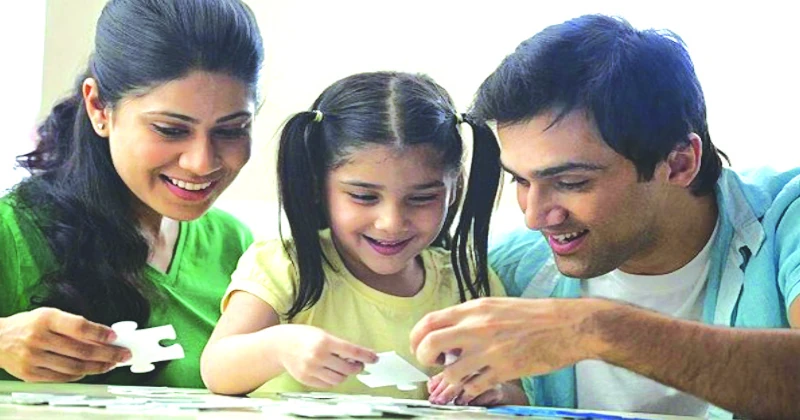
Children close to their parents are more likely to grow up kind, helpful: Research

The study revealed that a loving link between parents and their children early in life considerably enhances the child's tendency to be 'prosocial,' and act with kindness and empathy towards others

WEBDESKWEBDESK
Oct 9, 2023, 11:00 pm IST
in World, Health
Follow on Google News
Representative Image

Representative Image

FacebookTwitterWhatsAppTelegramEmail

According to a study, a loving link between parents and their children early in life considerably enhances the child’s tendency to be ‘prosocial,’ and act with kindness and empathy towards others.

The University of Cambridge study used data from more than 10,000 people born between 2000 and 2002 to understand the long-term interplay between our early relationships with our parents, prosociality and mental health. It is one of the first studies to look at how these characteristics interact over a long period spanning childhood and adolescence.

The researchers found that people who experienced warm and loving relationships with their parents at age three not only tended to have fewer mental health problems during early childhood and adolescence, but also displayed heightened ‘prosocial’ tendencies. This refers to socially-desirable behaviours intended to benefit others, such as kindness, empathy, helpfulness, generosity and volunteering.

Although the correlation between parent-child relationships and later prosociality needs to be verified through further research, the study points to a sizeable association. On average, it found that for every standard unit above ‘normal’ levels that a child’s closeness with their parents was higher at age three, their prosociality increased by 0.24 of a standard unit by adolescence.

Conversely, children whose early parental relationships were emotionally strained or abusive were less likely to develop prosocial habits over time. The researchers suggest this strengthens the case for developing targeted policies and support for young families within which establishing close parent-child relationships may not always be straightforward; for example, if parents are struggling with financial and work pressures and do not have much time.

The study also explored how far mental health and prosocial behaviour are fixed ‘traits’ in young people, and how far they fluctuate according to circumstances like changes at school or in personal relationships. It measured both mental health and prosociality at ages five, seven, 11, 14 and 17 in order to develop a comprehensive picture of the dynamics shaping these characteristics and how they interact.

The research was undertaken by Ioannis Katsantonis and Dr Ros McLellan, both from the Faculty of Education, University of Cambridge.

Katsantonis, the lead author and a doctoral researcher specialising in psychology and education said, “Our analysis showed that after a certain age, we tend to be mentally well, or mentally unwell, and have a reasonably fixed level of resilience. Prosociality varies more and for longer, depending on our environment. A big influence appears to be our early relationship with our parents. As children, we internalise those aspects of our relationships with parents that are characterised by emotion, care and warmth. This affects our future disposition to be kind and helpful towards others.”

The study used data from 10,700 participants in the Millennium Cohort Study, which has monitored the development of a large group of people born in the UK between 2000 and 2002. It includes survey-based information about their prosociality, ‘internalising’ mental health symptoms (such as depression and anxiety) and ‘externalising’ symptoms (such as aggression).

Further survey data provided information about how far the participants’ relationships with their parents at age three were characterised by ‘maltreatment’ (physical and verbal abuse); emotional conflict; and ‘closeness’ (warmth, security and care). Other potentially confounding factors, like ethnic background and socio-economic status, were also taken into account.

The Cambridge team then used a complex form of statistical analysis called latent state-trait-occasion modelling to understand how far the participants’ mental health symptoms and prosocial inclinations seemed to be expressing fixed personality ‘traits’ at each stage of their development. This enabled them, for example, to determine how far a child who behaved anxiously when surveyed was responding to a particular experience or set of circumstances, and how far they were just a naturally anxious child.

The study found some evidence of a link between mental health problems and prosociality. Notably, children who displayed higher than average externalising mental health symptoms at a younger age showed less prosociality than usual later. For example, for each standard unit increase above normal that a child displayed externalising mental health problems at age seven, their prosociality typically fell by 0.11 of a unit at age 11.

There was no clear evidence that the reverse applied, however. While children with greater than average prosociality generally had better mental health at any single given point in time, this did not mean their mental health improved as they got older. On the basis of this finding, the study suggests that schools’ efforts to foster prosocial behaviours may be more impactful if they are integrated into the curriculum in a sustained way, rather than being implemented in the form of one-off interventions, like anti-bullying weeks.

As well as being more prosocial, children who had closer relationships with their parents at age three also tended to have fewer symptoms of poor mental health in later childhood and adolescence.

Katsantonis said that the findings underlined the importance of cultivating strong early relationships between parents and children, which is already widely seen as critical to supporting children’s healthy development in other areas.

“So much of this comes back to parents,” Katsantonis said. “How much they can spend time with their children and respond to their needs and emotions early in life matters enormously.”

“Some may need help learning how to do that, but we should not underestimate the importance of simply giving them time. Closeness only develops with time, and for parents who are living or working in stressful and constrained circumstances, there often isn’t enough. Policies which address that, at any level, will have many benefits, including enhancing children’s mental resilience and their capacity to act positively towards others later in life.”

(with inputs from ANI)

Topics: Healthmental healthChildrenEarly Relationships
Share5TweetSendShareSend
✮ Subscribe Organiser YouTube Channel. ✮
✮ Join Organiser's WhatsApp channel for Nationalist views beyond the news. ✮
Previous News

Uttar Pradesh: Vivek Agnihotri meets CM Yogi Adityanath, requests ‘The Vaccine War’ screening for students

Next News

West Bengal: “Their Biriyani and alcohol budgets have exceeded”: BJP leader on TMC withdrawing protest

Related News

Exposure to digital world corrupting the young minds

Sexualized entertainment is corrupting young minds

21st century is an age of dreams and dilemmas. Teaching children to think intelligently and feel deeply will transform into genuine humanity

The 21st century child: Between dreams and dilemmas

Representative Image

Health Ministry issues advisory on rational use of cough syrups for children, government issues strict guidelines

Low to glow: Finding balance across life’s spectrum

Gujarat Govt launches ‘Swasthya Gujarat, Medasvita Mukt Gujarat’ campaign to promote obesity-free, healthy living

Representative Image

Common anesthetic in low doses can improve symptoms of depression: Study

Load More

Comments

The comments posted here/below/in the given space are not on behalf of Organiser. The person posting the comment will be in sole ownership of its responsibility. According to the central government's IT rules, obscene or offensive statement made against a person, religion, community or nation is a punishable offense, and legal action would be taken against people who indulge in such activities.

Latest News

BJYM leader Shyamraj with Janaki

Kerala: Widow of BJP worker murdered in 1995 steps into electoral battle after three decades at Valancherry

Russian Sber bank has unveiled access to its retail investors to the Indian stock market by etching its mutual fund to Nifty50

Scripting economic bonhomie: Russian investors gain access to Indian stocks, Sber unveils Nifty50 pegged mutual funds

Petitioner S Vignesh Shishir speaking to the reporters about the Rahul Gandhi UK citizenship case outside the Raebareli court

Rahul Gandhi UK Citizenship Case: Congress supporters create ruckus in court; Foreign visit details shared with judge

(L) Kerala High Court (R) Bouncers in Trippoonithura temple

Kerala: HC slams CPM-controlled Kochi Devaswom Board for deploying bouncers for crowd management during festival

Fact Check: Rahul Gandhi false claim about govt blocking his meet with Russian President Putin exposed; MEA clears air

Union Minister for Road Transport and Highways Nitin Gadkari (Right)

India set for highway overhaul as Union Minister Nitin Gadkari unveils nationwide shift to MLFF electronic tolling

RSS Akhil Bharatiya Prachar Pramukh Shri Sunil Ambekar

When Narrative Wars result in bloodshed, countering them becomes imperative: Sunil Ambekar

Ministry of Civil Aviation mandates emergency action: IndiGo ordered to stabilise flight operations by midnight

Chhattisgarh CM Vishnu Deo Sai at Panchjanya Conclave, Nava Raipur, Image Courtesy - Chhattisgarh govt

Panchjanya Conclave: Chhattisgarh CM Sai shares views on development projects in Maoist hotbed, women empowerment

Union Finance Minister Nirmala Sitharaman

‘TMC is holding Bengal back’: Sitharaman slams Mamata govt over industrial & healthcare setbacks

Load More
  • Privacy
  • Terms
  • Cookie Policy
  • Refund and Cancellation
  • Delivery and Shipping

© Bharat Prakashan (Delhi) Limited.
Tech-enabled by Ananthapuri Technologies

  • Home
  • Search Organiser
  • Bharat
    • Assam
    • Bihar
    • Chhattisgarh
    • Jharkhand
    • Maharashtra
    • View All States
  • World
    • Asia
    • Africa
    • North America
    • South America
    • Europe
    • Australia
  • Editorial
  • Operation Sindoor
  • Opinion
  • Analysis
  • Defence
  • Culture
  • Sports
  • Business
  • RSS @ 100
  • Entertainment
  • More ..
    • Sci & Tech
    • Vocal4Local
    • Special Report
    • Education
    • Employment
    • Books
    • Interviews
    • Travel
    • Health
    • Politics
    • Law
    • Economy
    • Obituary
  • Subscribe Magazine
  • Read Ecopy
  • Advertise
  • Circulation
  • Careers
  • About Us
  • Contact Us
  • Policies & Terms
    • Privacy Policy
    • Cookie Policy
    • Refund and Cancellation
    • Terms of Use

© Bharat Prakashan (Delhi) Limited.
Tech-enabled by Ananthapuri Technologies