
Book Review: Razed but never erased; Keshavadeva Temple and Vasudeva Krishna of Mathura
December 5, 2025
  • Read Ecopy
  • Circulation
  • Advertise
  • Careers
  • About Us
  • Contact Us
Android AppiPhone AppArattai
Organiser
  • ‌
  • Bharat
    • Assam
    • Bihar
    • Chhattisgarh
    • Jharkhand
    • Maharashtra
    • View All States
  • World
    • Asia
    • Europe
    • North America
    • South America
    • Africa
    • Australia
  • Editorial
  • International
  • Opinion
  • RSS @ 100
  • More
    • Op Sindoor
    • Analysis
    • Sports
    • Defence
    • Politics
    • Business
    • Economy
    • Culture
    • Special Report
    • Sci & Tech
    • Entertainment
    • G20
    • Azadi Ka Amrit Mahotsav
    • Vocal4Local
    • Web Stories
    • Education
    • Employment
    • Books
    • Interviews
    • Travel
    • Law
    • Health
    • Obituary
  • Subscribe
    • Subscribe Print Edition
    • Subscribe Ecopy
    • Read Ecopy
  • ‌
  • Bharat
    • Assam
    • Bihar
    • Chhattisgarh
    • Jharkhand
    • Maharashtra
    • View All States
  • World
    • Asia
    • Europe
    • North America
    • South America
    • Africa
    • Australia
  • Editorial
  • International
  • Opinion
  • RSS @ 100
  • More
    • Op Sindoor
    • Analysis
    • Sports
    • Defence
    • Politics
    • Business
    • Economy
    • Culture
    • Special Report
    • Sci & Tech
    • Entertainment
    • G20
    • Azadi Ka Amrit Mahotsav
    • Vocal4Local
    • Web Stories
    • Education
    • Employment
    • Books
    • Interviews
    • Travel
    • Law
    • Health
    • Obituary
  • Subscribe
    • Subscribe Print Edition
    • Subscribe Ecopy
    • Read Ecopy
Organiser
  • Home
  • Bharat
  • World
  • Operation Sindoor
  • Editorial
  • Analysis
  • Opinion
  • Culture
  • Defence
  • International Edition
  • RSS @ 100
  • Magazine
  • Read Ecopy
Home Bharat

Book Review: Razed but never erased; Keshavadeva Temple and Vasudeva Krishna of Mathura

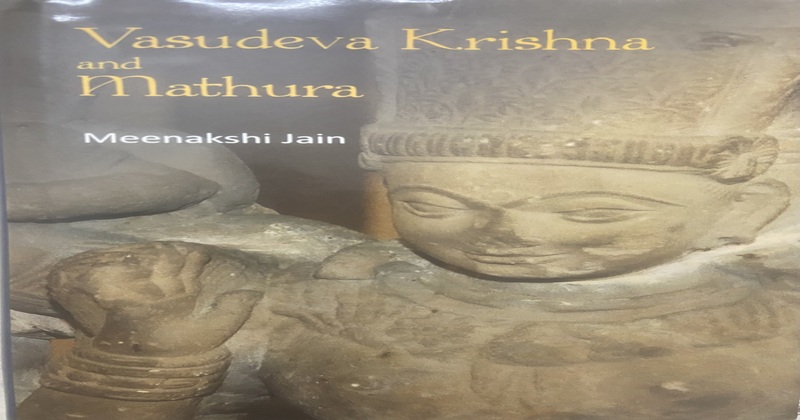
A spiritual ecology comprising 33 crore gods and goddesses, over 100 crore believers and an unquestioned history of at least 5000 years, can be a heaven of academic study and inquiry. Acclaimed historian and academic Meenakshi Jain steps into these deep waters with her new work ‘Vasudeva Krishna and Mathura’. In this book, she picks Bhagvata religion and image worship as the focus of her study, and traces the shape of contemporary land dispute around Keshavadeva Temple.    

Dr. Swadesh SinghDr. Swadesh Singh
Sep 7, 2023, 06:00 pm IST
in Bharat, Book Review
Follow on Google News
FacebookTwitterWhatsAppTelegramEmail

Vasudev Krishna and Mathura, By Meenakshi Jain; Aryan Book International, New Delhi, Pages: 222; Price: 795/-

The book begins with a study of the antecedents of image worship. The first chapter discusses the shift from yagna to puja and from the deities of sacrificial fires to deities of the epics and Puranas before the commencement of the Common Era. The growth of image worship is seen parallel to that of the concept of bhakti and Yaksha worship. Interesting to note is that the sacrificial fires were never abandoned; in fact, they are still in practice, indicating the grand continuity of tradition even when it is continually remodeled. This quote from Ananda Coomaraswamy seems particularly relevant: “In fact, the use of images in temples, the practice of prostration, the offering of flowers, incense, food, and clothes, the use of bells the singing of hymns, the presentation of drama dealing with Lila of the deity, all these are characteristics of Hindu worship even at the present day…” Besides Coomaraswamy, Jain quotes academics like DC Sirkar, JN Banerjea, Herbert Hartel among others to reconstruct this transition. She also looks at earliest images (Naga, Yaksha) as well as literary references (Vedikas, Shastras, Smritis) to give a comprehensive view.

The second and the third chapters move on to talk about the Bhagavata religion, which is one of the earliest known sects of Hinduism. Jain lays out the origin of Bhagsvata among the Vrishni in Mathura region whose roots went back to the Rig Veda. She traces the development of Bhagsvata over three stages of Viravada – cult of five heroes (Samkarsana, Vasudeva Krishna, Pradyumna, Samba, Anniruddha) Vyuhavada – where Vrishni Viras came to be regarded as divine with foregrounding of Vasudeva Krishna, and Avataravada – where concept of incarnation gained currency with Vasudeva Krishna getting identified with Vishnu and Narayana. These chapters present a fascinating study of how the Bhagavata religion merged with the cults of Vishnu, Narayana, and Gopala and in turn made Vishnu up the sacred hierarchy in the triad of Brahma, Vishnu and Shiva.

As an academic, Jain is well-known for working with primary sources and presenting documentary evidences. In the two chapters on Krishna worship, the author takes the reader through an exhaustive study of literary and epigraphic evidences. Parts of the Chandogya Upanishad, dating back to 6-7th century BCE, are cited which present Vasudeva Krishna as son of Devaki and student of Ghora Angirasa. Among other literary sources discussed are Yaska, Panini, Patanjali, Buddhist references, Baudhayana Dharmasutra, Mahanarayana Upanishad, etc. The earliest known epigraphic evidence presented is that of Garuda pillar at Besnagar by Heliodorus dating back to 2nd cent BCE. Besides this, inscriptions of Nanaghat, Nasik, Chinna, Nagarjunakonda, and Guntur have also been discussed. A further exploration of epigraphic evidences is carried out in the chapters that establish the centrality of Mathura and Katra Keshavadeva for Vrishnis and Vasudeva Krishna.

The ninth invasion by Mahmud Ghaznavi in 1071 CE heralded a new and grim phase for Mathura. The author chronologically reconstructs the successive demolitions and reconstructions. Plundered by Ghaznavi, the temple at Katra was reconstructed by Gahadavala Vassal Jajja in 1150 only to be destroyed by Qutubuddin Aibak. It was again repaired and this time destroyed by Sikandar Lodi. The temple was rebuilt by Bir Singh Deo Bundela during the reign of Jahangir and once again in 1670 Aurangzeb ordered its demolition.

The last two chapters of the book locate Katra Keshavadeva in its present context. Jain documents how the land came to be attached as government land to be eventually auctioned to Raja Patnimal and eventually sold to Seth Jugal Kishore Birla and transferred to Shri Krishna Janmabhumi Trust in 1951. Here, Jain’s provides readers access to judicial records and persistent attempts to dispute the ownership of land only to have them shot down each time. The author builds a case against Idgah by providing detailed groundwork spanning history and legality. Case 547 of 1928, presents an interesting example from the litany of details provided in the book. The suit was filed by Rai Kishan Das against Abdullah Khan and others “for possession of stones by their removal from the paved courtyard of the mosque and for possession of the land on which defendents had set up a mill for grinding.” In the ruling, the claims for recovery were upheld with important observation by the judge: “At the very outset I must say that in the documents on the record this Katra is described as Katra Keshavadeva and in none of them it is described as Katra Idgah. It is, therefore, a lie to say that this Katra is called Katra Idgah.”

The final chapter of the book looks straight at the case against Idgah. It states how another body named Shri Krishna Janmasthan Sewa Sangh was formed in 1958. While this body had no authority, it illegally entered an agreement with Shahi Masjid in 1968 and ceded a part of Katra Keshavadeva to Idgah. Jain documents the subsequent case of breach of trust, counter affidavit and appeal in High Court till September 2020 when a petition was admitted in Mathura District court in behalf of Shree Krishna Virajman.

As an author Jain, is known for her works that create space for alternative ideas. Padma Shri receipient in 2020, Jain has been Senior Fellow of Pradhanmantri Sangrahlay (formerly known as NMML) and faculty of History in Delhi University. Some of her best known works have been ‘Rama and Ayodhya’, ‘Battle for Rama: Case of the Temple at Ayodhya’, and ‘Sati’. Her current book emerges as a natural successor to her last work ‘Flight of Deities and Rebirth of Temples’ that took up the mammoth task of tracing the journey of images and idols in the face of successive Islamic invasions.

Each of Jain’s past works pushed academic thought and rigour into unexplored terrains. This book too matches its predecessors. Jain’s works are deeply academic and exhaustive in terms diligence, sourcing, verification, citations. Here also Jain works with primary texts and supports her analysis with citations. She takes up the toughest and heaviest burden of any intellectual battle – laying the groundwork – and makes a path where none existed. The breadcrumbs all through her book inspire and motivate aspiring academics to pursue new areas of inquiry.

Topics: book reviewVasudev Krishna and Mathura
Dr. Swadesh Singh
Dr. Swadesh Singh
Assistant Professor, Political Science, Satyawati College, Delhi University, Delhi [Read more]
Share1TweetSendShareSend
✮ Subscribe Organiser YouTube Channel. ✮
✮ Join Organiser's WhatsApp channel for Nationalist views beyond the news. ✮
Previous News

UPI ATMs launched in Bharat: Cardless cash withdrawal is a reality now

Next News

Assam: Venomous tweets against Hindus by asistant judge Ahadur Rahman sparks huge controversy

Related News

Living the Vivekananda Way:
Practical Spirituality for Modern India

Living the Vivekananda Way: Practical spirituality for modern India

Book Review: The Guns of Navarone

Book Review: Modi vs Khan Market Gang; A dialectical examination of contemporary Indian political discourse

Book Review: Perversion of India’s Political Parlance by Sita Ram Goel

Book Review: We and the World Around

What went wrong with Capitalism

Load More

Comments

The comments posted here/below/in the given space are not on behalf of Organiser. The person posting the comment will be in sole ownership of its responsibility. According to the central government's IT rules, obscene or offensive statement made against a person, religion, community or nation is a punishable offense, and legal action would be taken against people who indulge in such activities.

Latest News

23rd India-Russia Annual Summit

India-Russia Summit heralds new chapter in time-tested ties: Inks MoUs in economic, defence, tourism & education

DGCA orders probe into IndiGo flight disruptions; Committee to report in 15 days

BJYM leader Shyamraj with Janaki

Kerala: Widow of BJP worker murdered in 1995 steps into electoral battle after three decades at Valancherry

Russian Sber bank has unveiled access to its retail investors to the Indian stock market by etching its mutual fund to Nifty50

Scripting economic bonhomie: Russian investors gain access to Indian stocks, Sber unveils Nifty50 pegged mutual funds

Petitioner S Vignesh Shishir speaking to the reporters about the Rahul Gandhi UK citizenship case outside the Raebareli court

Rahul Gandhi UK Citizenship Case: Congress supporters create ruckus in court; Foreign visit details shared with judge

(L) Kerala High Court (R) Bouncers in Trippoonithura temple

Kerala: HC slams CPM-controlled Kochi Devaswom Board for deploying bouncers for crowd management during festival

Fact Check: Rahul Gandhi false claim about govt blocking his meet with Russian President Putin exposed; MEA clears air

Union Minister for Road Transport and Highways Nitin Gadkari (Right)

India set for highway overhaul as Union Minister Nitin Gadkari unveils nationwide shift to MLFF electronic tolling

RSS Akhil Bharatiya Prachar Pramukh Shri Sunil Ambekar

When Narrative Wars result in bloodshed, countering them becomes imperative: Sunil Ambekar

Ministry of Civil Aviation mandates emergency action: IndiGo ordered to stabilise flight operations by midnight

Load More
  • Privacy
  • Terms
  • Cookie Policy
  • Refund and Cancellation
  • Delivery and Shipping

© Bharat Prakashan (Delhi) Limited.
Tech-enabled by Ananthapuri Technologies

  • Home
  • Search Organiser
  • Bharat
    • Assam
    • Bihar
    • Chhattisgarh
    • Jharkhand
    • Maharashtra
    • View All States
  • World
    • Asia
    • Africa
    • North America
    • South America
    • Europe
    • Australia
  • Editorial
  • Operation Sindoor
  • Opinion
  • Analysis
  • Defence
  • Culture
  • Sports
  • Business
  • RSS @ 100
  • Entertainment
  • More ..
    • Sci & Tech
    • Vocal4Local
    • Special Report
    • Education
    • Employment
    • Books
    • Interviews
    • Travel
    • Health
    • Politics
    • Law
    • Economy
    • Obituary
  • Subscribe Magazine
  • Read Ecopy
  • Advertise
  • Circulation
  • Careers
  • About Us
  • Contact Us
  • Policies & Terms
    • Privacy Policy
    • Cookie Policy
    • Refund and Cancellation
    • Terms of Use

© Bharat Prakashan (Delhi) Limited.
Tech-enabled by Ananthapuri Technologies