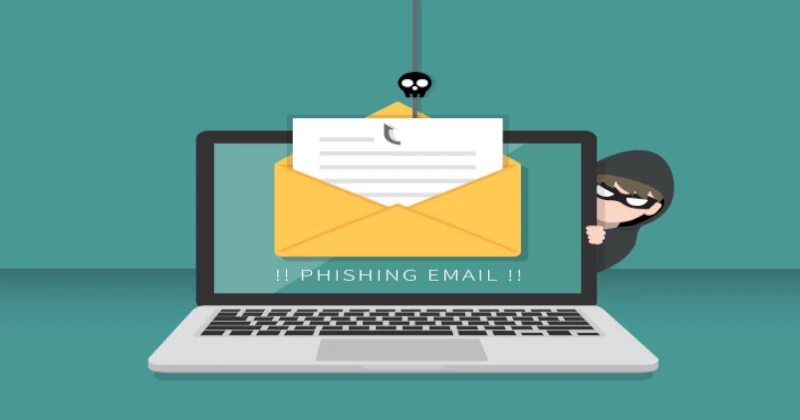
Deprived youth with poor learning skills most vulnerable to email scams: Research
December 5, 2025
  • Read Ecopy
  • Circulation
  • Advertise
  • Careers
  • About Us
  • Contact Us
Android AppiPhone AppArattai
Organiser
  • ‌
  • Bharat
    • Assam
    • Bihar
    • Chhattisgarh
    • Jharkhand
    • Maharashtra
    • View All States
  • World
    • Asia
    • Europe
    • North America
    • South America
    • Africa
    • Australia
  • Editorial
  • International
  • Opinion
  • RSS @ 100
  • More
    • Op Sindoor
    • Analysis
    • Sports
    • Defence
    • Politics
    • Business
    • Economy
    • Culture
    • Special Report
    • Sci & Tech
    • Entertainment
    • G20
    • Azadi Ka Amrit Mahotsav
    • Vocal4Local
    • Web Stories
    • Education
    • Employment
    • Books
    • Interviews
    • Travel
    • Law
    • Health
    • Obituary
  • Subscribe
    • Subscribe Print Edition
    • Subscribe Ecopy
    • Read Ecopy
  • ‌
  • Bharat
    • Assam
    • Bihar
    • Chhattisgarh
    • Jharkhand
    • Maharashtra
    • View All States
  • World
    • Asia
    • Europe
    • North America
    • South America
    • Africa
    • Australia
  • Editorial
  • International
  • Opinion
  • RSS @ 100
  • More
    • Op Sindoor
    • Analysis
    • Sports
    • Defence
    • Politics
    • Business
    • Economy
    • Culture
    • Special Report
    • Sci & Tech
    • Entertainment
    • G20
    • Azadi Ka Amrit Mahotsav
    • Vocal4Local
    • Web Stories
    • Education
    • Employment
    • Books
    • Interviews
    • Travel
    • Law
    • Health
    • Obituary
  • Subscribe
    • Subscribe Print Edition
    • Subscribe Ecopy
    • Read Ecopy
Organiser
  • Home
  • Bharat
  • World
  • Operation Sindoor
  • Editorial
  • Analysis
  • Opinion
  • Culture
  • Defence
  • International Edition
  • RSS @ 100
  • Magazine
  • Read Ecopy
Home World

Deprived youth with poor learning skills most vulnerable to email scams: Research

Findings based on more than 170,000 students aged 15 show that one in five from low-income families or deprived areas could fall victim to phishing

WEBDESKWEBDESK
Sep 2, 2023, 11:00 pm IST
in World, Health
Follow on Google News
Representative Image

Representative Image

FacebookTwitterWhatsAppTelegramEmail

According to an international study published in the peer-reviewed British Journal of Educational Studies, disadvantaged youth are more vulnerable to email scams and require more protection.

Findings based on more than 170,000 students aged 15 show that one in five from low-income families or deprived areas could fall victim to phishing. This is much higher than the probability for the age group overall. Email scams leave people vulnerable to identity theft, putting young people at risk of financial fraud and having their savings stripped.

The most vulnerable are those who also have poor learning skills according to the data from 38 countries including the UK, US and Japan.

Furthermore, the study highlights that students who are taught about the dangers of digital fraud are just as likely to respond inappropriately to these emails as pupils who have received no specific education on the topic.

Author Professor John Jerrim says this highlights a gap in education provision. He is now urging schools to provide more – and better quality – teaching on how to recognise online harms including phishing emails.

“Socio-economically disadvantaged groups are – at least in some countries – at greater risk from phishing attacks than their more advantaged peers,” says Professor Jerrim from University College London in England.

“This is largely driven by socio-economic differences in cognitive abilities. Unfortunately, current attempts by schools to address this issue do not seem to be particularly effective.

“Teenagers taught in the classroom about the risks appear to be just as likely to take inappropriate action. More needs to be done to help young people navigate what is becoming an increasingly complex and dangerous online world.

“This is particularly true for some of the most vulnerable groups who are most at risk of falling for attempts at digital fraud.” More than 3 billion spam emails are sent every day and phishing is one of the most common attempts at cyber fraud.

Current research into who is most susceptible to this crime tends to focus on older people, not school-age children. Little is known about the efficacy of schools’ attempts to teach young people how to recognize and react appropriately.

Data for this study was based on 176,186 children who took part in the 2018 Programme for International Assessment (PISA), a triennial survey run by the Organisation for Economic Co-operation and Development (OECD).

PISA examines what students in OECD countries know in reading, science, and mathematics. Pupils must complete a two-hour ability test then a questionnaire.

The 2018 PISA asked pupils how they would respond to a made-up scenario where a mobile-phone company told them via email they had won a smartphone. The sender asked them to click a link and fill out their data to claim the phone.

Possible responses included answering the email to request more details, checking the sender’s email address, clicking on the link, and filling out the form as soon as possible.

Professor Jerrim’s study focused on answers to the third response and asked pupils if they had been taught how to detect phishing or spam emails. Results showed that Japanese teens were least likely to respond (4 per cent) to the email than anywhere else in the world.

The proportion in Denmark, Sweden and Finland who responded was significantly lower (6-7 per cent) than in other developed countries. Teenagers in Mexico (30 per cent) and Chile (27 per cent) were most at risk – almost a quarter were likely to respond. The figure for the UK was 9 per cent.

No gender difference was found – boys were just as likely to respond as girls. However, teenagers from socio-economically disadvantaged backgrounds were markedly more likely to click the link.

The biggest gap was based on cognitive skill with a quarter of low achieving students saying they believed clicking was the appropriate response. This compared with only 5 per cent  of those in the top reading scores.

The study also investigated whether students who receive instruction from their school about the dangers of phishing emails are at less risk of being fooled. In addition, results showed ‘no clear evidence’ that students who received instruction from their school on phishing email dangers were at less risk.

Limitations of the study included the fact it is based on responses to survey questions. Professor Jerrim said this meant the research did not necessarily capture how teenagers would respond in real life.

(with inputs from ANI)

Topics: ResearchHealthpoor learning skillsE mail scams
ShareTweetSendShareSend
✮ Subscribe Organiser YouTube Channel. ✮
✮ Join Organiser's WhatsApp channel for Nationalist views beyond the news. ✮
Previous News

Pakistan Horror: Hindu woman admitted to hospital for kidney transplant drugged and raped by doctors

Next News

Uttar Pradesh: Ahead of festival season, exams, section 144 imposed in Lucknow to combat any untoward incident

Related News

With the right ecosystem and vision, Indian scientists can rise to Nobel heights

Why Nobel Prize is eluding Indian science

Low to glow: Finding balance across life’s spectrum

Gujarat Govt launches ‘Swasthya Gujarat, Medasvita Mukt Gujarat’ campaign to promote obesity-free, healthy living

Current antivirals may be less effective against severe infection caused by bird flu virus in cows’ milk: Study

Representative Image

Consumption of ultraprocessed foods linked to rising premature deaths: Study

Odisha leads Immunisation drive: New IEC materials launched to eliminate measles and rubella by 2026

Load More

Comments

The comments posted here/below/in the given space are not on behalf of Organiser. The person posting the comment will be in sole ownership of its responsibility. According to the central government's IT rules, obscene or offensive statement made against a person, religion, community or nation is a punishable offense, and legal action would be taken against people who indulge in such activities.

Latest News

PM Modi presents Putin with Bhagavad Gita, chess set, and silver horse

Cultural ties strengthened: PM Modi presents Putin with Bhagavad Gita, chess set, and silver horse

Image for representational purpose only, Courtesy Vocal Media

Bihar to get ‘Special Economic Zones’ in Buxar and West Champaran

Thirupparankundram Karthigai Deepam utsav

Andhra Pradesh: AP Dy CM Pawan Kalyan reacts to Thirupparankundram row, flags concern over religious rights of Hindus

23rd India-Russia Annual Summit

India-Russia Summit heralds new chapter in time-tested ties: Inks MoUs in economic, defence, tourism & education

DGCA orders probe into IndiGo flight disruptions; Committee to report in 15 days

BJYM leader Shyamraj with Janaki

Kerala: Widow of BJP worker murdered in 1995 steps into electoral battle after three decades at Valancherry

Russian Sber bank has unveiled access to its retail investors to the Indian stock market by etching its mutual fund to Nifty50

Scripting economic bonhomie: Russian investors gain access to Indian stocks, Sber unveils Nifty50 pegged mutual funds

Petitioner S Vignesh Shishir speaking to the reporters about the Rahul Gandhi UK citizenship case outside the Raebareli court

Rahul Gandhi UK Citizenship Case: Congress supporters create ruckus in court; Foreign visit details shared with judge

(L) Kerala High Court (R) Bouncers in Trippoonithura temple

Kerala: HC slams CPM-controlled Kochi Devaswom Board for deploying bouncers for crowd management during festival

Fact Check: Rahul Gandhi false claim about govt blocking his meet with Russian President Putin exposed; MEA clears air

Load More
  • Privacy
  • Terms
  • Cookie Policy
  • Refund and Cancellation
  • Delivery and Shipping

© Bharat Prakashan (Delhi) Limited.
Tech-enabled by Ananthapuri Technologies

  • Home
  • Search Organiser
  • Bharat
    • Assam
    • Bihar
    • Chhattisgarh
    • Jharkhand
    • Maharashtra
    • View All States
  • World
    • Asia
    • Africa
    • North America
    • South America
    • Europe
    • Australia
  • Editorial
  • Operation Sindoor
  • Opinion
  • Analysis
  • Defence
  • Culture
  • Sports
  • Business
  • RSS @ 100
  • Entertainment
  • More ..
    • Sci & Tech
    • Vocal4Local
    • Special Report
    • Education
    • Employment
    • Books
    • Interviews
    • Travel
    • Health
    • Politics
    • Law
    • Economy
    • Obituary
  • Subscribe Magazine
  • Read Ecopy
  • Advertise
  • Circulation
  • Careers
  • About Us
  • Contact Us
  • Policies & Terms
    • Privacy Policy
    • Cookie Policy
    • Refund and Cancellation
    • Terms of Use

© Bharat Prakashan (Delhi) Limited.
Tech-enabled by Ananthapuri Technologies