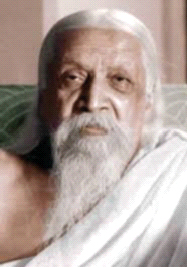
“We speak often of the Hindu religion, of the Sanatan Dharma, but few of us really know what that religion is. Other religions are preponderatingly religions of faith and profession, but the Sanatan Dharma is life itself; it is a thing that has not so much to be believed as lived. This is the Dharma that for the salvation of humanity was cherished in the seclusion of this peninsula from of old. It is to give this religion that India is rising. She does not rise as other countries do, for self or when she is strong, to trample on the weak. She is rising to shed the eternal light entrusted to her over the world. India has always existed for humanity and not for herself and it is for humanity and not for herself that she must be great”. — Sri Aurobindo, Uttarpara Speech, May 30, 1909
For a civilisational society like Bharat with a heritage of thousands of years, seventy-five years is a relatively smaller period. Still, we celebrated the Azadi Ka Amrit Mahotsav simply because this ancient land, though in a divided form, attained Independence with the prolonged struggle and desire to reclaim the desired position for Bharat Mata on the world stage. The formal celebration of regaining freedom from colonial rule seventy-six years ago will come to an end with the Meri Mati-Mera Desh (My Soil – My Country) campaign. Under the participatory initiative, ordinary people will undertake multiple activities from the village level to the national capital. Both in rural and urban areas, each village, panchayat, block, town, city, municipality etc., will erect Shilaphalakam or memorial plaques saluting the sacrifices of local brave–hearts. An Amrit Kalash Yatra will also be conducted, carrying soil from all corners of the country in 7,500 Kalash to create an Amrit Vatika (memorial garden) in Delhi, symbolising the spirit of Ek Bharat Shreshtha Bharat. The campaign will be a culmination of the Amrit Mahotsav that started on March 12, 2021, and the beginning of executing the resolutions for the centenary year to be celebrated in 2047.
The two-year-long celebrations contributed immensely to changing our approach towards the freedom struggle. We, as a nation, have developed a more comprehensive understanding of the process of colonisation. It was a political subjugation and a cultural and intellectual suppression attempt to denationalise society. Similarly, our collective response was not just political but holistic with the objectives of Swadharma, Swadeshi, Swabhasha and Swaraj. In this process of continuous resistance, all sections of society, regions, sects and ideologies contributed with a clear conviction for complete Independence. Many unsung freedom fighters got their due recognition, and numeral stories of local resistance and sacrifices resonated in the national consciousness. The realisation that what attained in 1947 was just political freedom. Reclaiming our cultural ethos of unity and restructuring our system based on the decentralised governance model is still a process. Contemplation on these lines is one of the most remarkable achievements of the Amrit Mahotsav celebrations.
Immediately after the Independence, the ruling class should have ideally accelerated this decolonisation process. From the education system to polity, nationalisation should have been the mantra, as reflected during our Constituent Assembly debates. In the Congress party, some leaders carried this legacy of civilisational wisdom and insisted on reclaiming our national symbols and pride. Despite PM Nehru’s displeasure, the rejuvenation of Somnath temple was the beginning of that process. Eminent and culturally rooted historian R C Mujumdar taking up the cultural history project of Bharat, again shelved by Nehru, was also meant for the same. It was Nehru, and his obsession with the Western model that halted that journey. Later, Congress exhibited a clear departure from the Gandhian ideals and some strange form of democratic socialism, in reality, institutionalised as dynastic authoritarianism was imposed on Bharat. The socialistic pattern of the economy, blindly imported concept by Nehruvians, suppressed the entrepreneurial spirit of Bharat and conveniently branded as the ‘Hindu Rate of Growth’. Intellectual treachery, academic autocracy, media monopoly and cultural manipulations became the norm. The downfall and disconnect of the Congress and its communist ideologues are rooted in these ills.
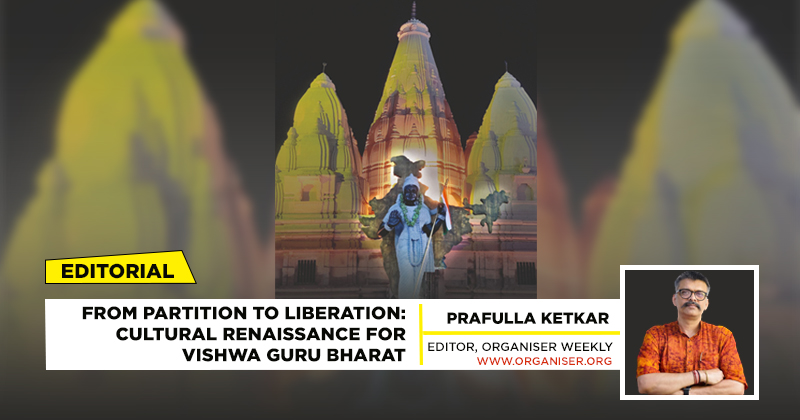
Not that individuals, organisations and movements did not attempt to renationalise the approach, but the systemic resistance was almost crushing. Treatment of the great Gandhians like Acharya Dharmapal and Jay Prakash Narayan are the most prominent examples of the continued arrogance of the colonial mindset. Any attempt to reignite the national spirit is still being ridiculed as ‘saffronisation’ and ‘communalisation’. In the last nine years, this process of eradicating the colonial symptoms, reclaiming the cultural heritage and rejuvenating the grandeur of our architecture has been accelerated. From the Statue of Unity to the Statue of Equality, from the Kashi Vishwanath corridor to the ongoing reconstruction of Ayodhya, from police and war memorials to Lachin Barphukan and Chhatrapati Shivaji memorials, all are not just architectural marvels but also symbols of the resurgence of civilisational Bharat for the contemporary times. The urge to be self-reliant in military, space and technological power follows from the same spirit. The acceptance and respect of such Bharat at the global level is the natural corollary.
Hence, this Independence Day, Organiser decided to revisit this spirit of decolonisation, hoping it would inspire us to undertake the future course of action— going beyond reconstructing heritage sites and creating new monuments. British systematically studied Bharat and created an intellectual class, theories and policies that furthered their colonisation agenda. Our social, cultural and geographical faultlines based on particular identities are nothing but the residual effect of the same. The colonial state has fractured the inherent unity of this Rashtra. To execute the Panch Pran (five resolves) envisaged and articulated by PM Narendra Modi, we must also liberate our minds. The spirit behind reclaiming sacred places and exuberating our confidence through grand national monuments will facilitate this process. We must nurture academic rigour and an institutionalised communication strategy to complement the same. The campaigns such as Har Ghar Tiranga and Meri Mati, Mera Desh would definitely flare up the patriotic sentiments around Independence Day. However, the journey towards cultural and intellectual liberation needs sustained efforts to reconnect with the inherent national unity while celebrating diversity. Hopefully, this endeavour of Organiser will provide some light in realising our national destiny to be the Vishwa Guru – the moral and righteous compass of the world. Happy Independence Day! Let us liberate ourselves from the colonial mentality!
Prafulla Ketkar, is the Editor, Organiser (Weekly) since 2013. He has a experience of over 20 years in the fields of research, media and academics. He is also Advisory Committee School of Journalism, Delhi University. He has been writing on issues related to International politics and foreign policy, with special reference to China and Democracy, Hindutva, and Bharatiya Civilisation. He was also a member of the Editorial team of the recently published Complete Works of Pt Deendayal Ji in 15 Volumes. He has 2 books, 29 academic articles, 2 entries in Encyclopedia of India and numerous articles to his credit.[Read more]
The comments posted here/below/in the given space are not on behalf of Organiser. The person posting the comment will be in sole ownership of its responsibility. According to the central government's IT rules, obscene or offensive statement made against a person, religion, community or nation is a punishable offense, and legal action would be taken against people who indulge in such activities.



















Comments