Book Review: Strategic Culture in Ramayana
December 5, 2025
  • Read Ecopy
  • Circulation
  • Advertise
  • Careers
  • About Us
  • Contact Us
Android AppiPhone AppArattai
Organiser
  • ‌
  • Bharat
    • Assam
    • Bihar
    • Chhattisgarh
    • Jharkhand
    • Maharashtra
    • View All States
  • World
    • Asia
    • Europe
    • North America
    • South America
    • Africa
    • Australia
  • Editorial
  • International
  • Opinion
  • RSS @ 100
  • More
    • Op Sindoor
    • Analysis
    • Sports
    • Defence
    • Politics
    • Business
    • Economy
    • Culture
    • Special Report
    • Sci & Tech
    • Entertainment
    • G20
    • Azadi Ka Amrit Mahotsav
    • Vocal4Local
    • Web Stories
    • Education
    • Employment
    • Books
    • Interviews
    • Travel
    • Law
    • Health
    • Obituary
  • Subscribe
    • Subscribe Print Edition
    • Subscribe Ecopy
    • Read Ecopy
  • ‌
  • Bharat
    • Assam
    • Bihar
    • Chhattisgarh
    • Jharkhand
    • Maharashtra
    • View All States
  • World
    • Asia
    • Europe
    • North America
    • South America
    • Africa
    • Australia
  • Editorial
  • International
  • Opinion
  • RSS @ 100
  • More
    • Op Sindoor
    • Analysis
    • Sports
    • Defence
    • Politics
    • Business
    • Economy
    • Culture
    • Special Report
    • Sci & Tech
    • Entertainment
    • G20
    • Azadi Ka Amrit Mahotsav
    • Vocal4Local
    • Web Stories
    • Education
    • Employment
    • Books
    • Interviews
    • Travel
    • Law
    • Health
    • Obituary
  • Subscribe
    • Subscribe Print Edition
    • Subscribe Ecopy
    • Read Ecopy
Organiser
  • Home
  • Bharat
  • World
  • Operation Sindoor
  • Editorial
  • Analysis
  • Opinion
  • Culture
  • Defence
  • International Edition
  • RSS @ 100
  • Magazine
  • Read Ecopy
Home Bharat

Book Review: Strategic Culture in Ramayana

The book is an outcome of a serious academic effort to interpret the Indian knowledge tradition through the textual and strategic reading of the ‘Ramayana’

Dr Vivek Kumar MishraDr Vivek Kumar Mishra
Jul 23, 2023, 06:00 pm IST
in Bharat, Book Review
Follow on Google News
FacebookTwitterWhatsAppTelegramEmail
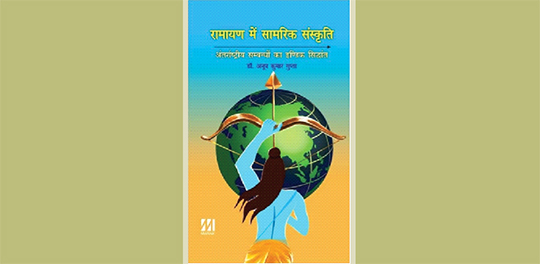
Title: Ramayan Mein Saamrik Sanskriti : Antarashtriya Sambandhon Ka Indic Sidhant, Author: Dr. Anoop Kumar Gupta, Publisher: Manak Publications Pvt. Ltd., Pp284, ” 750.00

Valmiki Ramayana is the first epic in Sanskrit; that is why it is also called Adikavya. This epic presents a captivating tableau of ideal life values. Valmiki Ramayana also has a strategic dimension that needs more attention. The place of Ramayana in the pre-Kautilya strategic thinking tradition is very significant. The contemporary International Relations Theory (IRT) is Euro-centric, status quo, and non-inclusive. Indian knowledge tradition has not been included or given due space by Western scholars in the study of International Relations. Very little has been written on the Indian perspective on International Relations.

Indian scholar Binay Kumar Sarkar initiated the discussion on the Indian approach to international Relations in 1919 with the article “Hindu Theory of International Relations”, published in the journal American Political Science Review. Later, other scholars such as V Ramchandra Dikshitar, George Modelski, G T Date, Torkel Brekke, BNS Yadav, Michael Liebig, Kaushik Roy, Amrita Narlikar and Aruna Narlikar and Foreign Minister S Jaishankar took this tradition forward. In February 2023, the publication of the book “Indic Perspective on International Relations”, edited by Dr Vivek Kumar Mishra, is a constructive initiative in this direction. Taking this link  forward, this book by Dr Anoop Kumar Gupta is a commendable step.

In the foreword, the Dean of Bharatiya Vidya Bhavan, Prof Shashi Bala, stated that many scholars were unable to understand the Indian perspective, being influenced by the literature written on the Indian knowledge system by foreign scholars. Thus many important subjects remained away from us, like science in Vedas or martial arts in Ramayana. According to Prof Shashi Bala, skill in warfare has been an integral feature of our culture since ancient times. Both arms and scriptures were equally trained in the ashrams during the Ramayana period in India. Based on dignity and ideals, paving the way for public welfare, and establishing life values, war is seen as the conclusion in the life of Bhagwan Ram in Ramayana.

The strategic culture of Rama reflected a fine flend of politico-military and spiritual-cultural ethos. In contrast, the strategic culture of Ravana is based only on materialism and military character

Strategic Culture and its relation with national security

The concept of “strategic culture” is related to national security. After India’s Independence, enough academic work has been done on the theoretical and practical dimensions of Indian strategic aspects. Still, scholars did not give proper space to the study of “strategic culture” in ancient Indian literature. Ramayana has generally been seen, understood and explained more from religious, spiritual, cultural, literary and social perspectives, but it is also an important strategic text and contains an important strategic dimension. Scholars did not pay proper attention to this crucial aspect of Ramayana. No important textual study and analysis has been done on this subject. This book by Dr Anoop Kumar Gupta is an important academic effort toward a comprehensive textual analysis of the strategic culture in Ramayana.

Ramayana can play a pivotal role in the development of Indian theory of International Relations

An analysis of the Ramayana from a strategic point of view can play an essential role in the development of the Indian theory of International Relations. The current form of International Relations theory is Europe-centric, in which emphasis is laid only on European principles and values. The main reason is that Indian scholars have not taken any serious initiative in this regard. This book can be an important departure point in making the spectrum of current International Relations theory more comprehensive and inclusive and in developing the Indian understanding of power and its use.

The book is divided into nine chapters. The first chapter discusses various aspects of strategic culture and grand strategy, along with a detailed description of the development of non-Western International Relations theories and Indian theory as an alternative. In the second chapter, discourses on the strategic culture of contemporary India have been discussed and analysed. In the third chapter, a comprehensive analysis has been made of the discourse on the strategic culture of ancient India. The following five chapters focus on the nature of strategic culture in the Ramayana. In chapter four, Ramayana’s geo-strategic environment is discussed along with the destabilising rise of Lanka under the dispensation of King Ravana. In chapter five, the nature of Ravana’s strategic thinking and an analysis of Ravana’s strategy are presented in chapter six. In chapter seven, the strategic thinking of Rama is discussed, and in chapter eight, the strategy of Rama is analysed. In the last chapter, discussing the relevance of “strategic culture” in Ramayana, it has been emphasised how the strategic reading of Ramayana is relevant in establishing the Indic perspective on International Relations Theory.

Know about the two paradigms of strategic culture in Ramyana 

Thus the book mainly focuses on the strategic culture and grand strategy in Ramayana. The author has given a detailed description of two paradigms of strategic culture in Ramayana. On the one hand, there is a model of the strategic culture of Rama, and on the other hand, there is a model of the strategic culture of Ravana. There is a great difference in strategic thinking and strategic behaviour between Ravana and Rama. The core value of Rama’s strategic culture is spiritual non-dualism, while the basic fundamental of Ravana’s strategic culture is materialism. There is a wonderful balance of idealism and realism in the strategic culture of Rama, but the pattern of aggressive realism is seen in the strategic culture of Ravana.

The strategic culture of Rama reflected a fine blend of politico-military and spiritual-cultural ethos. In contrast, the strategic culture of Ravana is based only on materialism and military character. In the strategic culture of Ram, there is no hesitation to use force and adopt the path of war to protect Dharma, justice, and public welfare. In contrast, for Ravana, the power element is a means of domination, expansion, and oppression of others. Therefore, the difference between Rama’s ideology and Ravana’s ideology can be described as the difference between the ideology of Dharma and Adharma. The strategic thought and strategic preferences of Rama and Ravana have been explained very well in this book.

The author has made a very commendable and serious academic effort on the important subject of strategic culture in the Indian knowledge tradition through the textual and strategic reading of the Ramayana.


Topics: Bharatiya Vidya BhavanInternational Relations theoryDharma and AdharmaIndian theory of International RelationsRamayan Mein Saamrik Sanskriti : Antarashtriya Sambandhon Ka Indic SidhantRamayana
ShareTweetSendShareSend
✮ Subscribe Organiser YouTube Channel. ✮
✮ Join Organiser's WhatsApp channel for Nationalist views beyond the news. ✮
Previous News

Even if billions of people support Amartya Sen, Visva Bharati shall not budge an inch: VB on Sen’s “illegal occupation”

Next News

S20-G20 Summit: Isha Yoga Center brings a new impression of India, say G20 Delegates

Related News

Ayodhya to host a Ramayana park featuring a 25-foot Ravana statue

Ayodhya to host a Ramayana park featuring a 25-foot Ravana statue depicting the battle between Bhagwan Ram and Ravana

Deepotsav in Ayodhya last year

Ayodhya Deepotsav 2025: 28 lakh diyas to light up Saryu Ghats, 30,000 volunteers to create new world record

Sarsanghchalak Dr Mohan Bhagwat

Maharshi Valmiki wrote Ramayan to guide people towards strength & solace through Bhagwan Ram’s ideals: Dr Bhagwat

Birth Anniversary of Maharishi Valmiki: A celebration of social equality and human upliftment

Representative image

Uttarakhand urges NCERT to introduce Bhagavad Gita & Ramayana; Initiative aims to strengthen civilizational roots

Swami Vivekananda

Immortal Swami Vivekananda: The end of an era, the rise of an idea

Load More

Comments

The comments posted here/below/in the given space are not on behalf of Organiser. The person posting the comment will be in sole ownership of its responsibility. According to the central government's IT rules, obscene or offensive statement made against a person, religion, community or nation is a punishable offense, and legal action would be taken against people who indulge in such activities.

Latest News

DGCA orders probe into IndiGo flight disruptions; Committee to report in 15 days

BJYM leader Shyamraj with Janaki

Kerala: Widow of BJP worker murdered in 1995 steps into electoral battle after three decades at Valancherry

Russian Sber bank has unveiled access to its retail investors to the Indian stock market by etching its mutual fund to Nifty50

Scripting economic bonhomie: Russian investors gain access to Indian stocks, Sber unveils Nifty50 pegged mutual funds

Petitioner S Vignesh Shishir speaking to the reporters about the Rahul Gandhi UK citizenship case outside the Raebareli court

Rahul Gandhi UK Citizenship Case: Congress supporters create ruckus in court; Foreign visit details shared with judge

(L) Kerala High Court (R) Bouncers in Trippoonithura temple

Kerala: HC slams CPM-controlled Kochi Devaswom Board for deploying bouncers for crowd management during festival

Fact Check: Rahul Gandhi false claim about govt blocking his meet with Russian President Putin exposed; MEA clears air

Union Minister for Road Transport and Highways Nitin Gadkari (Right)

India set for highway overhaul as Union Minister Nitin Gadkari unveils nationwide shift to MLFF electronic tolling

RSS Akhil Bharatiya Prachar Pramukh Shri Sunil Ambekar

When Narrative Wars result in bloodshed, countering them becomes imperative: Sunil Ambekar

Ministry of Civil Aviation mandates emergency action: IndiGo ordered to stabilise flight operations by midnight

Chhattisgarh CM Vishnu Deo Sai at Panchjanya Conclave, Nava Raipur, Image Courtesy - Chhattisgarh govt

Panchjanya Conclave: Chhattisgarh CM Sai shares views on development projects in Maoist hotbed, women empowerment

Load More
  • Privacy
  • Terms
  • Cookie Policy
  • Refund and Cancellation
  • Delivery and Shipping

© Bharat Prakashan (Delhi) Limited.
Tech-enabled by Ananthapuri Technologies

  • Home
  • Search Organiser
  • Bharat
    • Assam
    • Bihar
    • Chhattisgarh
    • Jharkhand
    • Maharashtra
    • View All States
  • World
    • Asia
    • Africa
    • North America
    • South America
    • Europe
    • Australia
  • Editorial
  • Operation Sindoor
  • Opinion
  • Analysis
  • Defence
  • Culture
  • Sports
  • Business
  • RSS @ 100
  • Entertainment
  • More ..
    • Sci & Tech
    • Vocal4Local
    • Special Report
    • Education
    • Employment
    • Books
    • Interviews
    • Travel
    • Health
    • Politics
    • Law
    • Economy
    • Obituary
  • Subscribe Magazine
  • Read Ecopy
  • Advertise
  • Circulation
  • Careers
  • About Us
  • Contact Us
  • Policies & Terms
    • Privacy Policy
    • Cookie Policy
    • Refund and Cancellation
    • Terms of Use

© Bharat Prakashan (Delhi) Limited.
Tech-enabled by Ananthapuri Technologies