Study finds new design of computer memory that reduce energy consumption
June 4, 2026
  • Read Ecopy
  • Circulation
  • Advertise
  • Careers
  • About Us
  • Contact Us
Android AppiPhone AppArattai
Organiser
  • ‌
  • Bharat
    • Assam
    • Bihar
    • Chhattisgarh
    • Jharkhand
    • Maharashtra
    • View All States
  • World
    • Asia
    • Europe
    • North America
    • South America
    • Africa
    • Australia
  • Editorial
  • International
  • Opinion
  • RSS @ 100
  • More
    • Op Sindoor
    • Analysis
    • Sports
    • Defence
    • Politics
    • Business
    • Economy
    • Culture
    • Special Report
    • Sci & Tech
    • Entertainment
    • G20
    • Azadi Ka Amrit Mahotsav
    • Vocal4Local
    • Web Stories
    • Education
    • Employment
    • Books
    • Interviews
    • Travel
    • Law
    • Health
    • Obituary
  • Subscribe
    • Subscribe Print Edition
    • Subscribe Ecopy
    • Read Ecopy
  • ‌
  • Bharat
    • Assam
    • Bihar
    • Chhattisgarh
    • Jharkhand
    • Maharashtra
    • View All States
  • World
    • Asia
    • Europe
    • North America
    • South America
    • Africa
    • Australia
  • Editorial
  • International
  • Opinion
  • RSS @ 100
  • More
    • Op Sindoor
    • Analysis
    • Sports
    • Defence
    • Politics
    • Business
    • Economy
    • Culture
    • Special Report
    • Sci & Tech
    • Entertainment
    • G20
    • Azadi Ka Amrit Mahotsav
    • Vocal4Local
    • Web Stories
    • Education
    • Employment
    • Books
    • Interviews
    • Travel
    • Law
    • Health
    • Obituary
  • Subscribe
    • Subscribe Print Edition
    • Subscribe Ecopy
    • Read Ecopy
Organiser
  • Home
  • Bharat
  • World
  • Operation Sindoor
  • Editorial
  • Analysis
  • Opinion
  • Culture
  • Defence
  • International Edition
  • RSS @ 100
  • Magazine
  • Read Ecopy
Home World

Study finds new design of computer memory that reduce energy consumption

The University of Cambridge-led team created a device that processes data in the same way that synapses in the human brain do

WEBDESKWEBDESK
Jun 27, 2023, 04:30 pm IST
in World, Sci & Tech
Follow on Google News
FacebookTwitterWhatsAppTelegramEmail

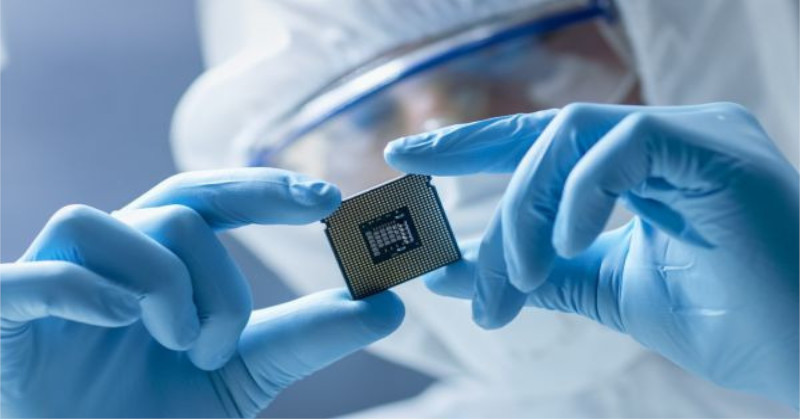
Researchers created a new design for computer memory that could improve performance while also lowering the energy demands of internet and communications technologies, which are expected to consume nearly a third of global electricity in the next ten years.

The study was published in the journal, ‘Science Advances.’

The University of Cambridge-led team created a device that processes data in the same way that synapses in the human brain do. The devices are made of hafnium oxide, a material that is already used in the semiconductor industry, and tiny self-assembled barriers that can be raised and lowered to allow electrons to pass through.

This method of altering the electrical resistance in computer memory devices and allowing information processing and memory to coexist could lead to the development of computer memory devices with significantly higher density, higher performance, and lower energy consumption. The findings were published in the journal Science Advances.

Our data-hungry world has led to a ballooning of energy demands, making it ever more difficult to reduce carbon emissions. Within the next few years, artificial intelligence, internet usage, algorithms and other data-driven technologies are expected to consume more than 30 per cent of global electricity.

“To a large extent, this explosion in energy demands is due to shortcomings of current computer memory technologies,” said first author Dr Markus Hellenbrand, from Cambridge’s Department of Materials Science and Metallurgy. “In conventional computing, there’s memory on one side and processing on the other, and data is shuffled back between the two, which takes both energy and time.”

One potential solution to the problem of inefficient computer memory is a new type of technology known as resistive switching memory. Conventional memory devices are capable of two states: one or zero. A functioning resistive switching memory device, however, would be capable of a continuous range of states – computer memory devices based on this principle would be capable of far greater density and speed.

“A typical USB stick based on the continuous range would be able to hold between ten and 100 times more information, for example,” said Hellenbrand.

Hellenbrand and his colleagues developed a prototype device based on hafnium oxide, an insulating material that is already used in the semiconductor industry. The issue with using this material for resistive switching memory applications is known as the uniformity problem. At the atomic level, hafnium oxide has no structure, with the hafnium and oxygen atoms randomly mixed, making it challenging to use for memory applications.

However, the researchers found that by adding barium to thin films of hafnium oxide, some unusual structures started to form, perpendicular to the hafnium oxide plane, in the composite material.

These vertical barium-rich ‘bridges’ are highly structured, and allow electrons to pass through, while the surrounding hafnium oxide remains unstructured. At the point where these bridges meet the device contacts, an energy barrier was created, which electrons can cross. The researchers were able to control the height of this barrier, which in turn changes the electrical resistance of the composite material.

“This allows multiple states to exist in the material, unlike conventional memory which has only two states,” said Hellenbrand.

Unlike other composite materials, which require expensive high-temperature manufacturing methods, these hafnium oxide composites self-assemble at low temperatures. The composite material showed high levels of performance and uniformity, making them highly promising for next-generation memory applications.

A patent on the technology has been filed by Cambridge Enterprise, the University’s commercialisation arm.

“What’s really exciting about these materials is they can work like a synapse in the brain: they can store and process information in the same place, like our brains can, making them highly promising for the rapidly growing AI and machine learning fields,” said Hellenbrand.

(with inputs from ANI)

Topics: TechnologyUniversity of Cambridgeenergy consumptionreduce energy consumptionHuman brainscience and tech
ShareTweetSendShareSend
✮ Subscribe Organiser YouTube Channel. ✮
✮ Join Organiser's WhatsApp channel for Nationalist views beyond the news. ✮
Previous News

Bihar: Anti-Terrorist Squad forms SIT to investigate Bhagalpur blast case

Next News

Uttar Pradesh: Sikander Ahmed raped and bludgeoned 19-year-old woman to death; administration bulldozed his property 

Related News

Representative Image

Indian scientists embed nano-gold in ultra-thin films; Opening new frontiers in self-powered wearable technologies

The Hague [Netherlands], May 16 (ANI): Prime Minister Narendra Modi and Prime Minister of the Netherlands Rob Jetten during the repatriation ceremony of the 11th-century Chola Copper Plates being returned to India from the Netherlands, in The Hague on Saturday. (@narendramodi X/ANI Photo)

Five-Nation Visit: India and Netherlands elevate ties to strategic partnership in trade, tech and defence

Representative Image

Bharat’s tech future will be defined by AI, semiconductors and Nari Shakti

Representative Image

Radiant Dawn of Atmanirbhar Bharat: From the shores of Keralam to the reactors of Tamil Nadu’s Kalpakkam

Delhi expands ICT infrastructure in schools, upgrade 376 ICT labs, add 31 new digital labs in government schools

Prime Minister Narendra Modi and Austria Chancellor Christian Stocker

India & Austria forge trade, technology & defence pact; Leaders condemn Pahalgam & Red Fort terror attack

Load More

Latest News

A representative image generated using AI

BHAVYA Scheme to transform India’s Manufacturing Landscape: DPIIT secretary calls for investment-ready industrial parks

Keralam: Madrasa Ustad Shemeer Asari sends Obscene video to Girls in WhatsApp Group, asks if they can do the same

Keralam: Madrasa Ustad Shemeer Asari sends Obscene video to Girls in WhatsApp Group, asks if they can do the same

Board outside the office of Karnataka Lokayukta

Karnataka government accused of shielding tainted officials as Lokayukta probes remain stalled

Ritabrata Banerjee Claims LoP Post as Revolt Rocks Mamata Banerjee's Party

TMC vs TMC in Bengal: Expelled leader Ritabrata Banerjee stakes claim to LoP post, deepening crisis in Mamata’s party

DRDO, IAF successfully flight-test indigenous RudraM-II air-to-surface missile

DRDO, IAF conduct successful RudraM-II Missile trials under extreme conditions, boosting India’s defence self-reliance

India receive the fourth squadron of the Russian-made S-400 air defence system

India receives fourth S-400 missile squadron from Russia, bolstering air defence

Union Minister Shivraj Singh Chouhan

Union Minister Shivraj Singh Chouhan pushes farmer-first reforms at national kharif campaign 2026 meet

Firhad Hakim Seeks Resignation as Kolkata Mayor Amid Growing Crisis in Mamata Banerjee's TMC

Another Shock for TMC? Mamata Banerjee’s trusted lieutenant Firhad Hakim seeks to quit as Mayor amid crisis

TCS Nashik Case: Former AIMIM MP Imtiaz Jaleel Mentioned in 1,500-Page Chargesheet; Admits Meeting Nida Khan’s Family

TCS Corporate Jihad Case: Imtiaz Jaleel met Nida Khan’s family while she was absconding, says 1,500-page chargesheet

PM Modi to Overtake Nehru as India's Longest-Serving Elected Prime Minister on June 10

PM Modi set to surpass Nehru’s record, become India’s longest-serving elected Prime Minister

Load More
  • Privacy
  • Terms
  • Cookie Policy
  • Refund and Cancellation
  • Delivery and Shipping

© Bharat Prakashan (Delhi) Limited.
Tech-enabled by Ananthapuri Technologies

  • Home
  • Search Organiser
  • Bharat
    • Assam
    • Bihar
    • Chhattisgarh
    • Jharkhand
    • Maharashtra
    • View All States
  • World
    • Asia
    • Africa
    • North America
    • South America
    • Europe
    • Australia
  • Editorial
  • Operation Sindoor
  • Opinion
  • Analysis
  • Defence
  • Culture
  • Sports
  • Business
  • RSS @ 100
  • Entertainment
  • More ..
    • Sci & Tech
    • Vocal4Local
    • Special Report
    • Education
    • Employment
    • Books
    • Interviews
    • Travel
    • Health
    • Politics
    • Law
    • Economy
    • Obituary
  • Subscribe Magazine
  • Read Ecopy
  • Advertise
  • Circulation
  • Careers
  • About Us
  • Contact Us
  • Policies & Terms
    • Privacy Policy
    • Cookie Policy
    • Refund and Cancellation
    • Terms of Use

© Bharat Prakashan (Delhi) Limited.
Tech-enabled by Ananthapuri Technologies