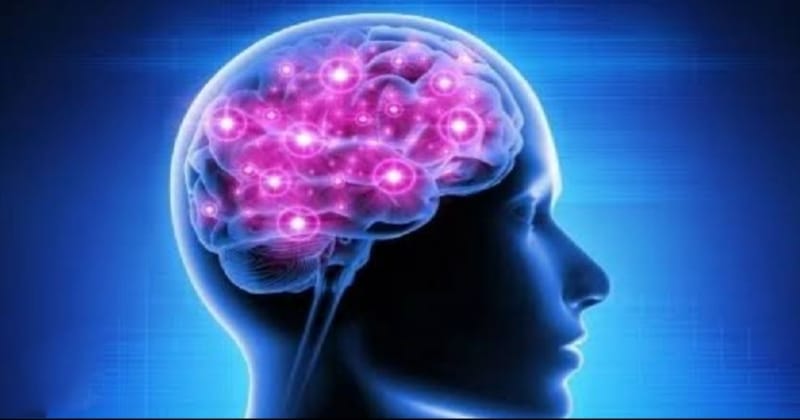
Brain waves can predict cognitive impairment in Parkinson's disease: Study
September 14, 2026
  • Read Ecopy
  • Circulation
  • Advertise
  • Careers
  • About Us
  • Contact Us
Android AppiPhone AppArattai
Organiser
  • ‌
  • Bharat
    • Assam
    • Bihar
    • Chhattisgarh
    • Jharkhand
    • Maharashtra
    • View All States
  • World
    • Asia
    • Europe
    • North America
    • South America
    • Africa
    • Australia
  • Editorial
  • International
  • Opinion
  • RSS @ 100
  • More
    • World Hindu Congress 2026
    • Op Sindoor
    • Analysis
    • Sports
    • Defence
    • Politics
    • Business
    • Economy
    • Culture
    • Special Report
    • Sci & Tech
    • Entertainment
    • G20
    • Azadi Ka Amrit Mahotsav
    • Vocal4Local
    • Web Stories
    • Education
    • Employment
    • Books
    • Interviews
    • Travel
    • Law
    • Health
    • Obituary
  • Subscribe
    • Subscribe Print Edition
    • Subscribe Ecopy
    • Read Ecopy
  • ‌
  • Bharat
    • Assam
    • Bihar
    • Chhattisgarh
    • Jharkhand
    • Maharashtra
    • View All States
  • World
    • Asia
    • Europe
    • North America
    • South America
    • Africa
    • Australia
  • Editorial
  • International
  • Opinion
  • RSS @ 100
  • More
    • World Hindu Congress 2026
    • Op Sindoor
    • Analysis
    • Sports
    • Defence
    • Politics
    • Business
    • Economy
    • Culture
    • Special Report
    • Sci & Tech
    • Entertainment
    • G20
    • Azadi Ka Amrit Mahotsav
    • Vocal4Local
    • Web Stories
    • Education
    • Employment
    • Books
    • Interviews
    • Travel
    • Law
    • Health
    • Obituary
  • Subscribe
    • Subscribe Print Edition
    • Subscribe Ecopy
    • Read Ecopy
Organiser
  • Home
  • Bharat
  • World
  • Operation Sindoor
  • Editorial
  • Analysis
  • Opinion
  • Culture
  • Defence
  • International Edition
  • RSS @ 100
  • Magazine
  • Read Ecopy
Home World

Brain waves can predict cognitive impairment in Parkinson’s disease: Study

WEBDESKWEBDESK
Jun 20, 2023, 11:00 pm IST
inWorld, Health
Follow on Google News
Facebook
Twitter
WhatsAppTelegramEmail

A recent University of Iowa study’s findings may aid in the improvement of cognitive impairment in Parkinson’s disease (PD) diagnosis as well as the development of novel biomarkers and targeted treatments for the illness’s cognitive symptoms.

A few minutes of data collected from a single electrode placed on top of the head may be enough to predict cognitive issues, including dementia, in Parkinson’s disease patients. The findings of the study were published in Journal ‘Neurology, Neurosurgery & Psychiatry.’

“Cognitive decline, including dementia, is a significant and underappreciated symptom of Parkinson’s disease. Around 30 per cent of patients can have cognitive symptoms at the beginning of the disease, and up to 80 per cent will have cognitive problems at some point in their disease,” said Nandakumar Narayanan, MD, PhD, associate professor of neurology at the UI Carver College of Medicine and senior author of the new study.

“Furthermore, although we have quite a few effective treatments for the motor symptoms of Parkinson’s, including medical therapies and deep brain stimulation, we have very few treatments for the cognitive aspects of Parkinson’s disease.”

Electroencephalography (EEG), a very ancient and common technique, was used to record the participants’ frontal regions of the brains and quantify low-frequency brain waves known as delta and theta waves.

The UI team discovered that cognitive failure in PD is closely related to diminished strength of these particular brain waves when a patient is needed to engage in thinking. According to the findings, EEG, which is readily accessible and non-invasive, may be helpful in identifying cognitive impairment in PD patients.

“Traditional methods for diagnosing cognitive problems often involve time-consuming pen and paper tests and require a neurologist to administer and interpret the tests. In addition, because these traditional tests can be ‘learned,’ they cannot be used repeatedly over time for the same patient,” says Narayanan, who also is a neurologist with UI Health Care and a member of the Iowa Neuroscience Institute.

“In contrast, EEG can be done continuously over several hours or days. It can be applied in nursing homes or patient’s homes, and it gives you a richly featured description of a patient’s cognitive status.”

The EEG measurements might also be useful for monitoring and fine-tuning the cognitive side effects of medications and brain stimulation used to treat Parkinson’s disease. Eventually, EEG could even provide a basic assay to determine whether new treatments for PD are effective at improving cognitive function.

Lastly, the study, which is one of the largest to date, involving 100 PD patients across the full spectrum of cognitive function from healthy to dementia, and 49 demographically similar control participants, reveals a fundamental insight into the role of the brain signal being measured by the EEG electrode.

All the participants completed three different tasks that are commonly used to assess cognitive control, and while they were doing the task, a single EEG electrode measured the strength of the low-frequency delta and theta brain waves from their frontal cortex.

Narayanan’s team found that diminished cognitive function was correlated with diminished strength of low-frequency brain waves while the patient was doing a task. Importantly, it did not matter which cognitive task the patient was doing during the measurement.

“Surprisingly, the effect was seen simply because the patient was required to pay attention to a cue and respond. I think this is the deep insight into why Parkinson’s patients have cognitive problems: they fail to engage these basic response processes in the brain,” Narayanan explains.

“That was very surprising to us, and it’s helpful because it means we might be able to get information about cognitive function using the simplest version of this task where there’s a cue, and the patient has to engage and respond. That process– cue, engage, respond–might be enough to determine where patients are on the cognitive status scale and whether they have the potential to improve.”

Narayanan says this insight might also be an opportunity to help patients. Potentially “cueing” Parkinson’s patients to engage in a task– whether it’s walking, talking or thinking, might improve how well they perform the task. If this is true, it would have important implications for the way rehabilitation, occupational, and speech therapists help patients with PD.

(with inputs from ANI)



Topics: Cognitive impairmentElectroencephalographyPatientsdiagnosisrehabilitationParkinson's diseaseBrain waves
Share
Tweet
SendShareSend
✮ Subscribe Organiser YouTube Channel. ✮
✮ Join Organiser's WhatsApp channel for Nationalist views beyond the news. ✮
Previous News

The Emergency Revisited – Part – I (3-Part Series): The Circumstances Leading to the Imposition of Emergency

Next News

“Integration of Yoga with Modern medicine can bridge the gap”: Dr Akshay Anand

Related News

SMILE Scheme: Centre’s big push for ‘BhikshaVrittiMukt Bharat’ as 12,710 persons rehabilitated

Foundation stone laying ceremony for the natural calamity victims by SevaBharati

Keralam: SevaBharati begins housing project for homeless victims of the Wayanad landslide

Representative image

Blood test shows promise for early detection of dementia: Study

Kalyan Jewellers MD TS Kalyana Raman inaugurates Sevabharati state conference

Kerala: Sevabharati to build houses for Wayanad landslide victims; Launches rehabilitation and educational initiatives

Researchers find how seaweed antioxidants help in prevention of Parkinsons

Representative image

Researchers discovered brain region involved in control of attention

Load More

Latest News

Odisha Chief Minister Mohan Charan Majhi addresses the media at Bhubaneswar airport after returning from his UAE visit on September 13, 2026.

Odisha secures Rs 2.43 lakh crore investment proposals during CM Majhi’s five-day UAE outreach programme

Bhagwan Ganesh

Ganesh Chaturthi: Rationale behind worshipping Bhagwan Ganesh

RSS Akhil Bharatiya Sah-Bauddhik Shikshan Pramukh Deepak Vispute addressing the gathering

‘Nation First’ should be the guiding principle for every individual, regardless of their Field: Deepak Vispute

‘India was not poor; it was made poor’: The truth re-emerges through Jema Ferrer’s perspective

Six years after talent manager Disha Salian was found dead, her father Satish Salian on September 11 recorded a detailed statement with the Central Bureau of Investigation (CBI), naming Shiv Sena (UBT) leader Aaditya Thackeray, actors Dino Morea and Sooraj Pancholi, and others.

Disha Salian Murder Case: Father names Aaditya Thackeray in CBI statement; Lawyer claims gang rape, murder cover-up

Release of a book at Vishwa Bandhutva Diwas programme that was organised in Ujjain

Bharat’s youth rooted in sacrifice, service & discipline can give new direction to World: Parag Abhyankar

AI Generated Representative Image

“Let Go” — But only when it suits you? Exposing the double standards of Kashmir’s political leadership

Bharatiya Kisan Sangh distributed free school uniforms, notebooks, pen bundles, bags to 7,000 students in flood-affected areas of Assam

Assam: Bharatiya Kisan Sangh distributes free school uniforms, notebooks & bags to 7,000 flood-affected students

Chinmoy Prabhu

When a Bengali Hindu suffers in Bangladesh, where does ‘Bangali-Prem’ go?

AI Generated Representative Image

BRICS Summit: Not de-dollarisation, but derisking from dollar; India scripts pragmatic shield against external shocks

Load More
  • Privacy
  • Terms
  • Cookie Policy
  • Refund and Cancellation
  • Delivery and Shipping

© Bharat Prakashan (Delhi) Limited.
Tech-enabled by Ananthapuri Technologies

  • Home
  • Search Organiser
  • Bharat
    • Assam
    • Bihar
    • Chhattisgarh
    • Jharkhand
    • Maharashtra
    • View All States
  • World
    • Asia
    • Africa
    • North America
    • South America
    • Europe
    • Australia
  • Editorial
  • Operation Sindoor
  • Opinion
  • Analysis
  • Defence
  • Culture
  • Sports
  • Business
  • RSS @ 100
  • Entertainment
  • More ..
    • Sci & Tech
    • Vocal4Local
    • Special Report
    • Education
    • Employment
    • Books
    • Interviews
    • Travel
    • Health
    • Politics
    • Law
    • Economy
    • Obituary
  • Subscribe Magazine
  • Read Ecopy
  • Advertise
  • Circulation
  • Careers
  • About Us
  • Contact Us
  • Policies & Terms
    • Privacy Policy
    • Cookie Policy
    • Refund and Cancellation
    • Terms of Use

© Bharat Prakashan (Delhi) Limited.
Tech-enabled by Ananthapuri Technologies