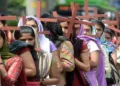
The recent violence in Manipur has brought the county’s attention back to the northeast region. Unfortunately, this time it is not for the reasons that the region has come to be known for in the past few years. After the change in dispensation in 2014 at the Centre and the government’s determined effort to bring back focus on the region that had long been ignored; development, peace and prosperity became the standard lens through which the northeast was viewed. However, the unprecedented violence across Manipur which began on May 3rdhas disturbingly brought to the fore age old ethnic and religious faultlines; even though at the outset a lay observer would be compelled to analyze the clashes between the Kuki hill tribes and the Meiteis of the valley as a mere result of the hotly debated question of Meitei inclusion in the Scheduled Tribe List. But with 60 dead, 122 injured, 1700 houses gutted, over 35,000 people evacuated and lodged in camps for their own safety and most importantly temples and churches destroyed, it is but justified to question the fulcrum of the extreme reaction to the suggestion made by the Manipur High Court to the State government to recommend the Meitei inclusion in the scheduled tribe list.
The Meiteis constitute 53 per cent of the state population and the Kukis and Nagas combined make up 40 per cent. The Meiteis are largely Hindus or follow a hybrid version of Vaishnavism and the indigenous Sanamahi religion in addition to being classified as non tribals whereas the hill tribes are entirely Christians but classified as Scheduled tribes. The Meiteis who are considered the original inhabitants of Manipur and are in larger numbersremain restricted to the valley of Imphal due to their nonscheduled tribe status. Whereas the hilltribes which are smaller in number such as the Kukis and Nagas have access and control of 90 per cent of the land outside of the valley because of their scheduled tribe status. In addition, they have the right to own land in the valley, making the Meiteis anxious about their own landholdings. These dynamics need to beunderstoodin the context of there being 31 per cent reservation in jobs and education for scheduled tribes in Manipur.
The Meitei community has long demanded Scheduled Tribe status based on the fact that while they were included as tribes alongside the Nagas and Kukis by the British government before Independence they were kept out of the Scheduled Tribes List when the Constitution (Scheduled Tribes) Order, 1950 was passed. This they say was done because they had adopted Hinduism centuries ago. They were finally given OBC status during Mandal Commission but their demand for Scheduled Tribe status had been pending since 2012 in the High Court. Addressing this demand the Manipur HC recommended the inclusion of the Meiteis to the state government resulting in the vicious backlash.
Demand of Meitei community for ST status is based on the fact that while they were included as tribes by the British, they were kept out of ST List when the Constitution (ST) Order, 1950 was passed
In reality, the Scheduled Tribal status has been recommended across the country through the years enabling communities to receive special benefits and reservations to assist their development and give them equal opportunities. The status of Scheduled Tribe is a constitutional right and provision given by the constitution for most vulnerable, backward, socially, ecologically isolated people living in forest/ hillocks with unique traits, customs, traditions and cultural values in a natural manner. To this end, the Lokur Committee was set up in 1965 to define and clarify the criteria pertaining to Schedule Tribes. The Committee recommended five criteria for identification, namely, primitive traits, distinct culture, geographical isolation, shyness of contact with the community at large, and backwardness. A multi layered procedure was laid down for inclusion of any community in ST list depending on the recommendation made by the State Government to the Ministry of Tribal Affairs. After examination by the Ministry, the recommendation is forwarded to the Registrar General of India (RGI) and the National Commission for Scheduled Tribes (NCST) for their consent. Only after the consent of these two Authorities, the proposal is sent to the Cabinet, which puts these proposals in both Houses of Parliament. According to Article 342 (2) of the constitution, the Parliament takes the final decision on all such proposals after 1950.
However, it can be argued that not many tribes fit these criterions any longer. That is why reservation was envisioned historically for a limited period of time. It can also be argued that less deserving communities that have no historicity of the tribal way of life have been included in the Scheduled List across the country.For instance in 1976, the Indira Gandhi-led government included the Banjara community or the Lambadas in the list of Scheduled Tribes, which by definition is a Nomadic Tribe, equally in dire straits for development and inclusion in the mainstream but entirely different from the tribal communities in its characteristics and needs. The case regarding this issue still continues in the Supreme Court with the tribal Gond community raising strong objections to the same. The Dhangars are another case of Nomadic Tribes in Maharashtra which come under the OBC category having been recommended for the Scheduled Tribe List. Concerns aside for the dilution of the idea with which the Schedule Tribe List was envisaged and enshrined in the Constitution the fact remains that there have never been such serious and violent backlash against the inclusion of a community by opposing communities. Even though the Meiteis due to their previous inclusion as Scheduled Tribes have a far more compelling argument in defence of their demand.
Since the violence erupted, many analysts have argued that all stakeholders and representatives of the state and this issue must come to the table and find a peaceful way forward. As noble as the cause is and as even handed as it sounds, the first question that the opposing tribes of the Kukis and Nagas must ask themselves and we must find the courage to ask them is, if practicing Hinduism can keep the Meiteis out of the Scheduled Tribe List then should the same not apply to the Kukis and Nagas that have adopted Christianity? Furthermore, why should it not extend to other tribes across the country that have adopted other organised religions? Unless we face the reality that this is as much Christians vs Hindus as it is Tribals vs non Tribals, that these divides have to be bridged, that religious leaders have to take responsibility and that the situation cannot be limited by the spectrum of security dissent will continue to spiral into anarchy.