Uniform Civil Code: Law Commission seeks views from public & religious organisations within 30 days
August 23, 2026
  • Read Ecopy
  • Circulation
  • Advertise
  • Careers
  • About Us
  • Contact Us
Android AppiPhone AppArattai
Organiser
  • ‌
  • Bharat
    • Assam
    • Bihar
    • Chhattisgarh
    • Jharkhand
    • Maharashtra
    • View All States
  • World
    • Asia
    • Europe
    • North America
    • South America
    • Africa
    • Australia
  • Editorial
  • International
  • Opinion
  • RSS @ 100
  • More
    • Op Sindoor
    • Analysis
    • Sports
    • Defence
    • Politics
    • Business
    • Economy
    • Culture
    • Special Report
    • Sci & Tech
    • Entertainment
    • G20
    • Azadi Ka Amrit Mahotsav
    • Vocal4Local
    • Web Stories
    • Education
    • Employment
    • Books
    • Interviews
    • Travel
    • Law
    • Health
    • Obituary
  • Subscribe
    • Subscribe Print Edition
    • Subscribe Ecopy
    • Read Ecopy
  • ‌
  • Bharat
    • Assam
    • Bihar
    • Chhattisgarh
    • Jharkhand
    • Maharashtra
    • View All States
  • World
    • Asia
    • Europe
    • North America
    • South America
    • Africa
    • Australia
  • Editorial
  • International
  • Opinion
  • RSS @ 100
  • More
    • Op Sindoor
    • Analysis
    • Sports
    • Defence
    • Politics
    • Business
    • Economy
    • Culture
    • Special Report
    • Sci & Tech
    • Entertainment
    • G20
    • Azadi Ka Amrit Mahotsav
    • Vocal4Local
    • Web Stories
    • Education
    • Employment
    • Books
    • Interviews
    • Travel
    • Law
    • Health
    • Obituary
  • Subscribe
    • Subscribe Print Edition
    • Subscribe Ecopy
    • Read Ecopy
Organiser
  • Home
  • Bharat
  • World
  • Operation Sindoor
  • Editorial
  • Analysis
  • Opinion
  • Culture
  • Defence
  • International Edition
  • RSS @ 100
  • Magazine
  • Read Ecopy
Home Bharat

Uniform Civil Code: Law Commission seeks views from public & religious organisations within 30 days

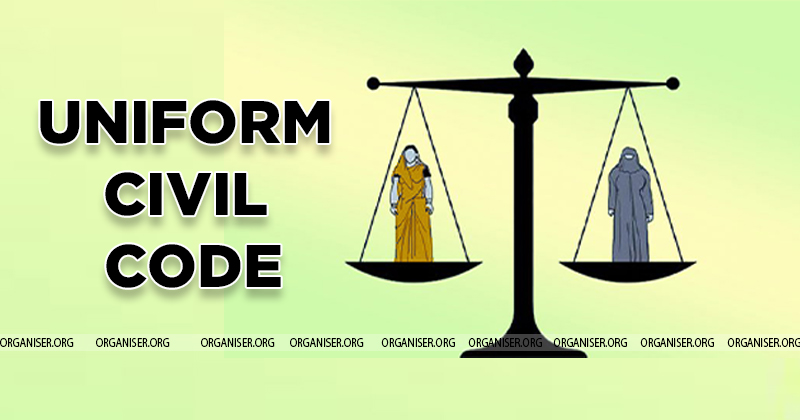
Uniform Civil Code resonates with the idea of ‘one country, one rule’ and finds its place in Article 44 of the Constitution of India

WEBDESKWEBDESK
Jun 15, 2023, 02:00 pm IST
inBharat
Follow on Google News
Uniform Civil Code

Uniform Civil Code

Facebook
Twitter
WhatsAppTelegramEmail

On June 14, the 22nd Law Commission of India issued a public notice soliciting the views and ideas of the general public and recognised religious organisations about the ‘Uniform Civil Code.’ The Law Commission of India is examining the subject matter in reference to the Ministry of Law and Justice’s reference dated June 17, 2016.

Earlier, the 21st Law Commission of India had examined the subject of the Uniform Civil Code and solicited views from stakeholders through an appeal and a questionnaire dated October 7, 2016, and further public notices in March and April 2018. Thereafter, the 21st Law Commission of India issued a Consultation Paper on “Reforms of Family Law” on August 31, 2018.

However, since more than three years have passed since the issuance of the Consultation Paper, the Law Commission of India has decided to deliberate afresh over the subject owing to the relevance and importance of the subject and various judicial orders on the subject.

Law Commission’s notice dated June 14 states, “Accordingly, the 22nd Law Commission of India decided again to solicit views and ideas of the public at large and recognized religious organizations about the Uniform Civil Code. Those who are interested and willing may present their views within a period of 30 days from the date of Notice through “click here” button or by Email at [email protected] to the Law Commission of India.”

“The concerned stakeholders are also at liberty to make their submissions in the form of consultation/ discussion/ working papers on any of the issues pertaining to the Uniform Civil Code to the “Member Secretary, Law Commission of India, 4th Floor, Lok Nayak Bhawan, Khan Market, New Delhi – 110 003.” If need be, Commission may call upon any individual or organization for a personal hearing or discussion,” the notice further stated.

Uniform Civil Code resonates with the idea of ‘one country, one rule’ and finds its place in Article 44 of the Constitution of India. Enshrined in Part IV of the Constitution, Uniform Civil Code is a Directive Principle of State Policy (DPSP). However, while the DPSPs are basic principles included in the Constitution to provide instructions/guidelines for the governments while formulating laws, they are not enforceable. Article 44 of the Constitution of India states, “The State shall endeavour to secure for the citizens a uniform civil code throughout the territory of India.”

Shah Bano Case (1985)

A 73-year-old woman by the name of Shah Bano was divorced by her husband, using the now outlawed ‘triple talaq’ or Talaq-e-Biddat, where she was not granted proper maintenance under the same. As a result, she filed a case based on Section 125 of the All India Criminal Code, which pertains to the ‘Maintenance of wives, children, and parents.’
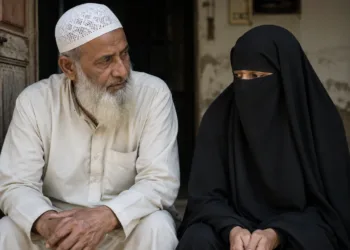
A representative image generated via AI
Bharat

UP woman alleges months of rape by father-in-law; husband pronounces triple talaq; 5 booked under anti-triple talaq law

The Hindu victim in the case (Photo: Subhi Vishwakarma)
Bharat

Love Jihad Horror: Hindu woman alleges 5 nikahs, 3 halalas in 13 year ordeal after ‘Naveen’ turned out to be Naved

A representation image of triple talaq, a banned practice in Bharat
Bharat

Rajasthan: Woman files Triple Talaq case against husband Furqan in Tonk

Rashtriya Swayamsevak Sangh (RSS) Sarsanghchalak Dr Mohan Bhagwat
Politics

“RSS supports reservations guaranteed under Constitution,” says Sarsanghchalak Dr Mohan Bhagwat trashes viral clip

Victim Nasreen and her husband Shahid (Organiser)
Bharat

Triple Talaq victim share plight with Organiser, “Brother-in-law raped, husband had unnatural sex, friends molested ”

Based on the judgment resulting from this case, a union civil code was recommended, and after the verdict, there were agitations and protests. As a result, Parliament passed the Muslim Women’s (Right to Protection on Divorce) Act (MWA) in 1986, making Section 125 of the Criminal Procedural Code inapplicable to Muslim women.

Daniel Latifi Case (2001)

The Muslim Woman’s Act (MVA) was challenged on the grounds that it violated Articles 14 and 15 and Article 21 of the Indian Constitution. While declaring the aforementioned law Constitutional, the Apex Court provided provisions that it would complement Section 125 of the Indian Criminal Code. This would ensure that the amount received by a wife during her Iddat period was sufficient to sustain her during that time and to provide for her future.

John Vallamattom Case (2003)

A Keralite Priest, John Vallamottom had challenged the Constitutional validity of Section 118 of the Indian Succession Act, which applies to all non-Hindus in the Union of India. He challenged that Section 118 of the ISA, Act was discriminatory in nature against Christians as this particular section put unreasonable restrictions on the amount of donations and charitable that can be done by Christians, with their own free will. The bench struck down the relevant Section 118 as unconstitutional.

Shayara Bano Case (2017)

In October 2015, Rizwan Ahmed divorced Shayara Bano through the practice of ‘talaq-e-biddat,’ also known as instantaneous triple talaq, wherein the man can divorce the wife by saying ‘talaq’ thrice and without the wife’s consent. Bano filed a writ petition before the Supreme Court challenging the constitutionality of talaq-e-biddat, polygamy and nikah-halala, contending that these practices violate multiple fundamental rights and were not protected by the Right to Freedom of Religion.

On February 16, 2017, the Supreme Court directed the All India Muslim Personal Law Board (AIMPLB), the Government of India and certain women’s rights groups. Notably, the AIMPLB filed submissions against Bano, while others filed in her support. The AIMPLB claimed that the courts could not review the uncodified Muslim personal laws and that these practices were essential to Islam and protected under the Right to Freedom of Religion.

Supreme Court’s Constitution Bench heard the matter and delivered a split verdict in a 3:2 ratio. While the majority held that the practice of ‘talaq-e-biddat’ was manifestly arbitrary and unconstitutional, the minority comprising Chief Justice Khehar and Justice Nazeer, said that the practice was protected under the Right to Freedom of Religion.

A representative image generated via AI
Bharat

UP woman alleges months of rape by father-in-law; husband pronounces triple talaq; 5 booked under anti-triple talaq law

The Hindu victim in the case (Photo: Subhi Vishwakarma)
Bharat

Love Jihad Horror: Hindu woman alleges 5 nikahs, 3 halalas in 13 year ordeal after ‘Naveen’ turned out to be Naved

A representation image of triple talaq, a banned practice in Bharat
Bharat

Rajasthan: Woman files Triple Talaq case against husband Furqan in Tonk

Rashtriya Swayamsevak Sangh (RSS) Sarsanghchalak Dr Mohan Bhagwat
Politics

“RSS supports reservations guaranteed under Constitution,” says Sarsanghchalak Dr Mohan Bhagwat trashes viral clip

Victim Nasreen and her husband Shahid (Organiser)
Bharat

Triple Talaq victim share plight with Organiser, “Brother-in-law raped, husband had unnatural sex, friends molested ”

The Government of India, in 2019, enacted legislation punishing the practice of ‘talaq-e-biddat’ with a maximum punishment of up to three years. Notably, Uniform Civil Code has been on Bharatiya Janata Party’s (BJP) agenda for a long time. The BJP has said that a secular set of laws would ensure gender equality. The BJP’s 2014 election manifesto said, “BJP believes that there cannot be gender equality till such time India adopts a uniform civil code, which protects the rights of all women, and the BJP reiterates its stand to draft a uniform civil code, drawing upon the best traditions and harmonizing them with the modern times,” the manifesto said.


Topics: talaq-e-biddatConstitution of IndiaUniform Civil CodeUCCLaw Commission of IndiaMinistry of Law and JusticeShah Bano CaseShayara Bano CaseJohn Vallamattom CaseDaniel Latifi CaseDirective Principle of State Policy
Share29
Tweet
SendShareSend
✮ Subscribe Organiser YouTube Channel. ✮
✮ Join Organiser's WhatsApp channel for Nationalist views beyond the news. ✮
Previous News

Modi Government asks e-commerce firms to create a self-regulatory framework to end ‘dark patterns’

Next News

Delhi Police recommends cancellation of POCSO against Brij Bhushan; files chargesheet in sexual harassment case

Related News

Chief Minister of West Bengal Suvendu Adhikari

West Bengal: After UCC, CM Suvendu Adhikari targets ‘Conversion’ and ‘Land Jihad’ with tough new laws in state

VHP International President Alok Kumar ji addressing the media

VHP to launch nationwide campaign seeking freedom of Hindu Temples from government control

Vandaniya Pramukh Sanchalika Ma. Shanta Kumari Ji, Pramukh Karyavahika Sita Gayatri Ji

Rashtra Sevika Samiti reviews organisational expansion; urged Union & State Govts to implement Uniform Civil Code

CM Dhami Announces Special Agniveer Cell, 10% Reservation in State Jobs for Retired Agniveers

Uttarakhand: CM Dhami unveils first dedicated Agniveer cell, homestay grants and job benefits for ex-servicemen

Madhya Pradesh's Uniform Civil Code draft proposes mandatory registration of live-in relationships

Madhya Pradesh: UCC draft proposes mandatory registration of live-in relationships, divorce & inheritance laws

For the first time, NCERT adds Emergency to class 9 curriculum, highlights suspension of rights and democratic struggles

NCERT refutes claims of dropping preamble from class 9 textbook, says reports are misleading

Load More

Latest News

AI Generated Image

Vande Mataram and the Politics of Appeasement: Is Congress repeating the Khilafat mistake of 1919?

Representative Image

The northern Afghanistan challenge for Taliban government in Kabul

Tamil Nadu: Madras HC says Trustees must administer temples, EOs cannot interfere in religious practices

For DPIIT-recognised startups, the two agreements could open different routes to growth.

DPIIT partners with PhonePe, Shell India to expand technology, market and investment support for startups

Hindu family found dead in Bangladesh

Bangladesh: Hindu school teacher & family found dead; Police suspect targeted attack amid spiking anti-Hindu violence

National Permaculture Conference

Karnataka: National Permaculture Conference calls for shift to natural, regenerative & sustainable agriculture

Home Minister Amit Shah holds a review meeting on the security situatinon in Siliguri Corridor

Home Minister Amit Shah outlines Siliguri strategy; Calls for inter-departmental synergy to foster national security

Girls from a village in Mahoba Uttar Pradesh benefitted under the Jal Jeevan Mission (Photo: Organiser)

Jal Jeevan Mission 2.0: Centre holds national workshop to strengthen village-level water management

Veteran Acress Sowcar Janaki (File Photo)

Tamil Nadu: Sowcar Janaki, who acted across five languages and 450-plus films, passes away at 94

Resetting the Global Financial Architecture: A tool for balanced and sustainable global economy

Load More
  • Privacy
  • Terms
  • Cookie Policy
  • Refund and Cancellation
  • Delivery and Shipping

© Bharat Prakashan (Delhi) Limited.
Tech-enabled by Ananthapuri Technologies

  • Home
  • Search Organiser
  • Bharat
    • Assam
    • Bihar
    • Chhattisgarh
    • Jharkhand
    • Maharashtra
    • View All States
  • World
    • Asia
    • Africa
    • North America
    • South America
    • Europe
    • Australia
  • Editorial
  • Operation Sindoor
  • Opinion
  • Analysis
  • Defence
  • Culture
  • Sports
  • Business
  • RSS @ 100
  • Entertainment
  • More ..
    • Sci & Tech
    • Vocal4Local
    • Special Report
    • Education
    • Employment
    • Books
    • Interviews
    • Travel
    • Health
    • Politics
    • Law
    • Economy
    • Obituary
  • Subscribe Magazine
  • Read Ecopy
  • Advertise
  • Circulation
  • Careers
  • About Us
  • Contact Us
  • Policies & Terms
    • Privacy Policy
    • Cookie Policy
    • Refund and Cancellation
    • Terms of Use

© Bharat Prakashan (Delhi) Limited.
Tech-enabled by Ananthapuri Technologies