



Study finds how single drop of blood can detect HIV, hepatitis B, hepatitis C
October 22, 2026
  • Read Ecopy
  • Circulation
  • Advertise
  • Careers
  • About Us
  • Contact Us
Android AppiPhone AppArattai
Organiser
  • ‌
  • Bharat
    • Assam
    • Bihar
    • Chhattisgarh
    • Jharkhand
    • Maharashtra
    • View All States
  • World
    • Asia
    • Europe
    • North America
    • South America
    • Africa
    • Australia
  • Editorial
  • International
  • Opinion
  • RSS @ 100
  • More
    • World Hindu Congress 2026
    • Op Sindoor
    • Analysis
    • Sports
    • Defence
    • Politics
    • Business
    • Economy
    • Culture
    • Special Report
    • Sci & Tech
    • Entertainment
    • G20
    • Azadi Ka Amrit Mahotsav
    • Vocal4Local
    • Web Stories
    • Education
    • Employment
    • Books
    • Interviews
    • Travel
    • Law
    • Health
    • Obituary
  • Subscribe
    • Subscribe Print Copy
    • Subscribe & Read Ecopy
Organiser
  • Home
  • Bharat
  • World
  • Operation Sindoor
  • Editorial
  • Analysis
  • Opinion
  • Culture
  • Defence
  • International Edition
  • RSS @ 100
  • Magazine
  • Read Ecopy
Home World

Study finds how single drop of blood can detect HIV, hepatitis B, hepatitis C

The most common method of testing for hepatitis B, hepatitis C, and HIV involves drawing blood from a vein. Although this strategy is quite effective, it is not appropriate everywhere because there is a significant reservoir of the three criteria

WEBDESKWEBDESK
Apr 14, 2023, 11:00 pm IST
inWorld, Health
Facebook
Twitter
WhatsAppTelegramEmail

At the European Conference of Clinical Microbiology & Infectious Diseases (ECCMID) this year in Copenhagen, Denmark, data on a test that may detect HIV, hepatitis B, and hepatitis C from a single drop of blood are being presented.

Hepatitis B or C claim the lives of over a million people each year. Every year, 1.5 million individuals contract HIV, and 650,000 people pass away from HIV-related causes.

The World Health Organisation (WHO) has made the elimination of all three viruses by 2030 one of its global health strategies but new tests are necessary if case numbers are to be reduced.

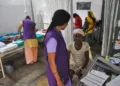
The most common test for hepatitis B, hepatitis C and HIV involves taking a blood sample from a vein using a needle. While this method works extremely well, there is a potentially large reservoir of the three conditions in places where this method is not suitable.

This could be prisons, drug rehabilitation centres and homeless shelters, where the taking of venous blood samples isn’t always suitable or countries in which the shipping and refrigerated storage of blood samples can be challenging.

Alternatives include dried blood spot tests, in which a single spot of blood is tested for nucleic acid from the three viruses.

Mr Stephen Nilsson-Moller and colleagues at the Department of Clinical Microbiology, Copenhagen University Hospital, Denmark validated (assessed) one such test.

To do the test, the individual’s finger is pricked and a few spots of blood collected on filter paper and allowed to dry.

The Hologic Panther System – testing equipment widely found in public health laboratories – then uses a technique called transcription mediated amplification to analyse one of the blood spots for genetic material from the three viruses.

The analysis is designed to be, and is normally, run on liquid samples of plasma or serum – not the dried samples used here. Twenty samples with known amounts of HIV, hepatitis B and hepatitis C were analysed via the dried blood spot method (60 in total) and the viruses were detected in all of the samples.

The plasma was also diluted to determine the lower limit of detection. This showed that it was possible to detect the viruses at levels that are much lower than are normally found in untreated patients.

Mr Nilsson-Moller says: “We’ve shown that using existing hospital equipment, it is possible to detect HIV, hepatitis B and hepatitis C from a single drop of blood.

“The dried blood spot test is ideal for places where you don’t want to use a needle for safety reasons or where it is less practical. This includes prisons, drug rehabilitation centres and homeless shelters.

“It is also suitable for developing countries or places where you run the risk of a blood sample being ruined before it is transferred to a laboratory that can analyse it.

“Blood samples need to be analysed within six hours when kept at room temperature, while dried blood spots can last for nine months without refrigeration.”

(with inputs from ANI)
Topics: HIVhepatitis Bhepatitis CBloodWHOHealthWorld Health Organisation
Share
Tweet
SendShareSend
✮ Subscribe Organiser YouTube Channel. ✮
✮ Join Organiser's WhatsApp channel for Nationalist views beyond the news. ✮
Previous News

Who is Jack Teixeira, the 21-year-old arrested by FBI in US classified documents leak probe?

Next News

DMK Files: Tamil Nadu BJP Chief Annamalai claims Stalin, his Ministers have Rs 1.34 lakh crore unaccounted assets

Related News

Women are powering India's health sector

Healing Hands & Rising Economy: How women are powering the Ayush services boom in India!

PM POSHAN Model: Serving nutrition, strengthening the nation and the roadmap for inclusive governance

A viral social media post claiming a WHO warning about milk adulteration causing cancer in 87 per cent of Indians by 2035 has been debunked as fake by PIB.

Fact Check: PIB debunks fake post claiming WHO warned 87 per cent of Indians will get Cancer from milk adulteration

Dr Suresh Hanagavadi conferred with Padmashri

Dr Suresh Hanagavadi: The remarkable journey of a doctor who revolutionised haemophilia care & patient advocacy

India is accelerating its fight against viral hepatitis through free screening, treatment and vaccination under the NVHCP

How India’s National Viral Hepatitis Control Programme is advancing the goal of eliminating hepatitis by 2030

Representative Image

Loneliness: A social problem or a cultural challenge?

Load More

Latest News

Representative Image

Who are the five former judges examining SIR? A look at the lawyers’ body behind the panel

FSSAI tightens the noose on Nestlé India over misleading claims

Nestle Under Fire: FSSAI flags misleading labels on Nescafe, infant formula, and kidney-care drinks

Indian Embassy Emergency Helpline Activated as Unrest Grips Paris and Lyon

France Unrest: Indian Embassy issues urgent safety advisory as violence escalates across Paris and Lyon

(Left) CJP leader Saurav Das (Right) Ashutosh Ranka (This is an AI generated image)

CJP leaders released after written undertaking not to call Jantar Mantar protests; Lawyer apologises to court

Representative Image (This is an AI generated image)

The Neha Bora Phenomenon: Student agitations, Maoist legacy, and the Urban Naxals

Schoolchildren walk outside an educational institution in Scotland amid heightened security concerns across the United Kingdom.

UK shuts 300 schools after ‘Allahu Akbar’ emails trigger panic amid Left-Islamist unrest rocking Europe

Tamil Nadu: Madras HC says using children in poll campaigns is in ‘bad taste’, calls for national debate

Hindu Americans contribute to US prosperity while preserving Sanatan Dharma through temples, culture and Seva

From Sanatan Dharma to Global Success: How Hindus are shaping America through enterprise, innovation and seva

CJP’s protests and Prashant Bhushan’s ‘regime change’ statement raise questions about the agitation’s broader political agenda

Conspiracy for ‘Regime Change’ in Bharat Exposed: CJP protests and left-wing mobilisation raise questions

75th Foundation Day of Bharatiya Jana Sangh: Dr Syama Prasad Mookerjee’s vision & journey from opposition to governance

Load More
  • Privacy
  • Terms
  • Cookie Policy
  • Refund and Cancellation
  • Delivery and Shipping

© Bharat Prakashan (Delhi) Limited.
Tech-enabled by Ananthapuri Technologies

  • Home
  • Search Organiser
  • Bharat
    • Assam
    • Bihar
    • Chhattisgarh
    • Jharkhand
    • Maharashtra
    • View All States
  • World
    • Asia
    • Africa
    • North America
    • South America
    • Europe
    • Australia
  • Editorial
  • Operation Sindoor
  • Opinion
  • Analysis
  • Defence
  • Culture
  • Sports
  • Business
  • RSS @ 100
  • Entertainment
  • More ..
    • Sci & Tech
    • Vocal4Local
    • Special Report
    • Education
    • Employment
    • Books
    • Interviews
    • Travel
    • Health
    • Politics
    • Law
    • Economy
    • Obituary
  • Subscribe Magazine
  • Read Ecopy
  • Advertise
  • Circulation
  • Careers
  • About Us
  • Contact Us
  • Policies & Terms
    • Privacy Policy
    • Cookie Policy
    • Refund and Cancellation
    • Terms of Use

© Bharat Prakashan (Delhi) Limited.
Tech-enabled by Ananthapuri Technologies