Indian Festivals and Sustainability: A model to emulate for mitigating climate change challenges
September 13, 2026
  • Read Ecopy
  • Circulation
  • Advertise
  • Careers
  • About Us
  • Contact Us
Android AppiPhone AppArattai
Organiser
  • ‌
  • Bharat
    • Assam
    • Bihar
    • Chhattisgarh
    • Jharkhand
    • Maharashtra
    • View All States
  • World
    • Asia
    • Europe
    • North America
    • South America
    • Africa
    • Australia
  • Editorial
  • International
  • Opinion
  • RSS @ 100
  • More
    • World Hindu Congress 2026
    • Op Sindoor
    • Analysis
    • Sports
    • Defence
    • Politics
    • Business
    • Economy
    • Culture
    • Special Report
    • Sci & Tech
    • Entertainment
    • G20
    • Azadi Ka Amrit Mahotsav
    • Vocal4Local
    • Web Stories
    • Education
    • Employment
    • Books
    • Interviews
    • Travel
    • Law
    • Health
    • Obituary
  • Subscribe
    • Subscribe Print Edition
    • Subscribe Ecopy
    • Read Ecopy
  • ‌
  • Bharat
    • Assam
    • Bihar
    • Chhattisgarh
    • Jharkhand
    • Maharashtra
    • View All States
  • World
    • Asia
    • Europe
    • North America
    • South America
    • Africa
    • Australia
  • Editorial
  • International
  • Opinion
  • RSS @ 100
  • More
    • World Hindu Congress 2026
    • Op Sindoor
    • Analysis
    • Sports
    • Defence
    • Politics
    • Business
    • Economy
    • Culture
    • Special Report
    • Sci & Tech
    • Entertainment
    • G20
    • Azadi Ka Amrit Mahotsav
    • Vocal4Local
    • Web Stories
    • Education
    • Employment
    • Books
    • Interviews
    • Travel
    • Law
    • Health
    • Obituary
  • Subscribe
    • Subscribe Print Edition
    • Subscribe Ecopy
    • Read Ecopy
Organiser
  • Home
  • Bharat
  • World
  • Operation Sindoor
  • Editorial
  • Analysis
  • Opinion
  • Culture
  • Defence
  • International Edition
  • RSS @ 100
  • Magazine
  • Read Ecopy
Home Bharat

Indian Festivals and Sustainability: A model to emulate for mitigating climate change challenges

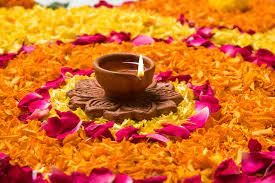
Indian Festivals have traditionally popularised sustainable practices and rituals to stay in harmony with the mother nature. Rituals and food habits are in tune with local seasons and effortlessly promote health, economy and ecology

Anubha MishraAnubha Mishra
Mar 22, 2023, 08:45 pm IST
inBharat
Follow on Google News
Facebook
Twitter
WhatsAppTelegramEmail

It is often said that India is a subcontinent of nationalities, rightly so because India is plural in every way possible. Every State is very distinct from the other in terms of food habits, agricultural and social practices, language, attire and whatnot but they are all joined through a hinge of common ethos.

The seventeen Sustainable Development Goals, formulated by UNGA in 2015, specifically target the environment and other social indicators which are automatically cared for in our environment-friendly and socially diverse festivals and ways. Naturally, India has been blessed with various geographical features, and this variation influences the seasonal variety.

Music For All Seasons
An interesting thing to observe in our country is the peculiarities these seasons bring and are celebrated in the form of folk songs and the wide variety of music which is made available to the common people is in itself a different genre. Indian classical music, with its exquisite refinement, honed over centuries, had ragas for six seasons and in some cases, not only seasons, there are set time slots to sing these ragas too.

For instance, in North India, the three Ragas to be rendered specifically are Basant, Bahar and Hindol. In the same fashion, Raga Vasanta is associated with spring, some thumris are sung around Holi in the month of March, Chaitis for the month of Chaitra or April, Kajris mark the onset of monsoon and are sung around June/July and so on.

Harvest Season

The other factor behind observing these festivals is that the festivals in India trace their genesis to the seasons and are woven in accordance with them. For example, festivals like Baisakhi in Punjab, Pongal in Tamil Nadu and Bihu in Assam are celebrated to mark the harvest season.

The intent behind these festivals is to ask for prosperity and blessings from the Nature Goddess before the harvest of these seasonal crops begins. Food is an important component required to sustain life and as per the Hindu way of life, it is believed that “As you eat food, so will be your mind.” Thus the food habits in our traditional societies got built around seasonal variation.

Food eaten in the pre-season festival prepares our body for the season to come. This helps in the holistic growth of the body and nourishment of the mind. So, overall health, as a result of these food habits, is maintained.

In India, worshipping Mother Nature and maintaining its sanctity is an age-old practice. Our forefathers considered cultivating such sustainable practices in the form of rituals and festivals to be an astute way of popularising it amongst masses. For instance, festivals like Teej in North and West India and Aadi Peruku in Tamil Nadu are specifically celebrated by women and mark the onset of monsoon and signify holiness of water. These festivals pay tribute to water’s life-sustaining properties. Thus, pay huge importance towards maintaining the cleanliness in our water bodies.

Worshippers of Wealth
Apart from these life-sustaining implications of festivals in ancient Bharat, every festival brings livelihood to many and positively affects the economy. Small-scale industries and cottage industries’ contribution to the total industrial output in India is nearly 40 per cent.

This is why when a festival arrives, we see a wide array of festive products hitting the market and giving impetus to the circulation of money within the economy. Production of ethnic, traditional décor whose making requires skill and art provides self-employment to every hand in an artistic way, rejoicing not just the economic needs of artisans but also the artistic needs of the buyer.

Present dispensation’s clarion call to popularise locally made items will immensely help the unorganised sector of the economy that contributes massively in generating revenue and fulfilling socialist ethics in the right way. It’s important to note that the bullish trend of the stock market, seen during Diwali, reinstates the faith that, as a society, Hindus have been worshippers of wealth in the form of Goddess Lakshmi.

Celebrating Womanhood
Indian festivals are an amalgamation of not just different cultures but also health, food and economy. These factors are the biggest testimony of shared brotherhood. The folklores popularised over ages and generations are a way to protect these customs and traditions which form as the backbone of our cultural and social mores. Our women have always been at the helm of forming these customs.

Raja Parba; a three day festival, which is celebrated in the coastal State of Odisha, is a very poignant example of celebrating womanhood through conserving nature’s bounty. The term ‘Rajah’ came from the Sanskrit word ‘Rajas’, which means menstruation. When a woman menstruates, she is called ‘Rajaswala’ or a menstruating woman. In medieval times, the festival became more popular as an agricultural worship of Mother Earth to prepare Mother Earth for the upcoming crop season.

Such forward-looking and libertarian practices make India’s festivals and way of life its biggest soft power because with approximately 32 million Indians residing outside India, the Indian diaspora is one of the world’s largest overseas diaspora. There can be no better medium to disseminate India’s message of ‘Vaisudhaiva Kutumbakam’ to the world than its festivals and culturally synced practices.

Understanding Sanatana Dharma
Over the last decades, it is a matter of concern the kind of alienation and disdain these customs and traditions have seen from their people. Due to increased Western influence, it has become imperative for all of us, both young and old, to be an advocate for our cultural practices and duties. People must be educated and persuaded to learn the science that exists behind these rituals and festivals.

Hinduism in Sanskrit is known as Sanatana Dharma and Sanatana means eternal, which has no beginning or end. It is a popular belief that Hinduism is one of the oldest and thriving civilisations. Lastly, more and more people should be encouraged to uphold their belief in these ancient practices instead of criticising and dumping it as orthodox and regressive. To sum it up, in the words of the Hon’ble Supreme Court of India, “Hinduism is not just a religion but a way of life.


Topics: Harvest SeasonBaisakhi in PunjabPongal in Tamil NaduBihu in AssamWorshippers of WealthSustainable Development GoalsIndian Festivals and Sustainability
Share1
Tweet
SendShareSend
✮ Subscribe Organiser YouTube Channel. ✮
✮ Join Organiser's WhatsApp channel for Nationalist views beyond the news. ✮
Previous News

Indian Ancient Food Culture: Where nutrition and sustainability go together

Next News

Right to Health Bill: Rajasthan Minister threatens action against protesting doctors, police resort to lathi charge

Related News

Atul Jain of Deendayal Research Institute

“SDGs are modern expression of Integral Humanism,” says Atul Jain of Deendayal Research Institute

To India, Sustainable Development Goals has been woven into its culture for centuries and not a new concept

From dharma to development: India’s timeless traditions defining sustainability

Dr. Krishna Gopal addresses “Geetayanam” national seminar. Also seen are L/R: K.C. Sudheerbabu, R. Sanjayan, Dr. K. Sikvaprasad, Swami Brahmaparananda and Dr. Archana Sreenivas.

Gita alone holds the key to sustainable development: RSS Sah Sarkaryavah Dr Krishna Gopal

India achieves clean energy target five years ahead of schedule

Clean Energy Revolution in India: Non-Fossil fuel power of Bharat touches 50.08 per cent, achieves target 5 years early

Artificial Intelligence: A Gateway to employment

Representative Image

Uttar Pradesh: From local to global, UP drafts ambitious export policy 2025–30 to achieve Rs 50 Billion target

Load More

Latest News

Tiger Bright coffee from Koraput’s tribal farmers featured in BRICS Summit media kits in New Delhi

From Eastern Ghats to BRICS: Koraput Coffee puts Odisha’s tribal enterprise on global map

The RSS has spent a century building influence through organisation, social networks and ideological formation beyond the electoral arena

RSS at 100: How the Sangh built a century-long network of influence beyond Indian politics

India on a Platter: BRICS Dinner Menu Celebrates Regional Culinary Heritage

BRICS Dinner Menu: From Khandvi, mushroom kebabs to pulao global leaders get a taste of Bharat’s culinary heritage

Exterior of the Lokayukta Building

Karnataka Lokayukta records 1,248 cases in four years, 887 linked to bribery

RSS Akhil Bharatiya Karyakarini Sadasya Dr Manmohan Vaidya at a Pramukh Jan Samvad Sangosthi organised by Kashi Mahanagar on the occasion of the RSS Centenary Year,

Entire society must unite with a sense of oneness; This Is the spirit of Sangh Work: Dr Manmohan Vaidya

‘Samuel Could Never Do This’: Mother Rejects Blasphemy Allegations Against Son in Lahore

Pakistan Blasphemy Case: Mother of Christian man Samuel Arif claims false implication, seeks justice

Prime Minister Narendra Modi, along with Chinese President Xi Jinping, Russian President Vladimir Putin and other world leaders, poses for a picture at a joint tree plantation initiative during the BRICS Summit

BRICS Summit 2026: India as the voice of Global South, shared responsibilities & scripting inclusive world order

Chinese President Xi Jinping and Prime Minister Narendra Modi

BRICS Summit 2026: PM Modi hold talks with President Xi; Stresses border peace & tranquility as key to India-China ties

Tamil Nadu: Hindu Munnani flags TVK govt’s restrictions on Vinayaka pandals, barring women, children from processions

Lashkar-e-Toiba founder Hafiz Saeed. (File image)

J&K Terror Case: Hafiz Saeed gets second NBW; NIA says he operates from Pakistan

Load More
  • Privacy
  • Terms
  • Cookie Policy
  • Refund and Cancellation
  • Delivery and Shipping

© Bharat Prakashan (Delhi) Limited.
Tech-enabled by Ananthapuri Technologies

  • Home
  • Search Organiser
  • Bharat
    • Assam
    • Bihar
    • Chhattisgarh
    • Jharkhand
    • Maharashtra
    • View All States
  • World
    • Asia
    • Africa
    • North America
    • South America
    • Europe
    • Australia
  • Editorial
  • Operation Sindoor
  • Opinion
  • Analysis
  • Defence
  • Culture
  • Sports
  • Business
  • RSS @ 100
  • Entertainment
  • More ..
    • Sci & Tech
    • Vocal4Local
    • Special Report
    • Education
    • Employment
    • Books
    • Interviews
    • Travel
    • Health
    • Politics
    • Law
    • Economy
    • Obituary
  • Subscribe Magazine
  • Read Ecopy
  • Advertise
  • Circulation
  • Careers
  • About Us
  • Contact Us
  • Policies & Terms
    • Privacy Policy
    • Cookie Policy
    • Refund and Cancellation
    • Terms of Use

© Bharat Prakashan (Delhi) Limited.
Tech-enabled by Ananthapuri Technologies