
Combatting Khalistani Mindset
June 5, 2026
  • Read Ecopy
  • Circulation
  • Advertise
  • Careers
  • About Us
  • Contact Us
Android AppiPhone AppArattai
Organiser
  • ‌
  • Bharat
    • Assam
    • Bihar
    • Chhattisgarh
    • Jharkhand
    • Maharashtra
    • View All States
  • World
    • Asia
    • Europe
    • North America
    • South America
    • Africa
    • Australia
  • Editorial
  • International
  • Opinion
  • RSS @ 100
  • More
    • Op Sindoor
    • Analysis
    • Sports
    • Defence
    • Politics
    • Business
    • Economy
    • Culture
    • Special Report
    • Sci & Tech
    • Entertainment
    • G20
    • Azadi Ka Amrit Mahotsav
    • Vocal4Local
    • Web Stories
    • Education
    • Employment
    • Books
    • Interviews
    • Travel
    • Law
    • Health
    • Obituary
  • Subscribe
    • Subscribe Print Edition
    • Subscribe Ecopy
    • Read Ecopy
  • ‌
  • Bharat
    • Assam
    • Bihar
    • Chhattisgarh
    • Jharkhand
    • Maharashtra
    • View All States
  • World
    • Asia
    • Europe
    • North America
    • South America
    • Africa
    • Australia
  • Editorial
  • International
  • Opinion
  • RSS @ 100
  • More
    • Op Sindoor
    • Analysis
    • Sports
    • Defence
    • Politics
    • Business
    • Economy
    • Culture
    • Special Report
    • Sci & Tech
    • Entertainment
    • G20
    • Azadi Ka Amrit Mahotsav
    • Vocal4Local
    • Web Stories
    • Education
    • Employment
    • Books
    • Interviews
    • Travel
    • Law
    • Health
    • Obituary
  • Subscribe
    • Subscribe Print Edition
    • Subscribe Ecopy
    • Read Ecopy
Organiser
  • Home
  • Bharat
  • World
  • Operation Sindoor
  • Editorial
  • Analysis
  • Opinion
  • Culture
  • Defence
  • International Edition
  • RSS @ 100
  • Magazine
  • Read Ecopy
Home Bharat

Combatting Khalistani Mindset

Some foreign governments and organisations have supported the Khalistan movement since the beginning. To combat this menace, currently, the Modi Government, unlike AAP's leadership in Punjab, has taken several responses against the movement.

Prof Rajiv ChopraProf Rajiv Chopra
Mar 1, 2023, 07:00 pm IST
in Bharat, Opinion, Punjab
Follow on Google News
FacebookTwitterWhatsAppTelegramEmail

Khalistan is a separatist movement that seeks to create an independent state for Sikhs in Punjab, India. It emerged in the 1970s as a response to the perceived discrimination and marginalisation of Sikhs in India. However, the movement has become increasingly militant and violent, losing thousands of lives. The Khalistan movement has been a major threat to the unity and integrity of India. This essay will discuss how the Khalistan movement is trying to break the nation’s unity.

Historical Background

The Khalistan movement has its roots in the 1947 Partition of India. The Sikh community, which had been an integral part of the Indian freedom struggle, felt betrayed by the Partition. The majority of Punjab, where the Sikh population was concentrated, went to Pakistan, while the rest remained in India. This division caused a sense of insecurity and mistrust among the Sikh community. The situation worsened in the 1970s when the Government of India launched an operation against Sikh militants who had taken up arms to demand a separate Sikh state. The operation, known as Operation Blue Star, was launched in 1984 to flush out Sikh militants from the Golden Temple in Amritsar, the holiest shrine of the Sikh religion. The operation resulted in the death of thousands of Sikhs, including innocent civilians. The aftermath of Operation Blue Star led to widespread resentment among the Sikh community. The assassination of Prime Minister Indira Gandhi by her Sikh bodyguards in 1984 further aggravated the situation. This event triggered anti-Sikh riots in which thousands of Sikhs were killed in Delhi and other parts of India.

The Khalistan Movement Today

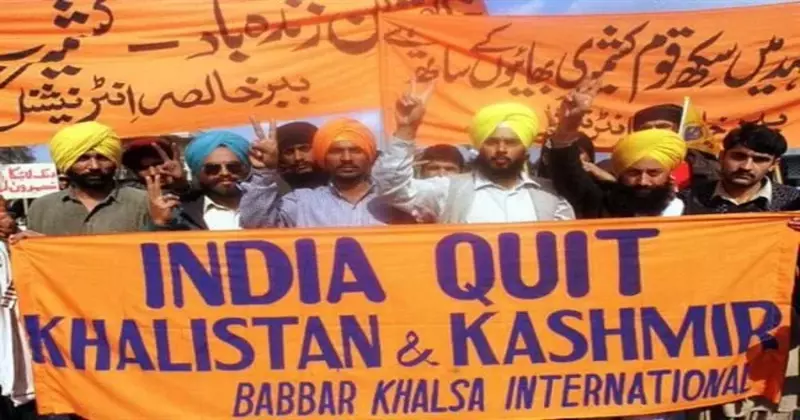
The Khalistan movement has evolved over the years. Initially, it was a peaceful demand for a separate Sikh state. However, it soon turned violent, with militant groups such as the Babbar Khalsa, Khalistan Commando Force, and the International Sikh Youth Federation carrying out terrorist activities in Punjab and other parts of India. The militants targeted not only the Indian security forces but also innocent civilians, including Hindus and moderate Sikhs who opposed the idea of a separate Sikh state. The violence continued throughout the 1980s and 1990s, leading to the loss of thousands of lives. The Government of India responded with a heavy-handed approach, launching counter-insurgency operations in Punjab. The military crackdown, coupled with political and economic reforms, weakened the Khalistan movement. By the early 2000s, the movement had lost much of its popular support, and the violence had subsided. However, the Khalistan movement has not entirely disappeared. Some extremist groups still exist and continue to espouse the idea of a separate Sikh state. These groups have taken their struggle to the international stage, seeking support from Sikh communities in other countries.

Impact on National Unity

The Khalistan movement has had a profound impact on the unity and integrity of India. The movement has created a sense of mistrust and suspicion between the Sikh community and the rest of the country. The anti-Sikh riots of 1984 and the subsequent violence in Punjab have left deep scars in the psyche of the Sikh community. The Khalistan movement has also given rise to separatist movements in other parts of India. The demand for separate states based on linguistic and ethnic lines has become a recurring theme in Indian politics. This trend poses a serious threat to the unity and integrity of the country. The Khalistan movement has also had a negative impact on India’s relations with other countries. The movement has been supported by some foreign governments and organisations, which has led to diplomatic tensions between India and these countries.

Modi’s Government’s Responses to Khalistani Movement

The Modi Government, unlike AAP’s leadership in Punjab, has taken several responses against the Khalistani movement, which seeks to create an independent Sikh state in the Punjab region of India. Some of these responses include:

(1) Banning Khalistani organisations: The Government of India has banned several organisations associated with the Khalistani movement, including the Babbar Khalsa International (BKI), Khalistan Liberation Force (KLF), and the International Sikh Youth Federation (ISYF), under the Unlawful Activities (Prevention) Act.

(2) Arresting Khalistani leaders: The Indian authorities have arrested several Khalistani leaders and activists for their involvement in violent activities and for spreading separatist ideology.

(3) Tightening security measures: The Government has tightened security measures in Punjab and other parts of the country to prevent any terrorist activities by Khalistani groups. It has also deployed additional security forces to maintain law and order in sensitive areas.

(4) Diplomatic efforts: The Government has made diplomatic efforts to counter the propaganda and misinformation spread by Khalistani groups in foreign countries. It has also sought the cooperation of foreign governments to extradite Khalistani leaders and activists wanted in India.

(5) Promoting Sikh culture: The Government has taken steps to promote Sikh culture and heritage to counter the separatist ideology of the Khalistani movement. It has also initiated various development programs in Punjab to address the socio-economic issues faced by the Sikh community.

(Views expressed are personal. The writer is the Principal of Delhi College of Arts and Commerce, University of Delhi)


Topics: Khalistan Liberation ForceKhalistani violenceInternational Sikh Youth FederationKhalistanUnlawful Activities Prevention ActBabbar Khalsa International
Prof Rajiv Chopra
Prof Rajiv Chopra
Principal, Delhi College of Arts & Commerce, Netaji Nagar, Delhi University [Read more]
Share2TweetSendShareSend
✮ Subscribe Organiser YouTube Channel. ✮
✮ Join Organiser's WhatsApp channel for Nationalist views beyond the news. ✮
Previous News

8th Raisina Dialogue 2023: Noted global leaders to participate in India’s premier conference on geopolitics

Next News

“This isn’t an era of war”: India reaffirms position on Russia-Ukraine conflict

Related News

Security on high alert after bomb threat in Chandigarh

Chandigarh on high alert after bomb threat email targets University, Mayor’s office, Secretariat and schools

NIA Court awards Kashmiri separatist Aasiya Andrabi life sentence

NIA Court awards Kashmiri separatist Aasiya Andrabi life sentence, two others get 30-year jail term in terror case

Canadian MPs make secret visit to Punjab; Meets Punjabi politicians

Secret visit by 3 Canadian MPs sparks row; Questions raised over trip funding, meetings with Punjabi politicians

ACM-ranked Maoist Mamata Podiami surrenders to senior police officials in Koraput.

Odisha: Koraput declared Maoist-free following surrender of Mamata Podiami an ACM-Ranked CPI (Maoist) cadre

Khalistani Terrorist Gurpatwant Singh Pannun

Delhi police register FIR against Khalistani terrorist Gurpatwant Pannun over ‘Sleeper cell’ threat video

Large cache of arms and explosives from the accused belonging to Babbar Khalsa International

Punjab: Terror module busted in Hoshiarpur ahead of Republic Day, four BKI operatives arrested

Load More

Latest News

World Environment Day: A green future demands more than planting trees

RSS Sarsanghchalak Dr Mohan Bhagwat

The time of Bharat has arrived; we need to expedite our preparation: Dr Bhagwat at RSS Karyakarta Vikas Varg 2

Padma Bhushan awardee and noted industrialist Kumar Mangalam Birla Kumar Mangalam Birla addressing the Samapana Samaroh (Valedictory Function) of the Rashtriya Swayamsevak Sangh Karyakarta Vikas Varg – Dwitiya at Nagpur, on June 4, 2026

“RSS always stood by the society and nation”, Kumar Mangalam Birla at RSS Karyakarta Vikas Varg 2 in Nagpur

Arunachal Pradesh seals all 15 illegal Mosques; Bandh called off by APIYO

MK Stalin with Sonai Gandhi; MK Stalin with Rahul Gandhi (File Photos) (Left to Right)

Tamil Nadu: DMK says no to INDIA Alliance meet in Delhi, blames Congress for political backstabbing

Union Finance Minister Nirmala Sitharaman

Karnataka: All-Women team powers Yadgir’s groundnut revolution; Nirmala Sitharaman inaugurates NABARD Unit

Keralam: Jamaat-e-Islami event features Hamas and Muslim Brotherhood ideologues, raises concerns over Political Islam

Representative Image (This is an AI Generated image)

Uttar Pradesh CM Abhyudaya Scheme: Apply for free civil services, JEE and NEET coaching from June 5

House worth Rs 2 crore of drug peddler bulldozed in J&K

Anti-narcotics campaign in J&K: Police demolish Rs 2 crore residential property linked to drug peddler Sheikh Tasaduq

As fuel shortages rippled across Asia, New Delhi expanded supplies to its neighbours while Beijing sought to turn energy security into strategic influence.

The Hormuz Test: How India’s energy assistance outshines China’s conditional approach

Load More
  • Privacy
  • Terms
  • Cookie Policy
  • Refund and Cancellation
  • Delivery and Shipping

© Bharat Prakashan (Delhi) Limited.
Tech-enabled by Ananthapuri Technologies

  • Home
  • Search Organiser
  • Bharat
    • Assam
    • Bihar
    • Chhattisgarh
    • Jharkhand
    • Maharashtra
    • View All States
  • World
    • Asia
    • Africa
    • North America
    • South America
    • Europe
    • Australia
  • Editorial
  • Operation Sindoor
  • Opinion
  • Analysis
  • Defence
  • Culture
  • Sports
  • Business
  • RSS @ 100
  • Entertainment
  • More ..
    • Sci & Tech
    • Vocal4Local
    • Special Report
    • Education
    • Employment
    • Books
    • Interviews
    • Travel
    • Health
    • Politics
    • Law
    • Economy
    • Obituary
  • Subscribe Magazine
  • Read Ecopy
  • Advertise
  • Circulation
  • Careers
  • About Us
  • Contact Us
  • Policies & Terms
    • Privacy Policy
    • Cookie Policy
    • Refund and Cancellation
    • Terms of Use

© Bharat Prakashan (Delhi) Limited.
Tech-enabled by Ananthapuri Technologies