
As the newly elected US Congress convened in Washington, D.C., earlier this month, the Chair recognised Congressman Rich McCormick to speak from the floor of the House for one minute. Mr McCormick is a Republican member of the House of Representatives from the state of Georgia, representing the state’s 7th Congressional district. The freshman congressman walked to the podium and delivered his maiden speech:
“I rise to this occasion to just appreciate my constituents, especially those who have immigrated from India. We have a very large portion of my community that’s made up of almost a hundred thousand people who have immigrated directly from India. One out of every five doctors in my community is from India. They represent some of the best citizens we have in America… Although they make up about 1% of American society, they pay about 6% of the taxes… They are the most productive and family-oriented and the best of what represents the best of American citizens.”
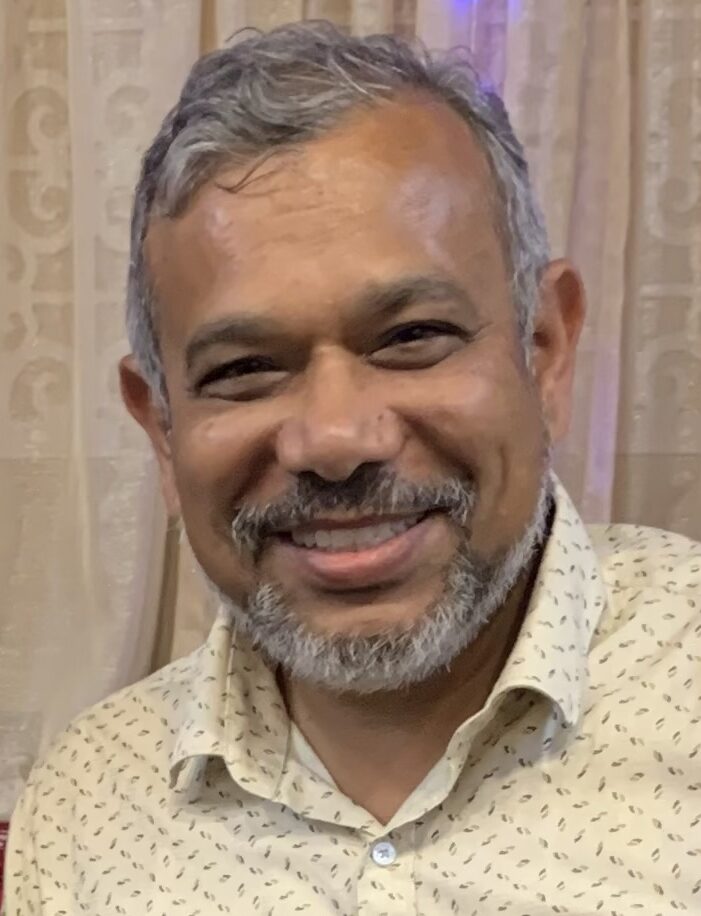
Used to constant negativity from the American elites in media and academia, this speech from the floor of the august house was music to many Indian ears. Chirayu Thakkar, a doctoral candidate at the National University of Singapore, wrote:
“The strength of India-US ties lies in the immense contributions of the Indian immigrant community. That’s the starting point.”
Today, Indian Americans account for roughly 1% of the U.S. population and 6% of America’s foreign-born population. This makes Indian Americans the second largest immigrant group in the country, after Mexicans, and ahead of immigrants from China and the Philippines
Indian Americans play a vital role in American society. They are the engines of the economy and the drivers of innovations. They also enrich an already diverse American cultural landscape. On top of it all, the Indian diaspora, as part of the world’s largest democracy, plays a crucial role in diplomacy and international relations.
Some of the first immigrants from undivided colonial India arrived in the U.S., the land of opportunities, in the early 19th century. They were small in number and found settlements mainly on the West Coast. These early Indian settlers worked in agriculture, lumber, and railroad industries. It wasn’t until 1965 that the passage of the Immigration and Nationality Act removed national origin quotas for immigration. The Act paved the way for non-European arrivals, including highly skilled Indian workers and professionals. From 206,000 in 1980, the Indian immigrant population grew to 2,688,00 in 2019 – a 15-fold increase in about 40 years.
Today, Indian Americans account for roughly 1% of the U.S. population and 6% of America’s foreign-born population. This makes Indian Americans the second largest immigrant group in the country, after Mexicans, and ahead of immigrants from China and the Philippines.
Notwithstanding their minuscule number, as Rep. McCormick pointed out in his speech, Indian Americans have the highest per-capita household income of any ethnic/national group. According to the Pew Research survey, Indian Americans are among the most educated based on 4-year college degrees. About 79% of Indian immigrants aged 25 and older had at least a bachelor’s degree. About 30% of Indian Americans hold a post-graduate degree, and 90% are in a technical discipline.
For the most part, from India’s independence in 1947 from British colonialism until the last two decades, the relationship between India and the U.S. has remained primarily uneventful. According to the former U.S. Ambassador to India, Rich Verma, the history of the Indo-US relationship is marked by “the periods of alignment, disinterest, frustration, and convergence” (Overcoming the Hesitations of History: An Analysis of U.S.-India Ties, Ph.D. dissertation, Georgetown University, 2020). It was during the Clinton presidency that the Indo-US relationship started moving positively. For his part, Mr Clinton initiated the de-coupling of India and Pakistan policy. Presidents Bush, Obama, and a largely transactional Trump kept that spirit going from the American side.
 However, despite the warming up of the relationship and increased diaspora involvement in U.S. politics, the US and India remain divided into values and perceptions. American leadership still “does not count India as one of its closest friends and partners” (Verna, 2020). Verma writes, “ Few would assert that we [U.S. and India] have become allies, natural or otherwise.”
This attitude has been on full display during the current Russo-Ukrainian conflict. “While Americans have been disturbed by India’s continued willingness to buy oil from Russia,” according to Walter Russell Mead, “Indians resent the West’s attempt to rally global support for what many here see as a largely Western problem in Ukraine.” Mead is a fellow at the Hudson Institute and an opinion columnist with the Wall Street Journal.
It is not just Ukraine. The US and India haven’t often seen eye to eye on many issues, including human rights, religious liberty, etc. Earlier, the US Secretary of State, Anthony Blinken, had mentioned India as a country “where religious freedom and rights of minorities are under threat.” The Indian officials rejected Secretary Blinken’s charge as “ill-informed.” In turn, India raised “concern” over “racially and ethnically motivated attacks, hate crimes, and gun violence” in the US.
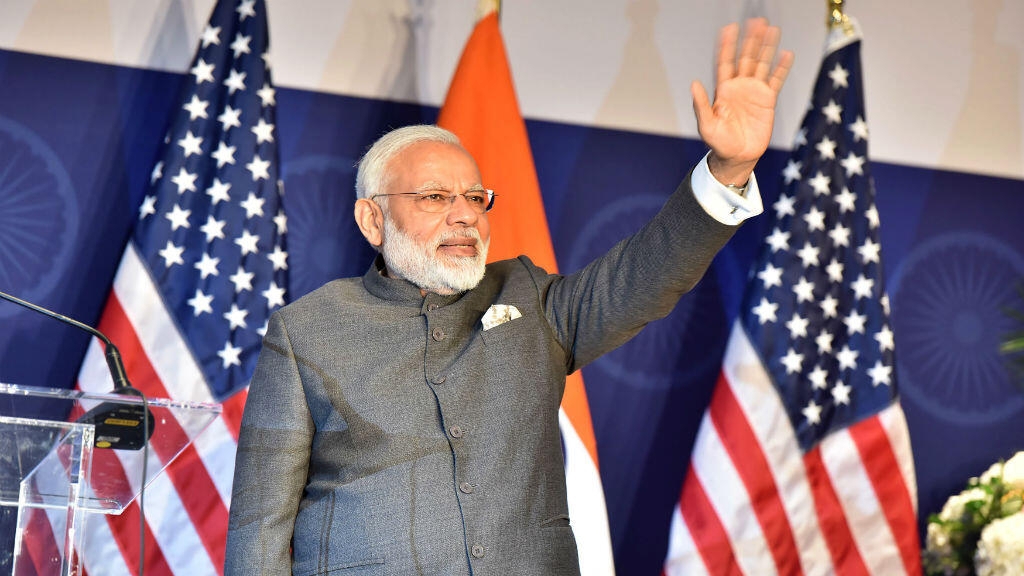
On his part, the Indian Prime Minister, Narendra Modi, has taken significant steps towards managing this complex relationship with a mixture of hard-nosed diplomacy and the soft power of diaspora involvement. On June 8, 2016, Mr. Modi addressed the joint sitting of the U.S. Congress – an address punctuated by numerous thunderous applauses and standing ovations. As Mr. Modi laid out his vision for the future of the Indo-US relationship, he proclaimed that the Indo-US ties have finally ‘overcome the hesitations of history.’
Despite the “hesitations” and disagreements that are the relics of the cold war era thinking dominating much of American policy-making, there is a growing awareness that America’s national interests are tied to India’s success. “American policymakers need to remember,” writes Mead in his recent Wall Street Journal column, “that Indian economic growth is critical to American goals in the Indo-Pacific.”
The recent QUAD initiative, comprising the U.S., India, Australia, and Japan, promises increased health, environment, technology, education, and public welfare cooperation among the member states. Last year, the navies of the Quad nations held a military exercise in the Indian Ocean.
There is a need for a pragmatic shift in the American attitude towards India. The aspirational India of 2023 is quite different from the 1970s. American policymaking cannot remain a prisoner of the past. It needs to adjust to the emerging new realities in the international arena. On that front, the two powerhouse democracies must get past their differences and start working towards a just and equitable future for their citizens.
Both the US and India owe this to the world.