Bodhidharma: Buddhist monk from India credited for diffusion of Chan Buddhism in China
June 10, 2026
  • Read Ecopy
  • Circulation
  • Advertise
  • Careers
  • About Us
  • Contact Us
Android AppiPhone AppArattai
Organiser
  • ‌
  • Bharat
    • Assam
    • Bihar
    • Chhattisgarh
    • Jharkhand
    • Maharashtra
    • View All States
  • World
    • Asia
    • Europe
    • North America
    • South America
    • Africa
    • Australia
  • Editorial
  • International
  • Opinion
  • RSS @ 100
  • More
    • Op Sindoor
    • Analysis
    • Sports
    • Defence
    • Politics
    • Business
    • Economy
    • Culture
    • Special Report
    • Sci & Tech
    • Entertainment
    • G20
    • Azadi Ka Amrit Mahotsav
    • Vocal4Local
    • Web Stories
    • Education
    • Employment
    • Books
    • Interviews
    • Travel
    • Law
    • Health
    • Obituary
  • Subscribe
    • Subscribe Print Edition
    • Subscribe Ecopy
    • Read Ecopy
  • ‌
  • Bharat
    • Assam
    • Bihar
    • Chhattisgarh
    • Jharkhand
    • Maharashtra
    • View All States
  • World
    • Asia
    • Europe
    • North America
    • South America
    • Africa
    • Australia
  • Editorial
  • International
  • Opinion
  • RSS @ 100
  • More
    • Op Sindoor
    • Analysis
    • Sports
    • Defence
    • Politics
    • Business
    • Economy
    • Culture
    • Special Report
    • Sci & Tech
    • Entertainment
    • G20
    • Azadi Ka Amrit Mahotsav
    • Vocal4Local
    • Web Stories
    • Education
    • Employment
    • Books
    • Interviews
    • Travel
    • Law
    • Health
    • Obituary
  • Subscribe
    • Subscribe Print Edition
    • Subscribe Ecopy
    • Read Ecopy
Organiser
  • Home
  • Bharat
  • World
  • Operation Sindoor
  • Editorial
  • Analysis
  • Opinion
  • Culture
  • Defence
  • International Edition
  • RSS @ 100
  • Magazine
  • Read Ecopy
Home Culture

Bodhidharma: Buddhist monk from India credited for diffusion of Chan Buddhism in China

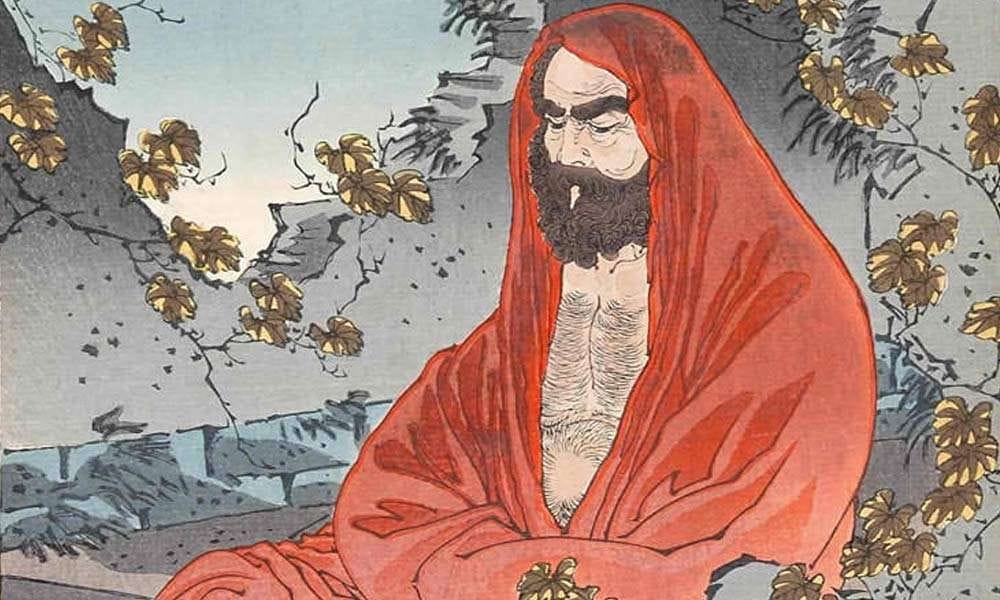
Bodhidharma, a revered Buddhist monk who lived during 5th or 6th century is credited for transmitting Chan Buddhism (the Chinese school of Mahayana Buddhism) in China. The word Chan originates from the Sanskrit word 'Dhyana' which means 'mental absorption' or meditation, Indo-Buddhist Heritage (IBH) Forum reported

WEBDESKWEBDESK
Dec 9, 2022, 11:07 am IST
in Culture
Follow on Google News
FacebookTwitterWhatsAppTelegramEmail

New Delhi [India] :  Bodhidharma, a revered Buddhist monk who lived during 5th or 6th century is credited for transmitting Chan Buddhism (the Chinese school of Mahayana Buddhism) in China. The word Chan originates from the Sanskrit word ‘Dhyana’ which means ‘mental absorption’ or meditation, Indo-Buddhist Heritage (IBH) Forum reported.

The teaching of this “great saint from Indian soil transformed the life and culture of people” in China, Japan and many other South East Asian nations.
The word was later conveyed to Vietnam as Thien, Korea as Seon and Zen Buddhism in Japan. Bodhidharma, also known as Putidamo in China and Daruma in Japan, was the second Indian Buddhist monk to visit Southern China, as per the IBH Forum report.

Phuntsog Dolma in the IBH Forum report said that Bodhidharma became the 28th patriarch of Mahayana Buddhism in India and the first patriarch of Chan Buddhism in China.

Bodhidharma was said to be the third son of Pallava king Simhavarman II of the ancient Pallava dynasty of South India. The Pallava kingdom comprised the current states of Tamil Nadu, Karnataka and Telangana. At that time, South India was the birthplace of great Buddhist panditas such as Acharya Nagarjuna and a “cradle of Mahayana Buddhism,” as per the IBH Forum report.

After his father’s death, Bodhidharma made the decision to give up his princely life. As a child, he was a bright student and had learned the Dharma from Prajnatara, a Buddhist master from Magadha. Recognising his student’s spiritual ability, Prajnatara trained him in ‘Instantaneous Entrance to the Way’ as per the Mahayana Tradition and attained Bodhi.

Bodhidharma travelled to China after his master Prajnatara’s advice. After arriving in China, he met Emperor Wu-ti, a devout Buddhist of the Liang dynasty. The meeting between Bodhidharma and Wu-ti is recorded in the Blue Cliff Record, a collection of Buddhist koans compiled in 1125.

During the meeting, Emperor Wu-ti asked, “I have constructed many temples for Buddhists and used to serve for transcribing a number of Buddhism sutras. What karmic merit is promised?” In response, Bodhidharma said, “No merit.” After his confrontation with Emperor Wu-ti, Bodhidharma went north to live in a cave at the Shaolin monastery located on Songshan on Mount Sung near Lo-yang.

According to the report, he sat in meditation for nine years and even met his first disciple Huike. Huike further carried out the lineage of Chan tradition in China and is believed to have established the Chinese martial arts of the Shaolin School.

In a conference paper titled ‘Contribution of Tamils to the Composite Culture of Asia’, it is written that Bodhidharma during his stay at Shaolin monastery “taught the monks the fighting art of India, which today is known as Kalaripayat and which in those days, was known as Vermanie.” These ancient martial art forms also included medicinal aspects.

As a prince, Bodhidharma would have learned traditional arts which he further taught his Chinese students. He taught his students martial arts, breathing techniques related to the Pranayama and other techniques of Yoga. He taught martial arts to students to prepare them to defend themselves against robbers, thieves and animals as they preached Buddhism while travelling from place to place.

Bodhidharma rejected devotional rituals, doctrinal debates, and verbal formalizations and supported meditation, through which people are able to grasp the Buddha nature within. He was said to have introduced the Lankavatara Sutra to Chinese Buddhism.

Bodhidharma was highly revered by the monks and people of China even made visits to the cave to pay their respects to him. As per the report, eight major temples are dedicated to Daruma in Japan. Furthermore, his statue is enshrined in almost every Japanese Zen temple along with a statue of Buddha. (ANI)


Topics: Bodhidharma: Buddhist monk from IndiaDiffusion of Chan Buddhism in ChinaChinese school of Mahayana BuddhismIndo-Buddhist Heritage28th patriarch of Mahayana Buddhism in IndiaLankavatara Sutra
ShareTweetSendShareSend
✮ Subscribe Organiser YouTube Channel. ✮
✮ Join Organiser's WhatsApp channel for Nationalist views beyond the news. ✮
Previous News

ISIS fighters in Pakistan pledge allegiance to New Caliphate

Next News

Karnataka: St Joseph Engineering College in Mangaluru suspends 4 ‘male’ students for ‘burqa’ dance

Related News

No Content Available
Load More

Latest News

India Deploys 12 Nuclear Warheads: Heralds doctrinal shift to script strategic deterrence against multi-front threat

J&K: Zojila tunnel clears key hurdle; Signals new era of connectivity for Ladakh

How Cockroach politics is hollowing out Bharatiya democratic culture

RSS centenary year is a time for renewed resolve and greater commitment to nation-building: Dr Mohan Bhagwat

Ex-DMK Minister Senthil Balaji (Right Side-File Photo)

Tamil Nadu: CBI books Rs 397 cr transformer tender scam from ex-DMK Minister Senthil Balaji’s tenure (2021-2023)

Border Security Force (BSF) officials inspect the Single Row Fencing (SRF) at a Border Out Post area (India-Bangladesh border)

Infiltration and Border Management: Saving the Siliguri corridor

External Affairs Ministry spokesperson Randhir Jaiswal, slams Pakistan over the recent killings in POJK

‘Hope Pakistan is held accountable’: India reacts after 20 killed in Pakistan Occupied Jammu & Kashmir

China’s anti-BLA offensive hits snag as UN members demand proof

UN Setback for China and Pakistan: US and allies stall move to ban Baloch Liberation Army

West Asia Conflict: Collective response to energy crisis

Atul Limaye Ji Sah Sarkaryavah, Rashtriya Swayamsevak Sangh while addressing a Pramukh Jan Gosthi Rashtriya at Raipur, Chhattisgarh

Chhattisgarh: Society must lead its own transformation through collective initiative: Atul Limaye

Load More
  • Privacy
  • Terms
  • Cookie Policy
  • Refund and Cancellation
  • Delivery and Shipping

© Bharat Prakashan (Delhi) Limited.
Tech-enabled by Ananthapuri Technologies

  • Home
  • Search Organiser
  • Bharat
    • Assam
    • Bihar
    • Chhattisgarh
    • Jharkhand
    • Maharashtra
    • View All States
  • World
    • Asia
    • Africa
    • North America
    • South America
    • Europe
    • Australia
  • Editorial
  • Operation Sindoor
  • Opinion
  • Analysis
  • Defence
  • Culture
  • Sports
  • Business
  • RSS @ 100
  • Entertainment
  • More ..
    • Sci & Tech
    • Vocal4Local
    • Special Report
    • Education
    • Employment
    • Books
    • Interviews
    • Travel
    • Health
    • Politics
    • Law
    • Economy
    • Obituary
  • Subscribe Magazine
  • Read Ecopy
  • Advertise
  • Circulation
  • Careers
  • About Us
  • Contact Us
  • Policies & Terms
    • Privacy Policy
    • Cookie Policy
    • Refund and Cancellation
    • Terms of Use

© Bharat Prakashan (Delhi) Limited.
Tech-enabled by Ananthapuri Technologies