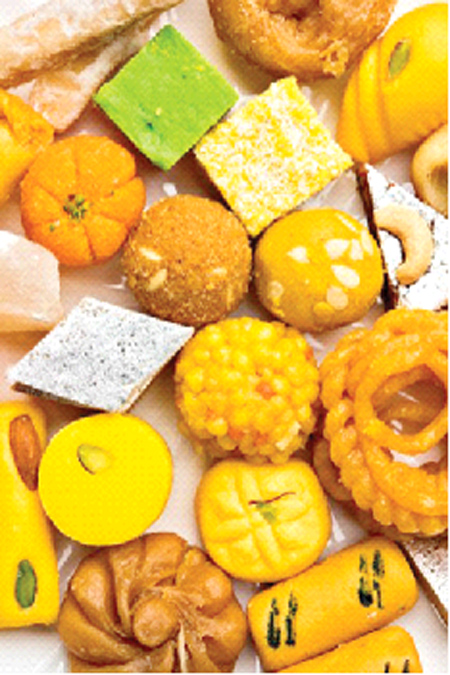
Festivals, interwoven into our lives, give us a lasting sense of aspirational fulfilment and a deep feel of rich heritage. However, the market forces pushing corporate products and brands have, of late, begun to dilute the festive spirit and traditions, as the corporate brands have been fast replacing traditional homemade ethnic sweets and snacks, as well as tailored dresses with branded ones. The rituals, their moral messages, age-old traditions and spiritual customs have also begun to fade-out. Branded attires have also been fast replacing tailored traditional dresses. The pious warmth, thrill and gaiety of celebrating religious festivals and their preparatory prelude, preceding for weeks, are also fast receding. The practice of visiting relatives and family-friends with packs of ethnic sweets and snacks is being replaced by branded products like Cadbury/ Ferrero-Rocher etc., with courier or gift pack delivery agencies. Homemade ethnic sweets are turning extinct and are getting fast replaced with Cadbury packs or Ferrero-Rocher or likes. Homemade snacks are quickly losing their sheen with Lehar, Haldiram or similar other brands and packs.
The proverbial 56 bhog (56 ethnic dishes), comprising 33 shacks and 32 bhojans (meaning 33 curries and 32 food varieties), are no more in vogue even in conversations. Manyavar, Mohe and Jade Blu like brands of dresses are fast replacing tailored clothes. Shifting focus away from customary traditions, rituals, spirituality, culture, heritage, and the age-old respect for festive traditions is also very fast.
The scare often being created against the raw items to be used for traditional and ethnic recipes, especially milk products on the eve of major festivals, has dithered our new generation away from homemade ethnic sweets, and the corporates have been finding an easy space for cultivating demand for their branded food products. This creates a lasting cleavage of festivals away from ethnic foods and traditions. Cadbury has so well capitalised in its festival marketing strategies and played a major role in causing a significant change in festive purchases
The growing scare and panic of adulterated milk products viz. Mawa, Khoya, Chenna, Paneer, and Ghee being raised only during the pre-festival periods dither the panic-stricken families away from traditional recipes. A million-dollar question in this regard arises: why not the local administration in the towns put in place a system of pre-testing and certifying all such milk products, cooking media etc., to facilitate celebrations with traditional and ethnic recipes without fear or panic of adulterated ingredients? Ensuring supplies of pure items for the traditional and ethnic dishes should be the responsibility of local administration, instead of being a partner in creating panic by some sporadic raids on dealers of these products, being used in ethnic recipes for homemade traditional sweets and snacks. It raises doubt about their intentions. The junk food, high sugar products of readymade food marketers, whose products have already raised the country’s disease burden to 21 per cent of the world’s total disease burden. Why do such unhealthy junk brands go unscathed?
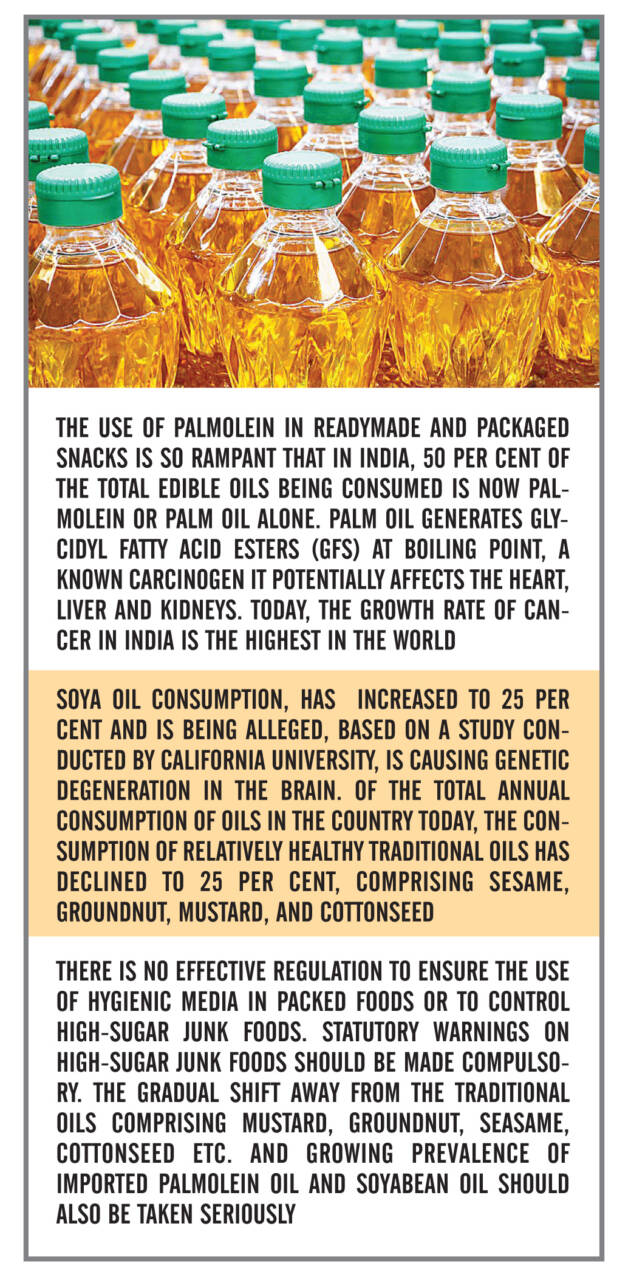
High-sugar chocolates with low or no cream, ice-cream imitations, devoid of milk fats or creams in the name of frozen desserts, and made with the blend of palm kernel oil, soybean oil and palm stearin cannot be called safe. Palm oil is high in saturated fats palmolein can precipitate heart problems and lead to a rise in bad cholesterol. The use of palmolein in readymade and packaged snacks is so rampant that in India, 50 per cent of the total edible oils being consumed is now palmolein or palm oil alone. Palm oil, otherwise a very healthy oil, generates glycidyl fatty acid esters (GFs) at boiling point, a known carcinogen and potentially affects the heart, liver and kidneys. All kinds of frying need boiling of palmolein, so GFs are invariably generated when cooking in palm oil. Today, the growth rate of cancer in India is the highest in the world.
Soya oil consumption too, has increased to 25 per cent and is being alleged, based on a study conducted by California University, to be causing genetic degeneration in the brain. Out of the total annual consumption of oils in the country today, the consumption of relatively healthy traditional oils has declined to 25 per cent, comprising sesame, groundnut, mustard, and cottonseed. There is no effective regulation to ensure the use of hygienic media in packed foods or to control high-sugar junk foods. Statutory warnings on high-sugar junk foods should be made compulsory. The gradual shift away from the traditional oils comprising mustard, groundnut, seasame, cottonseed etc. and growing prevalence of imported palmolein oil and soyabean oil should also be taken seriously. The traditional oils extracted from seeds with small expellers trigger decentralised employment generation, wherein farmers cultivate oil seeds across the villages, and small local expellers produce the oil to be distributed by neighbourhood Kirana shops. The country has more than six lakh villages where oil seed cultivation and tiny local expeller can thrive and generate employment. On the other hand, the palm oil and soybean oil industry is capital intensive, coupled with several health hazards.

The scare often being created against the raw items to be used for traditional and ethnic recipes, especially milk products on the eve of major festivals, has dithered our new generation away from homemade ethnic sweets, and the corporates have been finding an easy space for cultivating demand for their branded food products. This creates a lasting cleavage of festivals away from ethnic foods and traditions. Cadbury has so well capitalised in its festival marketing strategies and played a major role in causing a significant change in festive purchases. For example, Cadbury managed to position its chocolates as a superior substitute or as a perfect sweet one can give to his/her relatives, friends and other accomplices, bosses in the office, clients etc., in place of traditional Indian sweets. Ads of similar corporate brands have commercialised most of our fests altogether, driving us away from the customary, ritualistic, religious and spiritual celebrations. There are scores of examples, but the sole example of Cadbury’s initiative can be taken as a representative case to understand. Cadbury’s campaigns, such as Iss Diwali Kuchh Achha Ho Jaaye and Is Diwali Khushiya Le Chalo have successfully changed our mindsets. Brands need not be blamed for these merchandising attempts and materialistic shifts in our celebrations. Our sentiments and respect for the established traditions and customs should overweigh the advertisement-led lust for branded products. Ads may decisively influence our choices and feelings and may convince us that our festival is incomplete without these products and brands. But, our commitments to tradition and ethnicity should not melt away with brand-focused advertisements.
Our sentiments and respect for the traditions of each fest should over-weigh the influence of market forces and materialistic advertisements. The tradition of Rabadi ke Malpue on Hariyali Amavasya, Besan ki Chakki on Raksha Bandhan, Gujiya on Holi and Diwali, Til ke Ladoo on Makar Sankranti etc., should not die with brands, including chocolate brands, branded snacks etc. Tailored dresses, too, should not be bid total farewell with the temptation of celebrating fests with branded attires alone. Both should thrive.
Change in a dynamic universe is natural as a rule but our traditions and customs should sustain and prevail while accommodating the ever-newer corporate products and brands. Bharat has an age-old tradition of rich fests and heritage going back several millennia. So, the panic about adulterated inputs for ethnic recipes too, needs to be uprooted with urgent priority.