
From Raj Path to Kartavya Path: Deendayal Ji’s Vision in Action
June 24, 2026
  • Read Ecopy
  • Circulation
  • Advertise
  • Careers
  • About Us
  • Contact Us
Android AppiPhone AppArattai
Organiser
  • ‌
  • Bharat
    • Assam
    • Bihar
    • Chhattisgarh
    • Jharkhand
    • Maharashtra
    • View All States
  • World
    • Asia
    • Europe
    • North America
    • South America
    • Africa
    • Australia
  • Editorial
  • International
  • Opinion
  • RSS @ 100
  • More
    • Op Sindoor
    • Analysis
    • Sports
    • Defence
    • Politics
    • Business
    • Economy
    • Culture
    • Special Report
    • Sci & Tech
    • Entertainment
    • G20
    • Azadi Ka Amrit Mahotsav
    • Vocal4Local
    • Web Stories
    • Education
    • Employment
    • Books
    • Interviews
    • Travel
    • Law
    • Health
    • Obituary
  • Subscribe
    • Subscribe Print Edition
    • Subscribe Ecopy
    • Read Ecopy
  • ‌
  • Bharat
    • Assam
    • Bihar
    • Chhattisgarh
    • Jharkhand
    • Maharashtra
    • View All States
  • World
    • Asia
    • Europe
    • North America
    • South America
    • Africa
    • Australia
  • Editorial
  • International
  • Opinion
  • RSS @ 100
  • More
    • Op Sindoor
    • Analysis
    • Sports
    • Defence
    • Politics
    • Business
    • Economy
    • Culture
    • Special Report
    • Sci & Tech
    • Entertainment
    • G20
    • Azadi Ka Amrit Mahotsav
    • Vocal4Local
    • Web Stories
    • Education
    • Employment
    • Books
    • Interviews
    • Travel
    • Law
    • Health
    • Obituary
  • Subscribe
    • Subscribe Print Edition
    • Subscribe Ecopy
    • Read Ecopy
Organiser
  • Home
  • Bharat
  • World
  • Operation Sindoor
  • Editorial
  • Analysis
  • Opinion
  • Culture
  • Defence
  • International Edition
  • RSS @ 100
  • Magazine
  • Read Ecopy
Home Bharat

From Raj Path to Kartavya Path: Deendayal Ji’s Vision in Action

Prafulla KetkarPrafulla Ketkar
Sep 19, 2022, 12:39 pm IST
in Bharat, Editorial
Follow on Google News
FacebookTwitterWhatsAppTelegramEmail

“Bharatiya Jana Sangh was born out of this realisation that the party in power, or even others in the opposition, had completely neglected this fundamental basis of Bharat’s life and culture. In their attempt to modernise the country, they were trying to devitalise it by changing its age-old values. If they posed as reformers, they were only deluding the people, and themselves, Dayanand and Gandhiji were great reformers, they brooked no social evil, but they never decried Dharma or minimised its importance. On the contrary, they appealed in the name of Dharma, and they succeeded”. — Pt Deendayal Upadhyaya, the first lecture on Integral humanism, delivered on April 22, 1965

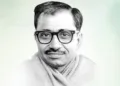
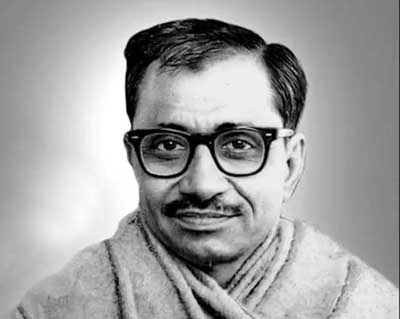
When Prime Minister Narendra Modi inaugurated the old Kingsway, i.e. Rajpath, the symbol of slavery, to a newly created Kartavya Path, with the statue of Netaji Subhash Chandra Bose watching the magnificent sight through the India Gate, it was history in the making. This symbolic gesture erased another symbol of slavery. The mindset behind ruling the country should not be Raj – i.e. power but Kartavya – i.e. duty has been firmly established. In the form of Netaji, a true leader of the soldiers, who led from the front in the freedom struggle, got his due place. At the same time, Prime Minister paid tribute to Pt Deendayal Upadhyaya, the original proponent of Decolonisation after Independence.

Deendayal Ji articulated his ideas on Integral Humanism which was not a rigid ideological programme in the Western sense. When the Bharatiya Jan Sangh was formed as a political party, taking inspiration from the Rashtriya Swayamsevak Sangh (RSS), all other political formulations then used to revolve around socialism or capitalism. Taking the Tilak and Gandhian line forward, Deendayal Ji rejected the blind imitation of both and proposed an original framework rooted in the Bharatiya philosophy of seeing a symbiotic relationship between the individual and collective, spiritual to the material, and national to universal. Many criticise and consider burning Hindutva as their lifetime project but do not understand this fundamental premise of our nationhood. Due to this diconnect with the national ethos, they cannot appreciate the Deendayal Ji’s vision for the complete decolonisation of social-political, economic and institutional thinking, which PM Modi is trying to take forward.

Our Rashtra Dharma has been not to discriminate against anyone based on religion. Hence, we must reject the British idea of differentiating individuals as majority and minority. Non-Indic faiths like Islamism and Christianism should shun the minoritism mindset. Before peddling the fake narratives about so-called minorities under threat, Western intellectuals, both within and outside, should not neglect the fact that no discriminatory practices are employed in the policy implementations. The ideation around Aatmanirbharata, or vocal for local, does not mean closing doors to the outside ideas. It is meant to strengthen the domestic market based on the available resources and skill set. Cow protection and promotion can go hand in hand with facilitating new semiconductor plants or 5G technology. The same applies to putting education and health at the core of policy-making as envisioned by Deendayal Ji. We need to revisit the integral thinking framework for our art, literature, philosophy, social sciences, technological and industrial policies, etc., to evolve our indigenous modernity during the Amrit Kaal.

Earlier, the idea of decolonisation was limited to political independence which changed over the period. With a wider connotation, it now means the process of restorative justice through cultural, psychological and economic freedom. We need to stimulate original ideas, objectives and strategies in tune with our national ethos to gain that freedom. Freedom of mind and thought processes from the colonial impact and hangover is the first step in that direction. Through the philosophical milieu of Integral Humanism, the modern Rishi in the form of Deendayal Ji initiated that process in the 1960s. The BJP-led governments naturally try to implement it through policies. Apparently, a lot of symbolism is involved, but that is necessary to initiate the churning. A fundamental shift in policy formulation is essential in the economic and institutional realm. We need a decentralised and integral model to evolve a truly Bharatiya model of development. Comprehensive decolonisation facilitated by the governments, undertaken by the intellectuals and imbibed by society is the need of the hour. That would be an apt tribute to Deendayal Ji.

Topics: Modi governmentAatmanirbharataDeendayal Ji’s VisionRaj Path to Kartavya PathBharatiya Jana Sangh
Prafulla Ketkar
Prafulla Ketkar
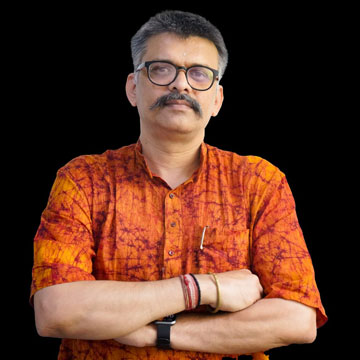
Prafulla Ketkar, is the Editor, Organiser (Weekly) since 2013. He has a experience of over 20 years in the fields of research, media and academics. He is also Advisory Committee School of Journalism, Delhi University. He has been writing on issues related to International politics and foreign policy, with special reference to China and Democracy, Hindutva, and Bharatiya Civilisation. He was also a member of the Editorial team of the recently published Complete Works of Pt Deendayal Ji in 15 Volumes. He has 2 books, 29 academic articles, 2 entries in Encyclopedia of India and numerous articles to his credit. [Read more]
Share9TweetSendShareSend
✮ Subscribe Organiser YouTube Channel. ✮
✮ Join Organiser's WhatsApp channel for Nationalist views beyond the news. ✮
Previous News

UK: British Queen Elizabeth’s state funeral to take place at Westminster Abbey in London today

Next News

TN: DMK minister’s royal style wedding costing over 300 cr serving 4,500 goats, 24,000 chicken, raises many eyebrows

Related News

The Modi era is presented as a transformative phase in Indian politics, governance, and national identity, reflecting the aspirations of a rapidly evolving India

Modi Yug: How twelve years of governance reshaped India’s aspirations, identity & development trajectory

12 years of Modi Government: A new era of nation building

A large crowd of Bangladeshis residing in West Bengal gathers at the Hakimpur border crossing in the Basirhat subdivision of North 24 Parganas district to cross over to Bangladesh

Unnatural Demographic Change: Securing Bharat against the silent invasion

A representative image

Ayushman Bharat Crosses 90 Cr ABHA Accounts: How Modi govt is building the world’s largest digital health ecosystem

Congress is accused of opposing the Great Nicobar Project for political reasons despite its strategic, economic and national security significance for India

Great Nicobar Project: Does Congress prioritise politics over national interest?

Womens’ Reservation Bill : Senseless Sabotage

Load More

Latest News

Elomi Global Worship Centre in Omalloor, Pathanamthitta district ; Pastor Binu Vazhakkuttom (Left to Right)

Keralam: Child abuse allegations at Pentecostal worship centre in Pathanamthitta; locals demand Pastor Binu’s arrest

Modi Govt’s Tourism Revolution: 183 projects, Rs 9,225 crore investment & rise of India’s cultural & spiritual circuits

Padma Awards 2026: Tamil Nadu’s distinguished achievers receive national honours

India’s history is not merely a tale of foreign domination but also a remarkable story of resilience, resistance & civilisational continuity

Indian History: Not just foreign rule, but a timeless story of resistance, self-respect and civilisational resilience

From $10 Billion to $190 Billion: Indian Bioeconomy Touches New Heights in 12 Years

From $10 Billion to $190 Billion: India’s Bioeconomy leads a 12-Year science revolution

Nagpur | Acceptance of Bharatiya civilisational values is steadily increasing worldwide: Shanta Kumari

Representative Image

Passport Seva Divas: India issues 1.39 crore passports in 2025 as ‘Passport Seva Network’ expands to 545 Centres

Uttarakhand Government replaces Madrasa Board with Unified Minority Education framework

Uttarakhand Ends Madrasa Board Era: New Minority Education Authority to take over from July 1

As growth slows and business failures mount, China’s debt enforcement system is turning financial distress into long-term social exclusion

China’s debt blacklist traps millions of citizens in financial ruin, exposing the human cost of a slowing economy

Keralam Chief Minister VD Satheeshan (Left Side)

Keralam: CM Satheeshan’s new liquor policy proposal triggers internal conflict within Congress

Load More
  • Privacy
  • Terms
  • Cookie Policy
  • Refund and Cancellation
  • Delivery and Shipping

© Bharat Prakashan (Delhi) Limited.
Tech-enabled by Ananthapuri Technologies

  • Home
  • Search Organiser
  • Bharat
    • Assam
    • Bihar
    • Chhattisgarh
    • Jharkhand
    • Maharashtra
    • View All States
  • World
    • Asia
    • Africa
    • North America
    • South America
    • Europe
    • Australia
  • Editorial
  • Operation Sindoor
  • Opinion
  • Analysis
  • Defence
  • Culture
  • Sports
  • Business
  • RSS @ 100
  • Entertainment
  • More ..
    • Sci & Tech
    • Vocal4Local
    • Special Report
    • Education
    • Employment
    • Books
    • Interviews
    • Travel
    • Health
    • Politics
    • Law
    • Economy
    • Obituary
  • Subscribe Magazine
  • Read Ecopy
  • Advertise
  • Circulation
  • Careers
  • About Us
  • Contact Us
  • Policies & Terms
    • Privacy Policy
    • Cookie Policy
    • Refund and Cancellation
    • Terms of Use

© Bharat Prakashan (Delhi) Limited.
Tech-enabled by Ananthapuri Technologies