Being Frank and Fair on Freebies
June 30, 2026
  • Read Ecopy
  • Circulation
  • Advertise
  • Careers
  • About Us
  • Contact Us
Android AppiPhone AppArattai
Organiser
  • ‌
  • Bharat
    • Assam
    • Bihar
    • Chhattisgarh
    • Jharkhand
    • Maharashtra
    • View All States
  • World
    • Asia
    • Europe
    • North America
    • South America
    • Africa
    • Australia
  • Editorial
  • International
  • Opinion
  • RSS @ 100
  • More
    • Op Sindoor
    • Analysis
    • Sports
    • Defence
    • Politics
    • Business
    • Economy
    • Culture
    • Special Report
    • Sci & Tech
    • Entertainment
    • G20
    • Azadi Ka Amrit Mahotsav
    • Vocal4Local
    • Web Stories
    • Education
    • Employment
    • Books
    • Interviews
    • Travel
    • Law
    • Health
    • Obituary
  • Subscribe
    • Subscribe Print Edition
    • Subscribe Ecopy
    • Read Ecopy
  • ‌
  • Bharat
    • Assam
    • Bihar
    • Chhattisgarh
    • Jharkhand
    • Maharashtra
    • View All States
  • World
    • Asia
    • Europe
    • North America
    • South America
    • Africa
    • Australia
  • Editorial
  • International
  • Opinion
  • RSS @ 100
  • More
    • Op Sindoor
    • Analysis
    • Sports
    • Defence
    • Politics
    • Business
    • Economy
    • Culture
    • Special Report
    • Sci & Tech
    • Entertainment
    • G20
    • Azadi Ka Amrit Mahotsav
    • Vocal4Local
    • Web Stories
    • Education
    • Employment
    • Books
    • Interviews
    • Travel
    • Law
    • Health
    • Obituary
  • Subscribe
    • Subscribe Print Edition
    • Subscribe Ecopy
    • Read Ecopy
Organiser
  • Home
  • Bharat
  • World
  • Operation Sindoor
  • Editorial
  • Analysis
  • Opinion
  • Culture
  • Defence
  • International Edition
  • RSS @ 100
  • Magazine
  • Read Ecopy
Home Editorial

Being Frank and Fair on Freebies

Prafulla KetkarPrafulla Ketkar
Aug 22, 2022, 01:48 pm IST
in Editorial
Follow on Google News
FacebookTwitterWhatsAppTelegramEmail

“The voter should not complain; he should command. He should not desire; he must demand. He should not grumble and grudge but should assess and assert. The voter should see that he votes for a principle and not for a party, that he votes for a party and not for a personality, that he votes for a person and not for the purse. Let him consider the cause and not the caste; go with the worthy rather than with the winner. Choose the right man and see that the man you choose wins; that will be your victory. If you simply go as a camp follower of the man who has created an impassion that he win, you have already lost, whatever the result of the election be. Vote is a matter of conscience. Do not sell it. Do not destroy it. When you vote take a momentous decision, please do not take it just on the spur of the moment”

— Pt Deendayal Upadhyaya, Your Vote – 1, Organiser, December 4, 1961

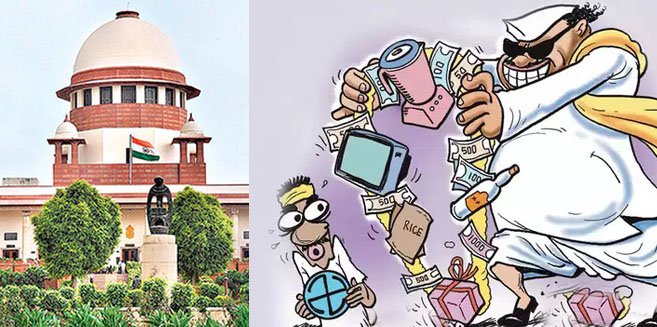
The Supreme Court rightly remarked – There are no free lunches – on the issue of ‘freebies’. On August 22, 2022, the Apex Court started listening to the arguments on the PIL filed by lawyer Ashwini Upadhyay, opposing the practice of political parties promising freebies during elections. The litigation also seeks the Election Commission to invoke its powers to freeze their election symbols and cancel their registration. The issue is complicated and therefore, needs greater deliberation at the national level, beyond the courtroom.

The discussion on poll manifestos and election promises is not new. While adopting the lofty ‘socialist’ ideals itself, the state’s role in welfare has been discussed and deliberated upon. In 2013 also, the top court in the judgement of S. Subramaniam Balaji v. State of Tamil Nadu (2013) addressed the same issue. The verdict clarifies that though the election promises cannot be construed as “corrupt practice”, the distribution of freebies influences voting behaviour. The Election Commission has also clarified that the promise of freebies at the government cost disturbs the level playing field and vitiates the electoral process.

The real issue is the method of differentiating between freebies and cross-subsidisation. As the Court is mulling over appointing an expert panel to delve over one of the core issues of the democratic process – what can be promised to the electorates while seeking their votes – we need to draw fine lines between these concepts.

Of course, in a democracy, there will be political programmes, and to fulfil them, political parties will make promises to the voters. There are Constitutional objectives, and as mentioned in Article 38 (1), the elected governments are expected ‘to promote the welfare of the people’. Few much-discussed schemes help us in drawing the lines between cross-subsidisation-based welfare schemes and freebies, as explained in a report by Reserved Bank of Bharat.

In the ‘State Finances: Risk Analysis’ report, the Apex bank has warned about the financial risks arising for the states from their “declining own tax revenue, increase in expenditure following growing preference for distribution of ‘freebies’, and rising overdue of loss-making DISCOMs.” The total outstanding liabilities of the States amount to a staggering number – Rs. 59,89,360 crores. The PDS, employment generation, and support in health and education – the fundamental things necessary to support and empower the marginalised through cross-subsidisation – should be considered welfare policies intended for the public good. On the other hand, pre-election declarations of free electricity, free water, free public transportation, waiver of pending utility bills and farm loan waivers etc. must be considered freebies.

Political parties can and should be allowed to make lofty promises, but they should be held accountable for the assurances given. A cost-benefit analysis of the same should be presented to the public. Does the mad race of making unrealistic promises strengthen our democracy? Do we want to continue with the bribery culture, where mindless promises, kinds and goods are allowed to flow during the election season? Should we allow our society to be State dependent on everything or empowerment, both social institutions and individuals through schemes, should be our goal. Many countries are grappling with a debt crisis leading to collapse of the political system. We should be reinvigorating social structures to create an efficient and industrious population. The Revadi Culture (freebies against votes) is not just a quick passport for fiscal disaster but a guaranteed visa for an unproductive nation.

Topics: Supreme CourtTamil NaduApex Courtjudgement of S. Subramaniam BalajiRevadi CultureState Finances: Risk AnalysisLawyer Ashwini Upadhyay
Prafulla Ketkar
Prafulla Ketkar
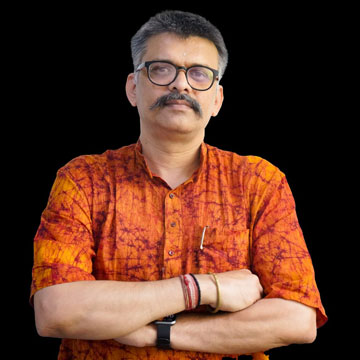
Prafulla Ketkar, is the Editor, Organiser (Weekly) since 2013. He has a experience of over 20 years in the fields of research, media and academics. He is also Advisory Committee School of Journalism, Delhi University. He has been writing on issues related to International politics and foreign policy, with special reference to China and Democracy, Hindutva, and Bharatiya Civilisation. He was also a member of the Editorial team of the recently published Complete Works of Pt Deendayal Ji in 15 Volumes. He has 2 books, 29 academic articles, 2 entries in Encyclopedia of India and numerous articles to his credit. [Read more]
Share23TweetSendShareSend
✮ Subscribe Organiser YouTube Channel. ✮
✮ Join Organiser's WhatsApp channel for Nationalist views beyond the news. ✮
Previous News

Russia detains IS suicide bomber plotting terrorist attack against one of India’s top leadership

Next News

Gujarat Museums where visitors can adore stories of human glories and resilience

Related News

Tamil Nadu CM Joseph Vijay’s Birthday Celebrations in schools by TVK sparks row; Child Rights Watch urges NCPCR action

St Peter & Paul Sea Foods Exports

Tiruvallur Ammonia Gas Leak: Death toll rises to 15; BJP questions delay in action, seeks Rs 25 lakh compensation

AI Image

Tamil Nadu: BJP cites 10 sexual assault cases in a day, alleges worsening law and order under TVK government

Tamil Nadu: Zoho’s Sridhar Vembu recounts alleged bribery demands for school NOC approvals during DMK regime

Tamil Nadu: ED raids 21 sites in probe into 2017 TRB polytechnic lecturer recruitment scam, freezes 56 bank accounts

Former -DMK Minister EV Velu (File Photo)

Tamil Nadu: Anti-graft agency raids 13 locations linked to ex-DMK Minister EV Velu over alleged contract irregularities

Load More

Latest News

Delhi-NCR Fight Against Vehicular Pollution: How Rs. 9,585cr central govt. scheme aims to improve city’s air quality

US President Trump signs the US–Iran Peace Agreement at Versailles, France

West Asia Conflict: The deal out of exhaustion

FCRA: Enforcement, not harassment

Born on July 6, 1901, in Kolkata, Dr Syama Prasad Mookerjee is remembered as a visionary leader, an educationist, and the founder of the Bharatiya Jana Sangh, who sacrificed his life for the unity & integrity of the nation

Dr Syama Prasad Mookerjee: Symbol of conviction, courage and commitment

Tamir Missiles form the core of Israel's Iron dome air defense system

Israel turns to India to build Iron Dome Tamir missiles: Signals New Delhi as defence partner amid West Asia crisis

West Bengal Chief Minister Suvendu Adhikari (R) and State Finance Minister Swapan Dasgupta (L) display copies of the State Budget after its presentation in the West Bengal Legislative Assembly, in Kolkata

West Bengal Budget 2026: A Transformative step

Ghar Wapsi: Ayush Malik returns to Sanatan fold in Shamli

Ghar Wapsi of Ayush Malik: Shamli Man who converted to Islam for Chandni Qureshi returns to Sanatan fold

ABVP-led DUSU Launches Dr B.R. Ambedkar Law internship 5.0 for DU law students

ABVP-led DUSU launches Dr BR Ambedkar Law internship 5.0; 657 DU students selected

Pakistan escalates airstrikes on Afghan territory

UN debunks Pakistan’s fake narrative & terror operation claim in Afghanistan: 29 civilians killed & not militants

The 1975 Emergency remains one of India's darkest chapters, marked by censorship, mass arrests, and widespread political repression

Emergency 1975: Harrowing stories of torture, mass arrests & resistance during India’s darkest democratic crisis

Load More
  • Privacy
  • Terms
  • Cookie Policy
  • Refund and Cancellation
  • Delivery and Shipping

© Bharat Prakashan (Delhi) Limited.
Tech-enabled by Ananthapuri Technologies

  • Home
  • Search Organiser
  • Bharat
    • Assam
    • Bihar
    • Chhattisgarh
    • Jharkhand
    • Maharashtra
    • View All States
  • World
    • Asia
    • Africa
    • North America
    • South America
    • Europe
    • Australia
  • Editorial
  • Operation Sindoor
  • Opinion
  • Analysis
  • Defence
  • Culture
  • Sports
  • Business
  • RSS @ 100
  • Entertainment
  • More ..
    • Sci & Tech
    • Vocal4Local
    • Special Report
    • Education
    • Employment
    • Books
    • Interviews
    • Travel
    • Health
    • Politics
    • Law
    • Economy
    • Obituary
  • Subscribe Magazine
  • Read Ecopy
  • Advertise
  • Circulation
  • Careers
  • About Us
  • Contact Us
  • Policies & Terms
    • Privacy Policy
    • Cookie Policy
    • Refund and Cancellation
    • Terms of Use

© Bharat Prakashan (Delhi) Limited.
Tech-enabled by Ananthapuri Technologies