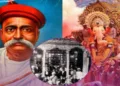
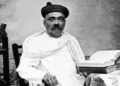
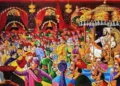
The history of freedom struggle of India, in several ways is the history of constructing and communicating the idea of Swa or self as a comprehensive response to colonialism. It must be seen as a dynamic and multi-dimensional idea consisting of economic, political, social, religious and cultural freedom to discover, create and nurture something of your own. Nineteenth century India witnessed a massive awakening of the idea of Swa manifested in the form of a struggle for Swa-bhiman (self-respect) Swa-deshi (self-made) & Swa-raj (self-rule). The development of print culture in colonial India led to a formation of a public sphere where Indians from across class, caste, religion and region found a space to communicate their ideas of Swa. In the 19th century, the national awakening of Swa found its roots in ‘spiritual’ nationalism, clearly grounded in the rich cultural heritage of the ancient Hindu philosophical thought.
Brits Believed In Superiority of White Race
Colonial rule resulted in a severe loss of prestige and identity for the Indians. For centuries, the British were successful in their imperialist design in two major ways – economic imperialism and cultural imperialism. Systematic destruction of the sustainable and prosperous Indian economy was coupled with a sustained propagation of racial superiority of the British via the theory of white man’s burden. The idea was that the Britishers as a white race were superior to the others living on the earth and that they had the divine burden entrusted to reign the God’s empire on earth. This so-called act of God, over centuries, reduced India to extreme poverty both economically as well culturally. Servility to the British masters resulted in the severe loss of the ‘self’ or the ‘Swa’.
Print media material like books, journals, periodicals, newspapers, pamphlets, posters and banners published in Indian languages gave wings to this cultural project of spiritual nationalism
For a socially, culturally and economically scarred Indian consciousness, it was unimaginable that at the turn of the 20th century, India as a national entity, free from the British clutches would acquire a new national consciousness. It was here that the growth of the massive Indian language print culture played a crucial role in creating a public sphere largely dominated by Hindu philosophical ideas of Sanatan dharma and ‘Vedanta’. Several Hindu nationalist leaders, while some were ‘Sanyasis’, others artists, novelists and journalists became a part of this huge ‘cultural project’ to fight the western cultural onslaught.
Print media material like books, journals, periodicals, newspapers, pamphlets, posters and banners published in Indian languages gave wings to this cultural project of spiritual nationalism. India as a motherland or ‘Bharat Mata’ was imagined, constructed and disseminated to ignite a sense of self-worth and self-esteem to uplift the Indian mindsets from the British slave mentality. Explosion of Hindi, Marathi, Bengali, Tamil, Telugu, Oriya, Malayalam, Kannada, Punjabi and Urdu language print media material created a public sphere which constantly engaged in the narratives of Hindu philosophy, its cultural values & practices.
Appealing To Mass Consciousness. Bengal was the frontrunner in this intellectual project. One of the prominent flagbearers of spiritual nationalism was Bankim Chandra Chattopadhyaya. ‘Bangadarshan’ , a literary magazine published by him, became a symbol of Swadesh and Swabhasha for the Indian masses. Though he was a prolific writer in English, he believed regional language was the best medium to appeal to the mass consciousness. His Bengali novels ‘Anand Math’, ‘Devi Chaudharani’ and ‘Sitaram’ contributed massively in sensitising the Indian masses in realising self-worth and in reviving the lost self-esteem. Bankim imagined his characters in historical settings where the stories revolved around the themes of nation worship, service to humanity and building a rational society. Engaging in writing fictional narratives for popular consumption, Bankim focused on representing nationalism as the highest dharma for an Indian. The plots were intended to liberate the Indian minds from the deep seeded inferiority.
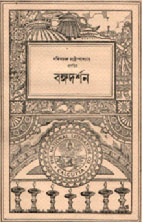
Anand Math was a grand saga of patriotism where Sanatan Dharma took centrestage. The story conceptualised the idea of a nation as a motherland portrayed as a mother goddess to be worshipped by the masses as her children. A careful weaving of Vande Mataram song in his novel immortalised the idea of Bharat Mata as a nation and its worship as the highest dharma in the Indian consciousness. Slogans of Bharat Mata ki jai and Vande Mataram echoed across the nation during the 19th and 20th century. Bankim’s incorporation of Vande Mataram in the story of Anand Math brought the song in popular consciousness, consequently manifesting itself across the print media material as a symbol of nationalism. It also went on to become a popular war cry for the freedom fighters throughout their struggle against the British.
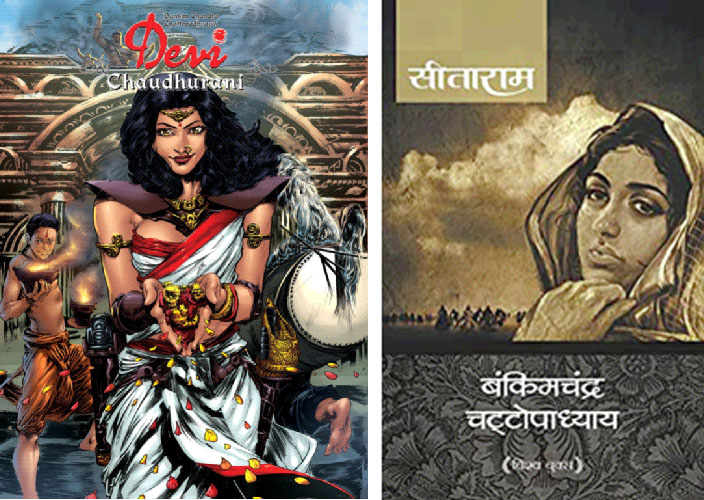
Indian masses in realising self-worth and in reviving their lost self-esteem
Bankim Chandra Chattopadhyaya and Swami Vivekananda successfully reconstructed and revived the vision of a glorious ancient civilisational paradigm. By and large, it was this model of spiritual nationalism which prevailed at the mass level, became a source of inspiration for the likes of Aurobindo Ghosh, Bal Gangadhar, Bipan Chandra Pal, Lala Lajpat Rai, Bhupendranath Dutt and Bhagat Singh in the course of their struggle for Swadeshi and Swaraj
Bhupendranath Dutt in his treatise Swami Vivekananda, Patriot-Prophet: A Study suggested that Swamiji seems to have asked his disciples to follow the ideals of Santan Dharma and worship of the motherland as laid down by Bankim Chandra.
Focus On Santan Dharma
Towards the end of the 19th century, Swami Vivekananda emerged on the national scene and focusing on the philosophical ideas of Santan Dharma, concretised nationalism by grounding it withing the Vedanta philosophy. Swamiji himself was a symbol of spiritual nationalism and laid stress on the three fundamental ancient Vedanta texts viz. the Upanishads, the Brahma sutras and the Bhagvad Gita. He gave a call to the Indian youth in particular to model themselves on the basic values of Vedanta to fight all kinds of divisive forces prevalent in society.
In 1896, Vivekananda edited an English language monthly journal, Prabuddha Bharat or Awakened India, published by the Ramakrishna Math. It was an epistemological attempt on his part to publish content targeted at national awakening based on improving knowledge related to the ideas of both Western and Indian philosophical thought. The content of the writings published in Prabuddha Bharat dealt with subjects like ‘Modern Civilisation and Vedanta’, ‘What is duty’, ‘The glory of devotion adapted from Mahabharata’, ‘Doing good to the World’, ‘Thoughts on the Bhagavad Gita’ and ‘Max Muller a Vedantist’. The structure and form of the stories was divided into different sections including news and notes, editorials and extracts from religious and philosophical texts and novels.
Swami Vivekanand conceived the idea of the journal as a part of the larger cultural project to counter and demolish the ideas of western supremacy. Swamiji realising the need and potential for a struggle between two cultures launched this intellectual project where Sanatan dharma and Vedanta philosophy became the bedrock of the spiritual awakening of Indian masses in the larger discourse of ‘Swa’. The objective was clearly laid down in Vol I, No. I, July, 1896, Prabuddha Bharata – “…The ready response with which our prospectus has been favored on all sides, the eagerness with which our movement has been welcomed and the support that has been generously promised to us in several quarters, all show that the time is ripe for similar undertaking, that there is a real demand in the country for spiritual nourishment – for the refreshment of the soul…”
The 20th century Indian national movement and the print media material associated with it were clearly inspired and awakened by the spread of spiritual nationalism with its strong grounding in Sanatan dharma and Vedanta philosophy. Bankim Chandra Chattopadhyaya and Swami Vivekananda successfully reconstructed and revived the vision of a glorious ancient civilisational paradigm. By and large, it was this model of spiritual nationalism which prevailed at the mass level, became a source of inspiration for the likes of Aurobindo Ghosh, Bal Gangadhar, Bipan Chandra Pal, Lala Lajpat Rai, Bhupendranath Dutt and Bhagat Singh in the course of their struggle for
Swadeshi and Swaraj.