Tiananmen Square massacre reveals the violent nature of Chinese politics
July 21, 2026
  • Read Ecopy
  • Circulation
  • Advertise
  • Careers
  • About Us
  • Contact Us
Android AppiPhone AppArattai
Organiser
  • ‌
  • Bharat
    • Assam
    • Bihar
    • Chhattisgarh
    • Jharkhand
    • Maharashtra
    • View All States
  • World
    • Asia
    • Europe
    • North America
    • South America
    • Africa
    • Australia
  • Editorial
  • International
  • Opinion
  • RSS @ 100
  • More
    • Op Sindoor
    • Analysis
    • Sports
    • Defence
    • Politics
    • Business
    • Economy
    • Culture
    • Special Report
    • Sci & Tech
    • Entertainment
    • G20
    • Azadi Ka Amrit Mahotsav
    • Vocal4Local
    • Web Stories
    • Education
    • Employment
    • Books
    • Interviews
    • Travel
    • Law
    • Health
    • Obituary
  • Subscribe
    • Subscribe Print Edition
    • Subscribe Ecopy
    • Read Ecopy
  • ‌
  • Bharat
    • Assam
    • Bihar
    • Chhattisgarh
    • Jharkhand
    • Maharashtra
    • View All States
  • World
    • Asia
    • Europe
    • North America
    • South America
    • Africa
    • Australia
  • Editorial
  • International
  • Opinion
  • RSS @ 100
  • More
    • Op Sindoor
    • Analysis
    • Sports
    • Defence
    • Politics
    • Business
    • Economy
    • Culture
    • Special Report
    • Sci & Tech
    • Entertainment
    • G20
    • Azadi Ka Amrit Mahotsav
    • Vocal4Local
    • Web Stories
    • Education
    • Employment
    • Books
    • Interviews
    • Travel
    • Law
    • Health
    • Obituary
  • Subscribe
    • Subscribe Print Edition
    • Subscribe Ecopy
    • Read Ecopy
Organiser
  • Home
  • Bharat
  • World
  • Operation Sindoor
  • Editorial
  • Analysis
  • Opinion
  • Culture
  • Defence
  • International Edition
  • RSS @ 100
  • Magazine
  • Read Ecopy
Home World

Tiananmen Square massacre reveals the violent nature of Chinese politics

From a historical and contemporary perspective, the Tiananmen Square massacre in 1989 should remind the world of the ruthless nature of Chinese polity under the CPC.

WEBDESKWEBDESK
Apr 9, 2022, 01:10 pm IST
in World
Follow on Google News
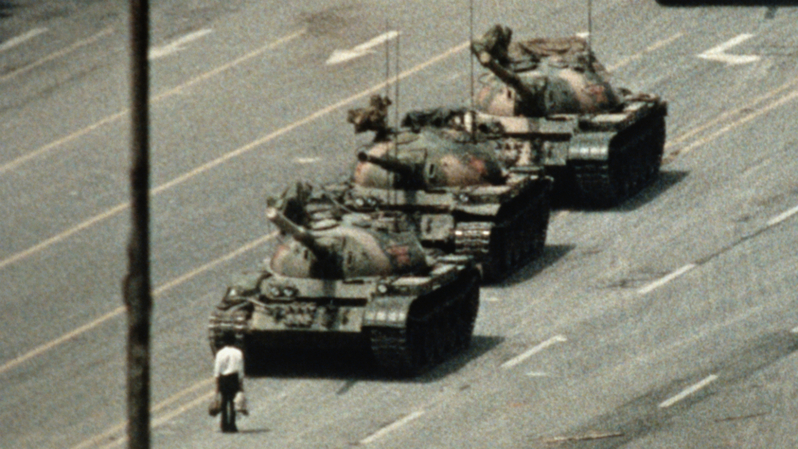
Man standing in front of tanks in Tiananmen Square (Photo Source: Getty Images)

Man standing in front of tanks in Tiananmen Square (Photo Source: Getty Images)

FacebookTwitterWhatsAppTelegramEmail

Washington [US]: The Tiananmen Square massacre of 1989 offered a glimpse into the violent nature of Chinese politics under the Communist Party of China (CPC).

The CPC dislikes uncertainty and prefers complete control to ensure the stability of the party. Anything that creates ripples across the Chinese lake is seen as distortion and immediately put down. The world needs to recall Tiananmen for precisely this purpose, reported Global Strat View.

As the world commemorates the 32nd anniversary of the incident, recalling the powerful imagery of the tank man and scores of people who lost their lives, it is important to flag the new normal that China is the rising power and is out to claim its position on the global stage.

From a historical and contemporary perspective, the Tiananmen Square massacre in 1989 should remind the world of the ruthless nature of Chinese polity under the CPC.

While the world’s attention focuses on the atrocities and severe violations of international law by the Russian aggressors in Ukraine, it is critical not to forget China’s continued suppression of human rights, reported Global Strat View.

Intra-party elite rivalry for power and ideological contestation provides one indication of how the CPC responded to the protest movement. The other factor underpinning the protests was the worsening political and economic situation, characterized by runaway inflation, credit crunch, and corruption. All these factors undoubtedly contributed to the widespread unrest.

The conventional narrative portrays the protest movement as a bid for democratization. However, as Vijay Gokhale, India’s former Foreign Secretary, aptly recalls in his book on the subject, “the students’ concerns were overwhelmingly limited to their grievances,” which mainly related to better job and education opportunities, the problem of elitism, and the demand for some personal freedom.

The death of Hu Yaobang, former General Secretary, provided the incendiary spark as students spontaneously gathered to mourn the leader.

Tens of thousands gathered on the day of Hu’s funeral, calling for greater freedom of speech and less censorship.

In the following weeks, protesters gathered in Tiananmen Square, with numbers estimated to be up to one million.

On 13 May, hundreds of student protesters went on hunger strike to push for talks with CPC leaders.

On 3 June, the Chinese leadership sent in regular troops to enforce martial law, which had already been imposed but was being disobeyed by local citizens.

What transpired on the midnight of 3-4 June when the Square was forcibly vacated has remained a matter of speculation. On 5 June, a man faced down a line of tanks heading away from the Square. He was carrying two shopping bags and was filmed walking to block the tanks from moving past.

At the end of June 1989, the Chinese government said 200 civilians and several dozen security personnel had died.

In 2017, newly released UK documents revealed that a diplomatic cable from the then UK Ambassador to China, Sir Alan Donald, had said that 10,000 had died.

The Tiananmen Square massacre remains taboo in China, and attempts to discuss, commemorate, and demand justice is not permitted, said Global Strat View. (ANI)
Topics: ChinaTiananmen Square massacre
ShareTweetSendShareSend
✮ Subscribe Organiser YouTube Channel. ✮
✮ Join Organiser's WhatsApp channel for Nationalist views beyond the news. ✮
Previous News

People in Gilgit-Baltistan rage against Pak Army for forcibly usurping lands: Report

Next News

‘Hiding like a rat’: BJP leader Saumitra Khan slams TMC’s Anubrata Mandal for ‘involvement’ in Birbhum violence

Related News

Floods, wage protests and expanding digital surveillance underscore Beijing's efforts to contain social unrest and suppress public dissent

China tightens online surveillance and censorship as floods, economic distress and labour unrest fuel dissent

The Indian Ocean remains the enduring foundation of the India-US strategic partnership, according to Italy's ISPI

China Isn’t the Real Driver: Indian Ocean keeps India-US strategic partnership strong, says report

Great Nicobar is emerging as a strategic gateway that strengthens India's maritime reach while increasing pressure on China's Malacca Dilemma

Great Nicobar Project to boost India’s Indo-Pacific leverage, deepen China’s Malacca Dilemma: Report

As India expands its global partnerships, China grapples with growing political, military and economic challenges

Coup Fears in China? Why President Xi staying home while PM Modi expands India’s global diplomatic footprint?

Different shades of diplomacy and foreign policy

CCP tightens grip on China's state-controlled Catholic church

Bible and Xi: China’s new mandate makes president’s speeches mandatory study in Catholic Churches

Load More

Latest News

Punjab Pharma Officer Exam Cheating Racket Exposed: 35 detained, candidates allegedly paid up to Rs 13 lakh

(Left) Congress leader Mohammed Nalapad (Right) Karnataka Minister Priyank Kharge

RSS Defamation Case in Karnataka: Court orders personal appearance Of Priyank Kharge, Mohammed Nalapad

BMS hosts 15th BRICS Trade Union Forum (TUF) Summit 2026 in Hyderabad; Calls for worker-centric global order

BRICS TUF Summit 2026: Shifting the labour discourse

Courtesy: T.C. Rajesh’s FB post

Keralam: CPM’s Deshabhimani daily drops ‘Vijayan, the thief’ article from Sunday supplement; text Surfaces on FB

Self-immolation by Lobsang Palden in front of UN Headquarters in New York, (inset) the activist shortly before immolating himself

China and Tibet: Immolation of ‘Imposed Unity’

Authorities attacked during anti-encroachment drive in Shivajinagar

Anti-Encrochment Drive in Karnataka: Officials attacked in Shivajinagar; BJP slams govt’s appeasement politics

The Shadow of politics & radical ideologies behind NEET protests

AgriBio 2.0 aims to build a self-reliant, climate-resilient agricultural future through biotechnology

NITI Aayog’s AgriBio 2.0: How biotechnology and climate-resilient crops will transform Indian agriculture

(L) Jalaudheen Ustad with Dr. Arif Hussein Theruvath (R)

Keralam: Islamic scholar inaugurates Ex-Muslim event anonymously over security fears

Delhi's CJP protest allegedly shifted from student issues to political confrontation, overshadowing educational concerns

Delhi’s CJP Protest: How opposition collectives hijacked the movement and compromised students’ interests

Load More
  • Privacy
  • Terms
  • Cookie Policy
  • Refund and Cancellation
  • Delivery and Shipping

© Bharat Prakashan (Delhi) Limited.
Tech-enabled by Ananthapuri Technologies

  • Home
  • Search Organiser
  • Bharat
    • Assam
    • Bihar
    • Chhattisgarh
    • Jharkhand
    • Maharashtra
    • View All States
  • World
    • Asia
    • Africa
    • North America
    • South America
    • Europe
    • Australia
  • Editorial
  • Operation Sindoor
  • Opinion
  • Analysis
  • Defence
  • Culture
  • Sports
  • Business
  • RSS @ 100
  • Entertainment
  • More ..
    • Sci & Tech
    • Vocal4Local
    • Special Report
    • Education
    • Employment
    • Books
    • Interviews
    • Travel
    • Health
    • Politics
    • Law
    • Economy
    • Obituary
  • Subscribe Magazine
  • Read Ecopy
  • Advertise
  • Circulation
  • Careers
  • About Us
  • Contact Us
  • Policies & Terms
    • Privacy Policy
    • Cookie Policy
    • Refund and Cancellation
    • Terms of Use

© Bharat Prakashan (Delhi) Limited.
Tech-enabled by Ananthapuri Technologies