India, the largest democracy in the world, whose cultural heritage dates back to more than 5000 plus years, is essentially a multi-cultural and multi-ethnic country and an ideal example of the phrase ‘Unity in Diversity’.
India’s cultural history of several thousand years shows continuity, where subtle changes have taken place, but with the thread of continuity remaining strong.
The festivals of India, especially the harvest or agricultural festivals, are not merely occupations for the common masses.
They encapsulate a feeling of celebration of reaping the handwork sown by them. In the form of festivals, people exert the identities that they resonate with.
However diverse in names, cultures, traditions and customs, the ultimate aim of these festivities is to thank the ‘giver’ —Mother Nature. The uniqueness comes from pluralism, as deep down, the message conveyed is one.
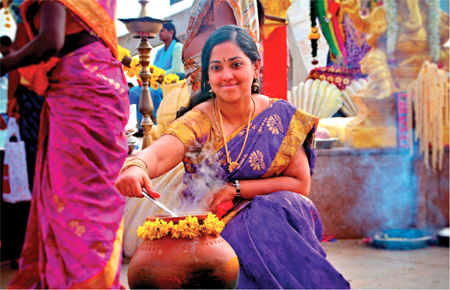
Commemorations of beliefs and faiths woven around them have spawned in India a range of delightful practices and events, which are both temporal and spiritual. These have evolved as festivals that are not just integral to Indian culture but form the very basis of it. Festivals related to agriculture, which engendered human settlement 10,000 years ago. Since then, agriculture has not only described the mainstay of the Indian economy right up to modern times but has also woven the fabric of Indian social life.
Harvest is basic economics and time to thank the ‘giver’. Harvest brings relief, generates happiness and sows calmness. Harvest Season as a time is a reflection of happiness in society. It is time to eat, drink and make merry. It is an expansive time to give and receive. It is an ambience ripe for festivity.
Generally, the new year is celebrated in different states of India at the time of harvesting crops.
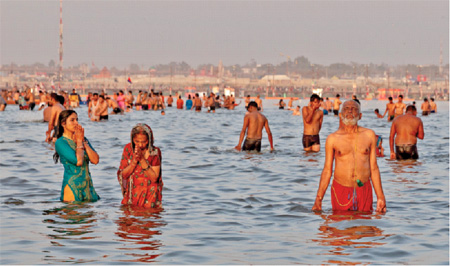
There are many harvest festivals celebrated in different forms by different people in the country. A pan India celebration, Makar Sankranti is one of the oldest and most colourful harvest festivals. Celebrated in January, it marks the end of an unfavorable/inauspicious phase and the beginning of a holy phase. The famous Kumbh Mela generally begins on Makar Sankranti in Uttar Pradesh, while the Sabrimala pilgrimages of Kerala end on this day. Most of the country celebrates the day by dipping themselves in the holy rivers of their states, the most famous of them being the Gangasagar Mela of Bengal.
The harvest festival is a new chapter, a fresh start in the lives of the people. It is a celebration of embracing the change, forgetting the mishaps of the past and forgiving any mistakes committed
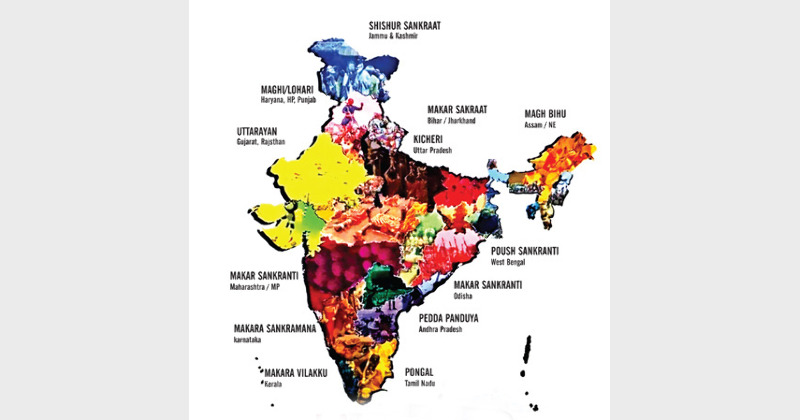
It goes by different names in different states. If it is Sankraman in Karnataka, it is Pongal in Tamil Nadu, where it means ‘spill over’.
Baisakhi in April is celebrated across the northern religion, especially in Punjab; Rongali Bihu in April is a festival of Assam celebrated three times a year (Magh Bihu in January, and Kati Bihu in October).
Jonbeel Mela is observed in January and February. It includes both tribal and non-tribal people of Assam and Meghalaya, where they festively barter agricultural produce at the end of the Assamese Magh Bihu period.
The harvest festival celebrated across India as Makar Sankranti is known as Poush Sankranti or Poush Parbon in West Bengal. In West Bengal, people celebrate this festival with rituals, puja, and traditional customs that revolve around special food items cooked in households only during the Sankranti or Uttarayan season.
Hareli festival celebrated in July-August by the tribal community in Chhattisgarh revolves around the worship of farm equipment, cows and prayers for good crops. Vishu is commemorated in Kerala, Tamil Nadu and Karnataka which is similar to the New Year festivals observed elsewhere in India, usually on April 14 of the Gregorian calendar. The most important event of the festival is Vishukani, meaning the first object viewed in the morning. Onam in August-September is a grand carnival of Kerala that celebrates the homecoming of the legendary Emperor Mahabali, as the harvest of rice and rain flowers fills the fields.
Nuakhai, also known as Nibanna is the harvest festival of Odisha celebrated in the months of August-September.
Kut is a major post-harvest festival celebrated in November by Kuki-Chin tribes in Manipur, with a burst of cultural events comprising folk and traditional dances. Tokhu Emong in November, celebrated by the tribes of Lotha Wagas is another post-harvest festival enjoyed with tribal folk dances and old folk songs over nine days. Then there is the Ladakh harvest festival, a Buddhist tradition; Lohri of Punjab, et al.
A pan India celebration, Makar Sankranti is one of the oldest and most colourful harvest festivals. Celebrated in January, it marks the end of an unfavourable/inauspicious phase and the beginning of a holy phase
Very few countries can match India in bringing together people from across faiths and from all directions.
Another dimension that is important in the festive spirit is boosting the confidence of the local communities.
Economics and commerce are an indispensable part of the festivals. Harvest festivals are not just about exhibiting India’s rich and deep heritage but also providing a platform to the regional and local communities to promote their aspirations and faith in mainstream society.
Each of the festivals and celebrations demands specific goods and services. With increasing purchasing power and cataclysmic changes in communication and transportation, the demand is only getting louder, larger and differentiated. The supply is now able to keep pace with the demand. The number of items in demand is growing year on year. They begin with the mundane accouterments like tents and pandals, banners and buntings, music and decorations, and transit to the eclectic sweets & snacks and fruits & flowers; and finally to the core of the festival that includes the worship material and the involvement of the pujari/purohit.
All festivals, be they faith-centric or secular in nature, involve the exchange of gifts, sweets and fruits. All these activities support economic activities in varying degrees throughout the year.
All these are economic activities circumscribed by the local boundaries once confined to the village republic. They are now a part of the larger national economy and maybe even global. The goods and services between rural and urban centers enjoy a two-way free flow exchange. The agents of such an economic landscape, namely the producer, the distributor, and the consumer, are linked along the supply chain.
For some skeptics, these festivities are a waste of time and money for the rural people. However, they forget how important they are for the rural economy to sustain itself. The circulation of money, demand, and supply can only upgrade people’s living standards. It is high time to break the prejudiced lens of conservative thinking.
It is the quintessential way to connect, integrate and synergise modernity and cultural landscape by generating different kinds of enterprise.
New generation activities like rural and agri-tourism have emerged. The endless line of India’s multi-cultural, multi-faceted and multi-coloured festivals offers a great opportunity to promote and sustain rural tourism and enrich the rural service sector. India can develop its brand of economic model linked to its multi-foliated, variegated and pluralist culture.
The aim of life is beyond the biological and even sociological. Man’s ultimate desire is to express himself and realise self-actualisation. Hence, festivals and culture have to be viewed from a perspective that is not merely materialised.