Saving endangered animals from extinction
August 31, 2026
  • Read Ecopy
  • Circulation
  • Advertise
  • Careers
  • About Us
  • Contact Us
Android AppiPhone AppArattai
Organiser
  • ‌
  • Bharat
    • Assam
    • Bihar
    • Chhattisgarh
    • Jharkhand
    • Maharashtra
    • View All States
  • World
    • Asia
    • Europe
    • North America
    • South America
    • Africa
    • Australia
  • Editorial
  • International
  • Opinion
  • RSS @ 100
  • More
    • Op Sindoor
    • Analysis
    • Sports
    • Defence
    • Politics
    • Business
    • Economy
    • Culture
    • Special Report
    • Sci & Tech
    • Entertainment
    • G20
    • Azadi Ka Amrit Mahotsav
    • Vocal4Local
    • Web Stories
    • Education
    • Employment
    • Books
    • Interviews
    • Travel
    • Law
    • Health
    • Obituary
  • Subscribe
    • Subscribe Print Edition
    • Subscribe Ecopy
    • Read Ecopy
  • ‌
  • Bharat
    • Assam
    • Bihar
    • Chhattisgarh
    • Jharkhand
    • Maharashtra
    • View All States
  • World
    • Asia
    • Europe
    • North America
    • South America
    • Africa
    • Australia
  • Editorial
  • International
  • Opinion
  • RSS @ 100
  • More
    • Op Sindoor
    • Analysis
    • Sports
    • Defence
    • Politics
    • Business
    • Economy
    • Culture
    • Special Report
    • Sci & Tech
    • Entertainment
    • G20
    • Azadi Ka Amrit Mahotsav
    • Vocal4Local
    • Web Stories
    • Education
    • Employment
    • Books
    • Interviews
    • Travel
    • Law
    • Health
    • Obituary
  • Subscribe
    • Subscribe Print Edition
    • Subscribe Ecopy
    • Read Ecopy
Organiser
  • Home
  • Bharat
  • World
  • Operation Sindoor
  • Editorial
  • Analysis
  • Opinion
  • Culture
  • Defence
  • International Edition
  • RSS @ 100
  • Magazine
  • Read Ecopy
Home Bharat

Saving endangered animals from extinction

WEBDESKWEBDESK
Oct 23, 2021, 11:22 am IST
inBharat
Follow on Google News
Facebook
Twitter
WhatsAppTelegramEmail
A study was conducted to examine the reproductive and genetic fitness of these captive-bred individuals and found no overall signs of genetic inbreeding between individuals across different generations.

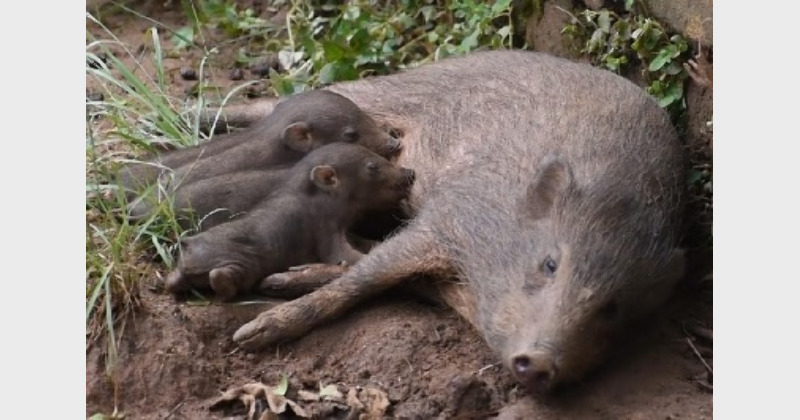
New Delhi: Pygmy hogs are rare and endangered animals listed by the International Union for the Conservation of Nature (IUCN) and designated as a Schedule 1 species under the Indian Wildlife Protection Act, 1972. It is one of the very few mammals that build its own home, or nest, complete with a roof. Its present population, including reintroduced animals, is estimated to be less than 300 in the wild. The original population, which became restricted to a single locality, the Manas National Park in Assam, India, may number less than 50.

Efforts to save this species from extinction include the protection of its only habitat and breeding the animals in captivity. These are undertaken by the Pygmy Hog Conservation Program (PHCP), which is a collaborative project with the Ministry of Environment and Forests, Government of India, IUCN/SSC Wild Pig Specialist Group, and Forest Department, Government of Assam, as the key partners.

Since 1996, over 500 pygmy hogs have been bred successfully, and 142 captive-born have been released into the wild as part of the conservation programme. However, all these captive individuals were offspring of just seven wild-caught individuals. One of the major challenges of a long-term captive breeding program is maintaining genetic diversity within a population over several generations. The genetic diversity can be lost from inbreeding due to mating between related individuals within a population, established with very few founders.

A study was recently conducted by the PHCP and the Laboratory for Conservation of Endangered Species at the Council of Scientific and Industrial Research’s Centre for Cellular and Molecular Biology (CSIR-CCMB-LaCONES) to examine the reproductive and genetic fitness of these captive-bred individuals. The research group headed by Dr. G. Umapathy of CSIR-CCMB LaCONES studied genetic changes in 36 captive-bred pygmy hogs over time across eight consecutive generations. They also tested the association between genetic diversity and reproductive success to account for any fitness loss.

The study found no overall signs of genetic inbreeding between individuals across different generations. Dr. Umapathy said, “This was possible because of the strict scientific conservation breeding protocol followed by the programme. But, the recent generations show slightly increased relatedness. We, therefore, recommend the introduction of a few wild individuals to the breeding pool.”

Dr. Goutam Narayan of PHCP and EcoSystems-India, said- “We carefully selected unrelated mates and bred them in separate family lines. We are glad that this study has provided evidence that it is possible to avoid genetic inbreeding in a small captive population even if the founder population is very small, if a strict protocol is followed year after year.”

Dr. Vinay K Nandicoori, Director, CCMB, said, “This is the first such study on Indian animals to understand genetics effect of long-term captive breeding of endangered animals. The outcomes of the study will guide the management and optimization of the breeding protocol in PHCP and other similar conservation breeding programmes.”

The lead author of the study was Dr. Deepanwita Purohit, and the other authors include S. Manu, M. S. Ram, S. Sharma, and H. C. Patnaik from CCMB, and Parag J. Deka from Pygmy Hog Conservation Programme.

Courtesy: India Science Wire

Share
Tweet
SendShareSend
✮ Subscribe Organiser YouTube Channel. ✮
✮ Join Organiser's WhatsApp channel for Nationalist views beyond the news. ✮
Previous News

Saudi-Iranian friction deep-rooted

Next News

New computation model to help diagnose autism

Related News

Goa: Muslim share rises from 1.95% to 8.33%, Christian count falls; Why opposition rejects anti-conversion Bill?

Jadavpur University

Jadavpur University: From nationalist educational emblem to leftist battleground & Maoist anarchy

BRICS Ahead, CJP Takes to Streets: Why Dipke’s September 5 March Raises National Security Questions

BRICS Summit ahead, CJP plans Delhi march: Is global optics driving the protest strategy before every big moment?

Students at the Gautam Buddha University, Greater Noida

Mann Ki Baat: PM Modi praises GBU’s mission ShakthiSAT, says dreams of daughters are now taking flight to space

Dutch TikTokker Angelo Bryson, known as Superhuman Unchained, at a pro-Palestine protest.

Dutch TikTokker recently converted to Islam livestreams stabbing three in Amsterdam; Watch video

From Kanchipuram to Kalamkari, India’s traditional textiles reflect its rich regional cultures and centuries-old craftsmanship

From Kanchipuram to Kalamkari: Exploring India’s rich traditional textiles and regional clothing heritage

Load More

Latest News

Goa: Muslim share rises from 1.95% to 8.33%, Christian count falls; Why opposition rejects anti-conversion Bill?

Jadavpur University

Jadavpur University: From nationalist educational emblem to leftist battleground & Maoist anarchy

BRICS Ahead, CJP Takes to Streets: Why Dipke’s September 5 March Raises National Security Questions

BRICS Summit ahead, CJP plans Delhi march: Is global optics driving the protest strategy before every big moment?

Students at the Gautam Buddha University, Greater Noida

Mann Ki Baat: PM Modi praises GBU’s mission ShakthiSAT, says dreams of daughters are now taking flight to space

Dutch TikTokker Angelo Bryson, known as Superhuman Unchained, at a pro-Palestine protest.

Dutch TikTokker recently converted to Islam livestreams stabbing three in Amsterdam; Watch video

From Kanchipuram to Kalamkari, India’s traditional textiles reflect its rich regional cultures and centuries-old craftsmanship

From Kanchipuram to Kalamkari: Exploring India’s rich traditional textiles and regional clothing heritage

Punjabi Influencer Abducted, Burnt Alive Near Morinda

Punjab Law and order crisis: Influencer Manjeet Kaur abducted, burnt alive after attack near Morinda

‘Dimagi Naxals’ romanticising Mao, Stalin and Pol Pot

The Swadeshi movement turned Indian enterprise into a powerful force for economic self-reliance, national pride and the struggle for Swaraj

Building Economic Swaraj: How Indian enterprises fought foreign rule and reclaimed national pride

Prime Minsiter Narendra Modi and Uzbekistan President Shavkat Mirziyoyev

India-Uzbekistan Herald New Chapter: Uranium deal, 30-day visa-free entry to Indians & $5bn trade propel bilateral ties

Load More
  • Privacy
  • Terms
  • Cookie Policy
  • Refund and Cancellation
  • Delivery and Shipping

© Bharat Prakashan (Delhi) Limited.
Tech-enabled by Ananthapuri Technologies

  • Home
  • Search Organiser
  • Bharat
    • Assam
    • Bihar
    • Chhattisgarh
    • Jharkhand
    • Maharashtra
    • View All States
  • World
    • Asia
    • Africa
    • North America
    • South America
    • Europe
    • Australia
  • Editorial
  • Operation Sindoor
  • Opinion
  • Analysis
  • Defence
  • Culture
  • Sports
  • Business
  • RSS @ 100
  • Entertainment
  • More ..
    • Sci & Tech
    • Vocal4Local
    • Special Report
    • Education
    • Employment
    • Books
    • Interviews
    • Travel
    • Health
    • Politics
    • Law
    • Economy
    • Obituary
  • Subscribe Magazine
  • Read Ecopy
  • Advertise
  • Circulation
  • Careers
  • About Us
  • Contact Us
  • Policies & Terms
    • Privacy Policy
    • Cookie Policy
    • Refund and Cancellation
    • Terms of Use

© Bharat Prakashan (Delhi) Limited.
Tech-enabled by Ananthapuri Technologies