Is it right for Judiciary to cross its Jurisdiction? - In defence of Legislature
June 11, 2026
  • Read Ecopy
  • Circulation
  • Advertise
  • Careers
  • About Us
  • Contact Us
Android AppiPhone AppArattai
Organiser
  • ‌
  • Bharat
    • Assam
    • Bihar
    • Chhattisgarh
    • Jharkhand
    • Maharashtra
    • View All States
  • World
    • Asia
    • Europe
    • North America
    • South America
    • Africa
    • Australia
  • Editorial
  • International
  • Opinion
  • RSS @ 100
  • More
    • Op Sindoor
    • Analysis
    • Sports
    • Defence
    • Politics
    • Business
    • Economy
    • Culture
    • Special Report
    • Sci & Tech
    • Entertainment
    • G20
    • Azadi Ka Amrit Mahotsav
    • Vocal4Local
    • Web Stories
    • Education
    • Employment
    • Books
    • Interviews
    • Travel
    • Law
    • Health
    • Obituary
  • Subscribe
    • Subscribe Print Edition
    • Subscribe Ecopy
    • Read Ecopy
  • ‌
  • Bharat
    • Assam
    • Bihar
    • Chhattisgarh
    • Jharkhand
    • Maharashtra
    • View All States
  • World
    • Asia
    • Europe
    • North America
    • South America
    • Africa
    • Australia
  • Editorial
  • International
  • Opinion
  • RSS @ 100
  • More
    • Op Sindoor
    • Analysis
    • Sports
    • Defence
    • Politics
    • Business
    • Economy
    • Culture
    • Special Report
    • Sci & Tech
    • Entertainment
    • G20
    • Azadi Ka Amrit Mahotsav
    • Vocal4Local
    • Web Stories
    • Education
    • Employment
    • Books
    • Interviews
    • Travel
    • Law
    • Health
    • Obituary
  • Subscribe
    • Subscribe Print Edition
    • Subscribe Ecopy
    • Read Ecopy
Organiser
  • Home
  • Bharat
  • World
  • Operation Sindoor
  • Editorial
  • Analysis
  • Opinion
  • Culture
  • Defence
  • International Edition
  • RSS @ 100
  • Magazine
  • Read Ecopy
Home Bharat

Is it right for Judiciary to cross its Jurisdiction? – In defence of Legislature

During the past few weeks, in the Corona's wake virus?s second wave hitting its peak, we have been having some colorful observations from the higher judiciary

Archive ManagerArchive Manager
Jun 19, 2021, 10:30 am IST
in Bharat
Follow on Google News
FacebookTwitterWhatsAppTelegramEmail
 
                                                                                                                                                          Sudeep Mahajan
 
 
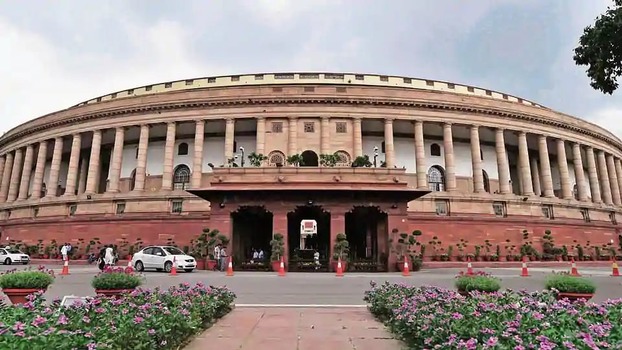
Parliament of India_1&nbs 
  
During the past few weeks, in the Corona’s wake virus’s second wave hitting its peak, we have been having some colorful observations from the higher judiciary. On April 24, 2021, a Division Bench of the Delhi High Court observed that it will “hang any person” who tries to obstruct oxygen supplies to hospitals in Delhi. Similarly, a bench of the Madras High Court said on April 27, 2021, that the election Commission is singularly responsible for the second wave of covid and should probably be tried on murder charges for their failure to ensure adherence to COVID-19 protocols, during the election. The observations which Supreme court later was constrained to say, “were harsh and inappropriate”. The Supreme Court further emphasized that “there is a need for judges of superior courts to exercise restraint…..”. However, the judicial quote that probably takes the cake is the one, in which the Delhi High court on June 1, 2021, while directing the Government to prioritize younger people over older ones, for administering Amphotericin-B, a drug used to treat Mucormycosis, observed that the young are the “future of the country” and need to be saved, while the elderly have, “lived their life” and that the Government should learn from the foreign countries. It must also be borne in mind that not all such observations get reported in papers. Any practising lawyer who has put in years will have much more to narrate. Usually, the quotes that get to be cited the most, are the ones laced with rare humour.
 
However, the question makes the higher judiciary, make such sweeping or even intemperate remarks when the role assigned to the higher judiciary in the Constitution makes it almost necessary that the observations that come from a judge holding a court, should always be tempered with moderation, restraint, discipline, and even wisdom. Is it the
extraordinary hard work that the judges need to put in, to keep up with ever-increasing piles of case files, or is it because the higher courts have come to firmly believe that they are the ultimate arbiters in the country and therefore every order or decision or policy of the state must get their stamp of approval, for things to move forward, at all?
It has long been settled and accepted, even by judicial verdicts of the apex court, that the courts are not ordinarily to interfere in the policy matters of the state. In Census Commissioner & others Vs R. Krishnamurthi (2015) 2 SCC 796, where a High Court had issued directions to Census department to conduct a caste-wise census to achieve social justice, the Supreme Court held, “it is not within the domain of the court to Legislate…. The courts have the jurisdiction to declare the law unconstitutional……. But the courts are not to plunge into policy-making by adding something to policy by issuing a writ of mandamus. There, the judicial restraint is called for, remembering what we have stated in the beginning…”. What the Judgment states, in the beginning, are the various quotes (all worth reading), aimed at reminding that “… refrain and restraint are the essential virtues in the arena of adjudication because they guard as sentinel….”. One such quote mentioned is from “centuries back” of Francis Bacon, who said thus; “Judges ought to be more learned than witty, more reverend than plausible, and more advised than confident. Above all things, integrity is their portion and proper virtue.… Let the judges also remember lions on both sides supported that Solomon’s throne: let them be lions but yet lions under the throne.”
 
Again in Union of India Vs Indian Radiological & Imaging Association, it was simply held that “The court can not substitute the wisdom of the legislature in adopting the policy in the power’s exercise of judicial review”.” Judicial review cannot extend to re-appreciating the efficacy of a legislative policy adopted in a law which has been enacted by the competent legislature”.
 
Many more such verdicts, dripping in wisdom, can be mentioned here, but these two are enough to illustrate the point. The question however that begs for an answer here is, why do very often courts in India forget or neglect such pearls of wisdom laid out by their revered seniors? Why nowhere else in the world, given the global scale of the pandemic, apart from India, have the courts, distrusting the state, taken upon themselves to arrange for oxygen, medicines, and the vaccine and also to direct which section of patients be attempted so be saved and which should be allowed to let go for having “lived their life”. These kinds of directions, without any doubt, are beyond the power and the jurisdiction of the courts. These are the areas that must be left for the Government to govern, preferably with the help of the experts. An assumption that all in the Government are fools or are corrupt or simply incompetent cannot always be a valid starting point for all judicial actions. The courts must never disregard that the preamble of the Constitution of India unequivocally makes the ‘people of India’ the very source of all the power that flows from the various provisions of the Constitution. It is thus, we, the people of India, who are the ultimate source of power in India. It is these very people who go to polls every five years to elect their representatives in the Parliament and the state legislatures, who must alone, as the chosen representatives of people, enact the laws and frame the policy for the people of India. Only these representatives, empowered by almost a sacred process of elections, are answerable, and accountable to the people of India and therefore alone have the power to enact laws and to frame the policy governing “we the people of India”, deserving, therefore, some respect, of the courts as well. The people of India have the right and the power to change their representatives, in the next elections, if they do not approve of the policies or the laws framed by their elected representatives.
 
We all know how the number of pending cases, awaiting their turn to be heard, and decided are piling up, by the day, in all courts in the country, will it be not a more useful and purposive use of the court’s time to hear and decide pending cases of ordinary folks, then to foray in the arena not meant for adjudication by the courts and respect the division of labor demarcated by the Constitution of India?
(Sudeep Mahajan is an Advocate in Punjab and; Haryana High Court and Ex-Additional Advocate General, Haryana.)

ShareTweetSendShareSend
✮ Subscribe Organiser YouTube Channel. ✮
✮ Join Organiser's WhatsApp channel for Nationalist views beyond the news. ✮
Previous News

Mamata and ‘freedom of speech: A case of the pot calling kettle black

Next News

Allahabad High Court Dismisses Petition Seeking Directions for Burial on Ganga Ghats; There Are Customs and You Haven’t Done Your Research, Says Court

Related News

(Left) Six Naga Civilians who were killed (Right)Hundreds of grief-stricken people at the Jawaharlal Institute of Medical Sciences (JNIMS) in Imphal East, where the mortal remains were taken to the mortuary

Tension Grips Manipur: Police recover mortal remains of 6 abducted Nagas killed by Kukis; UNC calls for shutdown

PM Narendra Modi

‘The problem was Congress, not Hindus’: PM Modi’s blistering attack, lists India’s milestones in last 12 years

Leader of Opposition R. Ashoka files complaint with Karnataka governor over scam in awarding tender for waste management

Karnataka Garbage Scam: BJP alleges Rs 36,000-crore of scandal, seeks CBI probe; Files complaint to governor

Assam: Auto driver Monowar Hussain arrested for molesting, attempting to rape tribal woman passenger in Guwahati

The world recognises unprecedented growth in digital infrastructure during the 12 years of Modi's government

12 Years of Modi Government: How India built one of the world’s largest digital public infrastructure ecosystems

The image of alleged "Kolkotta Bayee" Jewel King living at Pathanamthitta

Keralam: WhatsApp status reveals illegal Bangladeshi who lived in Pathanamthitta for five years as ‘Kolkotta Bayee’

Load More

Latest News

(Left) Six Naga Civilians who were killed (Right)Hundreds of grief-stricken people at the Jawaharlal Institute of Medical Sciences (JNIMS) in Imphal East, where the mortal remains were taken to the mortuary

Tension Grips Manipur: Police recover mortal remains of 6 abducted Nagas killed by Kukis; UNC calls for shutdown

PM Narendra Modi

‘The problem was Congress, not Hindus’: PM Modi’s blistering attack, lists India’s milestones in last 12 years

Leader of Opposition R. Ashoka files complaint with Karnataka governor over scam in awarding tender for waste management

Karnataka Garbage Scam: BJP alleges Rs 36,000-crore of scandal, seeks CBI probe; Files complaint to governor

Assam: Auto driver Monowar Hussain arrested for molesting, attempting to rape tribal woman passenger in Guwahati

The world recognises unprecedented growth in digital infrastructure during the 12 years of Modi's government

12 Years of Modi Government: How India built one of the world’s largest digital public infrastructure ecosystems

The image of alleged "Kolkotta Bayee" Jewel King living at Pathanamthitta

Keralam: WhatsApp status reveals illegal Bangladeshi who lived in Pathanamthitta for five years as ‘Kolkotta Bayee’

Following TMC’s defeat in 2026 West Bengal Assembly election, speculation grew that its MPs were moving towards the NDA under BJP pressure

Why TMC MPs are looking towards the NDA: Examining the electoral arithmetic behind the political shift

Father dies on the day of daughter's Nikah over dispute over Mehar amount in Uttarakhand

Uttarakhand: Bride’s father dies of heart attack amid pressure and dispute over mehar amount in nikah

India has been transformed by major advances in digital governance, financial inclusion, and global influence under Modi govt

India After 12 Years of Modi: A record, revolution and remaining challenges

Will CM Joseph Vijay preserve Tamil Nadu’s priceless temple heritage as artefacts decay in Egmore museum

Load More
  • Privacy
  • Terms
  • Cookie Policy
  • Refund and Cancellation
  • Delivery and Shipping

© Bharat Prakashan (Delhi) Limited.
Tech-enabled by Ananthapuri Technologies

  • Home
  • Search Organiser
  • Bharat
    • Assam
    • Bihar
    • Chhattisgarh
    • Jharkhand
    • Maharashtra
    • View All States
  • World
    • Asia
    • Africa
    • North America
    • South America
    • Europe
    • Australia
  • Editorial
  • Operation Sindoor
  • Opinion
  • Analysis
  • Defence
  • Culture
  • Sports
  • Business
  • RSS @ 100
  • Entertainment
  • More ..
    • Sci & Tech
    • Vocal4Local
    • Special Report
    • Education
    • Employment
    • Books
    • Interviews
    • Travel
    • Health
    • Politics
    • Law
    • Economy
    • Obituary
  • Subscribe Magazine
  • Read Ecopy
  • Advertise
  • Circulation
  • Careers
  • About Us
  • Contact Us
  • Policies & Terms
    • Privacy Policy
    • Cookie Policy
    • Refund and Cancellation
    • Terms of Use

© Bharat Prakashan (Delhi) Limited.
Tech-enabled by Ananthapuri Technologies