New method for efficient removal of heavy metals from water
September 15, 2026
  • Read Ecopy
  • Circulation
  • Advertise
  • Careers
  • About Us
  • Contact Us
Android AppiPhone AppArattai
Organiser
  • ‌
  • Bharat
    • Assam
    • Bihar
    • Chhattisgarh
    • Jharkhand
    • Maharashtra
    • View All States
  • World
    • Asia
    • Europe
    • North America
    • South America
    • Africa
    • Australia
  • Editorial
  • International
  • Opinion
  • RSS @ 100
  • More
    • World Hindu Congress 2026
    • Op Sindoor
    • Analysis
    • Sports
    • Defence
    • Politics
    • Business
    • Economy
    • Culture
    • Special Report
    • Sci & Tech
    • Entertainment
    • G20
    • Azadi Ka Amrit Mahotsav
    • Vocal4Local
    • Web Stories
    • Education
    • Employment
    • Books
    • Interviews
    • Travel
    • Law
    • Health
    • Obituary
  • Subscribe
    • Subscribe Print Edition
    • Subscribe Ecopy
    • Read Ecopy
  • ‌
  • Bharat
    • Assam
    • Bihar
    • Chhattisgarh
    • Jharkhand
    • Maharashtra
    • View All States
  • World
    • Asia
    • Europe
    • North America
    • South America
    • Africa
    • Australia
  • Editorial
  • International
  • Opinion
  • RSS @ 100
  • More
    • World Hindu Congress 2026
    • Op Sindoor
    • Analysis
    • Sports
    • Defence
    • Politics
    • Business
    • Economy
    • Culture
    • Special Report
    • Sci & Tech
    • Entertainment
    • G20
    • Azadi Ka Amrit Mahotsav
    • Vocal4Local
    • Web Stories
    • Education
    • Employment
    • Books
    • Interviews
    • Travel
    • Law
    • Health
    • Obituary
  • Subscribe
    • Subscribe Print Edition
    • Subscribe Ecopy
    • Read Ecopy
Organiser
  • Home
  • Bharat
  • World
  • Operation Sindoor
  • Editorial
  • Analysis
  • Opinion
  • Culture
  • Defence
  • International Edition
  • RSS @ 100
  • Magazine
  • Read Ecopy
Home Bharat

New method for efficient removal of heavy metals from water

WEBDESKWEBDESK
Mar 17, 2021, 11:56 am IST
inBharat
Follow on Google News
Facebook
Twitter
WhatsAppTelegramEmail

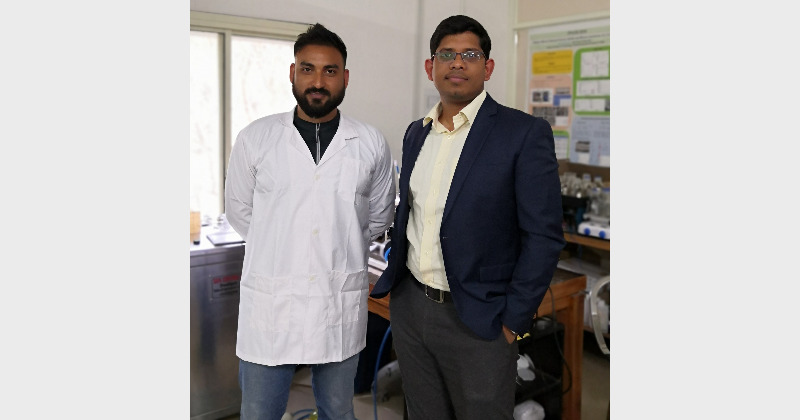
New Delhi: Heavy metals in water could lead to several neurological diseases in humans including Alzheimer’s, Parkinson’s and multiple sclerosis. A research team at the Indian Institute of Technology (IIT) Mandi has developed a fibrous membrane filter using a biopolymer-based material that helps to separate out the heavy metals from water samples.

These membranes contain adsorbents – materials that attract and hold the metals. “We tested with a prototype with four litres of heavy metal-laden water in the laboratory and have seen impressive results,” the scientists said. The researchers tested their membrane with copper laden water, to establish proof of principle.

“We have provided a novel, industrially scalable method of production of adsorbents that can bind to heavy metals. One specialty of these adsorbents is that they contain a large amount of a biopolymer, Chitosan, derived from crab shells that is mixed with a well-known polymer, Nylon,” explains lead researcher Dr Sumit Sinha Ray, Assistant Professor, School of Engineering, IIT Mandi.

Heavy metal pollution of water is a serious concern. “The problems of arsenic pollution in the Ganga basin are well known in India,” says Dr Ray. Major hazardous metals of concern for India in terms of their environmental load and health effects are lead, mercury, chromium, cadmium, copper, and aluminium, that are released into the water through anthropogenic activities such as mining, manufacturing, electroplating, electronics, and fertilizer production, among others, he added.

While normally the fibres used to make regular cartridge filter-assemblies are processed by a method called melt blowing, the IIT Mandi researchers have used a process called “solution blowing”. Solution blowing produces fibres that are nanometres in diameter – a hundred thousand times thinner than a single human hair. When the fibres get finer, their surface area increases tremendously, which results in better adsorption of heavy metals.

“Apart from producing nanofibres, solution blowing processes can enable blending of natural polymers like chitosan, and lignin with synthetic polymers like Nylon ”, says Dr Ray. The replacement of synthetic polymers with natural polymers is a welcome move in this era of environmental consciousness. Using the solution blowing technique, the IIT Mandi team could replace 40% of the nylon with chitosan, which means 40% less fossil-fuel-derived, polluting plastics.

Along with this, the researchers have also observed that while normally absorbent fibres bind to the target metal only at their surface, in their nanofibre membranes, the adsorption was seen to happen at the sub-surface scale as well, which translates to higher metal removal efficiency. As per the researchers’ hypothesis, for copper, for example, almost 302 mg of metal ions could be adsorbed per 1 g of adsorbent.

The membranes could be reused at least eight times before there was considerable reduction in the efficiency of metal adsorption. Recovery of the adsorbed metal in a metal-hydroxyl nitrate form was also easy, which is a value-addition to the membrane filter.

The paper has been co-authored by Dr. Sinha Ray and his research scholar, Mr. Ashish Kakoria, along with Dr. Suman Sinha Ray, Adjunct Assistant Professor, University of Illinois at Chicago. The results of this study have recently been published in the journal, Polymer.

The researchers are all set to scale up the technology to industrial scales so that they could handle larger volumes of metal-contaminated water, says a statement released by IIT Mandi. The study was funded by the Ministry of Mines, Government of India.


Share
Tweet
SendShareSend
✮ Subscribe Organiser YouTube Channel. ✮
✮ Join Organiser's WhatsApp channel for Nationalist views beyond the news. ✮
Previous News

Big victory for CRPF CoBRA Commandoes neutralises four “A” Category moist in Gaya, Bihar

Next News

Allahabad University Vice-chancellor requests Prayagraj DM to help people suffering from ‘loud Azan’

Related News

Representative Image

India crossed 80 Lakh HPV vaccine doses despite a sustained misinformation campaign

Riyadh’s search for Israeli intelligence and Islamabad’s refusal to deploy forces to Yemen expose growing cracks in the regional security equation

Saudi turns to Israel for intelligence as Houthis escalate; Sunni NATO ally Pakistan refuses troops for Yemen war

Bihar Temple Vandalism: Police detain 3 minor Muslim boys for stone-throwing, urination at Hanuman murti in Nalanda

IIT Madras hosts first universal brotherhood day celebration, highlights Swami Vivekananda’s legacy and vision for youth

Universal Brotherhood Day: IIT Madras hosts first celebration honouring Swami Vivekananda’s historic Chicago speech

SECL is powering India’s energy security today while advancing responsible mining, greener operations and a sustainable path towards Net Zero

Powering the present, building the future: How SECL is delivering energy security and a net-zero pathway together

Representative Image

Who Owns the Blueprint Inside Your Chip? How India is Moving from Chip Imports to Home-Grown Silicon

Load More

Latest News

Representative Image

India crossed 80 Lakh HPV vaccine doses despite a sustained misinformation campaign

Riyadh’s search for Israeli intelligence and Islamabad’s refusal to deploy forces to Yemen expose growing cracks in the regional security equation

Saudi turns to Israel for intelligence as Houthis escalate; Sunni NATO ally Pakistan refuses troops for Yemen war

Bihar Temple Vandalism: Police detain 3 minor Muslim boys for stone-throwing, urination at Hanuman murti in Nalanda

IIT Madras hosts first universal brotherhood day celebration, highlights Swami Vivekananda’s legacy and vision for youth

Universal Brotherhood Day: IIT Madras hosts first celebration honouring Swami Vivekananda’s historic Chicago speech

SECL is powering India’s energy security today while advancing responsible mining, greener operations and a sustainable path towards Net Zero

Powering the present, building the future: How SECL is delivering energy security and a net-zero pathway together

Representative Image

Who Owns the Blueprint Inside Your Chip? How India is Moving from Chip Imports to Home-Grown Silicon

From Left to Right: Kamakshi Swaminathan, National Vice President, Saksham; Satish Bansal, National Treasurer, Saksham; Umesh Aandhare, National General Secretary, Saksham; Alok Kumar, Sah Sarkaryavah; Dayal Singh Panwar, National President, Saksham; Gurmeet Singh Mahal, Jodhpur Prant President, Saksham; Dr Jasraj Sharma, Jodhpur Mahanagar President, Saksham; and Dhananjay Kumar Singh, National Krida Ayam Pramukh, Saksham

Saksham’s resolve for inclusion

Kashmiri Pandits perform a ritual on Balidan Diwas of Kashmiri Pandits, organised by Panun Kashmir in Paloura

Panun Kashmir observes Balidan Diwas in Jammu & Bengaluru, pay homage to martyrs

Tamil Nadu: Emerald Murugan murti stolen from Nadu Palani temple recovered from abandoned quarry, three arrested

Vande Mataram Row: Karnataka Congress govt faces HC challenge over two-stanza restriction

Load More
  • Privacy
  • Terms
  • Cookie Policy
  • Refund and Cancellation
  • Delivery and Shipping

© Bharat Prakashan (Delhi) Limited.
Tech-enabled by Ananthapuri Technologies

  • Home
  • Search Organiser
  • Bharat
    • Assam
    • Bihar
    • Chhattisgarh
    • Jharkhand
    • Maharashtra
    • View All States
  • World
    • Asia
    • Africa
    • North America
    • South America
    • Europe
    • Australia
  • Editorial
  • Operation Sindoor
  • Opinion
  • Analysis
  • Defence
  • Culture
  • Sports
  • Business
  • RSS @ 100
  • Entertainment
  • More ..
    • Sci & Tech
    • Vocal4Local
    • Special Report
    • Education
    • Employment
    • Books
    • Interviews
    • Travel
    • Health
    • Politics
    • Law
    • Economy
    • Obituary
  • Subscribe Magazine
  • Read Ecopy
  • Advertise
  • Circulation
  • Careers
  • About Us
  • Contact Us
  • Policies & Terms
    • Privacy Policy
    • Cookie Policy
    • Refund and Cancellation
    • Terms of Use

© Bharat Prakashan (Delhi) Limited.
Tech-enabled by Ananthapuri Technologies