Quality education and holistic development can only be achieved if all the players in the field of education be it, students, teachers, institutions, or bureaucracy collectively and actively strive for excellence. Bihar is crying for re-establishing itself as the hotspot of education it used to be in times of Nalanda and Takshashila. Are we listening?
–Kritika Ramya & Pratyush Prabhakar
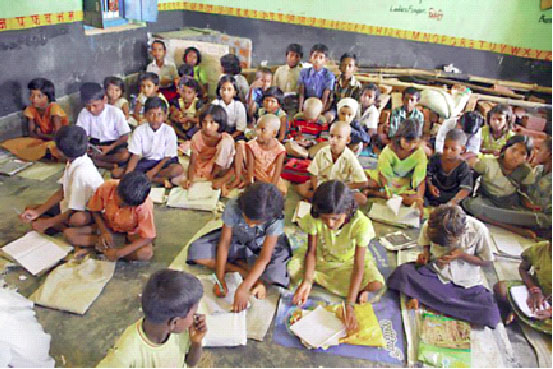
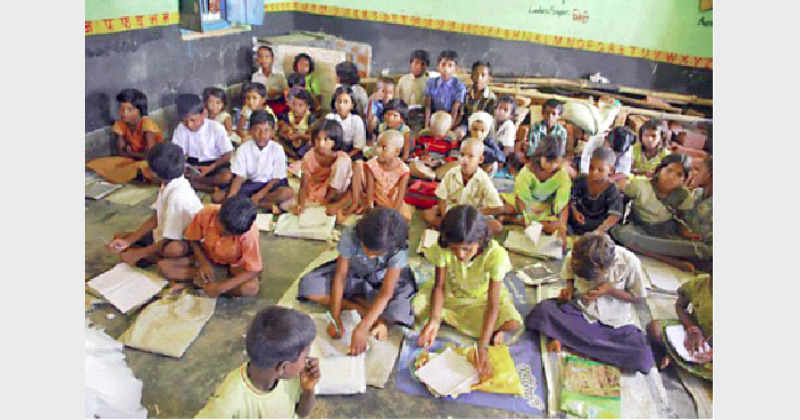
Photo Courtesy: Indranil Bhoumik
The National Education Policy (NEP) 2020 envisages an Indian system of quality education and aims to achieve the SDG 2030. The real question is, ‘Can India emerge as Vishwa Guru once again?’ And where does Bihar lie in the scheme of things?
The theory of animism believes that like humans, all other entities have souls too. Drawing from the beliefs of animism, why should institutions and public policies be devoid of a soul. History tells us that organisations and policies which have been infused a soul and made with a visionary mindset have survived and thrived over changing times and tumultuous events.
Landmark policies with an empathetic soul and written with a futuristic approach have the potential to change the course of history and define the future. The recently approved NEP 2020 under the aegis of Prime Minister Narendra Modi with the principles of access, equity, quality affordability and accountability in its soul, has the potential to transform the education landscape of the country and position India as the knowledge powerhouse of the world. The vision of NEP 2020 is to transform Bharat into an equitable and vibrant knowledge society providing quality education to all and thereby regaining the status of Vishwa Guru. Some of the fundamental principles of NEP are multidisciplinary holistic education, creativity and critical understanding, life skills, promotion of multilingualism encouraging creative and critical thinking, light but tight regulatory framework, research, internalisation, and continuous review.
When we talk about NEP and Bihar, the current literacy rate in Bihar is 70.9 per cent. As per the latest report titled ‘Household Social Consumption on Education in India’ by the Ministry of Statistics and Programme Implementation, National Statistics Office which is slightly higher than the Census 2011 literacy rate of Bihar which was 63.82 per cent. However, it is quite less compared to states like Kerala, which has a literacy rate of 96.2 per cent. With a low median age, lower-than national average literacy rate, a large underemployed and unemployed population and a large section of the young population being compelled to migrate for educational as well as employment purposes, there are all the reasons for Bihar to look towards the NEP with hope.
In recent times, Bihar has been witnessing a deplorable state of education especially in terms of rural education, be it the declining results of matriculation and intermediate examinations, rampant cheating, lack of quality of teachers, corruption in recruitment, pending arrears in salary, quality and availability of mid-day meals, etc.
Institutions have to play a key role in driving the NEP to its fruition. Once called Oxford of the East, Patna University and Bihar, in general, has witnessed an institutional decline in the sphere of education. Colleges which used to be the hotspot of ideas, knowledge and even political revolution in some ways wear a dreary look. Those who can, prefer to go out of Bihar immediately after school, which was not the case until a few years back. The institutions out of the capital city are better left undiscussed. The revival of education in Bihar and making a success story out of NEP must involve a revival of institutions. Right from building infra to recruiting faculty, creating transparent and effective governance mechanism and the most important part of the restoration of trust, will require a strong political will, academic excellence and a culture shift in the way things work in Bihar.
The migrant crisis during the COVID-19 pandemic induced lockdown has put again on focus the whole issue of generating local employment in Bihar. This cannot be done without a robust skill development ecosystem which drives people higher in the skill spectrum and back towards their roots. NEP talking about integrating vocational education right from class 6th is a welcome step in this direction. However, the long term and short-term skilling space need up-gradation; inclusion and greater market connect to make students job-ready.
Addressing these issues, Bihar Young Thinkers Forum, an organisation by youths of Bihar conducted a webinar on NEP 2020 & Bihar: The Way Ahead on the eve of Teacher’s Day. The panel consisted of Dr Manisha Priyam, Associate Professor National University of Education, Planning, and Administration, Dr Makarand Pranjape, Director, Indian Institute of Advanced Study, Shimla, and Prafulla Ketkar, Editor of Organiser. The speakers discussed various issues about NEP and its implementation in Bihar. Dr Paranjape stated that “The NEP, if not revolutionary, is certainly visionary”. He further emphasised on the role of institutional structures of the country in bridging the divide between policy and its implementation. He also gave a nexus between the phenomenon of exodus in states like Bihar and Bengal triggered due to institutional decline in the educational sphere. Dr Manisha highlighted the importance of Teacher training and consolidating language and learning in the road to achieving the mandate of NEP in Bihar. She recalled that the female literacy rate in Bihar in 2005 was as low as 15 per cent in districts of Purnea, Bihar when the national literacy rate was 65 per cent. The food cooked in mid-day meals was rotten, and the children of poor social caste were entirely out of the education dynamics. Prafulla Ketkar talked about the role of Rajya Shiksha Aayog and decentralisation in the area of education. He insisted on public-private partnerships in the field of education but was averse to the ides of commercialisation of education. He stressed on creating special education zones in India and balance between investment needs and challenges of commercialisation. He concluded by stating that NEP requires us to stay connected with language and culture and stay more rooted in education, thereby taking a gradual shift from the colonial system of education.
Bihar has a rich history in the area of education and has a record of producing luminaries across all walks of life. In our conversations, we take names of luminaries Bihar has produced and draw both inspirations as well as comfort. However, we often tend to fall back on history for comfort when we tend to lose out on the present and the future. Time has come to redeem ourselves and script a glorious future with education as a driving force and improving the lives of people as the key targeted outcome. It’s an imperative, not a choice if we want to have the slightest chance at giving our future generations the best shot to quality education and empowered life.
What is interesting is that NEP is aiming to tackle mediocrity at its roots, whether it pertains to students or teachers. Quality education and holistic development can only be achieved if all the players in the field of education be it, students, teachers, institutions, or bureaucracy collectively and actively strive for excellence. Bihar is crying for re-establishing itself as the hotspot of education it used to be in times of Nalanda and Takshashila. Are we listening?
(Kritika Ramya is Assistant Professor at Symbiosis Law School, Noida and Pratyush Prabhakar is Founder, Communeeti, a policy research organisation, alumnus IIM-Calcutta)