Dangers from the Digital World
June 9, 2026
  • Read Ecopy
  • Circulation
  • Advertise
  • Careers
  • About Us
  • Contact Us
Android AppiPhone AppArattai
Organiser
  • ‌
  • Bharat
    • Assam
    • Bihar
    • Chhattisgarh
    • Jharkhand
    • Maharashtra
    • View All States
  • World
    • Asia
    • Europe
    • North America
    • South America
    • Africa
    • Australia
  • Editorial
  • International
  • Opinion
  • RSS @ 100
  • More
    • Op Sindoor
    • Analysis
    • Sports
    • Defence
    • Politics
    • Business
    • Economy
    • Culture
    • Special Report
    • Sci & Tech
    • Entertainment
    • G20
    • Azadi Ka Amrit Mahotsav
    • Vocal4Local
    • Web Stories
    • Education
    • Employment
    • Books
    • Interviews
    • Travel
    • Law
    • Health
    • Obituary
  • Subscribe
    • Subscribe Print Edition
    • Subscribe Ecopy
    • Read Ecopy
  • ‌
  • Bharat
    • Assam
    • Bihar
    • Chhattisgarh
    • Jharkhand
    • Maharashtra
    • View All States
  • World
    • Asia
    • Europe
    • North America
    • South America
    • Africa
    • Australia
  • Editorial
  • International
  • Opinion
  • RSS @ 100
  • More
    • Op Sindoor
    • Analysis
    • Sports
    • Defence
    • Politics
    • Business
    • Economy
    • Culture
    • Special Report
    • Sci & Tech
    • Entertainment
    • G20
    • Azadi Ka Amrit Mahotsav
    • Vocal4Local
    • Web Stories
    • Education
    • Employment
    • Books
    • Interviews
    • Travel
    • Law
    • Health
    • Obituary
  • Subscribe
    • Subscribe Print Edition
    • Subscribe Ecopy
    • Read Ecopy
Organiser
  • Home
  • Bharat
  • World
  • Operation Sindoor
  • Editorial
  • Analysis
  • Opinion
  • Culture
  • Defence
  • International Edition
  • RSS @ 100
  • Magazine
  • Read Ecopy
Home Bharat

Dangers from the Digital World

Dangers from the Digital World

Archive ManagerArchive Manager
Sep 21, 2020, 04:21 pm IST
in Bharat
Follow on Google News
FacebookTwitterWhatsAppTelegramEmail
Atul Sehgal


a_1  H x W: 0 x
 
 
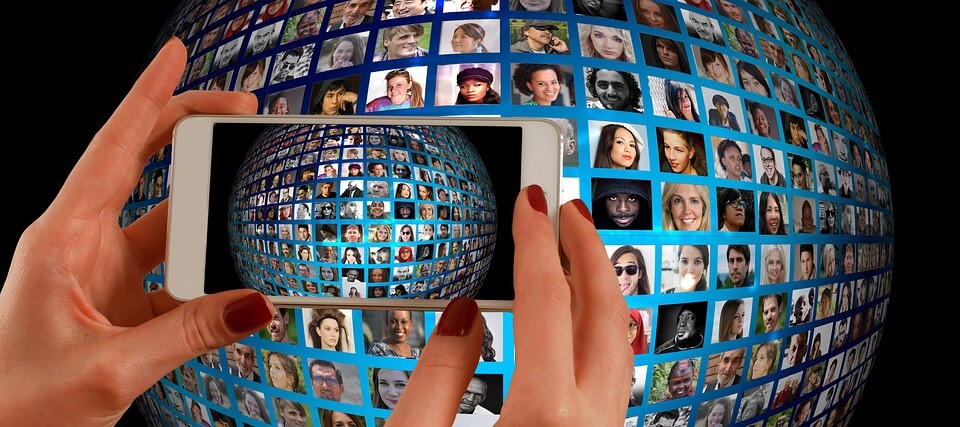
The present world is the digital world. The advent of computers, the internet, mobile telephony and related digital devices has dramatically transformed our systems of working. It is also gradually transforming our living paradigms. It seems that these devices are indispensable in our life because all our systems have become overly dependent on information technology.
 
In the above backdrop, it makes good sense to reflect on the past three decades and critically examine what net benefits have accrued to the world from widespread adoption of IT in all walks of life. The results of this exercise would, no doubt, provide useful inputs for chartering the way ahead.
 
It is worth recalling that computers were invented as labour-saving devices. They were meant to replace humans for performing stereotyped, repetitive work involving mathematical calculations. This was the first application of electronic computers. Later they were employed for typing, modifying, storing and retrieving all sorts of information — numerical and verbal. Volumes and volumes of texts could be stored in the digital memory systems of computers. The invention of the internet brought further, more dramatic changes in our working systems. The marriage of computers and the internet led to the development of mobile telephone sets. The mobile set today is a virtual office, photographer, music and cinema album, radio set, television set, catalogue, file, textbook, library, archive, telephone, conference room, the marketplace, cash purse —all rolled into one.
 
The development of programmes and speciality software for a host of applications affected the visible reduction of computational time and effort in all areas of working.
 
If the saving of manual labour and computational efficiency improvement was the prime purpose of developing digital devices and the related programming software, this purpose has been remarkably achieved. But what have been the tangible benefits of this? Let us cast a dispassionate look by posing some straightforward questions related to the effects of digital devices.
 
Have digital devices made a living more comfortable and convenient?
 
Did they increase productivity and income significantly?
 
Did they contribute to improvement in human health, nutrition and longevity?
 
Have they increased global trade and cultural exchange?
 
Have they reduced cultural barriers among humans?
 
Have they increased permissiveness in global society?
 
Have they strengthened the bonds of fraternity and camaraderie?
 
Have they enhanced global peace and security?
 
Have they made humans more informed? Or more knowledgeable? Or more learned?
 
Have they enhanced the happiness quotient of global humans?
 
Have they made humans more logical and less superstitious?
 
Have they enabled better governance?
 
Have they promoted scientific developments without damaging the environment?
 
Getting true answers to the above questions could form the objective of an interesting set of study and research projects. But, undeniably, it is not difficult to see and can be reasonably stated that —
 
The present age is the age of information blitzkrieg, marked by excessive flow of information, often incoherent, incomplete and incongruent.
 
The excessive flow of information has not enhanced the knowledge and understanding of subjects but made people confused and muddled on things.
 
Originality, creativity, innovativeness seem to have declined, and their space has been occupied by information bytes coming from mechanical dependence on digital devices.
 
The real world is slowly and inexorably giving way to the virtual world of Facebook, Google, WhatsApp, Instagram, Twitter etc.
 
Relationships have grown transient, superficial and selfish.
 
Economic and other crimes have not dwindled but increased in a way. Cybercriminals and account hackers are the new creeds of criminals.
 
Humans have become palpably more materialistic and less spiritualistic, less religious.
 
The disparity of wealth among the global population has widened further.
 
The arms race has not slowed down; hegemonic tendencies on the part of nations are more visible than before, and global peace appears to be a more distant dream.
 
The digital revolution is bringing forth Artificial Intelligence-based devices, including robots, to replace humans in factories and farm fields.
 
The internet-based mobile telephony works through low-frequency microwave radiation which has filled the lower layer of troposphere. As per the panchbhut theory of ancient Indian scholars, this constitutes the pollution of ether (akash). It is suspected to have Its adverse effects on humans, animals and plants which have not been even looked at, far from being exhaustively researched. There is a strong suspicion that the grave deleterious effects of microwave radiation pollution of the ethereal space may only be waiting to erupt. The AI (artificial intelligence) revolution is fraught with the dangers of job loss and economic deprivation on a gigantic scale.
 
Truly, the whole concept of digitisation and automation is the offshoot of capitalism. This system has bred inequality and insecurity across the world, leading to violent struggles by the have-nots and deprived. History has proved time and again that capitalism is anti-peace and anti-development because it creates a huge, unnatural and unsustainable economic disparity in the context of the global ecosphere and the larger global population.
 
Our modern scientists, economists and sociologists along with politicians and policy planners need to pause and take a hard look at the lurking severe dangers of the digital information systems that can have a devastating effect on peace, health and economic security of the global population in the times to come.
ShareTweetSendShareSend
✮ Subscribe Organiser YouTube Channel. ✮
✮ Join Organiser's WhatsApp channel for Nationalist views beyond the news. ✮
Previous News

India reports more than 90,000 recoveries for the 3rd successive day, Total Recovered cases close to 44 Lakh- highest in the world, Recovery Rate crosses the landmark of 80%

Next News

Tablighi Jamaat event caused spread of Covid among many persons: Home ministry in Rajya Sabha

Related News

Accused Nida Khan reportedly admits taking victim for religious instruction, teaching Islamic rituals

Nashik TCS Corporate Jihad: ‘I taught her how to do namaz,’ says Nida Khan; victim pressured to observe 30 ramzan roza

Germany: Sri Ganesha temple opens in Berlin: Europe’s largest Hindu Mandir reflects India’s cultural & dharmic spirit

Rajasthn | RSS centenary journey embodies dedication to nation-building: Dr Ramesh Agrawal

Decades of illegal infiltration from Bangladesh have driven profound demographic shifts in Assam, fundamentally altering its religious, linguistic, and political landscape

Unnatural demographic change: The termite threat

The Rs 200-crore MAHA Water Mission seeks to boost water security and democratise research funding in India

From Rigveda to Research Labs: How ANRF’s Rs 200 crore water mission is securing India’s future

(Right) Prakhar Shrivastava, Senior Consulting Editor and Anchor at Delhi Doordarshan Kendra at a Narada Jayanti programme in Guwahati (Left) Prakahar Srivastava addressing the gathering

Narada Jayanti by VSK Assam: “Half-truths more dangerous than lies,” says senior journalist Prakhar Shrivastava

Load More

Latest News

Accused Nida Khan reportedly admits taking victim for religious instruction, teaching Islamic rituals

Nashik TCS Corporate Jihad: ‘I taught her how to do namaz,’ says Nida Khan; victim pressured to observe 30 ramzan roza

Germany: Sri Ganesha temple opens in Berlin: Europe’s largest Hindu Mandir reflects India’s cultural & dharmic spirit

Rajasthn | RSS centenary journey embodies dedication to nation-building: Dr Ramesh Agrawal

Decades of illegal infiltration from Bangladesh have driven profound demographic shifts in Assam, fundamentally altering its religious, linguistic, and political landscape

Unnatural demographic change: The termite threat

The Rs 200-crore MAHA Water Mission seeks to boost water security and democratise research funding in India

From Rigveda to Research Labs: How ANRF’s Rs 200 crore water mission is securing India’s future

(Right) Prakhar Shrivastava, Senior Consulting Editor and Anchor at Delhi Doordarshan Kendra at a Narada Jayanti programme in Guwahati (Left) Prakahar Srivastava addressing the gathering

Narada Jayanti by VSK Assam: “Half-truths more dangerous than lies,” says senior journalist Prakhar Shrivastava

Everest Survivor being taken to the hospital on a stretcher

Everest Survivor ICU Interview: BBC under fire for interviewing Sherpa without family’s consent

Phillipines Earthquake: 7.8 magnitude deadly earthquake leaves 15 dead, 200 injured; Rescue operation underway

Shamli Conversion Case: 'I studied Islam on YouTube,' says Ayush Malik as family alleges grooming

Shamli Conversion Case: ‘I studied Islam on YouTube,’ says Ayush Malik, now Mohammad Ali, as family alleges grooming

RSS functionaries on the stage at samapan samaroh of Sangh Shiksha Varg and Karyakarta Vikas Varg–Pratham at Sambalpur.

Awakening of Lokshakti is essential for building a glorious Bharat: Dr Gopal Prasad Mahapatra

Load More
  • Privacy
  • Terms
  • Cookie Policy
  • Refund and Cancellation
  • Delivery and Shipping

© Bharat Prakashan (Delhi) Limited.
Tech-enabled by Ananthapuri Technologies

  • Home
  • Search Organiser
  • Bharat
    • Assam
    • Bihar
    • Chhattisgarh
    • Jharkhand
    • Maharashtra
    • View All States
  • World
    • Asia
    • Africa
    • North America
    • South America
    • Europe
    • Australia
  • Editorial
  • Operation Sindoor
  • Opinion
  • Analysis
  • Defence
  • Culture
  • Sports
  • Business
  • RSS @ 100
  • Entertainment
  • More ..
    • Sci & Tech
    • Vocal4Local
    • Special Report
    • Education
    • Employment
    • Books
    • Interviews
    • Travel
    • Health
    • Politics
    • Law
    • Economy
    • Obituary
  • Subscribe Magazine
  • Read Ecopy
  • Advertise
  • Circulation
  • Careers
  • About Us
  • Contact Us
  • Policies & Terms
    • Privacy Policy
    • Cookie Policy
    • Refund and Cancellation
    • Terms of Use

© Bharat Prakashan (Delhi) Limited.
Tech-enabled by Ananthapuri Technologies