Five Themes of Lokmanthan, 2018
June 11, 2026
  • Read Ecopy
  • Circulation
  • Advertise
  • Careers
  • About Us
  • Contact Us
Android AppiPhone AppArattai
Organiser
  • ‌
  • Bharat
    • Assam
    • Bihar
    • Chhattisgarh
    • Jharkhand
    • Maharashtra
    • View All States
  • World
    • Asia
    • Europe
    • North America
    • South America
    • Africa
    • Australia
  • Editorial
  • International
  • Opinion
  • RSS @ 100
  • More
    • Op Sindoor
    • Analysis
    • Sports
    • Defence
    • Politics
    • Business
    • Economy
    • Culture
    • Special Report
    • Sci & Tech
    • Entertainment
    • G20
    • Azadi Ka Amrit Mahotsav
    • Vocal4Local
    • Web Stories
    • Education
    • Employment
    • Books
    • Interviews
    • Travel
    • Law
    • Health
    • Obituary
  • Subscribe
    • Subscribe Print Edition
    • Subscribe Ecopy
    • Read Ecopy
  • ‌
  • Bharat
    • Assam
    • Bihar
    • Chhattisgarh
    • Jharkhand
    • Maharashtra
    • View All States
  • World
    • Asia
    • Europe
    • North America
    • South America
    • Africa
    • Australia
  • Editorial
  • International
  • Opinion
  • RSS @ 100
  • More
    • Op Sindoor
    • Analysis
    • Sports
    • Defence
    • Politics
    • Business
    • Economy
    • Culture
    • Special Report
    • Sci & Tech
    • Entertainment
    • G20
    • Azadi Ka Amrit Mahotsav
    • Vocal4Local
    • Web Stories
    • Education
    • Employment
    • Books
    • Interviews
    • Travel
    • Law
    • Health
    • Obituary
  • Subscribe
    • Subscribe Print Edition
    • Subscribe Ecopy
    • Read Ecopy
Organiser
  • Home
  • Bharat
  • World
  • Operation Sindoor
  • Editorial
  • Analysis
  • Opinion
  • Culture
  • Defence
  • International Edition
  • RSS @ 100
  • Magazine
  • Read Ecopy
Home Bharat

Five Themes of Lokmanthan, 2018

Lokmanthan 2018 (Ranchi) contemplated a deliberation around five themes of Samajavalokan, Vishwavalokan, Arthavalokan, Vyavasthavalokan and Atmavalokan. A ReportAs Lokmanthan is a confluence of intellectuals and practitioners dedicated for the nationalist cause, the individuals who blended all these virtues in their lives in different ways were remembered after the keynote address. Acharya Dharampala, Ravindra Guruji and Amritlal Vegad in different ways came up with different ideas rooted in Bharatiya ethos

Archive ManagerArchive Manager
Oct 9, 2018, 12:06 pm IST
in Bharat
Follow on Google News
FacebookTwitterWhatsAppTelegramEmail
Lokmanthan 2018 (Ranchi) contemplated a deliberation around five themes of Samajavalokan, Vishwavalokan, Arthavalokan, Vyavasthavalokan and Atmavalokan. A Report
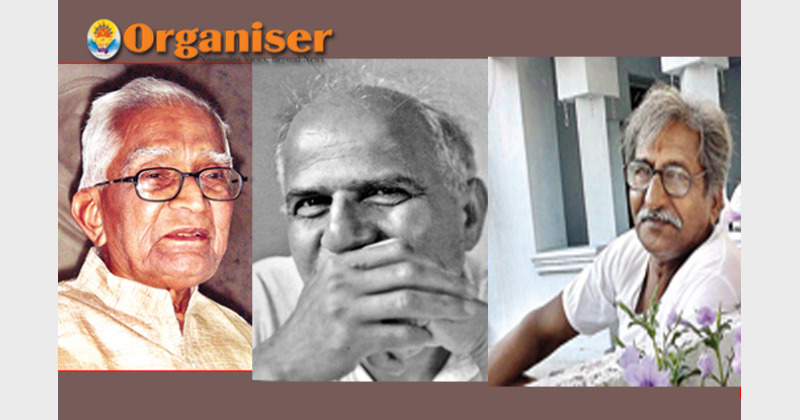
As Lokmanthan is a confluence of intellectuals and practitioners dedicated for the nationalist cause, the individuals who blended all these virtues in their lives in different ways were remembered after the keynote address. Acharya Dharampala, Ravindra Guruji and Amritlal Vegad in different ways came up with different ideas rooted in Bharatiya ethos and tried to bring them in practice. 
A in-detail look into various panel discussions around the main five themes of Lokmanthan, 2018.
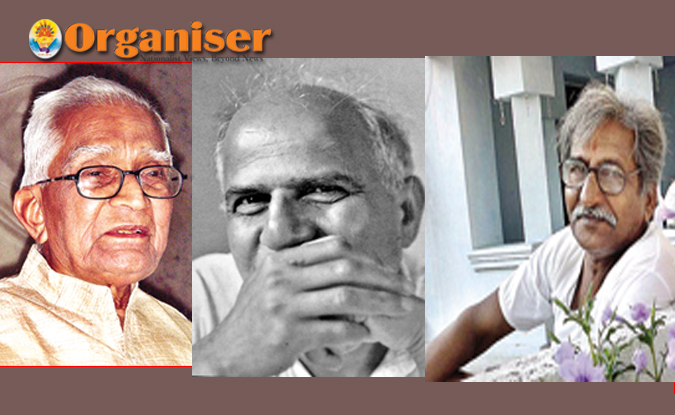
 
Amrutlal Vegad, Dharampal jii, Ravindra Guruji 
 
Samajavalokan
In the first session on Samajavalokan, plenary session on the Society was chaired by Swami Narasimhanand and the key speaker was Prof Shankar Saran. Prof Shankar Saran said that Bharat is the only nation, which maintains an uninterrupted flow of civilisational wisdom and people follow the same thought system or literature for the last 3000 years. The Western colonialists perceived it in a wrong way and thought for an urgent need for a systemic change in the Indian society. Taking forward the discussion, the editor of Prabuddha Bharata, Swami Narasimhananda, said that the cause of the deterioration of Bharat is that we worship women, but we do not respect them. Every boy who imbibes the values of Bharat will respect every woman as his mother. He also added that every Indian woman considers that motherhood is the one which makes a woman complete. Every nation has its character, and the national character of Bharat is none other than spirituality.
 
In the second part of understanding society, a panel discussion moderated by eminent journalist Umesh Upadhyaya had taken place. Former Chief Minister of Jharkhand Shri Arjun Munda, Prof Rakesh Mishra and Dr Kaushan Panwar were the participants. While Arun Munda with his obvious focus on the Scheduled Tribes said, their social condition has considerably improved, but the economic condition is still the same. Famous nationalist thinker Dr Koushal Pawar said that if have to bring our philosophy in our social systems, then all kinds of discrimination must end.
 
Vishwavalokan
One of the most well-received sessions, was on Vishwavalokan, how Bharat has seen the world and the world has approached Bharat. David Frawley was the chair of the session while Prof Meenakshi Jain and Dr Anirban Gnaguly were the key speakers. “Ancient foreigners have acknowledged about Bharat -We always had detailed knowledge about our land. All social groupings were based on work done by individuals in society, Women had a prominent political role, e.g. Pandya kingdom was, in fact, a queendom”, said Prof Jain.
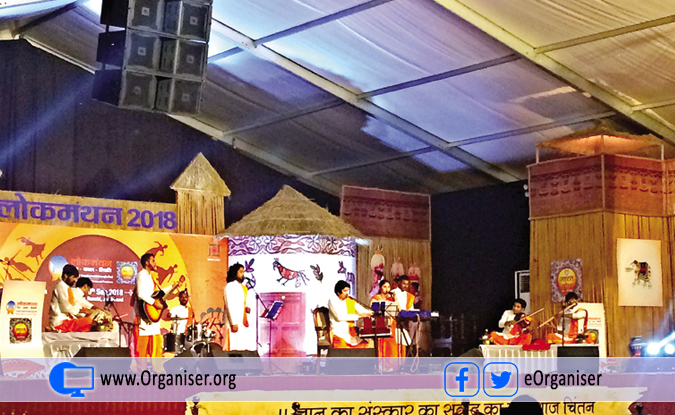


Dr Ganguly stressed on the question of What is our civilisational grand narrative, what is our sense of exceptionalism. How to retrace the footprints of our Civilizational Journey. Vedacharya David Frawley in his usual style engaged with the audience and said, “Modern Civilisation is essentially uncivilised because it is divorced from the universe and nature. Those who took power in India in the 1950s were influenced by Marxism, which is a sort of virulent form of colonialism, which taught to reject & deny civilisational & prevented the growth of a Bharatiya spirit”. How to regain the respect and recognition to the civilisational contribution is an intellectual challenge that we must except was the common outcome of this session.
 
Arthavalokan
Bharatiya perspective is generally considered to be apathetic to the material development. While throwing light on our economic models, Prof Kanagasabhapathi said, “The very basis of our great economic system is our great family system. Our sisters, Mothers and grandmothers create the very foundation of our economy. We have to understand that ours is a self-motivated and self-driven economy. While the other speaker Shri Tulsi Tawari remarked, “decentralisation of the economy and re-focusing it towards the agrarian sector is needed for rural poverty alleviation and arresting flood of rural to urban migration’.
 
The next part of Arthavalokan was a panel discussion which was anchored by Alok Puranik, and Dr Bajranglal Gupta and Sandeep Singh were the panellists. Dr Bajrang Lal Gupta said that We need to have ‘Employment Led Growth’ rather than ‘Growth Led Employment’ which is based on a flawed ‘Trickle Down Effect’. Sandeep Singh highlighted the unique achievements of the Bharatiya business models and ethics.
 
Vyavasthavalokan
Whether individuals are important or the systems in transformation and national reconstruction, is the common question we have to deal with. To find the answer to the same, there were two sessions on Vyavasthavalokan. The plenary was chaired by Padmashree Ashok Bhagat, Minister of State for Aviation Jayant Sinha and eminent thinker on the speakers. The Output of Governance should be Achievement regarding results for the people expressed regarding a Multiplicative Identity Awareness x Ability x Accountability = Achievement, argued Shri Jayant Sinha. While Shri Chitale said, “It is important in the present times that the new generation is aware of & inclined towards a career in public affairs. For this, promotion & development of Institutions teaching Public Affairs is needed, modelled on the lines of MBA.”
 
“In a democracy, the people are supreme. If the people do not place their trust in the governance system, then all government-managed resources prove to be futile and useless,” was the final word of the session from Padmshree Ashok Bhagat.
 
In the panel discussio
n on System and Governance, J P Narayana, Vinaya Sahastrabuddhe, Sampatiya Like and Manoj Shrivastava were the panellist, while Prafulla Ketkar moderated the session. How to energise the social systems, the outsourcing effect on systems, electoral reforms, self-help groups and their success etc. were discussed in the session. While taking pride in the past and whatever we have achieved in the last 70 years, how to make governance people-centric is the challenge and for that indigenized systems have to evolve with the synthesis of traditional and modern was the common consensus among participants.
 
Atmavalokan
The last plenary session was on Atmavalokan. The guiding words by eminent thinker Shri Ranga Hari were icing on the cake for the entire event. Using the analogy of Aadhar, Shri Hari ji said, as our retina and fingerprint define our unique individual identity, similarly, for the nation as well our Drishti (Vision) and Kriti (action) define our national identity. That Drushti is Hindutva (Hinduness). While doing introspection, we should keep these two as the guiding force. While chairing the session, Dr Kapil Tiwary emphasised the significance of ‘middle path’ propagated by Buddha while thinking about ourselves.
ShareTweetSendShareSend
✮ Subscribe Organiser YouTube Channel. ✮
✮ Join Organiser's WhatsApp channel for Nationalist views beyond the news. ✮
Previous News

Lokmanthan Signifies ?Churning for Action?

Next News

?It was a fusion of culture, literature, art and academic discussions?

Related News

(Left) Six Naga Civilians who were killed (Right)Hundreds of grief-stricken people at the Jawaharlal Institute of Medical Sciences (JNIMS) in Imphal East, where the mortal remains were taken to the mortuary

Tension Grips Manipur: Police recover mortal remains of 6 abducted Nagas killed by Kukis; UNC calls for shutdown

PM Narendra Modi addressing the NDA meeting

‘The problem was Congress, not Hindus’: PM Modi’s blistering attack, lists India’s milestones in last 12 years

Leader of Opposition R. Ashoka files complaint with Karnataka governor over scam in awarding tender for waste management

Karnataka Garbage Scam: BJP alleges Rs 36,000-crore of scandal, seeks CBI probe; Files complaint to governor

Assam: Auto driver Monowar Hussain arrested for molesting, attempting to rape tribal woman passenger in Guwahati

The world recognises unprecedented growth in digital infrastructure during the 12 years of Modi's government

12 Years of Modi Government: How India built one of the world’s largest digital public infrastructure ecosystems

The image of alleged "Kolkotta Bayee" Jewel King living at Pathanamthitta

Keralam: WhatsApp status reveals illegal Bangladeshi who lived in Pathanamthitta for five years as ‘Kolkotta Bayee’

Load More

Latest News

(Left) Six Naga Civilians who were killed (Right)Hundreds of grief-stricken people at the Jawaharlal Institute of Medical Sciences (JNIMS) in Imphal East, where the mortal remains were taken to the mortuary

Tension Grips Manipur: Police recover mortal remains of 6 abducted Nagas killed by Kukis; UNC calls for shutdown

PM Narendra Modi addressing the NDA meeting

‘The problem was Congress, not Hindus’: PM Modi’s blistering attack, lists India’s milestones in last 12 years

Leader of Opposition R. Ashoka files complaint with Karnataka governor over scam in awarding tender for waste management

Karnataka Garbage Scam: BJP alleges Rs 36,000-crore of scandal, seeks CBI probe; Files complaint to governor

Assam: Auto driver Monowar Hussain arrested for molesting, attempting to rape tribal woman passenger in Guwahati

The world recognises unprecedented growth in digital infrastructure during the 12 years of Modi's government

12 Years of Modi Government: How India built one of the world’s largest digital public infrastructure ecosystems

The image of alleged "Kolkotta Bayee" Jewel King living at Pathanamthitta

Keralam: WhatsApp status reveals illegal Bangladeshi who lived in Pathanamthitta for five years as ‘Kolkotta Bayee’

Following TMC’s defeat in 2026 West Bengal Assembly election, speculation grew that its MPs were moving towards the NDA under BJP pressure

Why TMC MPs are looking towards the NDA: Examining the electoral arithmetic behind the political shift

Father dies on the day of daughter's Nikah over dispute over Mehar amount in Uttarakhand

Uttarakhand: Bride’s father dies of heart attack amid pressure and dispute over mehar amount in nikah

India has been transformed by major advances in digital governance, financial inclusion, and global influence under Modi govt

India After 12 Years of Modi: A record, revolution and remaining challenges

Will CM Joseph Vijay preserve Tamil Nadu’s priceless temple heritage as artefacts decay in Egmore museum

Load More
  • Privacy
  • Terms
  • Cookie Policy
  • Refund and Cancellation
  • Delivery and Shipping

© Bharat Prakashan (Delhi) Limited.
Tech-enabled by Ananthapuri Technologies

  • Home
  • Search Organiser
  • Bharat
    • Assam
    • Bihar
    • Chhattisgarh
    • Jharkhand
    • Maharashtra
    • View All States
  • World
    • Asia
    • Africa
    • North America
    • South America
    • Europe
    • Australia
  • Editorial
  • Operation Sindoor
  • Opinion
  • Analysis
  • Defence
  • Culture
  • Sports
  • Business
  • RSS @ 100
  • Entertainment
  • More ..
    • Sci & Tech
    • Vocal4Local
    • Special Report
    • Education
    • Employment
    • Books
    • Interviews
    • Travel
    • Health
    • Politics
    • Law
    • Economy
    • Obituary
  • Subscribe Magazine
  • Read Ecopy
  • Advertise
  • Circulation
  • Careers
  • About Us
  • Contact Us
  • Policies & Terms
    • Privacy Policy
    • Cookie Policy
    • Refund and Cancellation
    • Terms of Use

© Bharat Prakashan (Delhi) Limited.
Tech-enabled by Ananthapuri Technologies