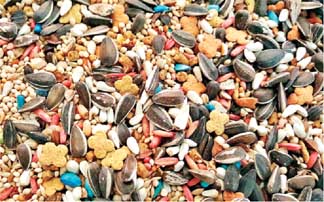
 With our indigenous seeds we can create a new India free from poisons, free from farmers’ suicides and free from malnutrition. That is the new India we should collectively work towards for 2022
Dr Vandana Shiva
India is a land rich in biodiversity. Over 10,000 years Indian farmers have used their brilliance and indigenous knowledge to domesticate and evolve thousands of crops including 200,000 rice varieties, 1500 wheat varieties, 1500 banana and mango varieties, hundreds of species of pulses and oilseeds, diverse millets and pseudo cereals, vegetables and spices of every kind.
This brilliance in breeding was abruptly stopped when the Green Revolution was imposed on us in the 1960’s by the chemical industry with its roots in the War. As in the colonisation of the past, our intelligence in seed breeding and agriculture was denied and our seeds were called “primitive” and displaced. A mechanical “intelligence” of industrial breeding for uniformity for external inputs was imposed. Instead of continuing to evolve diverse varieties of diverse species, our agriculture and our diet were reduced to rice and wheat.
Our native seeds, with tall straws, did a satyagraha against the intensive chemical inputs. New science is teaching us that plants have intelligence. Intelligence is rooted in the Latin word inter legere, which means to choose. Our desi seeds rejected the chemicals with a strong ‘no’ by lodging in rebellion against the toxic inputs. So, Norman Borlaug from Dupont Defense lab was put on the job of changing the plants to take up more chemicals. This is how the dwarf varieties of the rice and wheat were introduced through the Green Revolution. The myth was they produced more food. But as the UN has said, they were High Response Varieties, not High Yielding Varieties. And as Dr Swaminathan has admitted they merely changed the ‘partitioning’ between straw and grain.
Four Emergencies
Fifty years of chemical, industrial breeding for uniformity has contributed to four emergencies. First is the growing monopoly on seeds. The chemical giants Monsanto Bayer, Syngenta ChemChina, Dow Dupont have now emerged as a seed cartel pushing GMO technologies, which have clearly failed. The second emergency is the epidemic of farmers’ suicides due to debt for costly seeds and chemicals. No free and sovereign country should allow 300,000 farmers’ suicides. The third is the malnutrition and hunger crisis resulting from monocultures, which displaced our pulses, oilseeds, millets. The rice and wheat produced is nutritionally empty, so we have an epidemic of malnutrition and micronutrient and trace element deficiencies. And new food allergies such as gluten intolerance, etc. The fourth is the ecological crisis of climate change, erosion of our rich diversity, desertification of our soils, and severe water crisis. Globally, chemical farming contributes 50% of the greenhouse gas emissions. Even the stubble burning is an externality of the Green Revolution.
Corporations breed seeds for responding to their chemicals. Chemicals need uniformity monocultures. Monocultures are vulnerable to the climate change to which industrial farming makes a significant contribution. GM Bt Cotton was imposed with the claim that it would control pests and farmers would not need to spray pesticide. But it has clearly failed to control pests. It has unleashed an epidemic of farmers’ suicides due to debt because of high prices. Farmers are being forced to use more pesticides and hundreds have died due to pesticide poisoning. I visited the farmers admitted in the government hospital in Yavatmal due to pesticide poisoning. The Chair of the Taskforce on the Agrarian Crisis has called Bt Cotton a killer crop and said Monsanto is liable for failure. Maharashtra Chief Minister Devendra Fadnavis assured that a case of culpable homicide will be registered against the pesticide manufacturers. But it is Monsanto against whom the probe for culpable homicide should begin; it is Monsanto because it falsely claimed that Bt Cotton would control pests.
Seed Sovereignty
Navdanya has saved and distributed desi organic cotton seeds to farmers to give an alternative to Bt Cotton. Farmers’ seed sovereignty is at the heart of solutions to the epidemic of farmers’ suicides. Only when farmers have access to their own seeds will they be free of debt. And only through seed sovereignty can farmers’ income be increased. Organic Cotton farmers’ earn more by avoiding costly seeds and chemicals. Organic cotton is the future. Swadeshi seeds can reverse climate change, desertification, water crisis and biodiversity erosion. I started Navdanya 30 years ago to protect our native seeds, our seed sovereignty and our knowledge sovereignty, recognising farmers breeding, their brilliance and their intelligence. We have started more than 120 community seed banks to ensure the farmers varieties of swadeshi seeds.
I fought to defend our civilisation’s collective cumulative innovation from Biopiracy. Our neem was patented. We fought the case for 11 years and established Biopiracy was taking place. Our Basmati was patented as an invention of Ricetec in Texas. We forced the US Patent Office to cancel their claims. Swadeshi seeds have been bred for nutrition and health, taste and quality. Indian wheat was patented by Monsanto because it does not contribute to gluten allergies. An intervention by Bharatiya Krishak Samaj and Research Foundation for Science Technology and Ecology led to a defeat of the Biopiracy of desi wheat.
Climate Resilient Seeds
Swadeshi seeds have been bred for drought tolerance, flood tolerance and salt tolerance. Navdanya has distributed such climate resilient seeds after climate disasters. With climate change, swadeshi climate resilient varieties will be even more important. There is already an attempt by MNCs to patent climate resilient seeds. Monsanto’s patent for climate resilience was rejected by our patent office because article 3j of our patent law prevents patents on seeds, plants and animals. Monsanto is challenging 3j in the courts. To stop this Biopiracy we need to keep the climate resilient seeds in farmers’ hands.
Breeding for diversity, for nutrition, for resilience to pests, diseases and climate change is the swadeshi breeding strategy that created our rich biodiversity and our rich food and nutrition heritage. This is the scientific breeding strategy we must develop as a sovereign nation, not the colonising strategy of breeding for more chemical use, for monocultures, more vulnerability. At Navdanya we are rejuvenating the science of farmers’ breeding.
Food begins as seed. Our Seed Sovereignty (Bija Swaraj) is the foundation of our Food Sovereignty (Anna Swaraj). Our seeds are the seeds of national sovereignty in times of corporate rule, where the seed has become the site for a new colonisation. If we lose our seeds, we will be forced to eat toxic food, which is leading to the epidemic of chronic diseases. You become a seed saver by eating organic food from desi seeds because you become a coproducer with farmers to continue growing the seeds of diversity, freedom and resilience.
Saving, growing, eating desi seeds have become a political, social, economic, ecological, health and scientific imperative. Farmers have livelihood security. Eaters have nutritional security, taste, quality. Bija Swaraj offers solutions to farmers’ suicides, malnutrition and climate change. With our desi seeds we can create a new India free of poisons, free of farmers’ suicides and free of malnutrition. That is the new India we should collectively work towards for 2022.
(The writer is renowned environmental activist and food sovereignty advocate)