 It is time Bharat starts learning its lessons in Heritage and Culture preservation from countries like China. It not only makes people feel proud but also helps promoting tourism
Sankrant Sanu
Saving cultural heritage can have many meanings. It can be saving our languages, a carrier of culture. For instance, revitalizing our languages and using them for high technology and higher education.
Our dress, our food, are all part of our heritage. But here I’d like to focus on a particular aspect of cultural heritage, which is our ancient monuments. Why save them, and if we save them, how must we save them? These questions are important.
During a recent trip to China one found partaking of the new, the glittering city of Guangzhou, with the old, the fascinating city of Xian with a city wall wide enough to bike on, a Wild Goose Pagoda with its fabulous treasure and, not far away, the Terracotta warriors unearthed and being painstakingly restored. It was clear that China was “saving” and even restoring its cultural heritage, the cultural revolution notwithstanding. What is the clear purpose of China’s saving its cultural heritage?
The first is to inculcate a sense of national pride in its citizens. In Chinese museums, when China shows things from the past, it often does this to showcase its achievements and also to contrast these with those of the West. For instance, an exhibit on zinc-plating, which mentioned that this process was carried out far before it was “discovered” in the West. The restoration of the monuments often had a similar purpose, meant to showcase the glory of the Chinese people.
From Beijing, one can take a day tour to the Great Wall of China. This is a significant tourist attraction and there is a very organised process to visit it. Cable cars are set up to take one to the top and the visit to the fully restored wall gives a magnificent sense of its grandeur. However, it was only a small portion of the wall which was restored, while much of it was still in a state of disrepair. So why did China restore only a portion of the wall?
Cultural Tourism
The answer is quite clear—tourism. The Great Wall of China is a major tourist attraction, a wonder of the world. China gets over four times the international tourists that India does. China was serving up a portion of the wall as a tourist attraction, fully restored in all its glory. On the day of modern military warfare, with fighter jets and ICBMs, it would make little sense to restore the entire wall, either for security or for heritage. But what was restored was meticulously done, to showcase the prowess of ancient China and to earn significant foreign exchange from tourism.
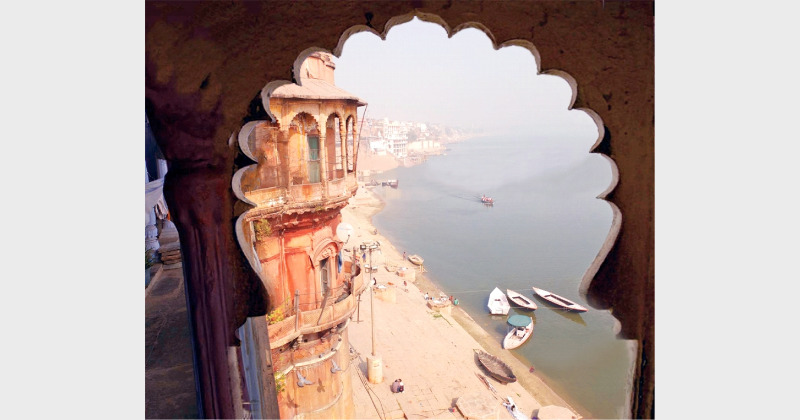
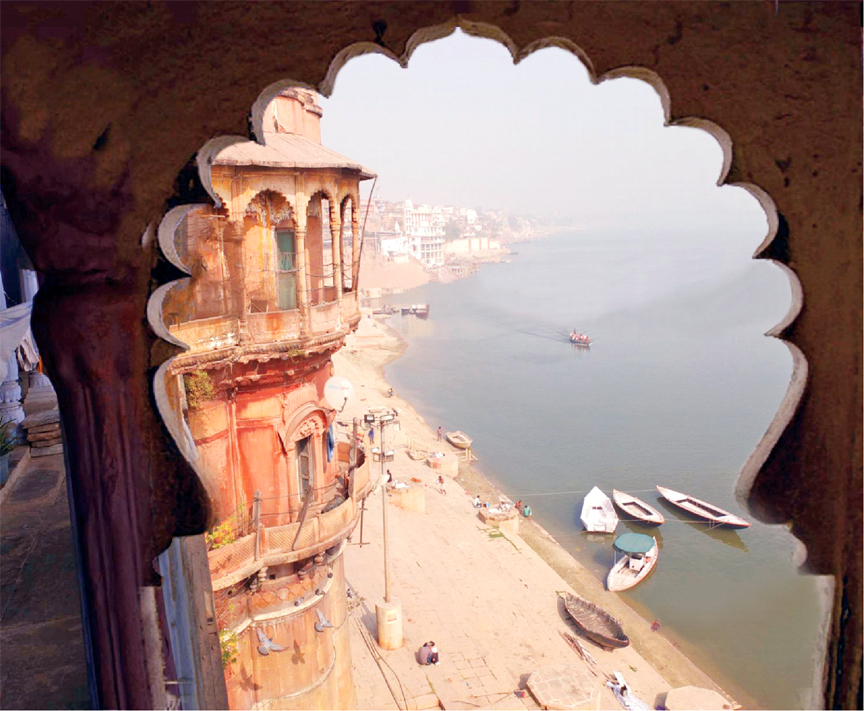
This is in contrast to the confused way India handles its cultural heritage. Take the city of Benares, the constituency of our Prime Minister, for instance. When you take a boat tour down the Ganga, you get to hear how the buildings on the side of the river were owned by different royal families. But now they are in an awful state of disrepair, with peeling paint and uninhabited, evoking none of the ancient grandeur. Apparently, laws don”t allow these “heritage” buildings to be sold, nor does the government maintain them. The result—one experiences the Benares riverfront neither as the magnificent royal experience it once was with palaces and draperies and the tinkling of the anklets of princesses nor as its modern river-side sacred city. The idea of “saving” cultural heritage appears to be to keep it looking old and rundown and not painting it for decades. This misses the point.
Saving the cultural heritage in case of an ancient city like this would be multi-fold. If the city wishes to restrict trade in waterfront properties, so that people don’t just pull these down and build hotels, for instance, it must restore it to how it looked like in its glory. Some portion of it could indeed by leased as luxury hotel space to pay for the upkeep, with suitable restrictions in place regarding architectural changes, or food and drink, as befits an old scared city.
Even many European cities, far younger than our old cities, are lovingly preserved and restored. While there are old cobblestone paths, they hide a modern drainage system. While there is modern electricity, it is completely invisible, not an unsightly mess of hanging wires, like our old cities. Also, parts of cities have been brought to life by restricting motorised traffic, which creates safer and more vibrant pedestrian usage, as well as evoking a feel of how it must once have been. Imagine an old-town Benares, which looks like it, were a thousand years old, but completely cleaned up with modern plumbing and underground electricity lines.
Benares as World Centre
It could be a worldwide tourist attraction. Hardly any city in the world can boast such an ancient continuous living tradition. Portions closed to traffic could be served by electric rickshaws, with some passes for residents. But restoring an old city means evoking the grandeur of how it was in the best of old days—not keeping old dilapidated buildings with peeling paint.
This kind of imaginative restoration is needed in many of our ancient temples, forts and other sites. A great example of this is the palace museum at Udaipur, one of the best maintained public palaces No surprise then that this is not being maintained by the government but by a trust run by the erstwhile royal family taking pride in its heritage. How valuable is our heritage?
Cultural Treasure
Climbing up the seven levels of the Wild Goose Pagoda in Xian, one finds a magnificent treasure. The treasure was palm-leaf manuscripts from India which the traveller and scholar Xuanzang (Hiuen Tsang) had brought. A magnificent pagoda was built to house this. India was at the centre of the world of knowledge. Others still remember this, but we have forgotten and we have failed to honor and treasure it.
An example of a badly maintained site would be the Sun temple at Modhera in Gujarat, now lying in ruins. One can only imagine its magnificence, its large pond when filled with fresh water, its steps a showcase of cultural activity, with swaying dancers striking anklet and pose. Some area of ruin can be preserved, to tell the story of how it was destroyed, but a restored temple, restored to its ancient grandeur, would, both, bring a sense of achievement of our civilization as well as be a great tourist spot. Why not restore it and revive it as a living cultural centre? Currently, it leaves the reconstruction to the imagination.
When we get the how and why the right of preserving our ancient monuments, we need to determine what kind of administrative arrangements, including quasi-private trusts would be best suited to bring this to fruition. There is no point saving a ruin indefinitely as a ruin, once any useful archaeological knowledge has been extracted. From the magnificent temples in Egypt to the Terracotta warriors unearthed in pieces from the ground, the governments have spent the resources to restore these to their grandeur. Why? To build pride in magnificent achievements, to tell the history and to bring tourists. Can we restore our cultural heritage with this sense of purpose?
(The writer is an IITian, blogger and entrepreneur)