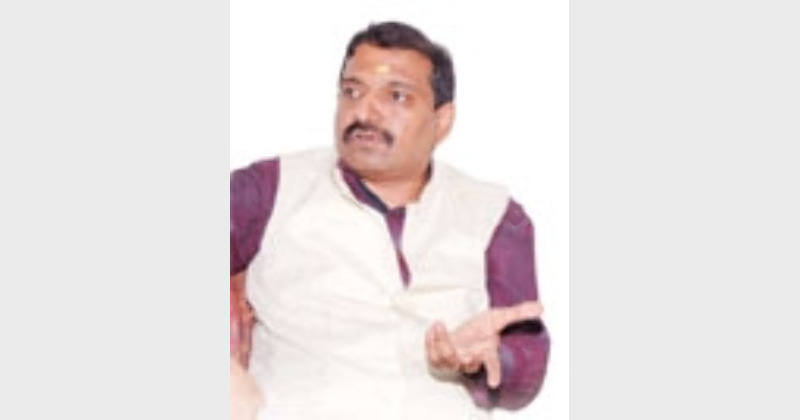
With journalists facing severe threat from fringe elements in the society and clamors rising for necessary legislation to curb the vicious attempts to silence the press, the question of eroding integrity of journalists and a serious death of ethics in present day journalism is also posed from various corners. Against this backdrop, Shri K G Suresh, Director General of Indian Institute of Mass Communication (IIMC), Delhi speaks to Khushboo Agrahari. Excerpts:
In India, journalists’ lives have always been at risk. According to reports at least 54 journalists were attacked between January 2016 and April 2017. How do you observe it?
It’s indeed a matter of serious concern that journalists continue to be at the receiving end even 70 years after India attained independence. While many are genuine cases, there are also instances where personal reasons rather than professional have led to the attack on the individual concerned. Nevertheless, as a country where democracy has taken deep roots, both the Union and State Governments should take pro-active steps to ensure the safety and security of media
persons. However, Indian media remain free and fiercely independent and these attacks have not deterred Indian media in any manner.
Don’t you think it’s high time to usher in a legislation to protect the lives of journalists?
Yes. There should be enabling laws to protect RTI activists and whistleblowers. But given the nature of the profession, I do not think it would be feasible for any Government to
provide security to all media persons. If the general law and order conditions improve and the rule of law prevails
for all citizens, journalists are automatically protected.
Do you think our elite media fraternity is always selective in protesting against atrocities against journalists?
I agree. I see more hullabaloo if a journalist working in English language or city based, is attacked. This smacks of elitism. Journalists working in the hinterland and writing in regional languages are facing a greater threat. Any attack on a journalist for professional reasons is an attack on democracy and freedom of speech and expression irrespective of the language he or she writes, the region they work and the ideology they profess. This selectivity smacks of activism.
Having said that, isn't it a serious concern that there is an alarming deterioration in the quality of new generation journalism? While we're carving for our rights, are we oblivious about the ethics which are necessarily to be upheld in this profession?
Absolutely. Activism is fast replacing journalism. Media persons are a polarised lot today. They are either pro or anti. There is hardly any neutral space left. Everything is either in black or white. There are no shades of grey. Agenda based reporting is fast becoming the norm. Certain newspapers, television channels and websites wear the ideologies on their sleeve. Ethics have been put on the back burner. You are considered ethical only if you subscribe to a certain ideology. This is undermining the credibility of the media and media persons.
What are the steps IIMC has taken to inculcate professional ethics in budding journalists?
Ethics are an integral part of our curriculum. We don’t preach but we weave it into our course. Practitioners are invited to share their experiences. We also don’t confine them to theoretical and technological aspects. Our emphasis on development journalism, history and sensitisation on gender, disability, fundamental duties etc also facilitate in the making of not just good journalists but also good citizens.
Do you think the journalistic ethics have to be recalibrated with respect to Indian views and thoughts to prevent the present apathy?
Yes. That’s why along with Western Communication models, we are now teaching Indian communication theories as well, We want to prepare global journalists with strong Indian roots. For example, the concept of Vasudhaiva Kutumbakam (the whole universe is one family) is about acceptance of all, irrespective of caste, creed, gender, race, ideology. If you are Indian, you are universal.
There must be a unique Indian perspective of journalism, apart from the western theories of communication and ethical approach to journalism. How can IIMC reinvigorate journalism studies based on Indian knowledge system?
From the current academic session, we have Introduced in all our courses the Indian communication theories, specially Sahridaya and Sadharanikaran, Natya Shastra, even as we continue to teach Western models. It’s important that Indian
students should see the world through the Indian perspective, which is a conflict avoidance model rather than a conflict resolution model.
Recently IIMC has amended its code of conduct list and asked the students to be careful and maintain ethical standards and integrity while posting anything on social media accounts. Please elaborate it as it has drawn criticism.
I do not agree with the critics. Even though we are teaching media, we are an academic institution where discipline has to be maintained. We have not stopped anyone from critiquing. Within the institution, there are grievance redressal mechanisms in place. We cannot allow anyone to make unsubstantiated and defamatory comments about faculty and administration in the social media.
Once you post something even on your personal account, it becomes public. We are only asking for responsible social media behaviour. Will the media houses in the name of freedom of speech and expression allow their staff to criticise the management?
As digital journalism is getting popular there are talks regarding traditional journalism fading out. Do you agree? How do you see the future of journalism evolving in the next decade?
Traditional journalism will have to innovate and reinvent itself if it wants to survive. I do not see print and TV fading out so fast because even today for the neo-literate, the newspaper continues to be a symbol of empowerment. It’s not just technology but also the content to a great extent which wouldguarantee your survival. There will be demand more for local news in regional languages. It would be the survival of the fittest. Journalism will have to go back to grassroots. Readers, viewers and listeners can no more be taken for granted. You are going to deal with an enlightened audience who demand quality and credibility.
As director of one of the premier journalism institutions what are the three must possess skills a modern-day journalism student should have?
I think the rules for a good journalist remain eternal—be a voracious reader, work hard and be socially conscious. Being a professional does not mean becoming a mercenary. Making a decent living is fine but making money certainly cannot be the motive.