“Far more distressing is the fact that there is no organised movement of social reform among the Musalmans of India on a scale sufficient to bring about their eradication. The Hindus have their social evils. But there is this relieving feature about them—namely, that some of them are conscious of their existence and a few of them are actively agitating for their removal. The Muslims, on the other hand, do not realize that they are evils and consequently do not agitate for their removal. Indeed, they oppose any change in their existing practices.”
– Dr B R Ambedkar, Pakistan or The Partition of India, Pg 233
The verdict of Uttar Pradesh has many side effects. The unscrupulous attempts by many to interpret it as a result of polarisation, without understanding the scale and nature of mandate, are difficult to digest. The exercise of painting the anointment of Yogi as the CM with communal overtones has failed miserably. The efforts to portray the decision to ban illegal slaughterhouses as ‘meat ban’ could not gain currency. Amidst all this, another soothing side-effect that has been gaining currency is the rise of reformist voices within the Muslim community.
Though Darul-Uloom, Deoband, had issued an edict way back in 2008 saying that “Muslims must refrain from cow slaughter, beef eating or trading in cow hide and Shariat doesn”t allow beef-eating if it’s prohibited under law”. However, it was hardly complied with. In 2015 also, on the occasion of Bakri-Id, a group of Muslims in Mubra took an initiative and voluntarily declared that they will support the Court order regarding ban on cow sacrifice.
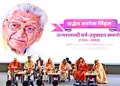
But what happened at Ajmer Sharif on April 4, 2017 is unprecedented. The heads of Sufi shrines who gathered at Dargah Ajmer on the occasion of the 805th annual Urs at the 12th century shrine and through a joint statement supported by all important priests coming from Hazrat Nizamuddin Aulia Dargah of New Delhi to Gulbarga Shareef of Karnataka, called for an ordinance on national ‘ban on beef’. Dargah Diwan of Ajmer Syed Zainual Abedin Ali Khan went ahead and took a pledge that he and his family ‘would never have beef for the rest of their lives as a mark of respect for the Hindu tradition and sentiments and end the atmosphere of enmity and suspicion. The Diwan also condemned the practice of triple talaq, calling it as ‘inhuman, anti-Islamic and against the gender equality’ and gave a call to shun it immediately.
This act is significant in many ways. First of all, the Diwan has nullified the myth that beef eating and triple talaq are essential practices of Islam. Secondly, by his pledge he has shown that reforms must begin at home. More importantly, in a society like Bharat, the institutions like Dargah has more reverence and respect than haphazard bodies like All Indian Muslim Personal Law Board. In tune with the Rishi-Khwaja tradition of Bharat, which calls for acceptance and amicable relations despite different paths, the Diwan has paved the way for larger process of assimilation and integration.
In continuation to this, the All India Shia Personal Law Board has also endorsed the proposal to ban triple talaq and declared its support for a ban on cow slaughter across the country, citing a fatwa issued by a Shia cleric in Iraq, Maulana Ayatollah Basheer Najafi, who is one of the five top Shia clerics. Unfortunately, the sane voice was responded to with a harsh responce as faced by many others. The spiritual head of the sacred shrine was “sacked” by his brother from the post for the “blasphemous”
support to the ban on cow-slaughter and now declared a “non Muslim”. The fortunate part is nobody is taking such fatwas seriously. Now a days many scholars and young intellectuals like Tufail Ahmad and Sultan Shahin are taking reformist position within Islam. Many women activists are coming forward and raising their voice for gender equality.
Many Muslims are looking forward to get rid of fundamentalist Islam. Number of people believe that new dawn of reforms and inclusive version of Islam will stem from the land of Bharat. For that not only the Muslim community but all the people who believe in integral and unified Bharat should stand by and strengthen the voices like Dargah Diwan. This will be a great service to the nation and humanity at large.
@PrafullaKetkar