Uniform Civil Code : Nothing Religious About it
June 10, 2026
  • Read Ecopy
  • Circulation
  • Advertise
  • Careers
  • About Us
  • Contact Us
Android AppiPhone AppArattai
Organiser
  • ‌
  • Bharat
    • Assam
    • Bihar
    • Chhattisgarh
    • Jharkhand
    • Maharashtra
    • View All States
  • World
    • Asia
    • Europe
    • North America
    • South America
    • Africa
    • Australia
  • Editorial
  • International
  • Opinion
  • RSS @ 100
  • More
    • Op Sindoor
    • Analysis
    • Sports
    • Defence
    • Politics
    • Business
    • Economy
    • Culture
    • Special Report
    • Sci & Tech
    • Entertainment
    • G20
    • Azadi Ka Amrit Mahotsav
    • Vocal4Local
    • Web Stories
    • Education
    • Employment
    • Books
    • Interviews
    • Travel
    • Law
    • Health
    • Obituary
  • Subscribe
    • Subscribe Print Edition
    • Subscribe Ecopy
    • Read Ecopy
  • ‌
  • Bharat
    • Assam
    • Bihar
    • Chhattisgarh
    • Jharkhand
    • Maharashtra
    • View All States
  • World
    • Asia
    • Europe
    • North America
    • South America
    • Africa
    • Australia
  • Editorial
  • International
  • Opinion
  • RSS @ 100
  • More
    • Op Sindoor
    • Analysis
    • Sports
    • Defence
    • Politics
    • Business
    • Economy
    • Culture
    • Special Report
    • Sci & Tech
    • Entertainment
    • G20
    • Azadi Ka Amrit Mahotsav
    • Vocal4Local
    • Web Stories
    • Education
    • Employment
    • Books
    • Interviews
    • Travel
    • Law
    • Health
    • Obituary
  • Subscribe
    • Subscribe Print Edition
    • Subscribe Ecopy
    • Read Ecopy
Organiser
  • Home
  • Bharat
  • World
  • Operation Sindoor
  • Editorial
  • Analysis
  • Opinion
  • Culture
  • Defence
  • International Edition
  • RSS @ 100
  • Magazine
  • Read Ecopy
Home General

Uniform Civil Code : Nothing Religious About it

Archive ManagerArchive Manager
Jul 11, 2016, 12:00 am IST
in General
Follow on Google News
FacebookTwitterWhatsAppTelegramEmail


Uniform Civil Code does not say marry in a particular manner. It ensures uniform rights to all in marriage, divorce, maintenance, inheritance, custody of children, adoption, remarriage, etc. Since its intended beneficiaries are women in general, it is gender-sensitive and has nothing to do with religion

R Venkataraman
The controversy over Uniform Civil Code (UCC) is nothing but political and vote bank politics has certainly marred the social welfare legislation for decades now in independent India. There is, of course, vested interest in a particular community also.

Another Related Story : Uniform Civil Code : Is the Dawn Near?

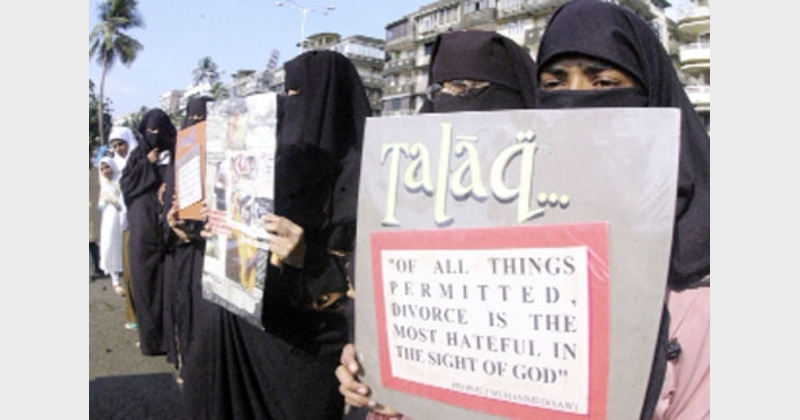
UCC does not mean a person should perform, during marriage, saptapadi (the sacred seven steps) or nikah or any other ritual. Nor a person would be compelled to marry in a certain manner. But after marriage nobody can just say talaq and abandon a woman. So, UCC is not just about marriage where personal laws or customs can play a role. Say for example, a Janjati person can marry according to a particular Janjati customs and practices, but, when that person divorces, can he just abandon his wife?
UCC does not certainly say marry in a particular manner. It is only about divorce, maintenance, inheritance, custody of children, adoption and remarriage. The UCC, as enshrined in the Article 44 of the Constitution of India, is nothing but empowerment of Indian women, irrespective of religion, language, place of birth, race, colour, etc. For, the “State”, under Article 15 of the Constitution “shall not discriminate against any citizen on grounds only of religion, race, caste, sex, place of birth or any of them”.
If one carefully reads the above, on the basis of “sex” too the State cannot discriminate any citizen. But willy-nilly, Article 44, somehow, may be in the wisdom of the founding Fathers of our Constitution, went to find a place in the “Directive Principles of State Policy” chapter of the Constitution, where as Article 15 remains in the Fundamental Rights Chapter of the Constitution.  
Now what is Uniform Civil Code (UCC)? Matters like marriage may not come under it as it depends on the customs and rites of an individual’s religion. But divorce, maintenance, adoption, custody of children and even dignity of the gender and gender justice is UCC, which is nothing but empowerment of women.
I was a law student in the year 1985 when the decision of the Supreme Court in Shah Bano case came. “A Common Civil Code will help the cause of national integration by removing disparate loyalties to law which having conflicting ideologies”, the SC then had observed. Hell broke loose. I was travelling to my native village in Tamil Nadu from Delhi (I was a law student of Delhi University’s Campus Law Centre) and travel by train took (still takes) about three nights, two days and a morning. It was a ‘mini Bharat Darshan’ as the train used to travel through about seven states. I could see protest meetings, especially by Muslims, at every State and on reaching my native village, the same night, there was a protest meeting by the Muslim community with copies of the judgment torn off and burnt. My village is a Muslim majority village. I thought for a while, only as a rational law student: “what is wrong with the judgement?” After all, Shah Bano who was given the irrevocable triple talaq was not given any maintenance and left to fend for herself. Under Section 125 Criminal Procedure Code (Cr.P.C.) petition, known as the maintenance case in common man’s language, she was ordered to be given Rs. 500 as alimony. Even that amount, in 1985, was not enough for a woman to keep herself up and live with dignity, for, Article 21 which guarantees Right to Life, by interpretation in various judgments of the various High Courts and the Supreme Court, the final court of the country, is held to be Right to Life includes Right to Life with Dignity.    
Then 10 years later, in 1995, as an accredited Supreme Court correspondent of The Telegraph I reported Justice Kuldeep Singh’s judgment in what came to be known as the Sarala Mudgal case. “It appears that…the rulers of the day are not in a mood to retrieve Article 44 from the cold storage where it is lying since 1949,” Justice Singh wrote in that judgment “requesting” the Government of the day to consider implementing Article 44 of the Constitution of India. Later, Justice KT Thomas of the Supreme Court, now retired, called for Uniform Civil Code for gender equality and gender justice. In July last year the Supreme Court again favoured UCC in a case of an unwed Christian mother who challenged the Delhi High Court order to reveal the name of the father of her child when she sought guardianship of the child. In a passport case it was held that Mother’s name was enough to get a passport issued for her child.
The Law Commission has in the past in several reports recommended for the same in different words. However, it has been argued that Article 44 of the Constitution is “Directive Principles” and hence un-enforceable. But look at the language “The State ‘Shall’” which is mandatory. So the ruling party now need not even “look for a debate”. It need not go for vote bank politics. Although the issue has been politicised since the Constituent Assembly. Dr Ambedkar wanted this provision though he had scant respect for Hindu law as in his opinion upper caste Hindus would dominate Independent India. The provision was thus put to cold storage under a “deceptively” worded “directive principles of State Policy”. When a government wants to implement a non-enforceable it becomes like right to education, right to know, etc. all are directive principles.
(The writer is a senior journalist and writes on legal issues)


ShareTweetSendShareSend
✮ Subscribe Organiser YouTube Channel. ✮
✮ Join Organiser's WhatsApp channel for Nationalist views beyond the news. ✮
Previous News

Cover Story/The Indian Americans : The Movers & Shapers

Next News

Opinion/IS in South Asia : The Wahhabi Devil

Related News

Hawkers protest in West Bengal

The Left’s Selective Morality: From Sainbari to Hawker protests

Odisha CM Mohan Charan Majhi and Union Minister of Law and Justice Arjun Ram Meghwal along with other dignitaries on the stage on the occasion of completion of 12 years of the Central Government

PM Modi’s 12-years of governance marks era of transformation, growth & global recognition: Odisha CM Mohan Majhi

Modi govt clears Rs 13,000 Crore Great Nicobar Airport Project (This is an AI generated image)

India’s strategic move in Great Nicobar: Rs 13,000 crore airport to double strength in the Indian Ocean

Redistricting efforts across the United States continue to redefine electoral boundaries and congressional competition before the 2026 midterms.

America’s electoral map shifts ahead of 2026 Midterms; Courts back redistricting push

India Deploys 12 Nuclear Warheads: Heralds doctrinal shift to script strategic deterrence against multi-front threat

J&K: Zojila tunnel clears key hurdle; Signals new era of connectivity for Ladakh

Load More

Latest News

Hawkers protest in West Bengal

The Left’s Selective Morality: From Sainbari to Hawker protests

Odisha CM Mohan Charan Majhi and Union Minister of Law and Justice Arjun Ram Meghwal along with other dignitaries on the stage on the occasion of completion of 12 years of the Central Government

PM Modi’s 12-years of governance marks era of transformation, growth & global recognition: Odisha CM Mohan Majhi

Modi govt clears Rs 13,000 Crore Great Nicobar Airport Project (This is an AI generated image)

India’s strategic move in Great Nicobar: Rs 13,000 crore airport to double strength in the Indian Ocean

Redistricting efforts across the United States continue to redefine electoral boundaries and congressional competition before the 2026 midterms.

America’s electoral map shifts ahead of 2026 Midterms; Courts back redistricting push

India Deploys 12 Nuclear Warheads: Heralds doctrinal shift to script strategic deterrence against multi-front threat

J&K: Zojila tunnel clears key hurdle; Signals new era of connectivity for Ladakh

How Cockroach politics is hollowing out Bharatiya democratic culture

RSS centenary year is a time for renewed resolve and greater commitment to nation-building: Dr Mohan Bhagwat

Ex-DMK Minister Senthil Balaji (Right Side-File Photo)

Tamil Nadu: CBI books Rs 397 cr transformer tender scam from ex-DMK Minister Senthil Balaji’s tenure (2021-2023)

Border Security Force (BSF) officials inspect the Single Row Fencing (SRF) at a Border Out Post area (India-Bangladesh border)

Infiltration and Border Management: Saving the Siliguri corridor

Load More
  • Privacy
  • Terms
  • Cookie Policy
  • Refund and Cancellation
  • Delivery and Shipping

© Bharat Prakashan (Delhi) Limited.
Tech-enabled by Ananthapuri Technologies

  • Home
  • Search Organiser
  • Bharat
    • Assam
    • Bihar
    • Chhattisgarh
    • Jharkhand
    • Maharashtra
    • View All States
  • World
    • Asia
    • Africa
    • North America
    • South America
    • Europe
    • Australia
  • Editorial
  • Operation Sindoor
  • Opinion
  • Analysis
  • Defence
  • Culture
  • Sports
  • Business
  • RSS @ 100
  • Entertainment
  • More ..
    • Sci & Tech
    • Vocal4Local
    • Special Report
    • Education
    • Employment
    • Books
    • Interviews
    • Travel
    • Health
    • Politics
    • Law
    • Economy
    • Obituary
  • Subscribe Magazine
  • Read Ecopy
  • Advertise
  • Circulation
  • Careers
  • About Us
  • Contact Us
  • Policies & Terms
    • Privacy Policy
    • Cookie Policy
    • Refund and Cancellation
    • Terms of Use

© Bharat Prakashan (Delhi) Limited.
Tech-enabled by Ananthapuri Technologies