The roots of universal oneness lies in the basic unit of family based on trust, dedication and sanskaras of collective life
The central theme of integral human ism is intense love and oneness or ‘atmeeyata’. This word is derived from the Sanskrit word ‘Atman’. This is unique concept that clarifies Indianness of India. We know that India is known to the world as a spiritual nation. This ‘adhyatmik’ word also traces its origin to the word ‘Atman’. ‘Atmeeyata means intense feeling of oneness and this oneness comes out of affection and love. Love is also natural quality of Atman. Therefore, oneness towards all and love for all is the basis of integration.
India evolved family system to bring this feeling into practical behavior. Family system is there in western countries also. But there is a lot of difference in them. In the west family is a legal system i.e. it accords legal sanctions to sexual relationship of man and woman to make them man and wife. They have some conditions. They enter into an agreement keeping their interest in mind to become man and wife and whenever the interest is harmed, they end the agreement and enter into another one with someone else. Thus, marriage and divorce have become so easy there. There is no place for values like piousness, samskar, dedication, faith etc. But this is not so in India. When a man and a woman enter into wedlock in India they become one entity. Their duality ends with that samskar of marriage. This process of two becoming one is firmly saddled in the Indian psyche since thousands of years.
Unity of husband and wife is the centre point of family system in India. The root of this thought is in the truth that entire universe is manifestation of the one supreme reality called God. This is the expression of that divine authority and each matter in this universe contains the same ‘Atmatattva’ that binds them together. The husband and wife too are bound by the same principle. To make this relationship fruitful it needs ‘sadhana’ and this is ‘sadhana’ of ‘ekatmata’ or oneness. With the birth of children this oneness gets expanded. Brothers and sisters are its further extension. This thought takes ultimately to the truth and realisation of ‘Vasudhaiva Kutumbakam’ or the universe as one family.
This means that this family feeling is the pivotal point of Indian social system. This family on the one hand acts as a protector of our culture and on the other hand it is the conductor of our tradition. All the cultural life values get transferred to next generation through the family. This process of transmission is a live process and each generation makes it rich with its vigor and valor and purifies it with the requirements of changing times. Deendayalji used to call it ‘yuganukul parivartan’.
This family feeling is also the basis of our social behaviour. Here the King is guardian of his subjects and disciple is like a son to his guru. The employer cares for his employees and market conducts itself with this family feeling. It is considered that duty of the shopkeeper is to fulfill the requirement of buyer. No permission is granted to do business depriving someone of his job and food. The feeling of Vasudhaiv Kutumbakam is employed in practical dealings. That made our villages economically viable and self-reliant. Professions were selected in honour such a way that each hand would get job. And earnings are done without insulting anybody’s freedom and honours. The attitude of service formed the bedrock of our earning vocations. No permission was granted to business detrimental to social health. Therefore, integral humanism does not favour mechanised big industries.
The philosophy of integral humanism talks of experiencing oneness not only with the human beings but also with the entire nature. This has been Indian tradition too. We impart lessons to imbibe this on the minds of the children in the family. Hence, ‘sun’ is elder brother, ‘moon’ is maternal uncle, ‘cat’ is ‘mausi’ and monkey is ‘mama’. For all of us the earth, cow, Ganga, and Tulsi are like mother. Earth, water, air, fire are gods. There are four principles of dealing with nature. First is love. Shakuntala explains, in Abhigyan Shakuntalam, her relationship with the plants that she loves them as her real brother. Second is gratitude. Our life is impossible sans earth, water, air, trees and plants. They fulfill all our needs. Therefore we must show gratitude towards the nature. Third is milking. Nature fulfills all our needs. That is why it is said that we must take from nature as per our requirement and not more than that. One who takes more than his requirement is described as thief in our scriptures. The fourth principle is protection. This entire universe is manifestation of the Supreme Reality. And human being is the best of all creations of God. Man is the best of all hence he has a duty to protect smaller and weaker elements and save them. From this point of view to protect and preserve the nature is the fourth principle. If we make arrangements based on these principles then we will have to change our economy, social system, production policy and market system in their totality. In this system there will not be any problem of pollution.
If we make this family feeling our base in dealing with society or nature, we can easily resolve our economic, social and cultural problems with ease. People will maintain their physical and mental health because in a family atmosphere there is no place for worry, tension, stress, excitement, fear, insecurity etc. As each one thinks for the other first. This attitude keeps diseases like heart attack, blood pressure, diabetes etc. away from the individual. Productivity is increased as every hand gets work to do. And this keeps him balanced. There is not much worry about earnings and a human being can safeguard his freedom and honour in the family leading to happiness in the society. Such a situation is considered the best conducive atmosphere for creativity that brings excellence in our productions. Nature also abounds in food grains, fruits, herbs and flowers. If we behave with love and gratitude towards nature we can have better quality returns from the nature. This leads to virtues like happiness, peace, harmony, sanskar, knowledge, skills and valor getting their proper place in the society.
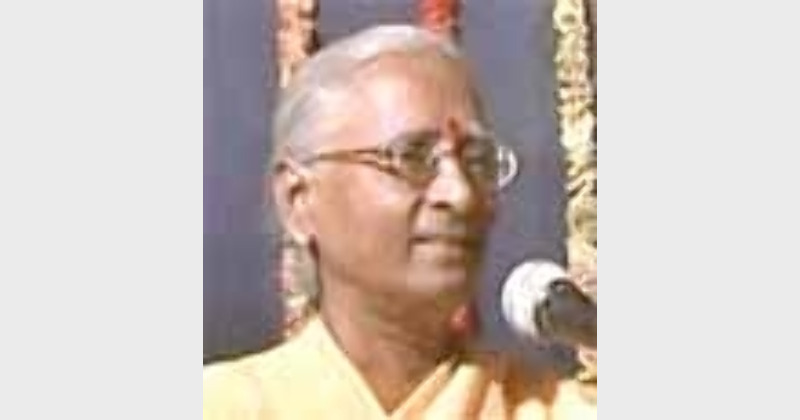
Indumati Katdare (the writer is Secretary of Punarutthan Trust, Ahmedabad)