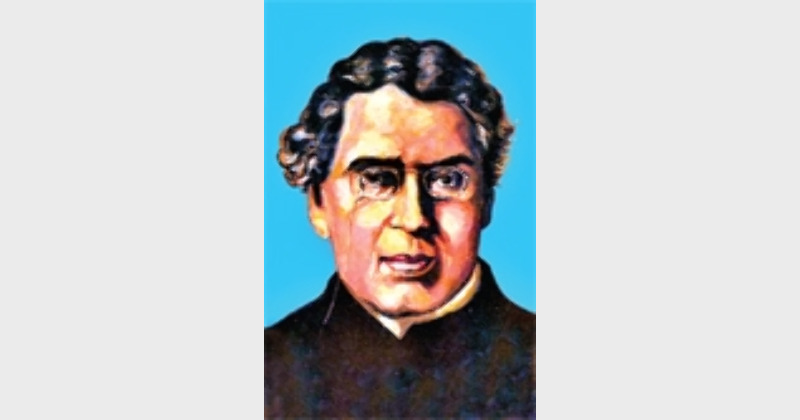
 Renowned Biologist, Physicist and Archaeologist, JC Basu is regarded as the Father of Radio Science. He also discovered that plants respond to various stimuli
Acharya Jagadish Chandra Basu did pioneering research, first in Physics and then in Plant Physiology. He was the first to produce millimeters-length radio waves and study their properties. These radio waves are now known as ‘microwaves’ and they are commonly used in radars, ground communications, satellite communications, remote sensing and microwave ovens. He also perfected the method of transmission and of reception of electromagnetic waves. Basu’s ‘Coherer’ or radio receiver for receiving radio waves was highly sensitive and it was far more compact, efficient and effective than the ones used in Europe at the time. He invented the world’s first ‘horn antenna’, which is now commonly used in all microwave-related devices. Basu was the first to show that semiconductor rectifiers could detect radio waves.
Basu’s galena receiver was amongst the earliest examples of a lead sulphide photo-conducting device. WH Brattain (1902-1987), the Nobel Laureate American Physicist who co-invented the transistor, credits Basu with the first use of semi-conducting crystals to detect radio waves and Nevill Mott (1905-1996), the British Physicist, who won the Nobel Prize in Physics in 1977 said: “In fact, he (Basu) had anticipated the existence of P-type and N-type semiconductors.”
Basu gave a public demonstration at the Town Hall in Kolkata in 1895 in which he transmitted electric waves (or radio waves) through three walls and activated a receiver which in turn caused a bell to ring, a pistol to fire and a small heap of gunpowder to explode. All this was achieved well before the Italian scientist Marconi who demonstrated wireless communication at longer wavelengths for which he was later awarded the Nobel Prize in 1909. In 1998, the Institute of Electricals and Electronics Engineers (IEEE) accepted JC Basu as the inventor of the ‘mercury coherer with a telephone’ used by Marconi. IEEE regarded Basu as one of the founders of the radio science.
Basu laid the foundation of modern physics in the country. His success in making of modern physics in India was in the domain of experimentation and instrumentation. He was a true experimentalist. Like Michael Faraday he attempted to understand the nature by measurement and not mathematics. He worked in isolation. At the time he began his work on electric waves at the Presidency College, Kolkata, there was no laboratory or instruments that he could use. There were no instrument-makers. He fabricated his own instruments with the help of a tinsmith whom he himself trained. It was Basu who made pure science a credible occupation for Indians.
After doing pioneering work in physics, Basu turned to plant physiology. He demonstrated that plants under different kinds of stimuli like mechanical, application of heat, electric shock, chemicals and drugs, produce response similar to that produced by animal tissues. He also tried to demonstrate that similar response to simulation could be noticed in certain inorganic systems. For his investigations Basu invented several novel and highly sensitive instruments. Among these the most important one was the Crescograph—an instrument for measuring the growth of a plant. He attempted to devise models, which were illustrative of physical basis of memory. His findings anticipated some of the later developments in subjects like biophysics, chronobiology, cybernetics, medicine and agriculture.
He had resolved not to seek any personal advantages from his inventions. Some argue that Basu should be regarded as father of open technology. He made his inventions and work freely available to others. His reluctance for patenting his work is legendary. Basu did research to seek the truth for its own sake. Thus while inaugurating his research institute he said: “Public life, and the various professions will be appropriate spheres of activity for many aspiring young men. But for my disciples, I call on those very few, who, realizing some inner call, will devote their whole life with strengthened character and determined purpose to take part in that infinite struggle to win knowledge for its own sake and see truth face to face.”
Jagadish Chandra Basu was born on November 30, 1858 in Mymensingh (now in Bangladesh) in undivided India. His father Bhagwan Chandra Basu was a civil servant in the British Raj deeply interested in the welfare of his fellow citizens. Basu had his early education in a local Bengali medium school, a pathsala, founded by his father. In this pathsala Basu studied with the children of peasants, fishermen and workers. In fact one of the students studied with him was the son of his own domestic servant. In their midst Basu imbibed an abiding love for animals, birds and plants as many of his later writings bear testimony to this. He also developed love for equality and brotherhood and he was freed from caste, class and religious prejudices. His father helped develop a spirit of asking questions in young Basu.
At the time of his graduation from Calcutta University in Physical Science Group Basu did not have clear plan for his future career. Following his father’s example the natural course for him was to join the coveted Indian Civil Service. However, his father did not want his son to become a civil servant. His father wanted that his son should be helpful to the common people. It was finally decided that Basu would study medicine in some English university and with this purpose he went to England in 1880. His mother sold off her own jewellery to send his son to England. Basu could not continue to study medicine as his health got adversely affected after working in the dissecting rooms. He ended up in studying natural science at Christ’s College at Cambridge. Among his teachers at Cambridge was the famous scientist Lord Rayleigh (1842-1919) with whom Basu stuck a life-long friendship. In 1884, Basu passed the Natural Sciences Tripos and in the same year he also obtained a Bachelor of Science degree from the University of London. After coming back to India in 1885, he joined the Presidency College at Kolkata. He was the first Indian to be appointed as Professor of Physics at Presidency College. His appointment was initially strongly opposed by Sir Alfred Croft, then Director of Public Instruction of Bengal and Charles R Tawney, Principal of the Presidency College. However, Basu finally managed to get the appointment because of the intervention of Lord Ripon, then Viceroy of British India. In those days British officials thought that Indians were not suitable for higher posts in the educational service and so the Imperial Educational Service was out of bound for them, howsoever qualified they might be.
Though Basu, because of Lord Ripon’s personal intervention, was given the appointment in the higher service, he was taken on temporary basis with one-half of the pay attached to such an appointment. Basu protested and he asked for the same salary as an Englishman was entitled to get. When his protest was not entertained he refused to accept his salary. He continued his teaching assignment without any salary for three years though his father was deeply indebted. Finally, both the Director of Public Instruction and the Principal of the Presidency College realised the value of Basu’s skill in teaching and also his lofty character. As a result, his appointment was made permanent with retrospective effect. He was given the full salary for the last three years in lump sum.
Basu retired from educational service in 1915. After his retirement, he established a research institute—the Basu Institute. The foundation ceremony of the Institute took place on November 23, 1917. In his inaugural speech he said: “I dedicate to-day this institute—not merely a Laboratory but a Temple…The advance of science is the principal object of this Institute and also the diffusion knowledge…I have sought permanently to associate the advancement of knowledge with the widest possible civic and public diffusion of it; and this without
any academic limitations, henceforth to all races and languages, to both men and women alike, and for all
time coming.”
Basu had realised that science was about addressing problems in nature and not compartmentalising knowledge in watertight distinct disciplines such as physics, chemistry, zoology and botany. Basu taught and inspired a number of young students. His students included Sisir Kumar Mitra, Satyendra Nath Basu and Meghnad Saha, who later made pioneering contributions in their own area of research.
Among his contemporaries, who influenced him, were Acharya Prafulla Chandra Ray, Swami Vivekananda, Sister Nivedita, Mahatma Gandhi and Rabindranath Tagore. His friendship with Tagore was deep-rooted and received much emotional support from him at difficult times. Before seriously taking up scientific investigations (1894), Basu spent many of his vacations visiting and photographing historic places of scenic beauty, armed with a full-sized camera. Some of his experiences he wrote down in vivid Bengali prose. These, together with some of his other literary addresses and writings were published in a volume called Abyakta (The Inexpressible).
Basu died on November 23, 1937 at Giridih in present Jharkhand (then part of Bihar). As one of his biographers, Patrick Geddes, wrote: “The life story of Jagadish Chandra Basu is worthy of close and ardent consideration by all young Indians whose purpose is shaping itself towards the service of science or other high cause of the intelligence or the social spirit.”
Dr Subodh Mahanti (The writer is former Scientist ‘G’ and Honorary Director of Vigyan Prasar)