Sardar Patel and Jawaharlal Nehru: Two contrasting figures
July 11, 2026
  • Read Ecopy
  • Circulation
  • Advertise
  • Careers
  • About Us
  • Contact Us
Android AppiPhone AppArattai
Organiser
  • ‌
  • Bharat
    • Assam
    • Bihar
    • Chhattisgarh
    • Jharkhand
    • Maharashtra
    • View All States
  • World
    • Asia
    • Europe
    • North America
    • South America
    • Africa
    • Australia
  • Editorial
  • International
  • Opinion
  • RSS @ 100
  • More
    • Op Sindoor
    • Analysis
    • Sports
    • Defence
    • Politics
    • Business
    • Economy
    • Culture
    • Special Report
    • Sci & Tech
    • Entertainment
    • G20
    • Azadi Ka Amrit Mahotsav
    • Vocal4Local
    • Web Stories
    • Education
    • Employment
    • Books
    • Interviews
    • Travel
    • Law
    • Health
    • Obituary
  • Subscribe
    • Subscribe Print Edition
    • Subscribe Ecopy
    • Read Ecopy
  • ‌
  • Bharat
    • Assam
    • Bihar
    • Chhattisgarh
    • Jharkhand
    • Maharashtra
    • View All States
  • World
    • Asia
    • Europe
    • North America
    • South America
    • Africa
    • Australia
  • Editorial
  • International
  • Opinion
  • RSS @ 100
  • More
    • Op Sindoor
    • Analysis
    • Sports
    • Defence
    • Politics
    • Business
    • Economy
    • Culture
    • Special Report
    • Sci & Tech
    • Entertainment
    • G20
    • Azadi Ka Amrit Mahotsav
    • Vocal4Local
    • Web Stories
    • Education
    • Employment
    • Books
    • Interviews
    • Travel
    • Law
    • Health
    • Obituary
  • Subscribe
    • Subscribe Print Edition
    • Subscribe Ecopy
    • Read Ecopy
Organiser
  • Home
  • Bharat
  • World
  • Operation Sindoor
  • Editorial
  • Analysis
  • Opinion
  • Culture
  • Defence
  • International Edition
  • RSS @ 100
  • Magazine
  • Read Ecopy
Home Bharat

Sardar Patel and Jawaharlal Nehru: Two contrasting figures

It seems to me very unfair on the part of politicians and the media to take part in comparing Vallabhbhai Patel, honoured as Sardar and Jawaharlal Nehru who became independent India?s first Prime Minister.

Archive ManagerArchive Manager
Dec 23, 2013, 03:27 pm IST
in Bharat
Follow on Google News
FacebookTwitterWhatsAppTelegramEmail


undefinedIt
seems to me very unfair on the part of politicians and the media to take part in comparing Vallabhbhai  Patel, honoured as Sardar and Jawaharlal Nehru who became independent India’s first Prime Minister. Vallabhabhai Patel, hailing from a  farming family was deen-rooted in the Indian soil while Jawaharlal Nehru, an upper-class anglicised Kashmir Brahmin was from his very childhood raised to be British in cultural upbringing. The two differ as chalk and cheese, no matter who the chalk is and who the cheese.

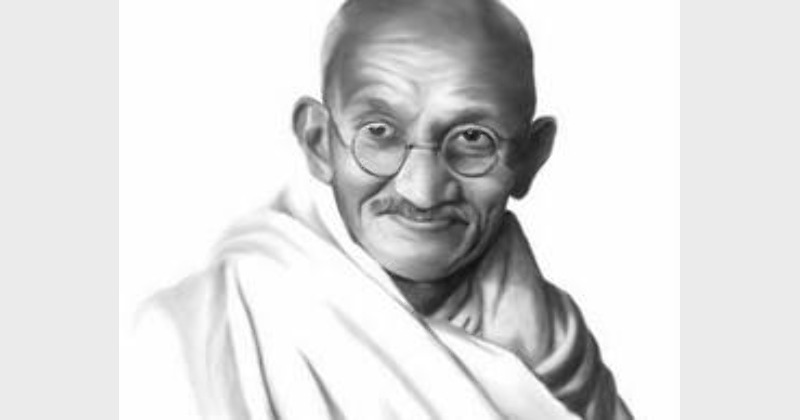
From his very early days Nehru was taught at home by an English tutor, spent his teens and early manhood in Britain and, when Gandhi preferred to have him as the country’s first Prime Minister he explained his choice on the playful but sustainable theory that “Jawaharlal is the only Englishman in my camp”.

The Mahatma preferred Nehru as his successor, noting in passing, as his successor, Nehru would carry forward his vision for a prosperous India. it was the biggest mistake he made. For the Mahatma, the village was the centre of progress; for Nehru it was urban India and socialism as he saw it. Was he to be blamed? Nehru was the product of his father Motilal’s ambitions and if he turned out to be an Indian version of the British Labour Party leadership, why blame him? Nehru was insensitive to Hindu feelings, witness his pronounced antipathy towards the renovation of the famous Somnath Temple. He was even opposed to President Rajendra Prasad inaugurating the opening of the renovated temple while it was the Sardar who raised the necessary funds to get the work done.

Nehru and the Sardar differed strongly on many issues and if they worked together on many others it was because they shared one guru: the Mahatma. In December 1950 the Sardar introduced the Preventive Detention Bill in Parliament which Nehru strongly supported claiming that it was “fully democratic”.

Earlier, in 1937 Nehru was opposed to the Congress participating in the general elections based on the Government of India Act, 1935. In his book The Re-Discovery of India, Meghnad Desai quotes Nehru as saying that he was opposed to Congress “taking office under British Imperialism”. But the Sardar, the great party organiser was all in favour of it, on the recommendation of no less than the Mahatma. That subsequently it was Nehru who travelled throughout the length and breadth of the country to fight for his party is another matter.

As Desai has noted: “Patel had his legitimate claims; he accepted (Gandhi’s) decision but the tensions remained between the fiery Left-wing ideologue and the pragmatic Rightist Patel”. On the passing of the Quit India resolution in August 1942 the Sardar had blind faith in Gandhi who thought that the Japanese would not invade India and were only against the British. But Nehru thought otherwise. 

There were differences between Nehru and Sardar over the offer of the Cripps Mission. There were, of course, wide differences within the party leadership. Gandhi totally rejected the Cripps offer as a post-dated cheque on a crumbling bank, but it is claimed Nehru encouraged Cripps “to go ahead with the scheme even if there was a refusal by Congress”. In his book on Gandhi, the Dutch scholar Koenrad Elst says it was Gandhi who frequently sidelined the Sardar in favour of Nehru. It must have pained the Sardar no end. At one point in time he even wished to resign from his role as Home Minister and Deputy Prime Minister and it was only after Gandhi was assassinated that the Sardar swore to stand by Nehru till the end. It was first Gandhi and his determination not to break up the party that led Sardar to yield to Nehru. Gandhi’s death merely strengthened Sardar’s determination to stand by the appointed leader. That speaks of his greatness. On the tortuous subject of dealing with princes – especially the Nizam – there are reports of dissidence between the two leaders. Nehru was not kindly disposed towards VP Menon because he was too close to the Sardar.

In his book India’s Parliamentary Democracy on Trial, Madhav Godbole says how upset Nehru was when Menon published two books on the unification of India which Sardar had suggested Menon should. As Nehru saw it, the publication of the books in their present form was likely to embarrass government greatly and might even create fresh problems and difficulties.

The Congress was Gandhi’s creation but it was the Sardar who held it together administratively speaking. But then if here was no Gandhi there would have been no Sardar and probably there would have been no Nehru as well.

Would Sardar have quit the party had Gandhi been alive? No one can tell and it is an irrelevant issue now. Let me end by saying that in reunifying India Sardar stood head and shoulders over Nehru and deserves all the praise we can lavish on him. Were Sardar the Prime Minister, today there would have been a different India. But why speculate over past history? Let the statue of the great Sardar arise, a long-differed honour is due to him as the second Ashoka of India’s history. Sardar Vallabhbhai Patel zindabad.

ShareTweetSendShareSend
✮ Subscribe Organiser YouTube Channel. ✮
✮ Join Organiser's WhatsApp channel for Nationalist views beyond the news. ✮
Previous News

Shifting sands of the American policy towards Islamic countries

Next News

Big fight in Bihar, who to be Congress poster boy against Modi dislikes

Related News

NIA chargesheets Shabir Shah, five others in 1996 Srinagar violence case

1996 mob violence & indiscriminate firing case: NIA chargesheets Shabir Ahmed Shah & 5 other Hurriyat leaders

Tamil Nadu: BJP, temple activists oppose lifting of registration ban on 3,085 acres of temple land in Karur

Tamil Nadu Governor Rajendra Vishwanath Arlekar, presided over the Kashi Tamil Sangamam 4.0 – 2025 Felicitation Ceremony at Lok Bhavan, Chennai on July 10, 2026

Tamil Nadu Governor Arlekar felicitates Kashi Tamil Sangamam 4.0 winners, calls for learning each other’s languages

Verification drive targeting suspected individuals in Karnataka (File Photo)

Karnataka: Six suspected illegal Bangladeshis detained in Mangaluru; FRRO begins verification for deportation

Tamil Nadu Chief Minister S. Joseph Vijay hands over compassionate appointment orders to 31 legal heirs of Karur stampede victims on July 10, 2026

Tamil Nadu: CM Joseph offers Karur victims’ kin govt jobs, subject to judicial review, politics over tragedy continues

Union Minister Shobha Karandlaje

Karnataka: Shobha Karandlaje urges Amit Shah to halt PRC of Congress govt; Cites illegal Bangladeshi immigration

Load More

Latest News

NIA chargesheets Shabir Shah, five others in 1996 Srinagar violence case

1996 mob violence & indiscriminate firing case: NIA chargesheets Shabir Ahmed Shah & 5 other Hurriyat leaders

Tamil Nadu: BJP, temple activists oppose lifting of registration ban on 3,085 acres of temple land in Karur

Tamil Nadu Governor Rajendra Vishwanath Arlekar, presided over the Kashi Tamil Sangamam 4.0 – 2025 Felicitation Ceremony at Lok Bhavan, Chennai on July 10, 2026

Tamil Nadu Governor Arlekar felicitates Kashi Tamil Sangamam 4.0 winners, calls for learning each other’s languages

Verification drive targeting suspected individuals in Karnataka (File Photo)

Karnataka: Six suspected illegal Bangladeshis detained in Mangaluru; FRRO begins verification for deportation

Tamil Nadu Chief Minister S. Joseph Vijay hands over compassionate appointment orders to 31 legal heirs of Karur stampede victims on July 10, 2026

Tamil Nadu: CM Joseph offers Karur victims’ kin govt jobs, subject to judicial review, politics over tragedy continues

Union Minister Shobha Karandlaje

Karnataka: Shobha Karandlaje urges Amit Shah to halt PRC of Congress govt; Cites illegal Bangladeshi immigration

PM Modi in New Zealand: Thanks Indian diaspora, Iconic sky tower glows in tricolour as bilateral ties gain momentum

Nashik court grants bail to accused in TCS conversion case; Cites Bhagwan Krishna’s prison birth trauma

A Radiant Glow or Deadly Poison? Banned Pakistani cosmetics worth Rs. 60 lakh seized in Nanded

India-Indonesia Sabang Port Strategy across the Malacca Strait: New Delhi’s pitch to catalyse maritime trade & security

Load More
  • Privacy
  • Terms
  • Cookie Policy
  • Refund and Cancellation
  • Delivery and Shipping

© Bharat Prakashan (Delhi) Limited.
Tech-enabled by Ananthapuri Technologies

  • Home
  • Search Organiser
  • Bharat
    • Assam
    • Bihar
    • Chhattisgarh
    • Jharkhand
    • Maharashtra
    • View All States
  • World
    • Asia
    • Africa
    • North America
    • South America
    • Europe
    • Australia
  • Editorial
  • Operation Sindoor
  • Opinion
  • Analysis
  • Defence
  • Culture
  • Sports
  • Business
  • RSS @ 100
  • Entertainment
  • More ..
    • Sci & Tech
    • Vocal4Local
    • Special Report
    • Education
    • Employment
    • Books
    • Interviews
    • Travel
    • Health
    • Politics
    • Law
    • Economy
    • Obituary
  • Subscribe Magazine
  • Read Ecopy
  • Advertise
  • Circulation
  • Careers
  • About Us
  • Contact Us
  • Policies & Terms
    • Privacy Policy
    • Cookie Policy
    • Refund and Cancellation
    • Terms of Use

© Bharat Prakashan (Delhi) Limited.
Tech-enabled by Ananthapuri Technologies