From Silent to Digital
June 6, 2026
  • Read Ecopy
  • Circulation
  • Advertise
  • Careers
  • About Us
  • Contact Us
Android AppiPhone AppArattai
Organiser
  • ‌
  • Bharat
    • Assam
    • Bihar
    • Chhattisgarh
    • Jharkhand
    • Maharashtra
    • View All States
  • World
    • Asia
    • Europe
    • North America
    • South America
    • Africa
    • Australia
  • Editorial
  • International
  • Opinion
  • RSS @ 100
  • More
    • Op Sindoor
    • Analysis
    • Sports
    • Defence
    • Politics
    • Business
    • Economy
    • Culture
    • Special Report
    • Sci & Tech
    • Entertainment
    • G20
    • Azadi Ka Amrit Mahotsav
    • Vocal4Local
    • Web Stories
    • Education
    • Employment
    • Books
    • Interviews
    • Travel
    • Law
    • Health
    • Obituary
  • Subscribe
    • Subscribe Print Edition
    • Subscribe Ecopy
    • Read Ecopy
  • ‌
  • Bharat
    • Assam
    • Bihar
    • Chhattisgarh
    • Jharkhand
    • Maharashtra
    • View All States
  • World
    • Asia
    • Europe
    • North America
    • South America
    • Africa
    • Australia
  • Editorial
  • International
  • Opinion
  • RSS @ 100
  • More
    • Op Sindoor
    • Analysis
    • Sports
    • Defence
    • Politics
    • Business
    • Economy
    • Culture
    • Special Report
    • Sci & Tech
    • Entertainment
    • G20
    • Azadi Ka Amrit Mahotsav
    • Vocal4Local
    • Web Stories
    • Education
    • Employment
    • Books
    • Interviews
    • Travel
    • Law
    • Health
    • Obituary
  • Subscribe
    • Subscribe Print Edition
    • Subscribe Ecopy
    • Read Ecopy
Organiser
  • Home
  • Bharat
  • World
  • Operation Sindoor
  • Editorial
  • Analysis
  • Opinion
  • Culture
  • Defence
  • International Edition
  • RSS @ 100
  • Magazine
  • Read Ecopy
Home General

From Silent to Digital

Archive ManagerArchive Manager
Oct 29, 2013, 12:00 am IST
in General
Follow on Google News
FacebookTwitterWhatsAppTelegramEmail

Technological Advancement

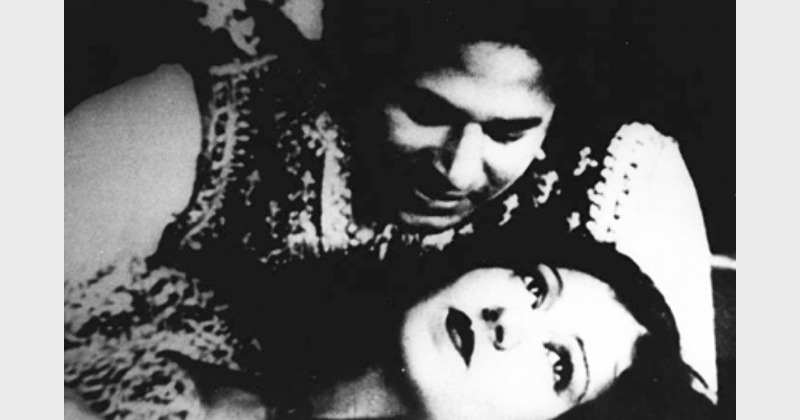
Since 1913, when Dada Saheb Phalke produced the country’s first silent film, which had all the ingredients of the Sanskrit drama, the film industry in the country has flourished and has played a major role in promoting a sense of Indianness, not only in India, but around the globe. Today we use the term “Bollywood” for the Indian film industry, but it is not as if everything in Indian cinema is Hollywood inspired, as the term Bollywood may seem to suggest, Indian cinema has a unique identity of its own and during the last 100 years, it has made significant contributions towards nation building.

India’s first talkie, Alam Ara was released in 1931. This film paved the way for the future of Indian cinema. After this the number of film production companies’ skyrocketed, as did the number of films being produced. Soon the colour films made their appearance. Today India produces close to 1,000 films every year. In fact, India is one country that has remained virtually unaffected by Hollywood’s dominance of the international cinema. Indian film producers don’t need to look at Hollywood’s calendar of mega-releases before releasing their own films.

As an artistic medium, filmmaking has always been about innovation. Indian directors utilise new innovations because they want to tell a better story. The bulky camera, which made it practically impossible to execute smooth tracking shots, has now given way to more sophisticated cameras. The use of computer-generated imaginary has become quite common during the last few decades. In the area of animation and digital entertainment, India is today regarded as a worldwide leader. Indian animators have made great contribution in technological wizardry that you get to see in international successes like Life of Pi, Skyfall and Kung Fu Panda. Few years ago, Ramayana: The Epic, a classic animation for children and adults, was released. The film, which sizzles and crackles with special effects, is a retelling of the story of Lord Rama, from his birth until his battle with Ravan at Sri Lanka. 

Technology is arguably having its most profound and pronounced effect on film in this day and age. It is an exciting age for international film industry, the digital age. In 2010, the Tamil science fiction film Enthiran (The Robot) was released. The film features Rajinikanth in dual roles, as a scientist and an andro humanoid robot, alongside Aishwarya Rai. The film entices the audiences with many special effects that have never been seen before on Indian screens; the viewers are regaled with scenes that have a shape shifting giant, a snake, a human train and much else. However, most Indian films are not overtly dependent upon special effects in order to keep their audiences hooked. So we don’t have movies like Avatar produced by James Cameron. Indian audience is more keen about watching movies that retain their Indianness and focus on emotional and social content.

One of the most exciting innovations in cinema is the use of higher frame rates. James Cameron and Peter Jackson have used this system in their films for having increased clarity. If the film is running through a projector, then you can’t have frame rate more than 24 FPS. But as films in the world make a transition to the digital, it has now become possible for directors to try higher frame rates. Peter Jackson shot The Hobbit at 48 FPS. Indian cinema is now gearing to incorporate new advances in digital technology. Films are now being planned that will have higher frame rate and other advances of digital technology. One problem that Indian cinema faces is that the design of most movie theatres in the country is not conducive for digital films. Lot of new investment will be needed to bring improvements in this area.

Research and development are continuous and relentless in the film industry, with many innovations entering the market everyday. The Indian film industry has to keep upgrading itself. Perhaps it is now time for the government to come up with new policies and regulations that will allow the creatives of Indian cinema to make more investment in technology so that the quality of our films can become even better.

—Anoop Verma

ShareTweetSendShareSend
✮ Subscribe Organiser YouTube Channel. ✮
✮ Join Organiser's WhatsApp channel for Nationalist views beyond the news. ✮
Previous News

The dark side of cinema

Next News

The Masala that makes it Indian

Related News

The Vedic age saw remarkable women sages, known as Rishikas, who composed hymns and shaped India's spiritual and philosophical heritage

Rishikas of Vedic Age: How Gargi, Maitreyi & other women shaped ancient India’s spiritual and philosophical tradition

Police in AAP-Ruled state of Punjab lathi charge sit-in protesters

Punjab: ITI candidates seeking jobs lathi-charged outside PSPCL HQ; opposition slams AAP Govt over police action

From constables to DGP, India's police system follows a structured chain of command that governs law enforcement across the country

From Constable to DGP: Understanding India’s police hierarchy, powers & recruitment system

The terracotta dice that challenges historical assumptions and highlights India's millennia-old civilisational heritage

How a 4,500-year-old terracotta dice is reviving the debate on India’s civilisational continuity & Vedic heritage

The Porumamilla inscription and the ancient science behind a reservoir that survived 650 years

India’s 655-Year-Old Water Policy: The Porumamilla inscription that turned stone into a manual of hydrology

India’s Permanent Representative to the United Nations Ambassador Harish Parvathaneni

India slams Pakistan at UNSC for peddling false narratives on Jammu & Kashmir

Load More

Latest News

The Vedic age saw remarkable women sages, known as Rishikas, who composed hymns and shaped India's spiritual and philosophical heritage

Rishikas of Vedic Age: How Gargi, Maitreyi & other women shaped ancient India’s spiritual and philosophical tradition

Police in AAP-Ruled state of Punjab lathi charge sit-in protesters

Punjab: ITI candidates seeking jobs lathi-charged outside PSPCL HQ; opposition slams AAP Govt over police action

From constables to DGP, India's police system follows a structured chain of command that governs law enforcement across the country

From Constable to DGP: Understanding India’s police hierarchy, powers & recruitment system

The terracotta dice that challenges historical assumptions and highlights India's millennia-old civilisational heritage

How a 4,500-year-old terracotta dice is reviving the debate on India’s civilisational continuity & Vedic heritage

The Porumamilla inscription and the ancient science behind a reservoir that survived 650 years

India’s 655-Year-Old Water Policy: The Porumamilla inscription that turned stone into a manual of hydrology

India’s Permanent Representative to the United Nations Ambassador Harish Parvathaneni

India slams Pakistan at UNSC for peddling false narratives on Jammu & Kashmir

Keralam: Pathanamthitta temple property occupied beyond lease period reclaimed by devotees

A series of high-level engagements signals New Delhi's growing focus on building interoperable security networks across the Indo-Pacific

India strengthens Indo-Pacific security architecture with new defence and maritime partnerships

Prime Minister Narendra Modi

“Makes every Indian proud”: PM Modi hails India’s 7.7 per cent GDP growth in FY 2025-26

Once known for maoist violence, Minpa now leads healthcare revolution with telemedicine services in Sukma

From Maoist Stronghold to Healthcare Hub: How Chhattisgarh’s Minpa is transforming through telemedicine & development

Load More
  • Privacy
  • Terms
  • Cookie Policy
  • Refund and Cancellation
  • Delivery and Shipping

© Bharat Prakashan (Delhi) Limited.
Tech-enabled by Ananthapuri Technologies

  • Home
  • Search Organiser
  • Bharat
    • Assam
    • Bihar
    • Chhattisgarh
    • Jharkhand
    • Maharashtra
    • View All States
  • World
    • Asia
    • Africa
    • North America
    • South America
    • Europe
    • Australia
  • Editorial
  • Operation Sindoor
  • Opinion
  • Analysis
  • Defence
  • Culture
  • Sports
  • Business
  • RSS @ 100
  • Entertainment
  • More ..
    • Sci & Tech
    • Vocal4Local
    • Special Report
    • Education
    • Employment
    • Books
    • Interviews
    • Travel
    • Health
    • Politics
    • Law
    • Economy
    • Obituary
  • Subscribe Magazine
  • Read Ecopy
  • Advertise
  • Circulation
  • Careers
  • About Us
  • Contact Us
  • Policies & Terms
    • Privacy Policy
    • Cookie Policy
    • Refund and Cancellation
    • Terms of Use

© Bharat Prakashan (Delhi) Limited.
Tech-enabled by Ananthapuri Technologies